
sharing is caring

In our MAp Client Stories we feature people we empower through our services – hospitality leaders who set new standards with bold ideas. We explore their paths, key learnings and the special something that makes their concepts stand out.

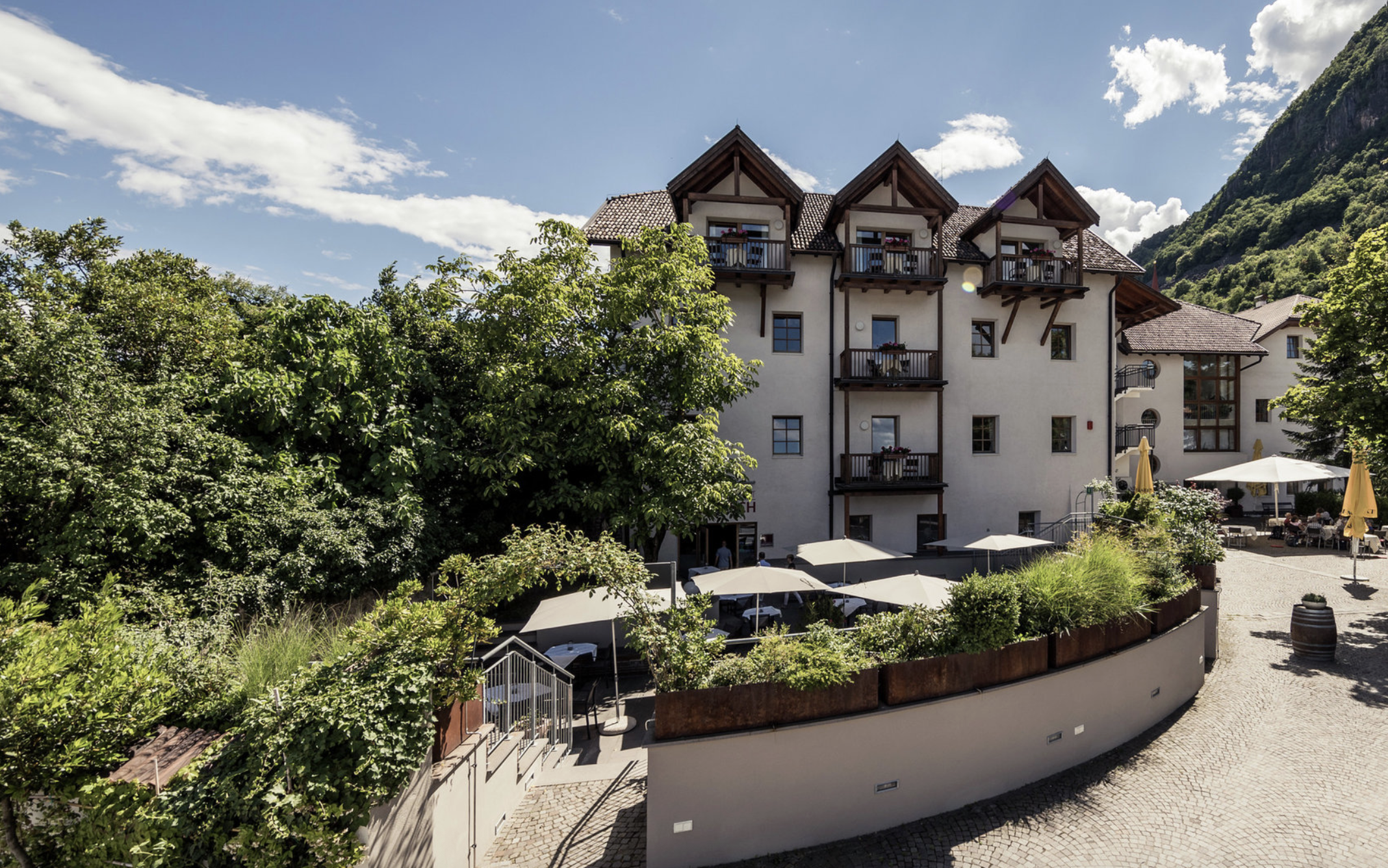
This time we speak with Christine Karadar, who leads Hotel Masatsch in Kaltern, where diversity is not an add-on – it is the concept. As a fully accessible hotel, restaurant and event venue run by Lebenshilfe South Tyrol, Masatsch creates spaces where people meet and connect – regardless of ability, background or circumstance. For guests, for employees and for the wider region. 

We support Hotel Masatsch with focused marketing and web services – sharpening their message, strengthening their website and amplifying what makes this place special.

Untertitel
MAp Client Stories: In conversation with Christine Karadar, host at inclusive Hotel Masatsch in Kaltern am See (South Tyrol)
Blog main image
Wie gelingt soziale Nachhaltigkeit im Hotelalltag – jenseits von Symbolik und Sonntagsreden?
Paragraphs
Everyone is welcome here
– with or without disabilities.
Christine Karadar, Hotel Masatsch

Christine, thank you for taking the time to speak with us today! Before we dive in: how did you first come to Masatsch? 

Christine: I had been following Hotel Masatsch with great interest for quite some time – I was fascinated by how this concept works. My background is actually in very different fields: I worked in event management and also in the social sector, especially on topics such as care and inclusion – how to better integrate people with disabilities into everyday life. 

For me, Masatsch has always been a prime example of how this can succeed. When I saw they were looking for new leadership, I applied – and got the job. Now I am fully immersed in this unique project. At first glance it is a social initiative, yes – but at the same time, it is a perfectly normal hotel for all guests. Everyone is welcome here – with or without disabilities.


Inclusion is part of daily life at Masatsch. What makes this place so special to you? And what do you do differently from a "classic" hotel? 

Christine: Hotel Masatsch really is a special place – it has a kind of energy, if I can put it that way. Even before I worked here, I often came by just to sit in the café or have lunch at the restaurant. And every time, I felt the same thing: this place just feels good. There is a kind of positive energy here. 

Now that I am part of the team, I feel it even more. What makes this place so unique is the work with our staff with disabilities. They bring such joy and enthusiasm to their work – it is contagious. You feel it the moment you arrive. 

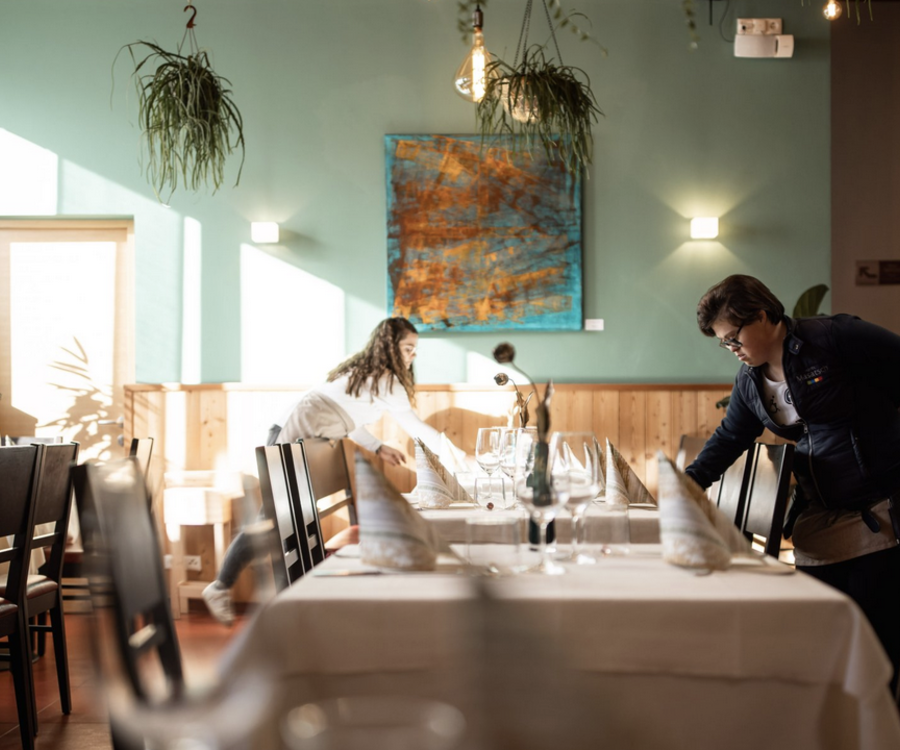
Every morning, one of our employees at the bar greets me with a coffee and a smile and says, "So good to see you!" Around 40 percent of our team – about 30 people – have disabilities. They work in the kitchen, service, housekeeping, or in our garden project, where we grow our own vegetables. Of course, this comes with daily challenges. We support, train, and accompany our team constantly. Many things have to be repeated and practiced often – almost like a school. But that is exactly what makes our work so meaningful.
So gelingt soziale Nachhaltigkeit im Hotelalltag

You have a very diverse team with different backgrounds and abilities. What does it take to make this work? And what can other hotels learn from it? 

Christine: To work here, one thing matters most: genuine interest in people – and empathy. Our team is diverse and full of different strengths. You have to be willing to share knowledge, support others, and practise things together until they stick. 

Our team leads – the head chef, the service managers – carry a lot of responsibility. They are not just supervisors, but coaches, motivators, mentors. They need to be patient and adapt to each person. The overall pace is a bit slower here – and that is a good thing. 

I often say: when you work here, you automatically shift down two gears. That creates space for real connection. What can other hotels learn from this? That inclusion is not a burden – it is a huge enrichment. When people with different abilities are truly integrated, the work environment becomes more patient, more respectful, more human. And guests feel that.


Many hotels want to become more inclusive but struggle to take the first step. What are the most common misconceptions – and what really matters? 

Christine: For me, social sustainability means not just including people with disabilities – but giving them real opportunities. The biggest misconception? That inclusion is an extra task. Something "on top". But it is not about being perfect – it is about mindset. 

It takes openness, patience, and a willingness to meet people at eye level. Once you take that step, something fundamental shifts: in the team, in your interactions, and in the entire culture of the business. That is what social sustainability really means to me.


Was there a moment when you thought: this is exactly why we are doing this? A memory or experience that stayed with you? 

Christine: Yes, absolutely. One moment from this summer stands out. We hosted a group from Germany – the Pfennigparade Foundation, which supports children and young people with severe disabilities. More than 20 people stayed with us for two weeks. It was a challenge, but also a very special experience. 

On their last evening, they organised a little farewell celebration for us. One of the girls – she was maybe nine years old – could not walk at all when she arrived. She used a walking frame and needed a lot of support. On the final evening, she suddenly walked up to me unaided, beaming with pride, and handed me a thank-you note for the whole team. She said these had been her best two weeks in a very long time. 

That moment really moved all of us. It reminded me why we do what we do. Moments like that show us that this work matters. It makes a difference.


Amazing, thank you for sharing! And to finish – our Quick 5, which we ask in every MAp Client Story:

  • A hotel that inspires you: Hotel Frida am Wald
  • A book or resource everyone should read if they want to be more sustainable: I honestly do not have one!
  • A destination on your to-travel list: Kyrgyzstan – it is at the top of my list.
  • quote to live by: “Go confidently in the direction of your dreams. Live the life you have imagined. As you simplify your life, the laws of the universe will be simpler.” – Henry David Thoreau, Walden (1854)
  • Your biggest wish for the future: A life full of meaningful experiences, connection, good health, and true friendship.

About Christine Karadar

Christine is the general manager of Hotel Masatsch in Kaltern, South Tyrol. She brings a background in event management and social work – and leads with a clear belief in people, inclusion, and the power of doing things differently. 

Hotel Masatsch is an inclusive, fully accessible hotel in Kaltern, near the Kalterersee in South Tyrol. Run by Lebenshilfe Südtirol, it offers barrier-free holidays for all guests – with or without disabilities – and creates meaningful encounters between people of all abilities. The hotel is especially designed for guests with mobility needs and specialises in wheelchair-accessible stays in the region.

Free Download

The Sustainable Hotel Insights. 6 Principles to make your hotel more socially sustainable

In this free guide you will receive a concise introduction to social sustainability in hotels – clear and directly actionable. The six principles set out concrete steps for guests and your team – from inclusive hospitality to holistic accessibility. Plus: a short best-practice example, key facts and resources to help you get started straight away.

Blog Block Image
Wie gelingt soziale Nachhaltigkeit im Hotelalltag – jenseits von Symbolik und Sonntagsreden?

Add new comment

Comment

Order

Plain text

  • No HTML tags allowed.
  • Lines and paragraphs break automatically.
  • Web page addresses and email addresses turn into links automatically.
Categories
sharing is caring

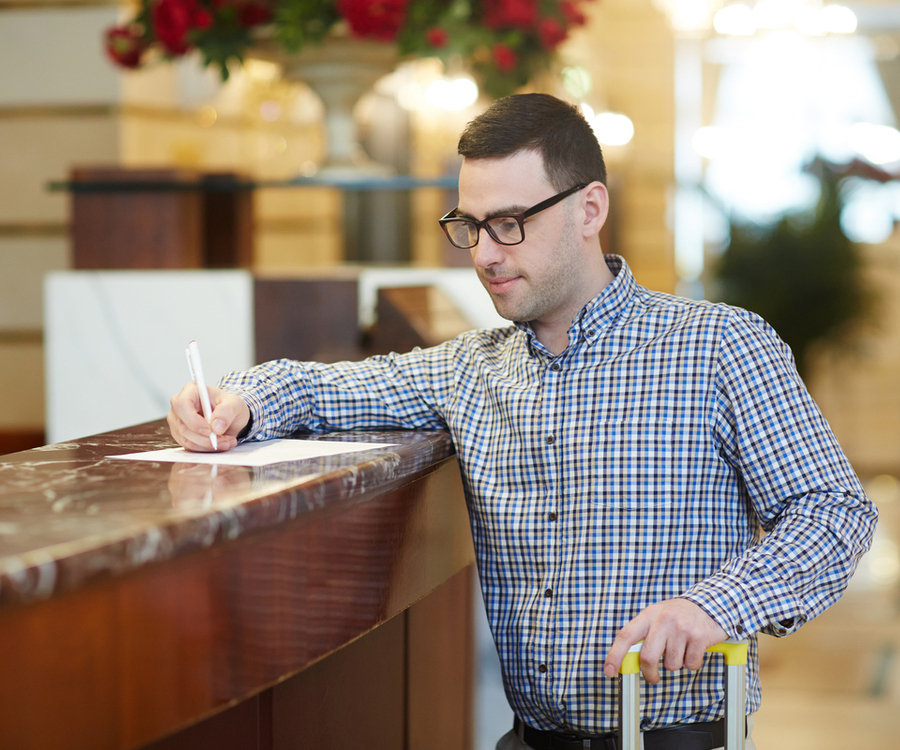
A good hotel is not defined by how many stars it has – but by how welcome it makes you feel. Sometimes that means offering a ramp. 

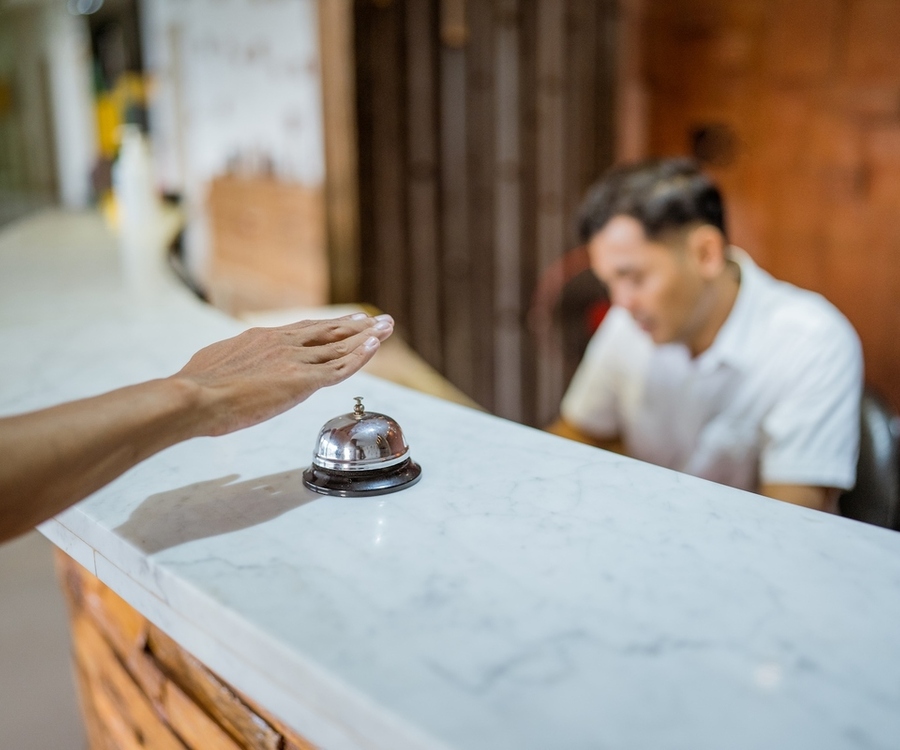
Sometimes a little extra time at check-in. Sometimes simply the feeling: This place respects me. And that's exactly where accessibility begins – in the mind, in the heart, in your attitude. Less about technology. More about true hospitality. 

It's not about ticking boxes. It is about asking: Who feels comfortable here? Who will come back – and who might not? 

This blog post invites you to rethink accessibility. Not as an obligation. But as a powerful opportunity to make your hotel more open, more human – and more welcoming to everyone who comes through your doors.

Untertitel
An invitation to rethink accessibility in hospitality
Blog main image
Barrierefreiheit im Hotel: Gastfreundschaft für alle
Paragraphs

Accessibility is a mindset, not a checklist

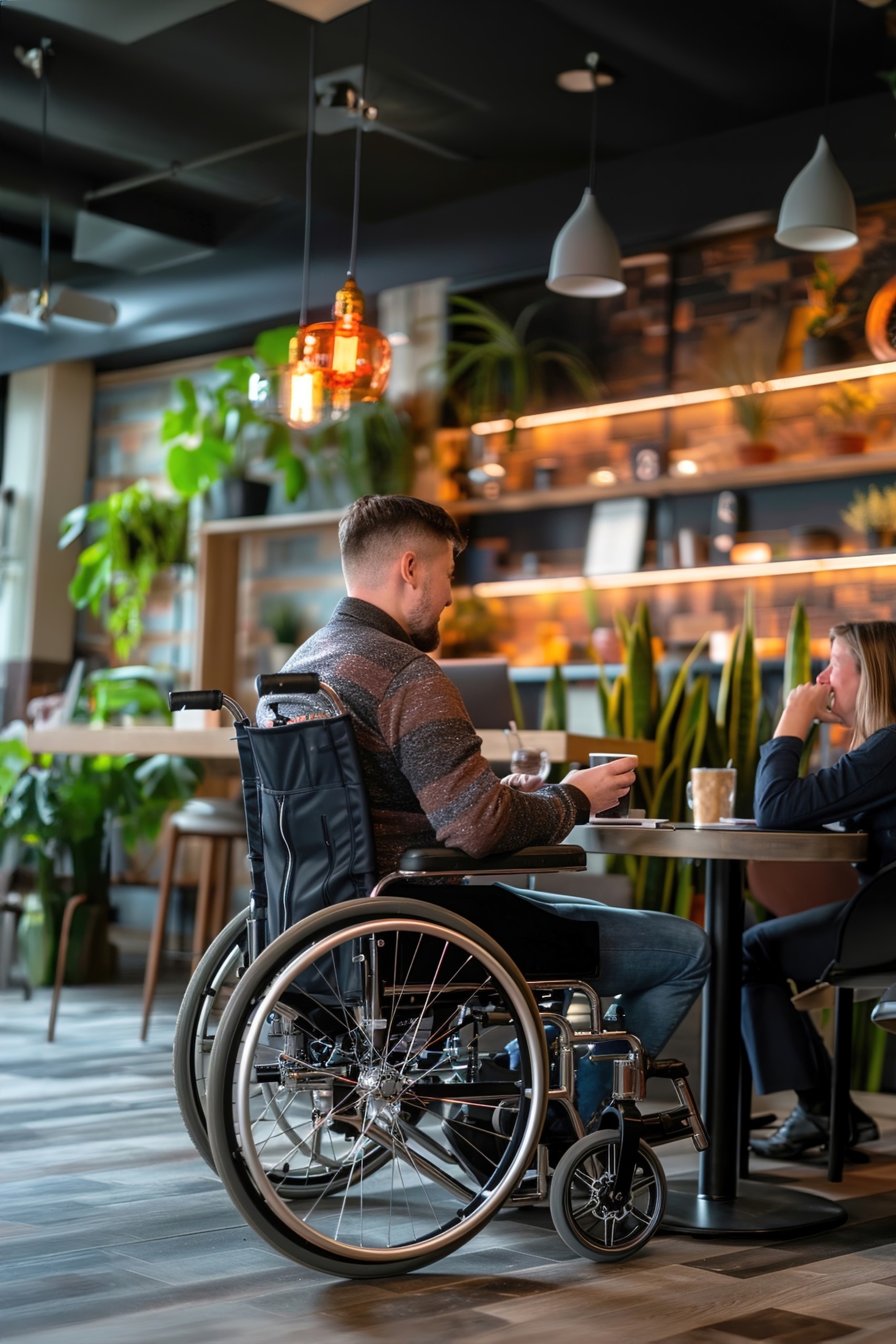
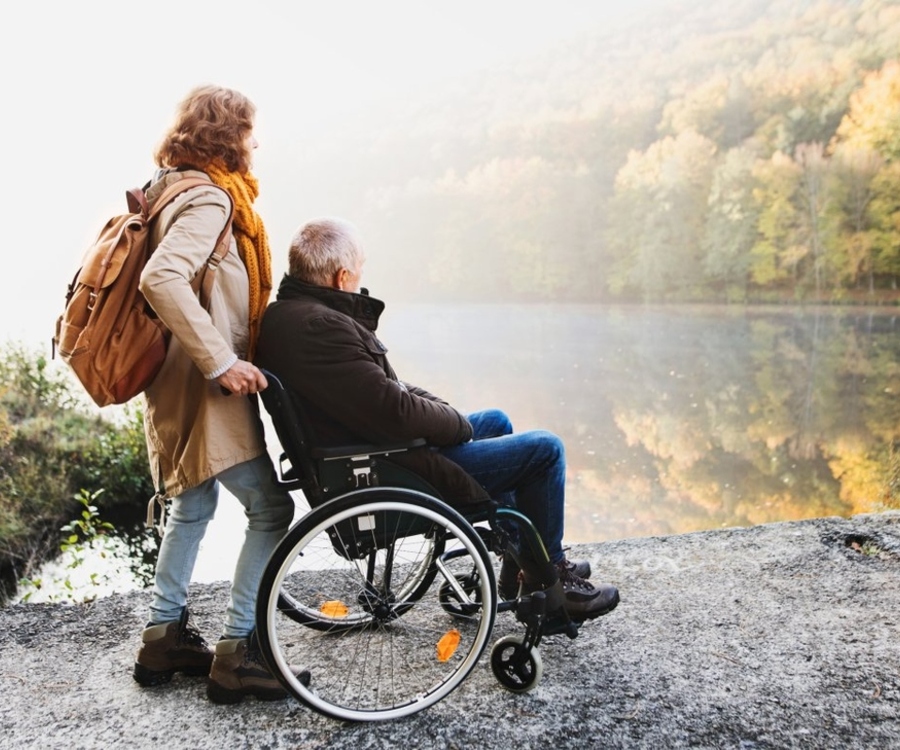
Accessibility is not just about someone in a wheelchair being able to enter your building. 

It's about making them want to. Because the reception is friendly. The signage is clear. The room is well thought out. And no one has to explain themselves. It's not about having perfect solutions. It is about a clear, honest intention: “We want you to feel at ease – just as you are.” 

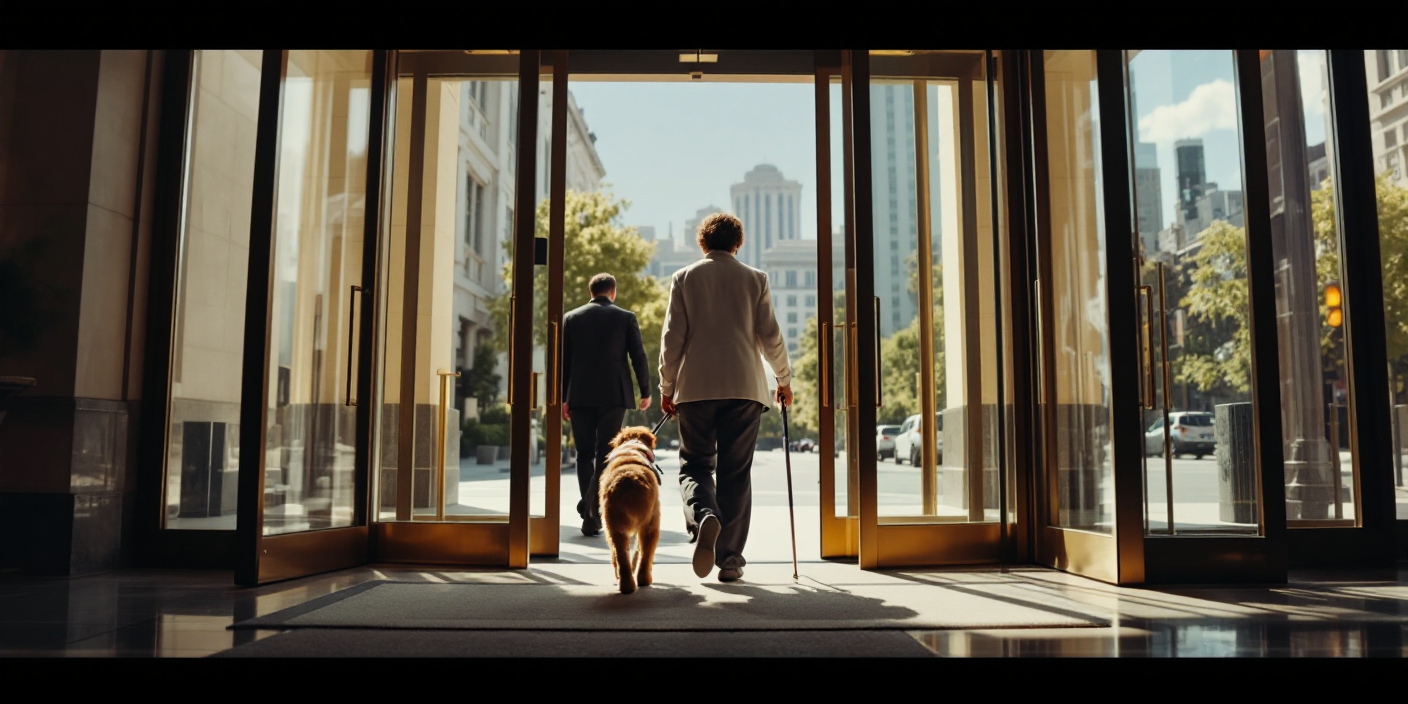
Whether neurodivergent, visually impaired, travelling with a personal assistant or caregiver or an assistance dog – true accessibility does not start with technical norms. It starts with understanding needs. It's not about treating someone as a special case – but about making them feel like a natural part of the picture. 

Accessibility is not a request. It is part of what real hospitality means. ☻ 

Five ways to start thinking differently about accessibility

1. Belonging over exception 

Inclusion starts where no one feels like an exception. Accessibility does not mean welcoming someone especially. It means remembering they might come – and making sure nothing stands in their way. Design spaces where people can move, orient themselves and feel safe – without having to explain themselves. 

Tip: Ask yourself: Where are barriers in your hotel? And how can you make belonging visible? Check your door widths. Offer quiet hours without music. Label allergens clearly. The list is long ;-)


2. Communication that connects

Accessibility often begins with a single word. Or the feeling of being understood – without having to explain. If guests cannot read, hear or process information quickly, they are left out. 

Language can exclude – or open doors. 
Simple wording, pictograms, clear check-in explanations – it is often the small things that make a big difference. Sometimes all it takes is a shift in perspective. 

Tip: Words reflect your mindset. Be mindful of phrases like “as you can see” or “have you heard?” Not everyone sees, hears or understands the way you do. That is where accessibility begins – not with complex instructions, but with language that includes everyone. Want to go deeper? Check out our Sustainable Hotel Handbook: Communication.

Barrierefreiheit im Hotel: Gastfreundschaft für alle

3. The first impression happens online

Before a guest enters your hotel, they have already been there – online. And that is where many great ideas fall apart: When websites are hard to read, bookings are complicated, or key information is hidden behind sleek design. 

Digital accessibility is not about tech. It is about respect. After all – what good is the perfect ramp if the path to it is confusing? 

Tip: Have someone test your website who struggles with orientation or invite someone from your community for a test stay at your hotel. You will learn a lot – and fast. For more, see our blog post on sustainable hotel websites.


4. Listening leads to insight

Sometimes you do not need a new concept. Just a good conversation. 

People living with limitations know exactly what they need. We just have to ask – openly, honestly, without fear. Guests who offer feedback. Team members who share experiences. Organisations that can support your journey. Listening does more than improving systems. It changes your perspective. 

Tip: Start small. Invite someone from your community to give feedback – maybe during a test stay, a walkthrough or an open conversation with your team.


5. A hotel that thinks ahead 

Accessibility does not mean having a protocol for every possible case. It means staying aware – and being ready. Ready to meet people’s needs in unexpected moments. 

A guest arrives with an assistance dog? 
A caregiver needs a separate bed in the same room? 
Someone wants to enjoy breakfast in peace, without sensory overload? 
Accessibility means: we may not have planned for it – but we are prepared. 

Tip: Bring accessibility into your team conversations – not as a list of rules, but as a shared mindset: “We ask one time too many – not one time too few. And we find solutions together.” 

Example (inspiration): Some supermarkets now offer autism-friendly shopping hours – dimmed lights, no music, no loud announcements, clear signage and a quieter checkout experience. That is what we call the curb-cut effect: small changes made for specific groups end up helping everyone.

Accessibility is not an extra
it is part of what real hospitality means.
MAp Boutique Consultancy

What you gain from accessibility? A lot.

Accessibility is not a limitation – it's an expansion. For your team. For your guests. For your positioning as a host who leads with purpose. Curb-cut effect, again: Designing with care for some often makes things better for all. From a clearly written menu to step-free access, subtitles and simple language – you reach more people, strengthen your brand and create guest experiences that leave a lasting impression. Because someone felt truly seen.

Conclusion

Accessibility is not about being perfect. And it does not have to be. At MAp Boutique Consultancy, we always say: progress over perfection.

That's true here as well. Start rethinking accessibility – today. Not through major renovations. But by choosing to notice more. By acting where you already can. And by creating a culture of welcome that includes everyone.

Want to go deeper? Download our free guide: 6 Principles for Social Sustainability in Hotels.
Or explore our The Sustainable Hotel Handbook: People.

#onwards

Free Download

The Sustainable Hotel Insights. 6 Principles to make your hotel more socially sustainable

In this free guide you will receive a concise introduction to social sustainability in hotels – clear and directly actionable. The six principles set out concrete steps for guests and your team – from inclusive hospitality to holistic accessibility. Plus: a short best-practice example, key facts and resources to help you get started straight away.
Blog Block Image
Barrierefreiheit im Hotel: Gastfreundschaft für alle

Add new comment

Comment

Order

Plain text

  • No HTML tags allowed.
  • Lines and paragraphs break automatically.
  • Web page addresses and email addresses turn into links automatically.
Categories
sharing is caring

It is just about time – the MAp Trend Report ist back, or let’s say better: it’s already here for 2026. And honestly? At this point, we would not want to imagine ending a year and starting a new one without it! ☻

Each year, we take a deep dive into what is coming – and more importantly, what truly matters for hoteliers, hospitality brands and changemakers across the industry. 

Because let us be clear: trends are not a gimmick. They are signals and a gentle nudge that we all need to look ahead rather than behind. 

Those who wait to act until a trend is mainstream? They are already late. But those who pay attention early can invest smarter, adapt quicker, and stay ahead of the curve. 

This is exactly what the MAp Trend Report 2026 is here for. 
What to expect? No fluff, no trend theatre – just carefully selected insights with direct relevance for your business. From EU regulations and climate disclosures to bleisure travel and purpose-led positioning. 

Shall we take a look? #Onwards

Untertitel
What is shaping hotels in 2026: European Union sustainability reporting, the rise of bleisure, and practical uses of artificial intelligence
Blog main image
2026 Hotel Industry Trends: Sustainability, artifical Intelligence, Bleisure and smarter Operations
Paragraphs
The future belongs to hotels that are both
human and smart
MAp Boutique Consultancy

1. Reporting is getting real, EU regulations are tightening

We know – this might sound like one of those things you would rather not hear. It sounds like work. It sounds like complexity. But here is the good news: it does not have to be! 

In fact, for hotels that start early, sustainability reporting can become a powerful asset – not a burden. 

The Corporate Sustainability Reporting Directive (CSRD) and the European Sustainability Reporting Standards (ESRS) will require more and more companies to disclose how they impact People and Planet.

Even if your hotel is not directly affected (yet), you might be indirectly impacted: 

  • through corporate clients who demand reporting, 
  • through investors who require transparency, 
  • or through business partners who are already reporting themselves. 

In short: sustainability performance will soon become part of your business credentials.

What can you do now? 

  • Find out where you stand today. Our Sustainability Assessment is here to guide you.
  • Decide where to take action first – the areas you want to focus on and improve.
  • Decide whether to walk the path on your own – or bring in professional support to make the journey smoother.
  • Start tracking what truly matters – from energy and emissions (Scope 1 and 2) to your social impact.
  • Choose the right framework for your journey – B Corp, Greensign or others as your starting point. 

Our MAdvice: You do not need to have it all figured out. But you do need to begin.Those who build structures now will be ready – and ahead – when reporting becomes the new normal.


2. Bleisure travel is becoming the norm, not the niche

The line between work and leisure continues to blur – and bleisure travel (Business and Leisure travel = Bleisure) is becoming the norm, not the niche. In fact, the bleisure travel market is projected to nearly quadruple by 2034 (Presedence Research, 2025). 

What used to be a short business trip is now often extended into a weekend getaway. Or even a “workation” in a location that inspires. Guests are looking for places where they can plug in, but also fully switch off. 

What this means for hotels: You need to cater to both sides of the experience – smart and professional, warm and personal.

Think: 

  • ergonomic desks, great coffee and strong Wi-Fi
  • co-working lounges that invite connection wellness offerings,
  • flexible check-in/out, weekend extensions
  • local insider tips that turn a work trip into a memory 

And yes, bleisure travellers are valuable guests: They stay longer, spend more, and often return.

What you can do now? 

  • Review your room amenities and workspace features
  • Create bleisure packages (weekend extensions, 2+ nights with special rates), such as our client B5 Boutique Hotel in Lugano
  • Offer remote-work stays (weekly or monthly rates, with perks for longer stays)
  • Communicate clearly to both direct guests and, where relevant, corporate partners
  • Re-think your loyalty programmes for hybrid travellers who want flexibility and recognition

Our MAdvice: Design your offers around flexibility, purpose and experience – and you will win the travellers who want it all.

2026 Hotel Industry Trends: Sustainability, artifical Intelligence, Bleisure and smarter Operations

3. Artificial Intelligence is coming strong – but not to take your job

Forget the doom stories. In 2026, Artificial Intelligence is not coming for your jobs – it is coming for your to-do list. 

From guest communication to revenue management, hotels are starting to embrace AI as a practical, powerful support system (Thynk, 2024). And we are sure: The smartest ones are not using it to replace their people – they are using it to elevate them. 

Think: 

  • personalised email replies that actually save time
  • chatbots that handle FAQs while your team focuses on real care
  • automated pricing tools that take market trends into account 

The key? Let technology do what it does best – so your people can do what they do best.

What you can do now: 

  • Explore AI tools such as chatlyn tailored for hospitality
  • Start small: one task, one team, one experiment
  • Train your team to work with AI, not against it
  • Keep the human touch at the heart of every guest interaction 

Our MAdvice: Do not fear the tech. Lead WITH it. Because the future belongs to hotels that are both human and smart.

MAp’s Bonus Tip for 2026: Be the hotel that dares

One thing we know for sure: The future belongs to the hotels that dare. 

Trends are tools. But it is your stance that gives them meaning. The most exciting hotels in 2026 do not just follow the direction of the market – they sharpen it. They build with intention, communicate with courage, and turn values into real life action. 

So if you are working on something in 2026, do not play it safe. 
Dare to be different. 
Dare to be true. 
Dare to be the hotel only YOU and your team can be. 

That is what guests will remember and what makes a positive impact. 

We hope that this short glance ahead has provided you with empowering ideas and sustainable inspiration. Let's work together to make hotels even more innovative, sustainable, and future-proof. Thank you for joining us on our journey to shape the hotel industry of tomorrow. #onwards

Blog Block Image
2026 Hotel Industry Trends: Sustainability, artifical Intelligence, Bleisure and smarter Operations

Add new comment

Comment

Order

Plain text

  • No HTML tags allowed.
  • Lines and paragraphs break automatically.
  • Web page addresses and email addresses turn into links automatically.
sharing is caring

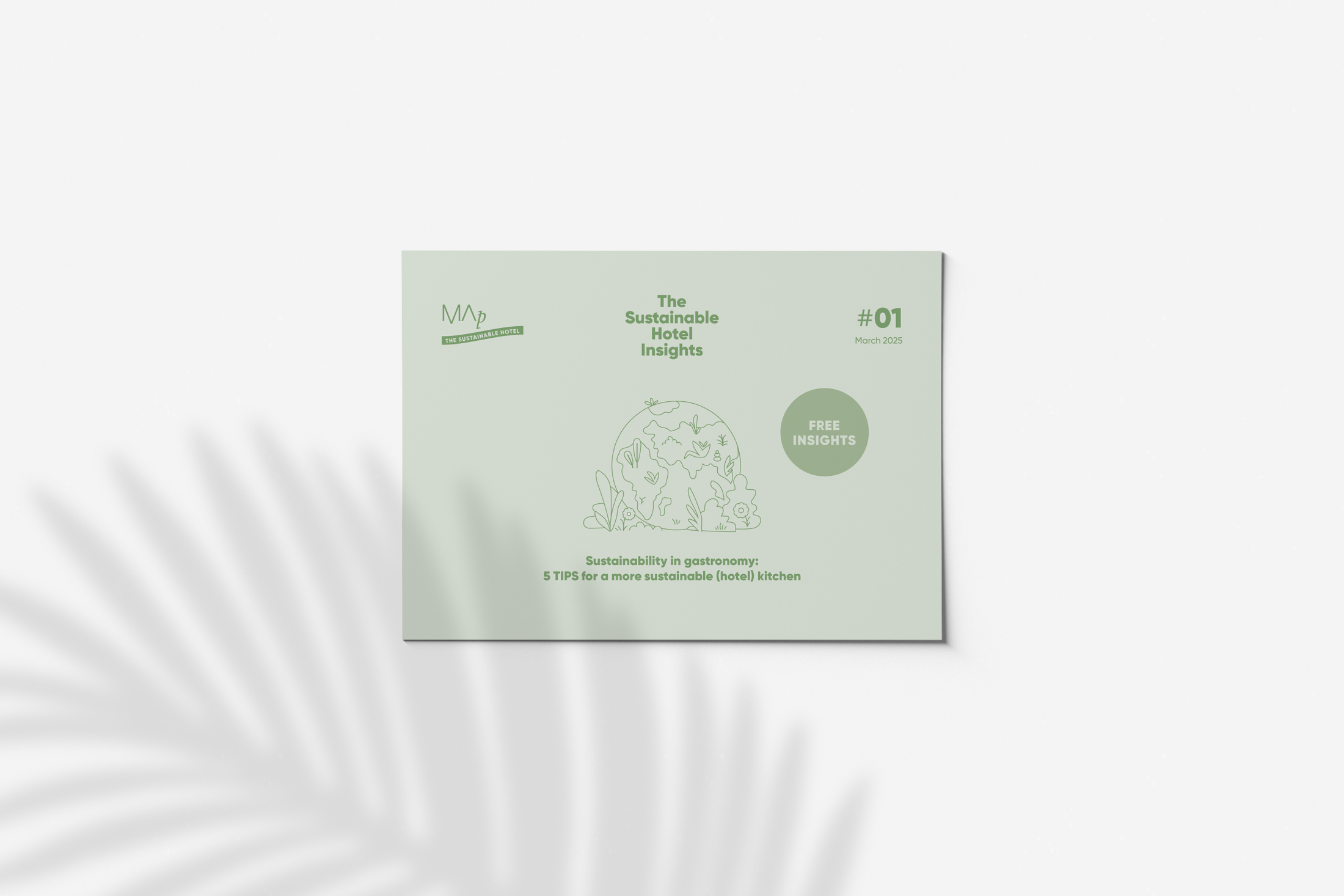
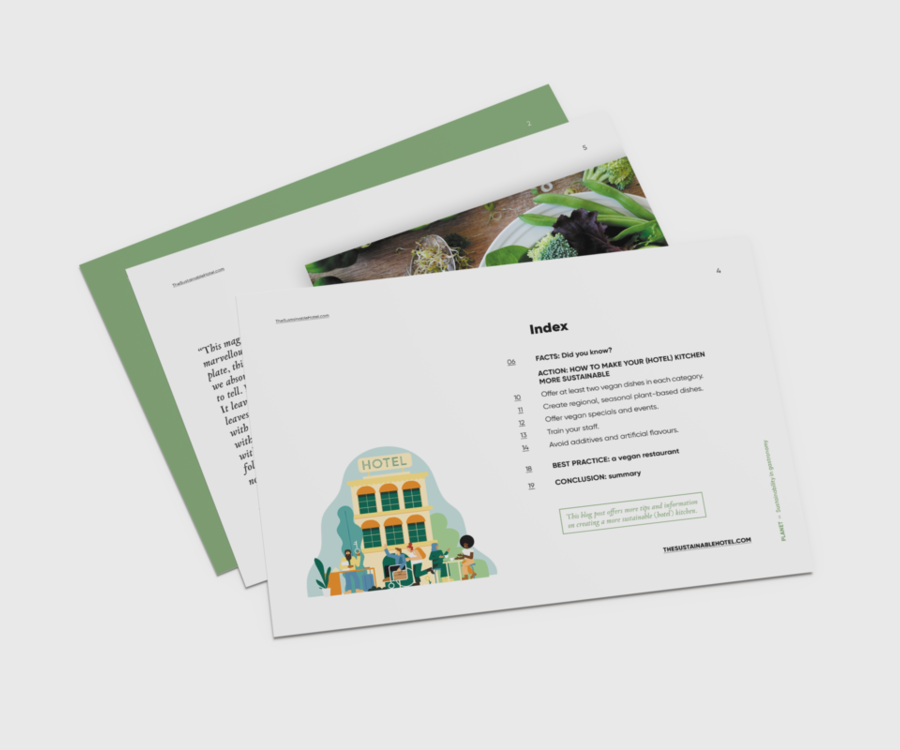
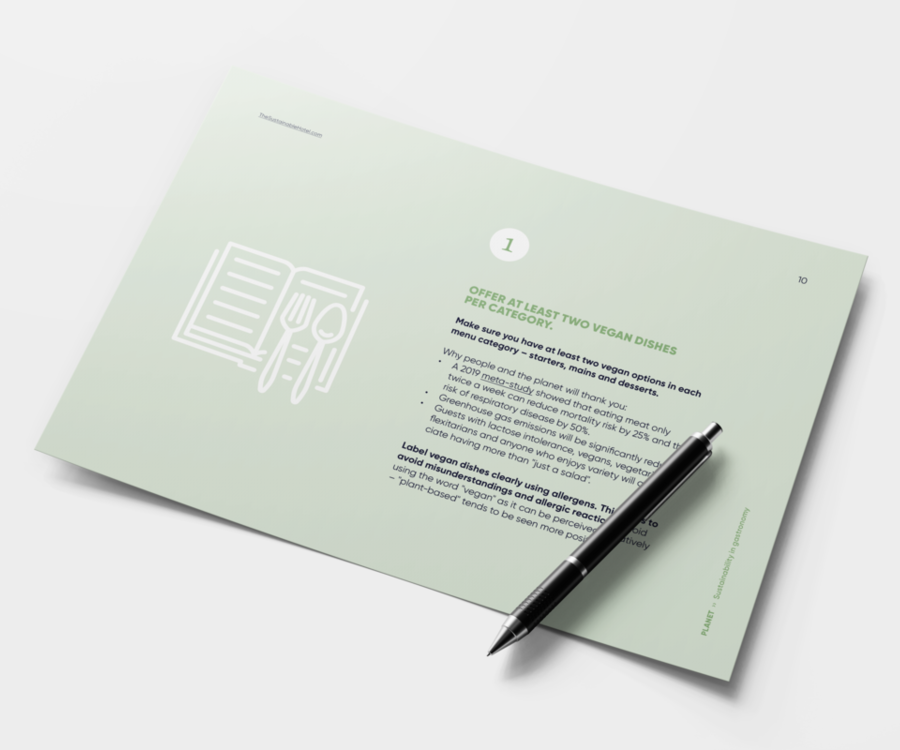
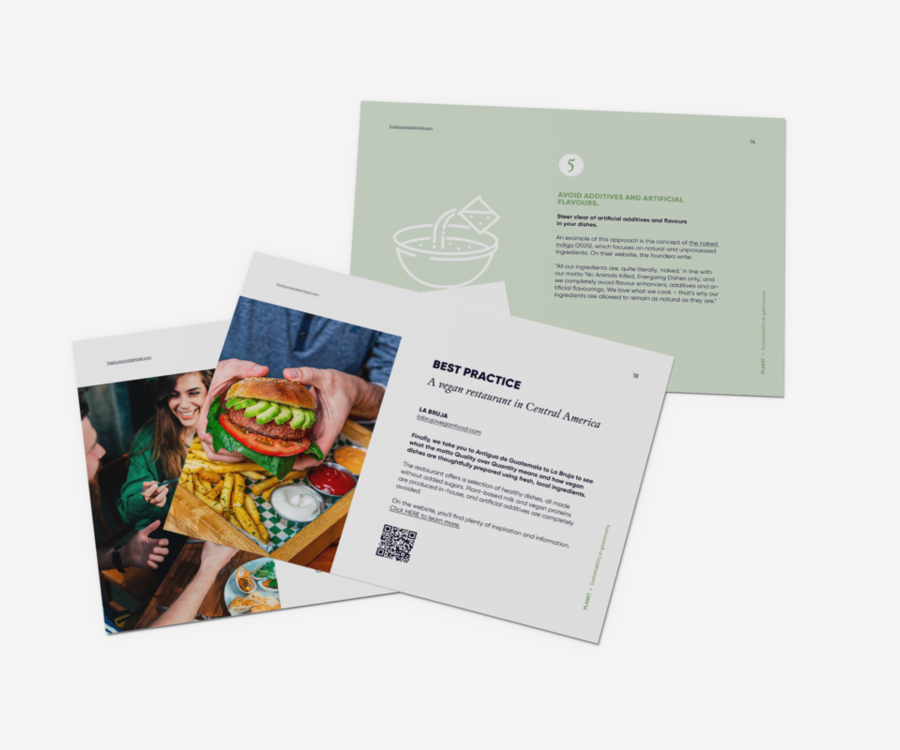
This free PDF file provides information, guidance and tips regarding sustainability in the (hotel) kitchen.

CHF 0.00

Available for download.

Weight
-86
Block Image
Sustainability in Hospitality: 5 Tips for a More Sustainable (Hotel) Kitchen
Main image
Sustainability in Hospitality: 5 Tips for a More Sustainable (Hotel) Kitchen
Paragraphs

5 Tips for a More Sustainable (Hotel) Kitchen

The way hotels and restaurants design their menus not only matters for our planet, but also for guests’ health and future generations' quality of life. That’s why we have created this practical guide – to empower you with our five top tips for a sustainable (hotel) kitchen, background information and practical insights.

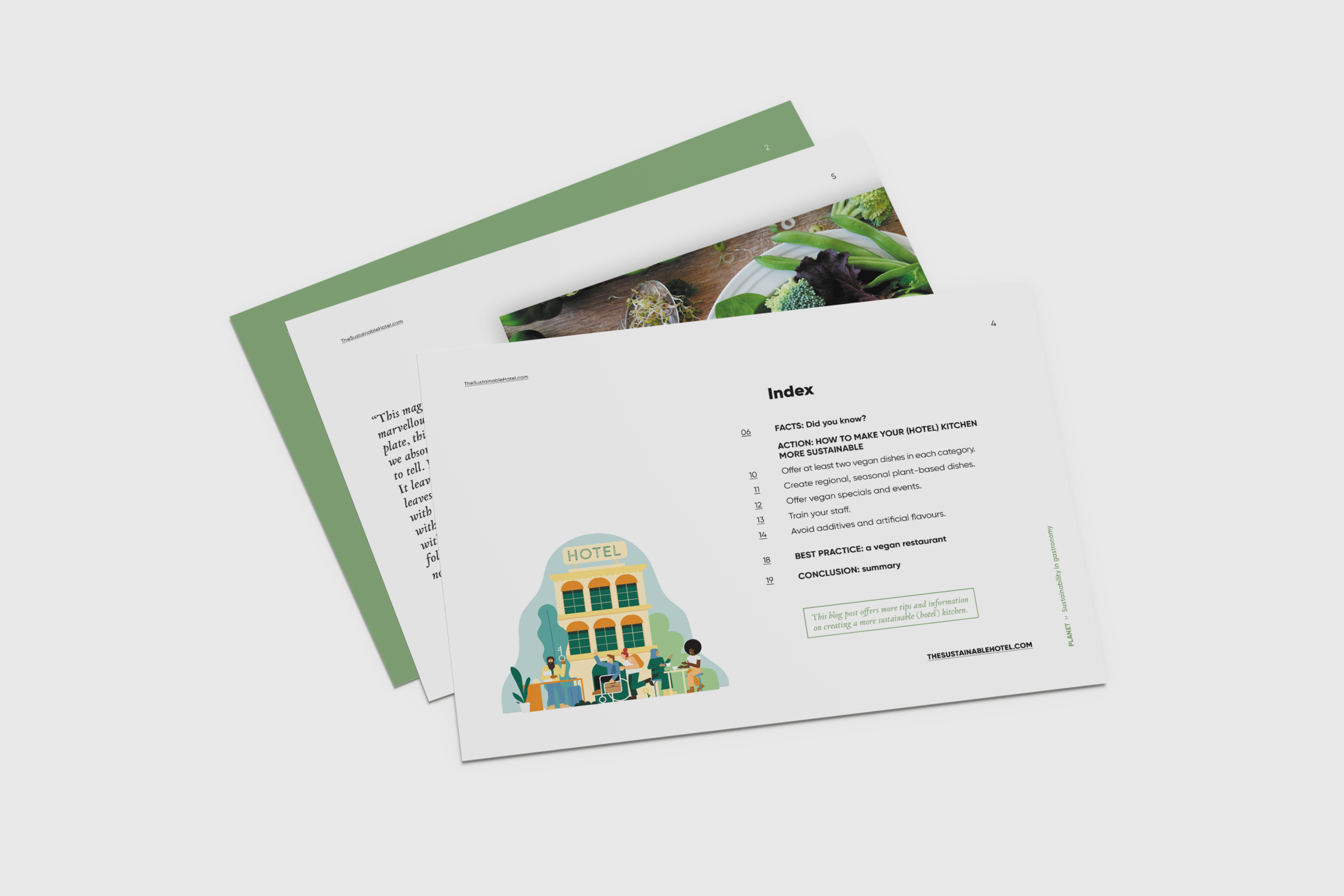
Included in the guide:

  • What males people give up meat?
  • How can hotel and restaurant managers benefit from this shift?
  • How can you make sure your menu is to the liking of (almost) everybody?
  • What can you do to make your (hotel) kitchen more sustainable?


Sustainability in Hospitality: 5 Tips for a More Sustainable (Hotel) Kitchen

About Balteschwiler Consulting

Balteschwiler Consulting offers tailored concepts for the hospitality industry – from introducing seasonal, regional and plant-based dishes to using eco-friendly cleaning and care products, as well as offering staff training. Through team workshops, Balteschwiler Consulting provides the knowledge needed to reduce your ecological footprint while increasing guest satisfaction.

Untertitel
We’ll show you how to make your (hotel) kitchen more sustainable in five simple steps.
Why you need it
  • 5 clear action steps for a sustainable (hotel) kitchen
  • Better understanding of meat consumption and its impact
  • The path to a sustainable (hotel) kitchen with this practical and free PDF guide
  • Information about a best-practice example, links to further must-read resources to support you on your #onwards journey
Zero Price view
CHF 0.00
Erscheint nach ? Sekunden
3
FREE DOWNLOADS
sharing is caring

The urgency of addressing sustainability in the hospitality industry cannot be overstated, as its impact on the environment and local communities is significant. Therefore, in this actionable hotel sustainability blog post, we help hotels aspiring to make a meaningful impact on sustainability take the concrete steps toward achieving that goal.

Rooted in MAp’s framework of the 4 Ps of Sustainability — Purpose, People, Planet and Profit — this blog post outlines 25 key action steps for each P that can revolutionise the way hotels operate, emphasising that the journey towards sustainability doesn't have to be daunting or financially burdensome.

It’s built on the principle that every action, no matter how small, contributes to a more sustainable and responsible hospitality and travel industry.

Did you know? We compiled a full guide presenting 284 action steps to get you started on implementing hotel sustainability in a holistic, practical and #stepbystep way.

Untertitel
We guide you to implementing hotel sustainability by taking small steps with a big impact.
Blog main image
284 praktische Maßnahmen zur Umsetzung von Nachhaltigkeit in der Hotellerie
Paragraphs

Purpose

At MAp, we start every (sustainability) project with Purpose. It is the golden thread running through and connecting all other elements. And the sustainable steps your hotel takes reflects what your overall Purpose is.

But let’s be clear about what your Purpose actually is: Purpose is the reason your hotel exists – its overall WHY. It is the derived meaning that comes when you know that you created something that you believe matters – to yourself, to others, to society. Be aware, Purpose does not entail earning a Profit. It must go above and beyond making money and be broad, humanistic and socially-engaged, linking your hotel to a greater good. Your Purpose will be your guiding compass to making this world a better place and growing your business, at the same time.

WHY Purpose matters

  • Brings you clarity and clarity = power
  • Creates a culture of innovation
  • Attracts the right people (guests, employees, partners) for your hotel
  • Builds resilience through turbulent times
  • Delivers personal satisfaction to the hotelier

5 action steps to create a hotel with Purpose

1. Discover your personal Purpose
2. Define your hotel’s Purpose
3. Embed your Purpose into your hotel business
4. Prioritise your sustainability activities based on your Purpose: People, Planet or Profit
5. Activate your Purpose – because Purpose is a verb, not a noun!

People

The social dimension of sustainability, People, deals with the impact your hotel has on the society for which and in which it operates. It’s about being a good host, a helpful neighbour, a quality employer and partner, a responsible and reliable brand – while serving the direct and indirect needs of your stakeholders.

And who are those stakeholders? While there are many stakeholder groups involved in making a hotel project a success, in this blog post, we focus the action steps on four key groups that your hotel has a major impact on: 

  • Your guests
  • Your employees
  • Your partners
  • Your local community

Unfortunately, the hospitality and tourism industry has not always had a good reputation when it comes to its social impact. On a bright note, though, as the industry touches every human on earth in one way or the other, there is so much opportunity to positively contribute to the lives of your guests, your employees and partners, and your local community – now and in the future.

WHY People matter

  • Only teamwork makes the dream work
  • Money always comes from People
  • People will make or break your brand

5 action steps to serve your employees more inclusively

1. Achieve a 50/50 balance between men and women in your management
2. Give equal employment opportunities to People already residing in the local community
3. Give equal management positions to People already residing in the local community
4. Offer employment opportunities without discrimination by gender, race, disability, religion and more
5. Offer management opportunities without discrimination by gender, race, disability, religion and more

You may also download our free guide on how to write inclusive job ads here

Planet

We know that many hoteliers are aware of how closely connected their hotels are to their surrounding environments. However, the relationship between hotels and Planet is not a healthy one; hotels create enormous negative impacts on the environment all along their lifecycles.

Therefore, the ultimate goal of environmental sustainability is to minimise your hotel’s environmental impact on the region and the Planet at large through the following key elements:

  • Energy
  • Waste
  • Food
  • Water

By tackling these elements holistically, hotels are able to limit their environmental impact and achieve carbon neutrality. And by implementing smart environmental measures they realise significant savings too – a win-win!

WHY Planet matters

  • There is no Planet B
  • If you put Planet over Profit, your Profit will grow healthy as well
  • Act now to environmental regulations – or react later

5 action steps to combat food waste

1. Compost bio waste
2. Plant a biological garden
3. Cook to order and eliminate the buffet
4. Make smaller food portion sizes
5. Donate extra food

Learn more about the topic in our free waste guide

Every action, no matter how small,
contributes to a more sustainable and responsible industry.
@weareMAp

Profit

We won’t argue: Profit is important. Without it, your hotel will cease to exist. But what is also important is that the Profit earned is:

  • Achieved in a sustainable way = not at the cost of People and Planet
  • Distributed in a sustainable way = used to secure your hotel’s operationality in the future while also making this world a better place

Money is the lifeblood of your business, but it is not your reason for being – that’s what Purpose is for. But how can you pursue your Purpose if you are not profitable and financially strong?

That’s the paradox: organisations that only exist to earn a Profit don’t last long. But organisations that don’t prioritise Profit can’t survive long enough to fulfil their Purpose. In other words, in the context of sustainability: it’s hard to be green when you’re in the red!

WHY Profit matters

  • Profit allows for progress in your business
  • Profit enables you to uplift, empower and better serve your stakeholder groups
  • Profit makes the world a better place (when you share it with the world)

5 action steps to practice philanthropic giving

1. Donate a share of your Profit
2. Create an employee donation scheme
3. Match employees’ donations
4. Create a guest donation scheme
5. Match guests’ donations

Take action now!

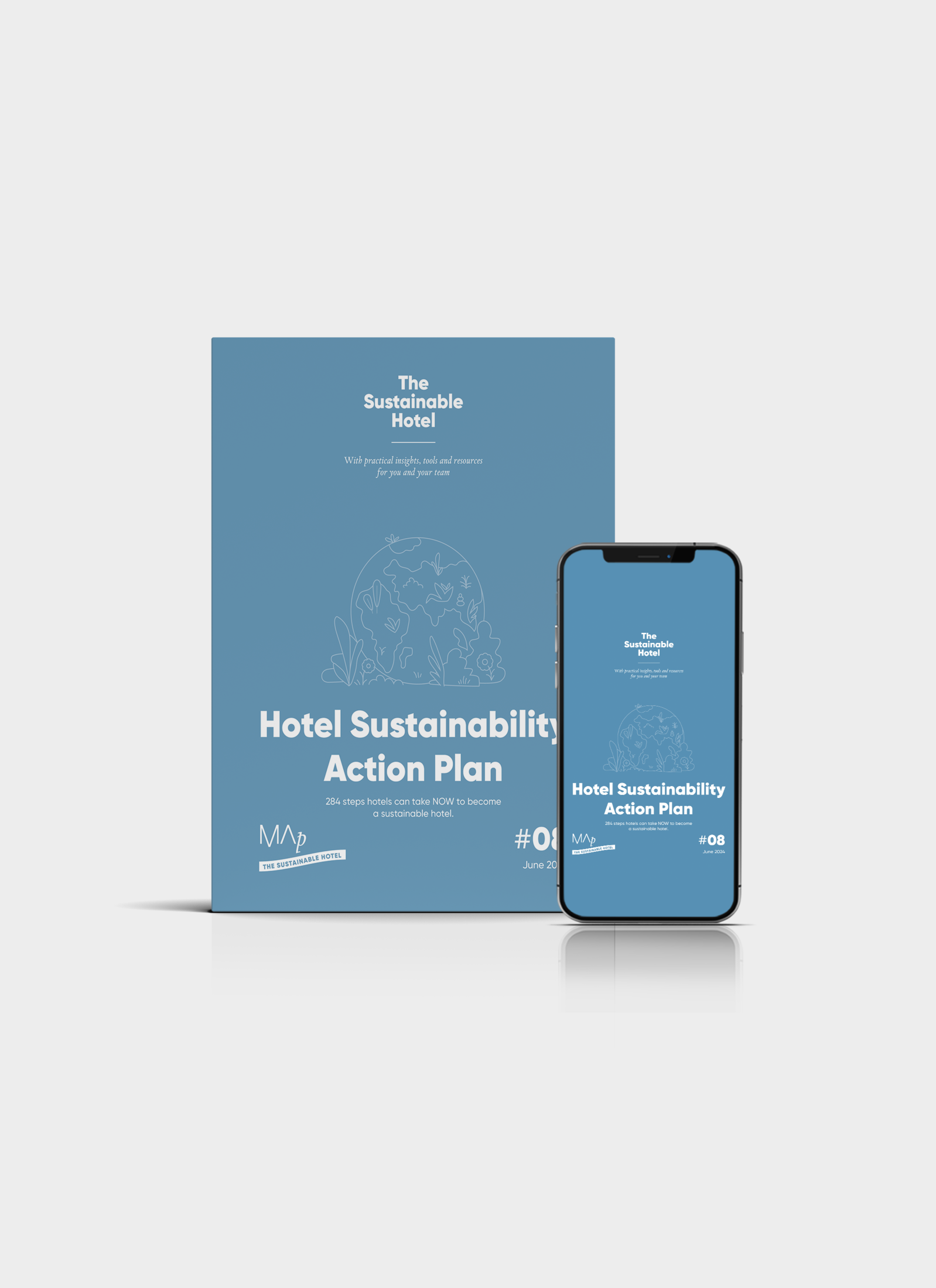
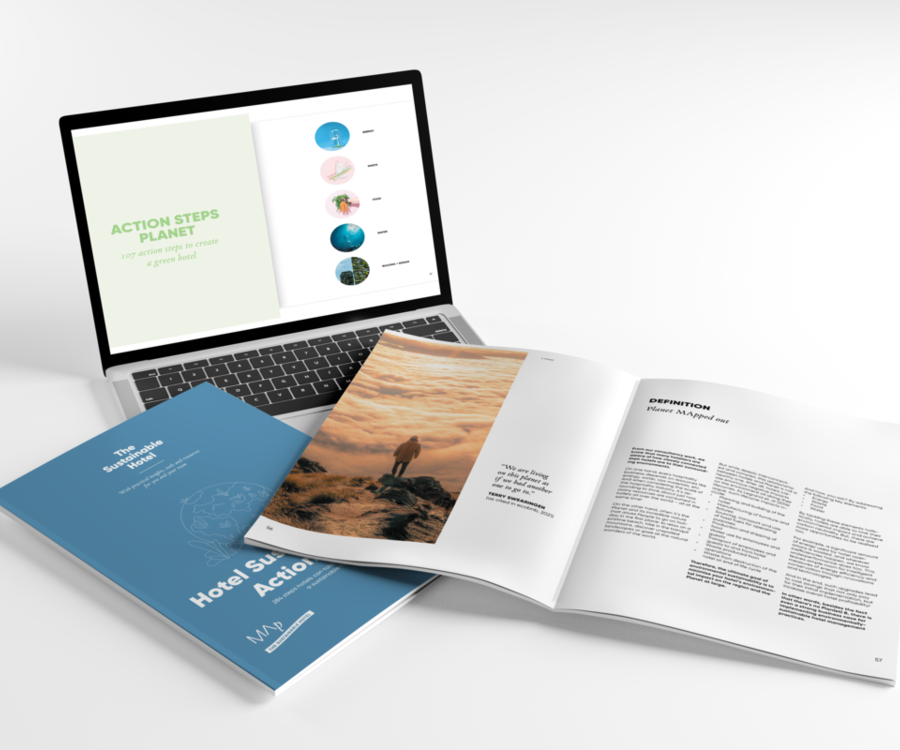
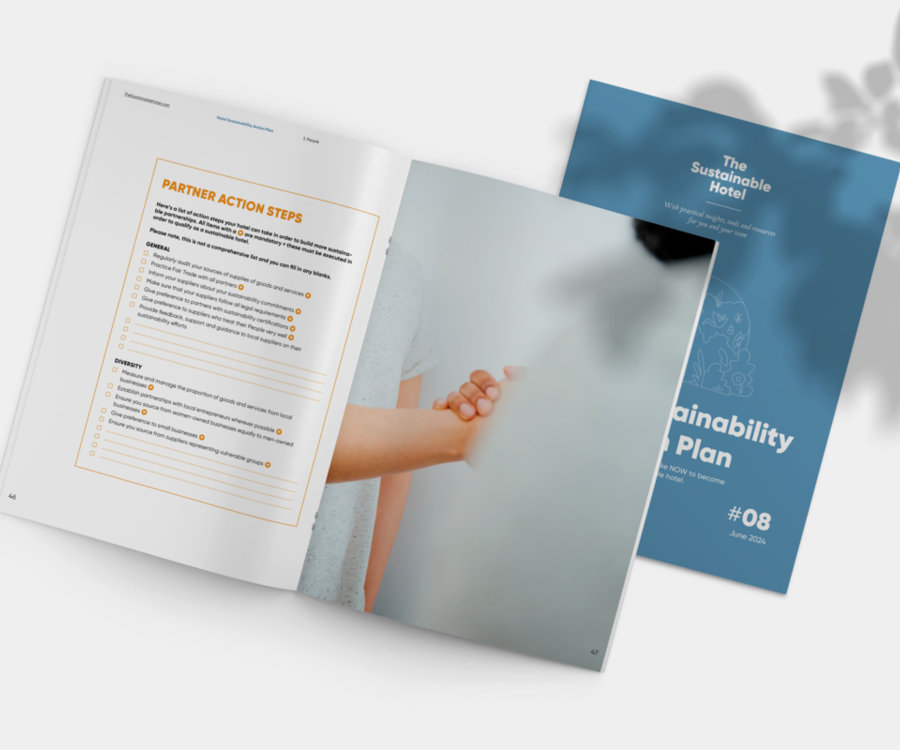
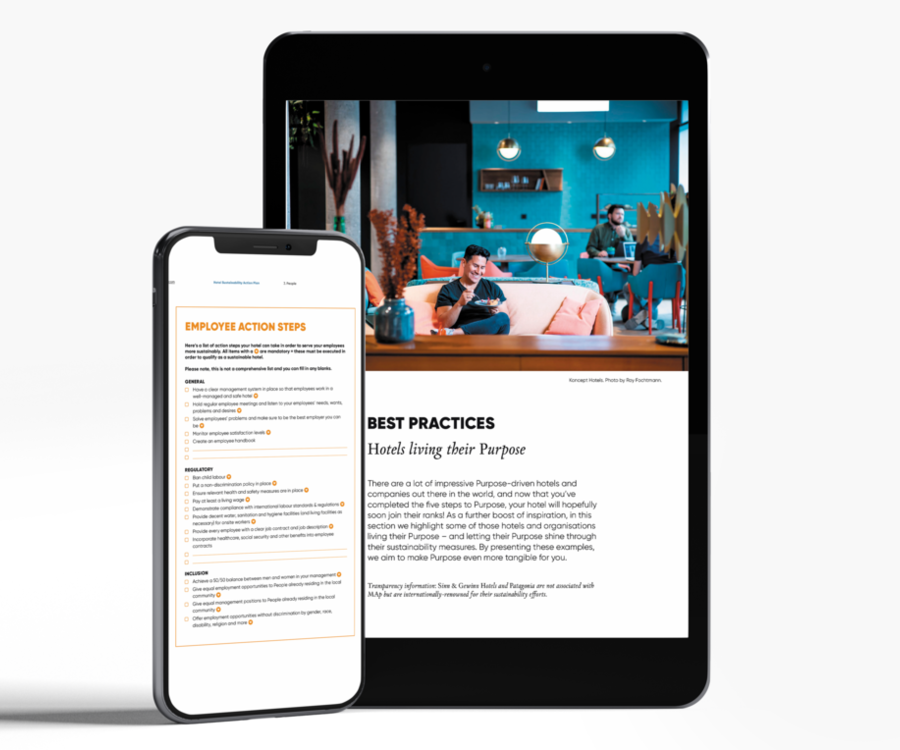
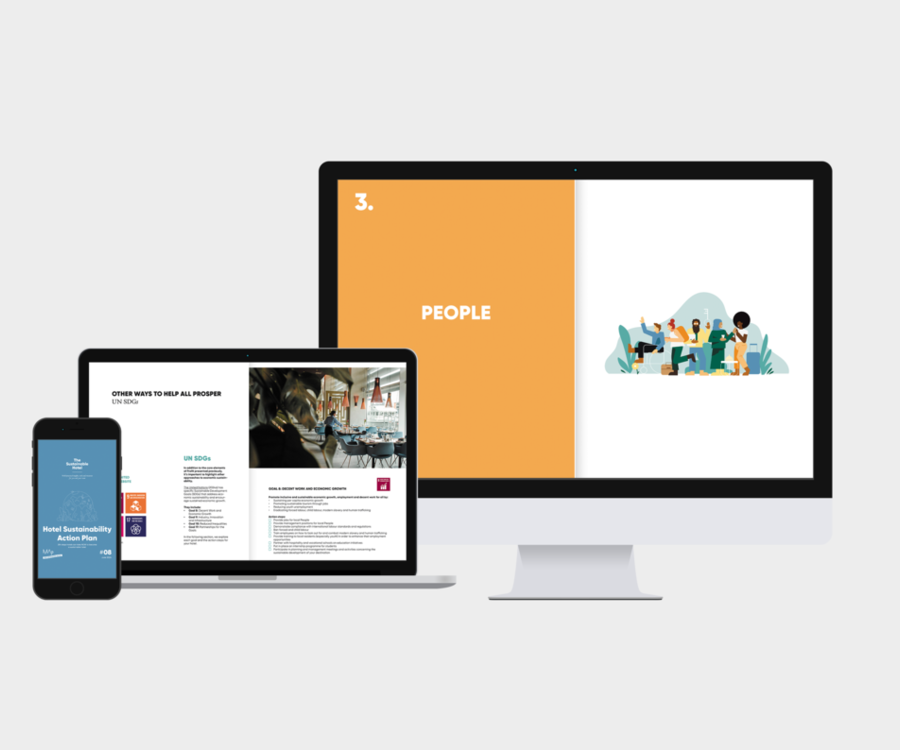
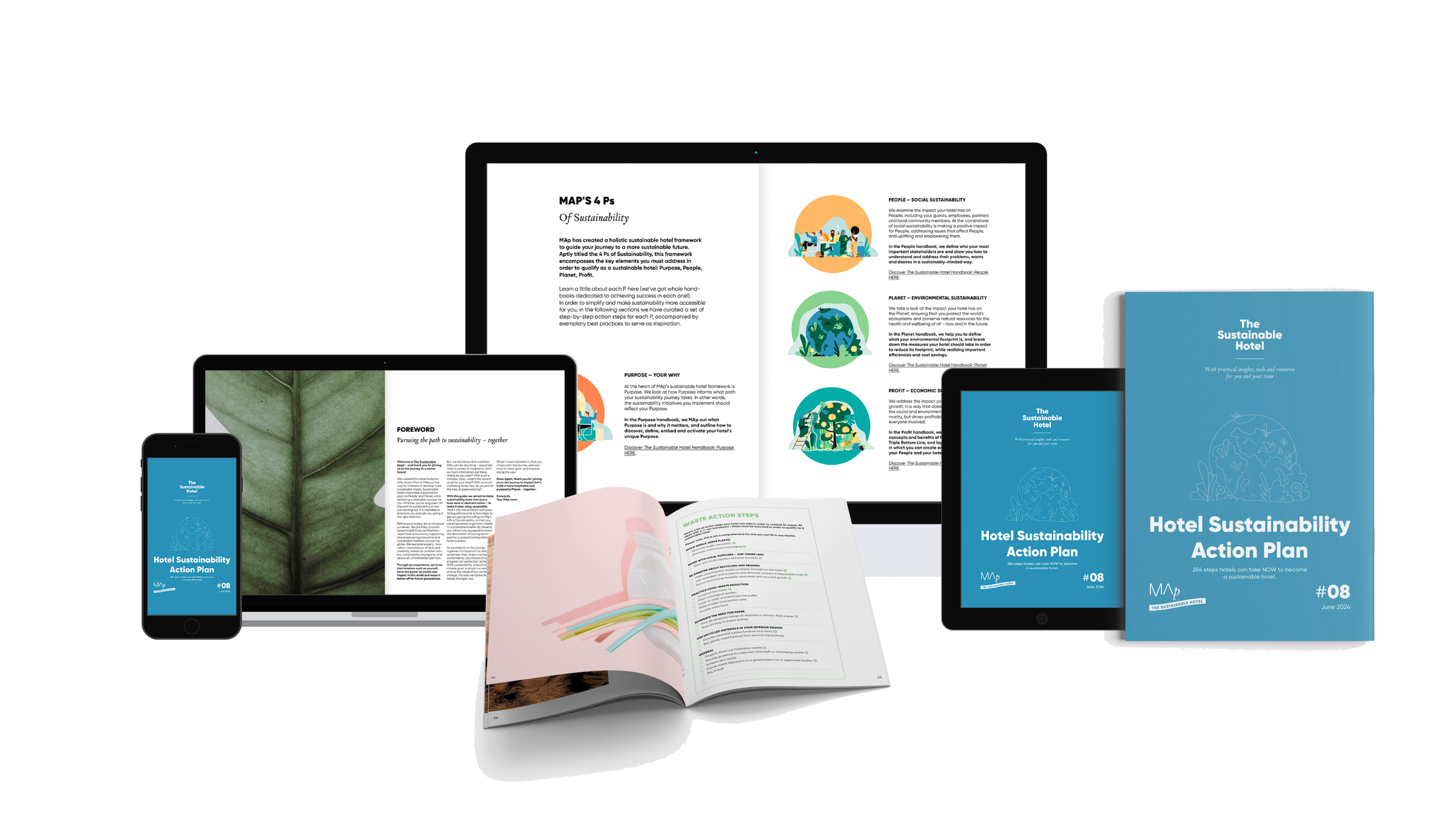
Hotel Sustainability Action Plan

We have compiled a full guide presenting 284 action steps to get you started on implementing hotel sustainability in a holistic, practical and #stepbystep way.

Check Top-Posts
Set to 2nd Top-Post
Quote Author
MAp Boutique Consultancy
Quote Subtitle
contributes to a more sustainable and responsible hospitality and travel industry.
Quote Title
Every action, no matter how small,
Blog Block Image
284 action steps to become a sustainable hotel

Add new comment

Comment

Order

Plain text

  • No HTML tags allowed.
  • Lines and paragraphs break automatically.
  • Web page addresses and email addresses turn into links automatically.
Types
sharing is caring

Sustainability in hospitality does not need to be complicated or expensive. This guide gives you clear priorities, concrete actions, and ready-to-use checklists so you can start in operations straight away, without getting lost in theory.

Weight
-92
Block Image
Your Hotel Sustainability Action Plan – by MAp Boutique Consultancy
Paragraphs
As seen on:

Your hotel sustainability action plan: 284 practical actions

Clear instructions, ready-to-use checklists and best-practice examples to implement sustainability in day-to-day hotel operations and make progress measurable.

What you get:

  • 284 practical actions in checklist format you can implement straight away
  • A clear, hands-on overview of the three pillars of sustainability, social, environmental and economic
  • International best practices from hotels and brands that show what works
  • Practical next steps to start your sustainability work, or improve what you already have
  • Curated resources and sources for deeper support
What People say about the sustainability guide

What hotel sustainability delivers

Here is what a structured, action-led approach unlocks for your hotel:

  • Lower costs through smarter resource use and higher efficiency
  • Reduced risk through clearer priorities and better preparation
  • More bookings through stronger positioning and higher trust
  • Stronger support from guests, team members, partners and local communities
  • Easier reporting through structured steps and clearer foundations
  • Clearer differentiation in the market through credible sustainability work
  • Stronger long-term performance because sustainability is embedded in operations


Start now with the practical hotel sustainability guide

284 actions, clear next steps and international best practices to implement sustainability in day-to-day operations and make progress measurable.

DIGITAL HANDBOOK

DIGITAL HANDBOOK

After payment, you can access your digital product (PDF file) immediately in your private and secured Community member area for easy, life-long access and download.

CHF 98.00

The Sustainable Hotel Handbook: Introduction

The Sustainable Hotel: Hotel Sustainability Action Plan

Payment
*VAT charges might apply per the billing address.
For your security, all orders are processed on a secured server.

What happens after your order

MAp Boutique Consultancy The Sustainable Hotel Secure Checkout
1: Secure checkout page

Click the purchase button above and you’ll be taken to a secure checkout page.

MAp Boutique Consultancy The Sustainable Hotel Secure Checkout
2: Login to your account

Complete your order and check your email for your login instructions.

MAp Boutique Consultancy The Sustainable Hotel Secure Checkout
3: Enjoy your new handbook

Login to your account and get started on making this planet a better place for all.

Action Plan

Is this action plan right for me?

Yes, if you want a practical starting point and clear next steps to implement sustainability in day-to-day hotel operations, without getting stuck in theory.

What will I get when I download it?

A structured action plan with 284 practical actions in checklist format, plus guidance, best-practice examples and curated resources to help you move forward.

Do I need to implement everything?

No. Use it as a menu. Pick what fits your hotel, prioritise the actions with the biggest impact, and build momentum step by step.

Is this suitable for small teams?

Yes. The actions are designed to be practical and modular, so you can start small and scale up as you go.

How quickly can I start?

Straight away. Choose one area, select a few actions, and begin with what is realistic for your team and operations.
Why is the Hotel Sustainability Action Plan perfect for independent and boutique hoteliers?

The Hotel Sustainability Action Plan was crafted specifically with independent and boutique hotels in mind. As seasoned hotel consultants, we know better than anyone that independent and boutique hotels have limited time, budget and resources compared to bigger hotels and hotel chains.

Therefore, the Hotel Sustainability Action Plan really focuses on everything boutique hoteliers need to make sustainability happen, with practical steps that are both realistic and budget-conscious, without being too time-consuming.

Is the Hotel Sustainability Action Plan suited for existing hotels?

Yes! The Hotel Sustainability Action Plan is perfect for hoteliers who already have a hotel and are looking to make it more sustainable. We present loads of sustainable activities you can implement in your existing operations to increase your hotel’s impact #stepbystep.

I am planning a new hotel, is the Hotel Sustainability Action Plan for me?

All recommendations and action steps presented in the Hotel Sustainability Action Plan apply to new hotels, too – not just existing ones. We even guide you in how to build sustainability into the hotel development process from the very start – from site selection and planning to construction and interior design.

Is the Hotel Sustainability Action Plan really worth the investment?

We say: absolutely! This guide is jam-packed with added value for boutique hoteliers looking to create sustainable hotels. Plus, with all the sustainability recommendations outlined in the Hotel Sustainability Action Plan, you will attract more guests and realise important cost savings and efficiency gains. So it will pay off – in the truest sense of the word!

Your Hotel Sustainability Action Plan – by MAp Boutique Consultancy
Your Hotel Sustainability Action Plan – put hotel sustainability into action – NOW!
Your Hotel Sustainability Action Plan – by MAp Boutique Consultancy

The Hotel Sustainability Shop

Explore practical tools and resources to power real change in your hotel.

Types
Untertitel
A practical guide with checklists and examples to implement sustainability in your hotel, and make progress measurable.
Erscheint nach ? Sekunden
3
Image Full Content
Your Hotel Sustainability Action Plan – by MAp Boutique Consultancy
sharing is caring

We are delighted to host this MAp meets with our MAp Boutique Consultancy team member Lisa Flora. Lisa Flora has been part of the MAp team since April 2023 and successfully defended her Master's thesis (Sustainable Regional and Destination Development course) entitled "The design possibilities of rural space, in an urbanised world." at the end of 2023 #woohoo.

In the course of her thesis at the University of Innsbruck and UMIT Hall, Lisa Flora dealt intensively with the development opportunities of rural areas and researched the extent to which young people's lifestyles and current technological trends affect the relative competitive relationship between urban and rural areas in Germany.

Untertitel
MAp talks to our team member Lisa Flora about how rural communities can use technology to respond to the future aspirations of young people and thus become more attractive.
Blog main image
Technology as a driving force for positive rural community development MAp Boutique Consultancy MAp meets Lisa Flora Buchauer
Paragraphs

Dear Lisa Flora, once again a big CONGRATULATIONS on completing your Master's degree in Sustainable Regional and Destination Development! Can you give us a brief insight into how you methodically approached this major sustainability topic of "making rural areas more attractive for young people"?

Thank you very much and with pleasure! It was clear to me that the first thing I wanted to do was analyse statements from young people throughout Germany. That's why I carried out youth study analyses. The aim was to find out: what is particularly important to young people between the ages of 12 and 25 when planning their future? I then used the information gained from this to carry out a systematic literature analysis and focused on technological trends, rural areas and the wishes of young people. This is the short version, because a Master's thesis consists of many individual methodological steps that are probably not so exciting for our readers. But our MAp mantra also applies here: #StepByStep.

Now, of course, we are looking forward to the answer! What do young people in Germany want for their future? Or what do they expect?

Three aspects seem to be particularly important to young people in Germany when it comes to their future: Flexibility, social life and standard of living. All three aspects are related to both everyday private life and professional life. It can currently be observed that young people feel that they can mainly realise these ideas in a city or urban area. Unfortunately, young people are therefore considering rural communities less and less as a place to live.

An interim question Lisa Flora, why did you set your Master's thesis in Germany?

The topic affects many people, of course! But I find it particularly interesting in Germany because there have been active attempts since the 1990s to initiate a counter-movement to rural exodus. For example, attempts were made to create equal living conditions and opportunities for urban and rural areas with the so-called spatial planning programme. However, this has not been a great success. I found it exciting to find out how technology could be used to achieve these goals in the future.

However, the results can also be applied to comparable countries such as Austria.

Why was it important to you to research and better understand the dynamics of rural areas in an urbanised world? What significance does this topic have for society and, above all, for future developments?

In times when the focus is increasingly on urban centres, rural areas are increasingly being pushed into the background. We can see that this has led to a negative spiral in recent years: As population density decreases, the infrastructure network in rural areas tends to become "patchier". This in turn means that many rural communities are struggling with the decline in educational opportunities, catering facilities and the closure of doctors' offices and police stations. And this makes local people unhappy, which is why many see the solution as moving to the city.

For the future, I see it as crucial that this trend changes. Firstly, in terms of social cohesion, so that there is a balanced and fair society in which all citizens have access to the same resources, services and opportunities regardless of where they live. And secondly, to ensure a diverse economic structure and the preservation of cultural identities. But the list is long and varied!

Successful rural community development today is about using technology not just as infrastructure,
but as a catalyst for social interaction, education and professional opportunities
@Lisa Flora Buchauer via @weareMAp

To what extent do technological trends play a role in the development of rural communities?

In recent years, technological progress has had a major impact on our daily lives, whether in the countryside or in the city. We have integrated technology into our everyday lives to such an extent that it is hard to imagine life without the many opportunities it has created. Young people in particular are making completely new demands on their place of residence as a result.

However, as already mentioned, in many rural areas in Germany, the infrastructure - including the digital infrastructure - is not as good as in the city and it is therefore not possible to keep up with the urban offer.

In summary, this means that successful rural community development today consists of using technology not only as infrastructure, but also as a driver for social interaction, education and professional opportunities. By integrating technologies that reflect the individual wishes and dreams of future generations, rural communities can not only become more attractive, but also better tailored to the needs of the future.

Does the topic of sustainability also play a role in relation to your research results?

The topic of sustainability plays a crucial role in the context of rural areas and is of great importance for their long-term development. However, my research findings primarily emphasise the social aspect of sustainability. For young people, it seems to be particularly important for their personal future to live in a place that promotes social justice, strengthens the community and offers initiatives that improve quality of life. Always in the context of technological offerings and opportunities.

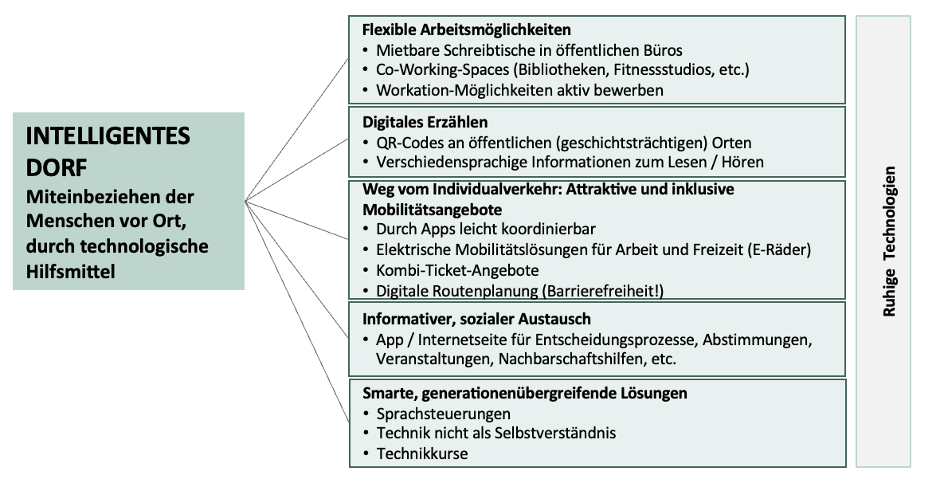
How can the findings of your master's thesis be put into practice? What are the top 5 concrete measures that can be taken to make rural areas more attractive to young people through technology?

What I like about my work is that I was able to identify concrete examples of implementation. Even simple measures can enhance rural areas for young people.

My top 5 recommendations for rural communities are:

1. Promotion of social infrastructure through technology:

Introducing digital platforms for information, announcements, voting and coordination of community activities and neighborhood assistance.

2. Improving mobility through technology-based solutions:

Introduction of coordinated mobility offers that can be controlled via an app. Combined ticket offers in particular increase attractiveness (combining car-sharing, buses, e-bikes, etc.). When planning digital routes, always offer barrier-free routes (suitable for wheelchairs, etc.) for comprehensive accessibility for all.

3. Creation of flexible working options and co-working spaces:

Provide creative workspaces (co-working spaces) to appeal to people with (increasingly common) flexible working models. Actively promoting rural areas as attractive places for "workation" also attracts young people.

4. Digital storytelling in places steeped in history:

Integrating technology to make stories and information accessible at historically significant places. The playful exchange of information generates interest among many young people. Use of QR codes to provide background information and emphasise the history of a place/street. (For example: Why is Jägergasse called what it is and what used to stand on such and such a street corner?)

5. Cross-generational technology accessibility:

Young people want to feel they can be happy where they live, even as they age. Therefore, creating inclusive technology solutions that are accessible to all age groups; providing technology courses, especially for older people, to improve their technological literacy. Introducing technology gradually and in consultation with the community for seamless integration.

Technologie als Impulsgeber für attraktive Dorfentwicklung

Source: Lisa Flora Buchauer

Of course, our final MAp meets question should not be missing today: What makes a truly unique hotel experience for you personally?

For me personally, a truly unique hotel experience is above all a "certain gut feeling". If I have a positive feeling when I first enter the hotel, I know it's something special.

A unique hotel experience for me is therefore a place that creates an emotional connection. And for me, such an emotional connection is created, for example, by offering various local experiences or creatively displaying the hotel's history in corridors / on the website.

And I have to admit: I'm also happy about the classic little chocolate on the bed pillow - preferably locally produced ;-)

About Lisa Flora Buchauer:

Lisa Flora was born in Innsbruck. Through her Bachelor's degree in Sociology and Master's degree in Sustainable Regional and Destination Development, holistic sustainability has become a matter close to her heart. She now lives in Zurich and is not only an expert in sustainability, but also a passionate coffee enthusiast and cyclist. Connect with her on LinkedIn.

Blog Block Image
Technology as a driving force for positive rural community development MAp Boutique Consultancy MAp meets Lisa Flora Buchauer

Add new comment

Comment

Order

Plain text

  • No HTML tags allowed.
  • Lines and paragraphs break automatically.
  • Web page addresses and email addresses turn into links automatically.
Categories
Types
sharing is caring

Today we meet Johannes Melin, technical sales expert at Orbital Systems, a company creating innovative products like showers, taps and more that reduce water and energy consumption.

Let’s find out how Orbital is leading today’s change for tomorrow’s water.

Untertitel
MAp meets Johannes Melin – technical sales expert at Orbital Systems.
Blog main image
How hotels can reduce their water and energy consumption with Orbital Systems MAp Boutique Consultancy
Paragraphs

Dear Johannes, thank you for your time! To begin with, please tell us a little bit about Orbital Systems and what your mission is.

Johannes: Orbital Systems is an innovation company whose mission is to make water appliances smarter and more efficient. Our products are made to save water and energy without compromising on the user experience.

Average consumption today exceeds 100 litres per person per day in the Western world. At Orbital, our goal is to reduce this number to 20 litres per day.

What inspired the founder of Orbital, Mehrdad Mahdjoubi, to launch the company? What major problems was he hoping to solve?

Johannes: As a student at Lund University, Mehrdad took part in an academic collaboration with NASA. Their mission was to uncover ways of sustaining life on Mars through innovative use of water. It was then that the revelation dawned on him; that groundbreaking ideas conceived for space could also revolutionise the way we manage water on our own Blue Planet. Fresh water is a finite resource, and its scarcity is a growing concern worldwide.

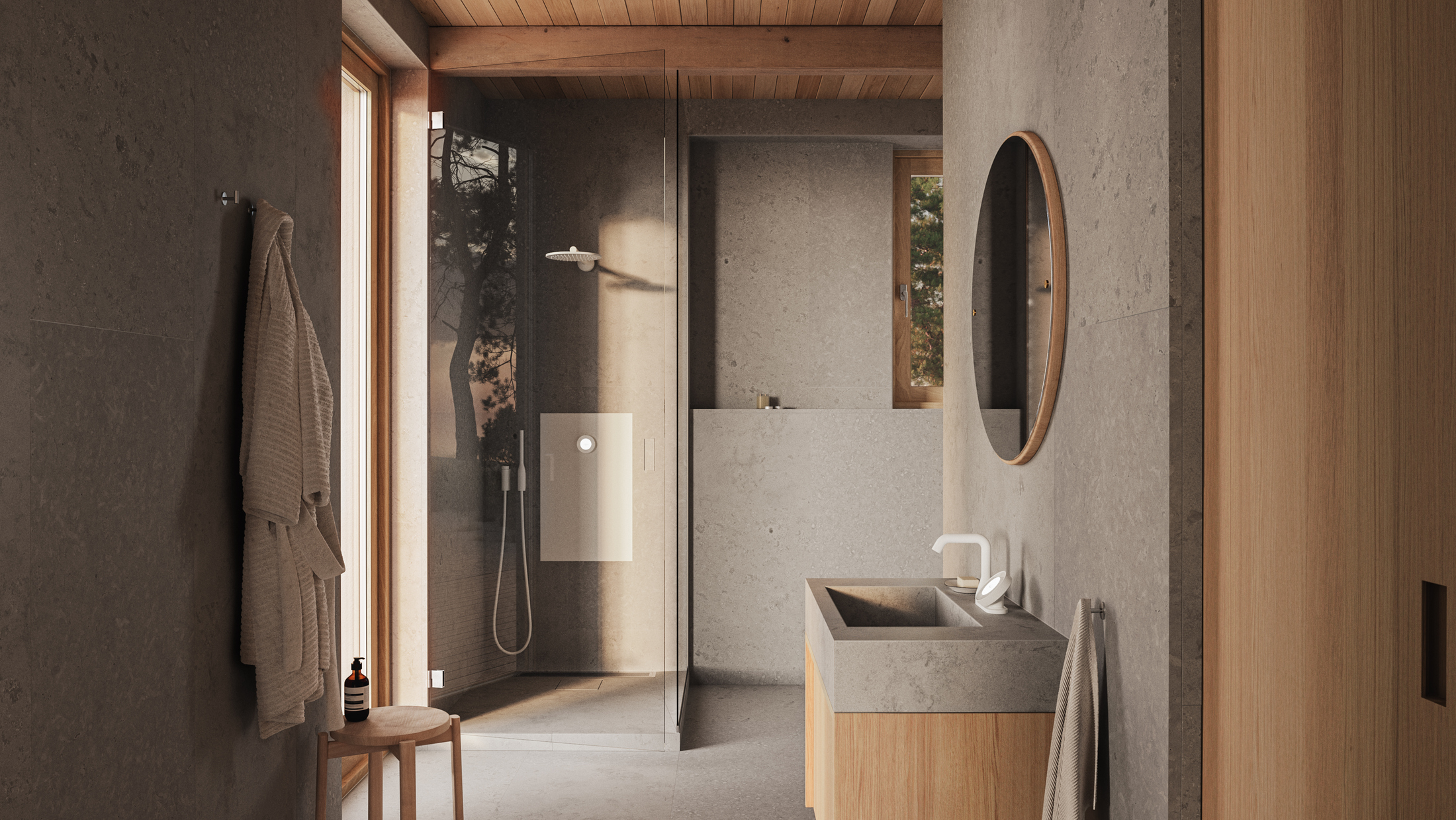
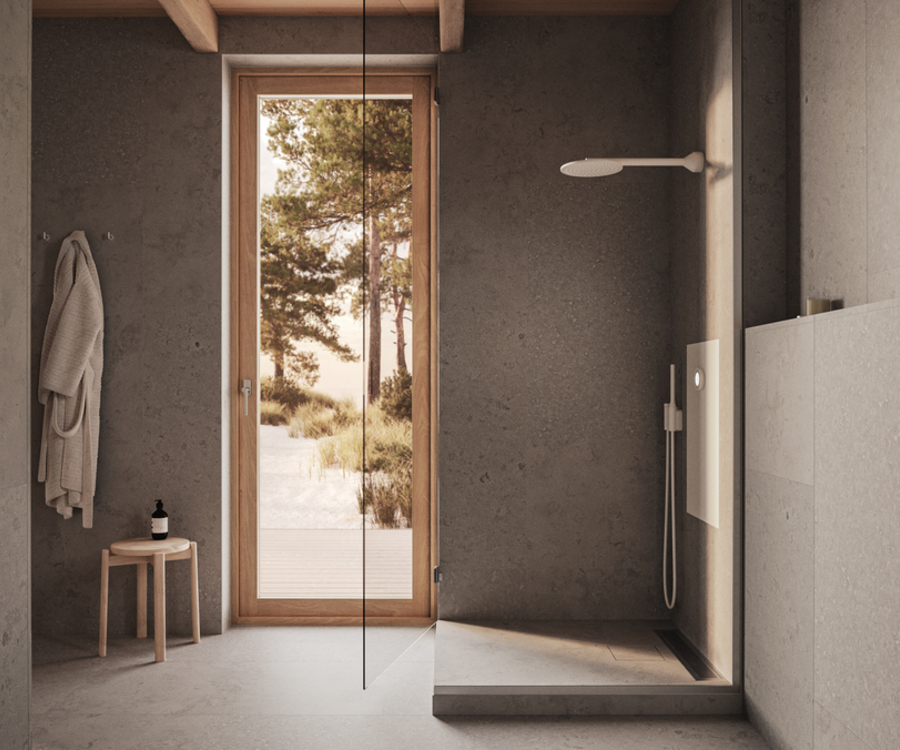
That's why our primary focus is on developing technologies that enable smarter use of water. Our advanced shower systems are engineered to drastically reduce water wastage without compromising on comfort or performance. By implementing Orbital showers in hotels, homes and businesses, we can significantly decrease water consumption on a global scale.

Can you tell us more about your products? What makes them so innovative and who are they made for?

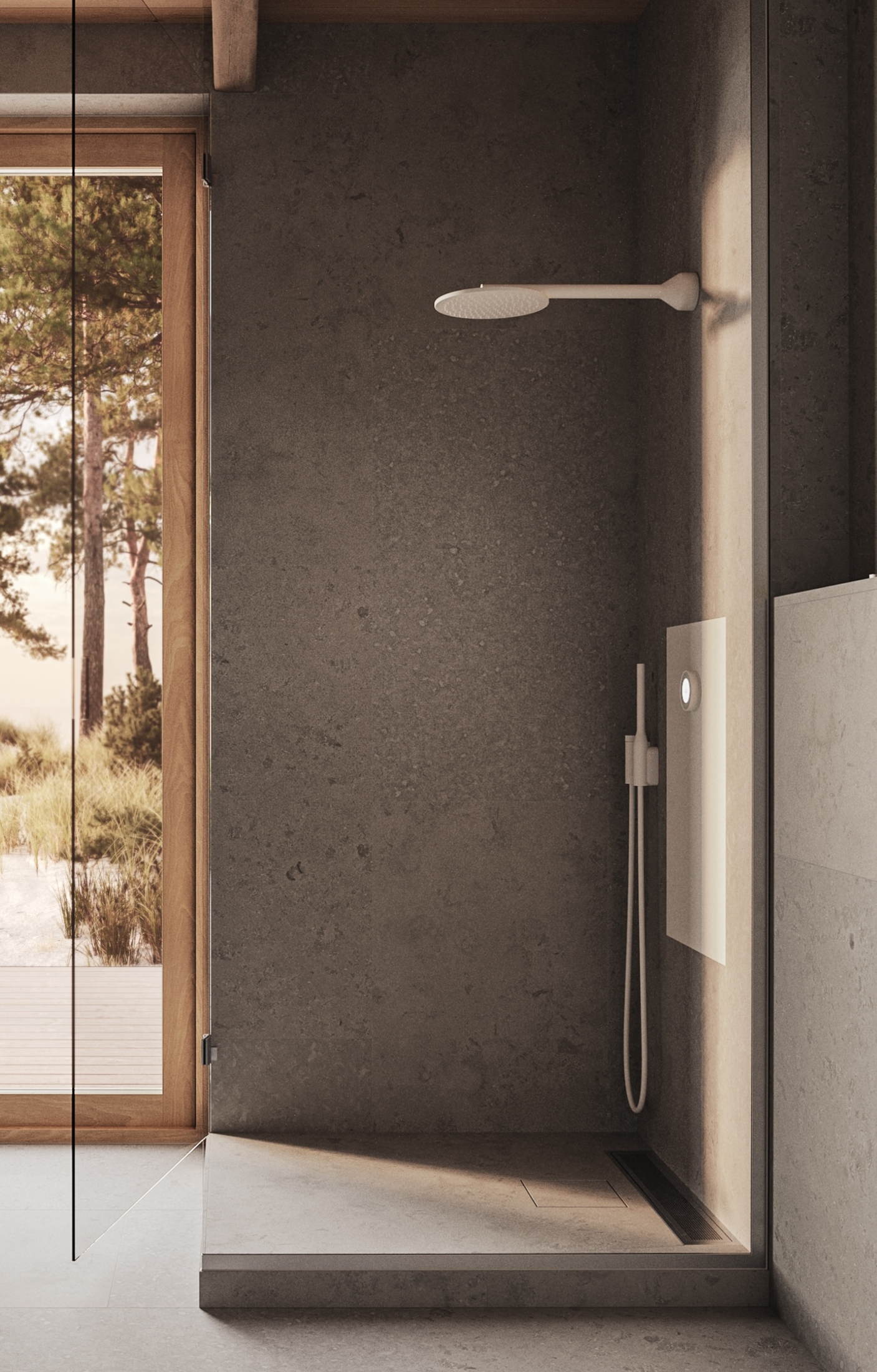
Johannes: Orbital Systems specialises in water- and energy-saving products that combine sustainability, innovative technology and design. Our key products utilise circular technology to reduce water and energy consumption by 50 to 100%, all while providing users with a premium experience featuring high flow and constant temperature.

The Scandinavian design is evident in our minimalist, functional and aesthetically pleasing approach, ensuring that our products not only perform efficiently but also enhance the visual appeal of the space they are used in. These products are ideal for environmentally conscious consumers, hotels, spas, gyms and private homeowners who value both sustainability and design.

When you look back at the hotels you've worked with and how you've supported them on their path to more sustainability with your products: What has been your biggest learning so far?

Johannes: Many hotels are not aware of how much they pay for the water and energy used by their showers. When we get a chance to look at their numbers, they are often very surprised when they realise the magnitude of the savings they could achieve by installing our products.

We have also learned that hotel guests are not very willing to change their behaviour to save water and energy. When they pay for a hotel stay, they often use the shower much more than they do at home. This is especially true in 4- and 5-star hotels where water consumption can be very high. To better suit the organisation of the hotel business, where it is common to have a property owner company and an operator company, we have introduced a financial model where the cost can be split between these two entities.

The property owner pays an amount equivalent to the cost of a conventional high-end shower system, while the operator pays a monthly or annual fee for a Care Plan that includes consumables and a 10-year warranty. With this setup, the hotel's operational expenses per room immediately become lower than with a conventional shower.

Many hotels are not aware of how much they pay for the water and energy used by their showers.
When we get a chance to look at their numbers, they are often very surprised when they realise the magnitude of the savings they could achieve by installing our products.
@JohannesMelin via @weareMAp

Nowadays, people are talking more and more about saving water but aren’t necessarily being smarter about their water usage. What are your three most important water-saving recommendations?

Johannes:

1. Reduce your shower time (or implement an Orbital Shower ;-) ).

2. Turn off the tap while brushing your teeth, fill the dishwasher and keep cold drinking water in a jar in the fridge.

3. Install dual flush toilets or, even better, the Orbital Tap for up to 100% greywater reuse from the toilet sink to toilet flushing.

Do you have any recommendations for hoteliers on how they can start and/or advance their sustainability journeys?

Johannes: Hire an expert who can take a holistic approach to analyse your current state and identify areas for impactful improvements.

Key actions to become more sustainable always include:

1. Implementing energy-efficient solutions

2. Reducing water consumption

3. Minimising waste

4. Choosing organic and locally sourced food

As always, our final MAp meets question: What makes a hotel experience truly outstanding for you personally?

Johannes: Freshly baked bread for breakfast, a comfortable bed in a cool and silent room, and of course a long and refreshing shower without any unnecessary waste of water and energy.

Wie Hotels ihren Wasser-und Energieverbrauch mit Orbital Systems reduzieren können

About Orbital Systems:

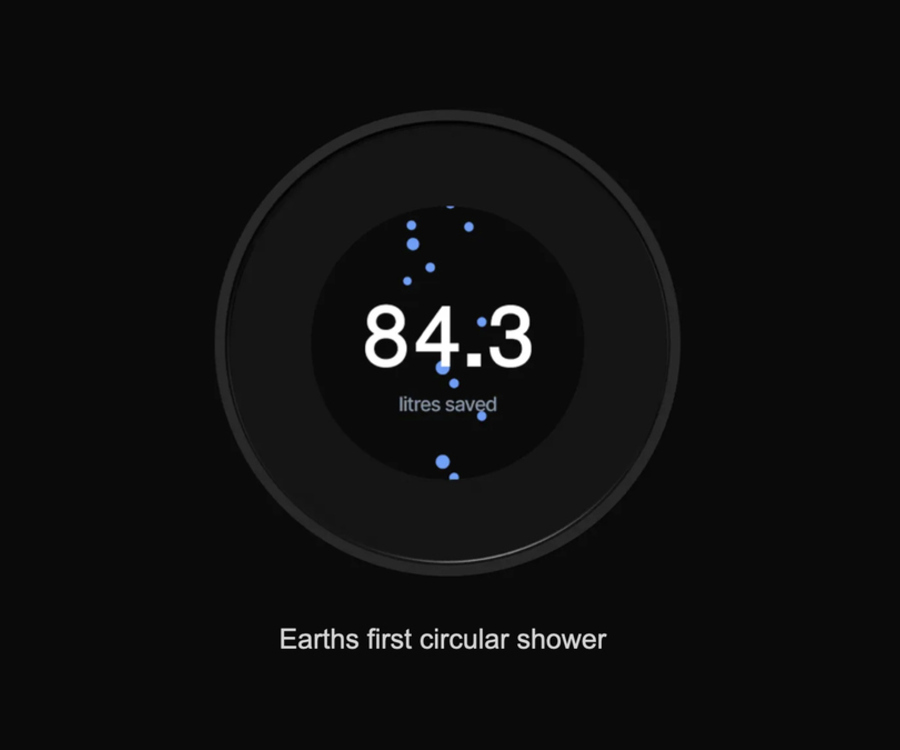
Orbital Systems is a Swedish company specializing in innovative water-saving solutions that combine sustainability with Scandinavian design principles. Their flagship products include the Orbital Shower, described as "Earth's first circular shower," and the recently introduced Orbital Tap, both of which utilize cutting-edge circular technology to significantly reduce water and energy consumption without compromising comfort or performance.

These products are designed for environmentally conscious consumers, hotels, spas, fitness centers, and private homeowners who value both sustainability and aesthetic appeal. Orbital Systems' commitment to water conservation is evident in their products' ability to purify and reuse water, potentially saving tens of thousands of liters per person annually.

The company's solutions have been installed in various locations across Europe, including high-end hotels and private residences, demonstrating their versatility and appeal to a wide range of users.

Blog Block Image
How hotels can reduce their water and energy consumption with Orbital Systems MAp Boutique Consultancy

Add new comment

Comment

Order

Plain text

  • No HTML tags allowed.
  • Lines and paragraphs break automatically.
  • Web page addresses and email addresses turn into links automatically.
Categories
Types
sharing is caring

We at MAp Boutique Consultancy believe brands themselves can be (and should be) sustainable. Over the last year, we’ve seen an increase in requests for creating sustainable hotel brands, which as a B Corp-certified agency, makes us very happy!

The fact is, consumers are no longer content with mere transactions; they seek stronger connections with brands that align with their values. As a result, brands are under increased scrutiny to not only provide high-quality products and services but also demonstrate their commitment to people and planet.

In this blog post, you’ll learn how to create a sustainable brand by:

  • Applying MAp’s 4 Ps of Sustainability
  • Developing well-designed visual identities
  • Auditing your supply chain
  • Choosing eco-friendly marketing materials
  • Following the principles of sustainable communication
Untertitel
Your blueprint for your brand's success
Blog main image
Schritt für Schritt zum nachhaltigen Branding
Paragraphs

What exactly is a sustainable brand?

Sustainable branding focuses on integrating sustainability into a brand's identity, values and practices. It goes beyond the superficial use of eco-friendly imagery or slogans and requires a deep commitment to environmental, social and economic responsibility. A sustainable brand has the power to influence change, drive consumer loyalty and inspire positive action.

Now that we've established the importance of sustainable branding, it's time to explore how to create a sustainable – and successful - brand.

Here's MAp’s step-by-step guide to help you get started:

1. Apply MAp’s proprietary framework on sustainability, aptly titled MAp’s 4 Ps of Sustainability: Purpose, People, Planet, Profit.

For every brand we create, we approach it holistically through the lens of the 4 Ps to determine how we can best portray a hotel’s Purpose, inspire and uplift its people, minimise its impact on the planet and economically benefit all of its stakeholders. When you enter into a (re-)branding process, we recommend to keep these 4 Ps close to you and ensure they are reflected in every aspect of your brand – from its visual identity to its verbal identity.

2. Develop well-designed visual identities that stand the test of time and are functionally adaptable.

Not only are branding or rebranding exercises a big commitment (financial and otherwise), they necessitate the production of new marketing materials and the elimination of old ones (= more waste).

When you practice sustainable branding, you overcome this by creating a visual identity that is timeless and therefore avoids becoming quickly outdated - instead, it grows with your business across existing and future product lines, projects, subsidiaries and more.

3. Audit your supply chain to source from sustainable suppliers, wherever possible.

Sourcing materials and services from responsible partners is essential – they should align with your sustainability values and meet your sustainability expectations. Beyond that, though, it’s important to give opportunities to small businesses, local ones, and those owned by women and people of colour when possible.

Also check if your partners have sustainability certifications in order to make sure that they walk the walk too!

Sustainable branding goes beyond the superficial use
of eco-friendly imagery or slogans and requires a deep commitment to environmental, social and economic responsibility.
@weareMAp

4. Choose eco-friendly marketing materials.

Today, there are many options for choosing environmentally-friendly materials and packaging, from biodegradable paper to eco-friendly printer ink. For your marketing material, we suggest to research and find the best partners and products to make your sustainable brand happen.

5. Follow the principles of sustainable communication and create an emotional connection with your audiences.

The brand verbal identity and messaging we develop follow MAp’s 10 Principles of Sustainable Communication: transparency, inclusiveness, cultural sensitivity, clarity, responsibility, authenticity, progress, relevance, inspirational, ethical.

We also recommend to employ emotional storytelling techniques to connect and appeal to audiences – not just your guests, but also your employees, partners and local community members. By following these steps, you can create a sustainable brand that not only resonates with your stakeholders but also empowers positive change in the world, making your brand a force for good.

The Sustainable Hotel Handbook: Communication

Master your brand's sustainability communication

Learn how to effectively communicate your sustainability activities with the help of MAp’s 10 Principles of Sustainable Communication and other practices to mitigate greenwashing and achieve more success.

Blog Block Image
A step-by-step guide to sustainable branding

Add new comment

Comment

Order

Plain text

  • No HTML tags allowed.
  • Lines and paragraphs break automatically.
  • Web page addresses and email addresses turn into links automatically.
Types
sharing is caring

Just like any other journey you embark on in life, your hotel’s sustainability journey should be a deeply personal one. Embracing sustainability as a hotelier is not just about putting up a "green" facade – it involves identifying your greater Purpose and committing to values that go beyond profit. Your sustainability journey should reflect your hotel's unique concept, the vision and mission that defines your brand and the aspirations you have for the world. It's not about following a cookie-cutter path; it's about forging your own, deeply personal trail.

In this blog post, you’ll learn how to start your hotel sustainability journey by:

  • Knowing the benefits of hotel sustainability
  • Checking your starting point
  • Defining your Purpose
  • Moving forward #stepbystep
Untertitel
A step-by-step guide to creating a sustainable hotel
Blog main image
Wie du deine Reise hin zu einem nachhaltigen Hotel-Business erfolgreich beginnst
Paragraphs

1. Know the benefits of hotel sustainability

Before you get started, you should know that sustainability is not just good for people and planet – it’s good for business too. Here we lay out the benefits of creating a sustainable hotel - talk about motivation!

1. Increased Attractiveness: According to Booking.com's Sustainable Travel Report (2021), 83% of global travelers consider sustainable travel important, with 61% expressing a desire to travel more sustainably.

2. Enhanced Guest Loyalty: Sustainable hotels communicate a message that is increasingly relevant in society. Conscious travelers prefer to support like-minded establishments and are more likely to return to such accommodations due to enhanced guest experience.

3. Greater Resilience: In turbulent times, sustainable hotels are better equipped to handle challenges and risks stemming from changes like supply chains, regulatory requirements, legal issues, disputes and reputation risks.

4. Increased Investment: Both the public and private sectors are increasingly investing in companies that deliver greater benefits to the world and practice sustainable economics.

5. Inspiration and Added Value: Sustainable hotels not only offer added value to their guests but also attract and retain top talents. They gain the best employees and partners, increase long-term business value, and have the capacity to support local communities.

6. Cost Savings: Energy-efficient technologies and reduced resource consumption can lead to substantial cost savings over time.

7. Positive Brand Image and Competitive Advantage: A commitment to sustainability can improve hotels’ reputations and can set themselves apart in a crowded marketplace, providing a unique selling point.

Sustainability is not about following a cookie-cutter path;
it's about forging your own, deeply personal trail.
@weareMAp

2. Check your Starting Point

You now know why it's worthwhile to embark on the journey of creating a sustainable hotel. But now you’re likely left with the question: HOW? And, most importantly, where do you begin?

Don’t fret! We’ve got a helpful, free tool to answer that question, as where you start depends on your hotel’s current status quo. Take 10 minutes to complete MAp’s Sustainability Assessment. Through targeted questions on topics like energy efficiency, social responsibility and resource management, you’ll not only receive a detailed analysis of your current sustainability standing, but also gain valuable insights for future actions.

Your commitment to sustainable change begins here: Take the free assessment NOW.

Why you should take the Sustainability Assessment:

  • Understand the current level of sustainability in your hotel and discover the starting point for further development. • Delve deeper into the holistic aspects of hotel sustainability.
  • Generate initial ideas and insights into how your hotel can be made more sustainable and successful.
  • Find out which The Sustainable Hotel handbooks and resources can be most helpful.
  • Receive tailored recommendations for the next steps in sustainable hotel development.

3. Define your Purpose

Now that the starting point for your sustainability journey is clear, it’s time to define your Purpose. At MAp, we tackle hotel sustainability through the lens of the 4 Ps of Sustainability - Purpose, People, Planet, Profit - and the first P we always start with is Purpose.

By discovering your Purpose, you can focus your sustainability journey on what matters most for your hotel: your sustainability priority – whether that’s People, Planet or Profit. Your Purpose informs what path you take, keeps your eyes on the road and inspires you – and your team – to move forward with passion and persistence. For example, if your hotel’s Purpose is “To bring people back to nature,” your sustainability priority might be environmental sustainability, Planet.

To help you get to the heart of your Purpose, ask these questions: WHY do you do what you do? WHY are you embarking on this journey? WHAT change do you wish to make in this world?

We’ve got a whole handbook dedicated to Purpose to guide you in identifying yours, integrating it into your operations and sharing it with the world – check it out HERE.

4. Moving forward #stepbystep

Your Purpose serves as your guiding star, identifying your sustainability priority, be it social (People), environmental (Planet) or economic sustainability (Profit). As a next step, it’s time to tackle that P. But great news! We’ve got handbooks dedicated to each P, which provide deep insights into each area and what action steps you need to take in order to achieve sustainability in that area. Once you've successfully addressed your first priority P, it’s important to not forget the other areas of sustainability and address them #stepbystep too. After all, to create a truly sustainable hotel, your hotel has to be holistically sustainable – or else it falls short. Like we said at the beginning, sustainability is a journey! What’s most important is that you take the first step. With this, we hope it’s clear what step that is.

The Sustainable Hotel Roadmap

Use this interactive RoadMAp to guide your journey to implementing sustainable hotel practices.

In this free interactive RoadMAp, we guide you through the 4 steps that you should take in order to start your journey to implementing sustainable hotel practices.

Blog Block Image
How to Start your Hotel Sustainability Journey

Add new comment

Comment

Order

Plain text

  • No HTML tags allowed.
  • Lines and paragraphs break automatically.
  • Web page addresses and email addresses turn into links automatically.
Types