
sharing is caring

No templates but bespoke design. Refined, handcrafted, and built to guide the right guests to book direct.

Certified B Corporation. Since 2014. Tailor-made, beautiful hotel websites. Built for real-world performance.

Untertitel
We create beautiful, high-performing hotel websites that express brand character and convert.
Linktext
Book a discovery call
Paragraphs
Proof in practice

Our hotel websites, brought online with style

We craft websites that carry your purpose, show your style, and bring the right guests home. Explore hotel projects that show how a refined, conversion-led website succeeds in the real world.

Your website is your most important channel

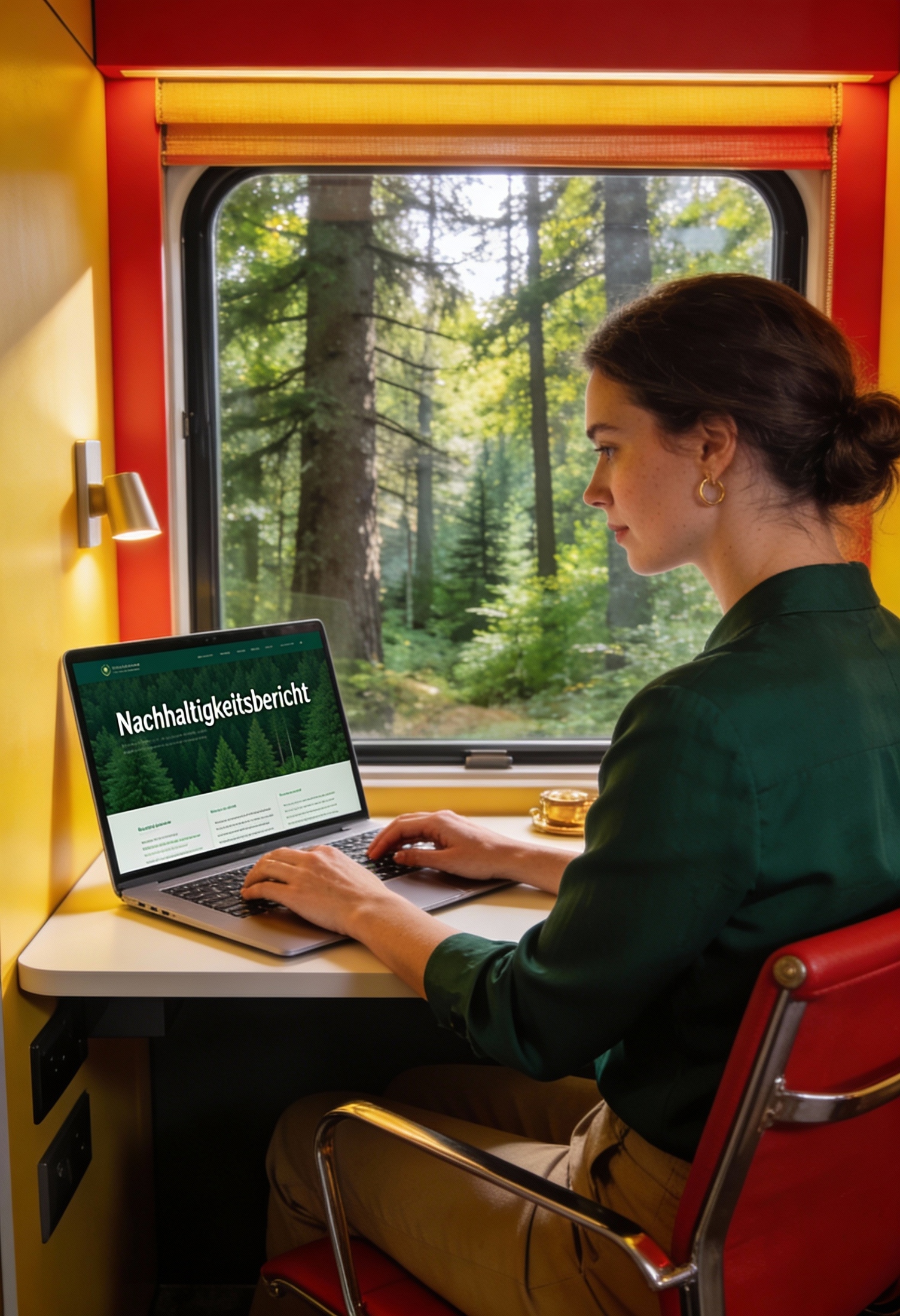
A hotel website is the digital front desk and the most important direct sales channel. It carries purpose, shows style, answers doubts and makes it easy to book. At MAp we turn brand clarity into a signature digital home for standout hotels.

Many hotel websites look fine, but do not book.

Scattered content, slow pages and unclear paths to reserve create hesitation. Brand stories do not carry through. Trust drops, direct bookings suffer and teams end up patching instead of building a coherent brand experience.
 

  • Scattered content and unclear structure, guests cannot find what matters
  • Unclear calls to action and weak paths to book
  • Brand character fades, the hotel feels interchangeable
  • Sustainability claims feel generic, which weakens trust and conversion
  • Teams feel trapped between templates and tools, instead of building a coherent brand experience
  • Creating a website feels overwhelming, decisions stall and scope creeps

Our solution, and why it is unique

Many agencies lead with technology or templates. We lead with brand and guest journey, then choose the right design and build approach. That is why our sites feel distinctive and perform with consistency.
 

  • Story first, then technology. The brand narrative and guest journey drive every decision
  • Direct-first architecture. Clear paths to book, persuasive content and supportive prompts
  • Sustainability you can speak about. Credible, human storytelling that strengthens trust
  • Performance and access for all. Fast pages, clear structure, inclusive design and easy content updates
  • Boutique attention, global calibre. You work with senior minds who care, from strategy to launch
  • One solution, from one hand. We deliver strategy, copy, design, development and launch, so the website is coherent and built to perform.

What you get

A tailor-made hotel website, built around story, structure, proof, performance.
 

  • Story: A clear narrative that expresses purpose, personality and signature experiences, translated into page-by-page messaging that feels unmistakably the hotel
  • Structure: A guest-centred information architecture with intuitive navigation and decision pathways, designed to reduce uncertainty and guide guests to book
  • Proof: Trust signals that hold up, including credibility blocks, reviews and press modules, and sustainability content shaped around evidence, not labels
  • Performance: A high-performing, mobile-first website direction with clear calls to action, search fundamentals, content structure that works in search engines and artificial intelligence tools, and measurement foundations

Why a bespoke hotel website pays off

A conversion-led website helps a hotel to:
 

  • Increase direct bookings by making the hotel easy to understand and easy to book
  • Reduce reliance on third parties by improving enquiry quality and booking intent
  • Protect premium positioning with clear differentiation and consistent brand expression
  • Build trust with proof-led content, including credible sustainability storytelling
  • Brief partners faster and avoid costly detours through clearer decisions and structure
  • Create a website that stays useful over time, with easier updates and stronger consistency

A distinctive website that books is not decoration. It is a performance asset that earns trust and brings the right guests home.

RoadMAp to a website that attracts and books

#stepbystep

1. Discovery

We define audience, priorities and the guest journey, then set decision filters for fast, confident progress.

Outcome: clarity on positioning, structure, content priorities and what proof must be shown.

2. Creation

Every website is handcrafted and hotel-specific. We translate story and brand into structure, copy and design direction that converts.

Outcome: a coherent site architecture, core page copy, proof modules and build-ready direction for development.

3. Launch and optimisation foundation

Websites only matter when they perform. We support quality assurance and launch readiness, then define the improvement priorities.

Outcome: a live website designed to convert, with measurement in place and a roadmap for continuous performance.
Hotel Websites

What is hotel website design, and what makes it different at MAp?

Hotel website design at MAp is a strategic and creative service that turns positioning into presence and bookings. We lead with story and guest journey, then build the structure and content that helps guests decide and book with confidence.

Are you a template provider?

No. We are not a template vendor or a production factory. Every website is tailor-made to reflect the hotel’s purpose, style and commercial priorities.

Do you build the website end to end?

We build it. End to end, from one hand. We lead strategy, structure, copy, design and development, then launch with quality assurance and measurement in place. You get one accountable partner and one cohesive website, built to perform.

What is included in a hotel website project?

End to end, from one hand. We lead strategy and structure, positioning and copy, design and development, guest pathways and calls to action, proof-led credibility blocks, and the full search engine optimisation and artificial intelligence optimisation foundation. We then launch with quality assurance and tracking in place, so performance can be measured and improved.

How long does a hotel website project take?

Timing depends on scope, content readiness and stakeholder availability. We define milestones and decision points at kick-off to keep progress focused and efficient.

Can you collaborate with our agency, designer or internal team?

Yes. We align partners around a shared structure and clear content direction so decisions stay consistent. 

Discover our approach

What is included in a hotel website project?

End to end, from one hand. We lead strategy and structure, positioning and core copy, design and development, guest pathways and calls to action, proof-led credibility blocks, and the full search engine optimisation and artificial intelligence optimisation foundation. 

We then launch with quality assurance and tracking in place, so performance can be measured and improved.

How do you ensure the website drives direct bookings?

We design the site around booking decisions, clear paths to book, persuasive page flow, supportive prompts and less friction throughout the journey. 

In parallel, we build the search engine optimisation and artificial intelligence optimisation foundation, so the right guests can actually find the hotel, understand it fast and choose to book direct.

How do you create a sustainable hotel website without greenwashing?

We lead with proof and keep claims specific, human and verifiable. Sustainability becomes part of the guest journey and brand story, supported by evidence and clear next steps, not labels. 

If helpful, we share our practical guide on what makes a hotel website sustainable, from lighter pages and greener hosting to accessibility and measurement. 

Read the guide

Show Blocks
sharing is caring

Every day, we work with people who want to make hospitality better – for all. But what does “better” actually mean? And how do we know if we are getting there?

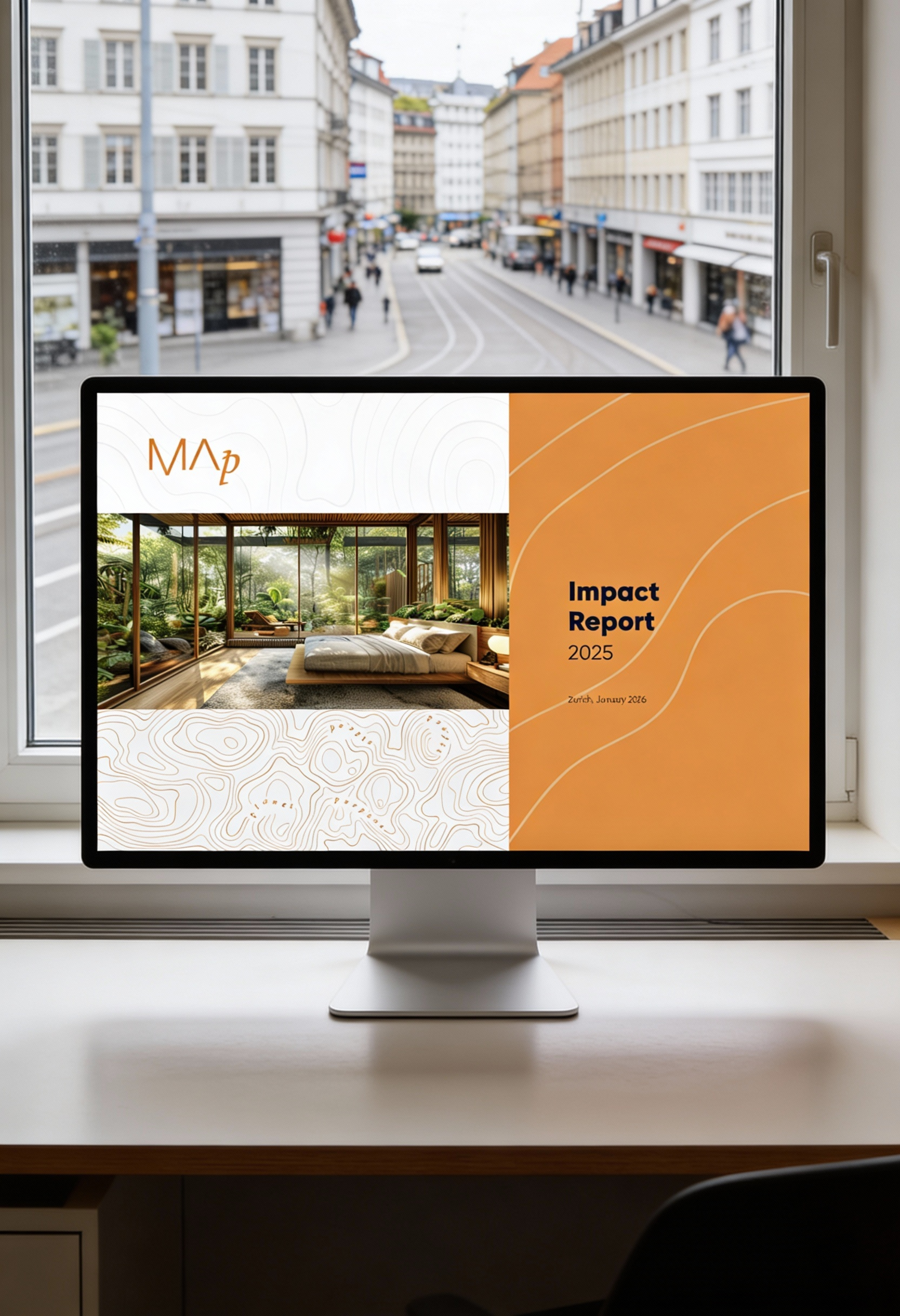
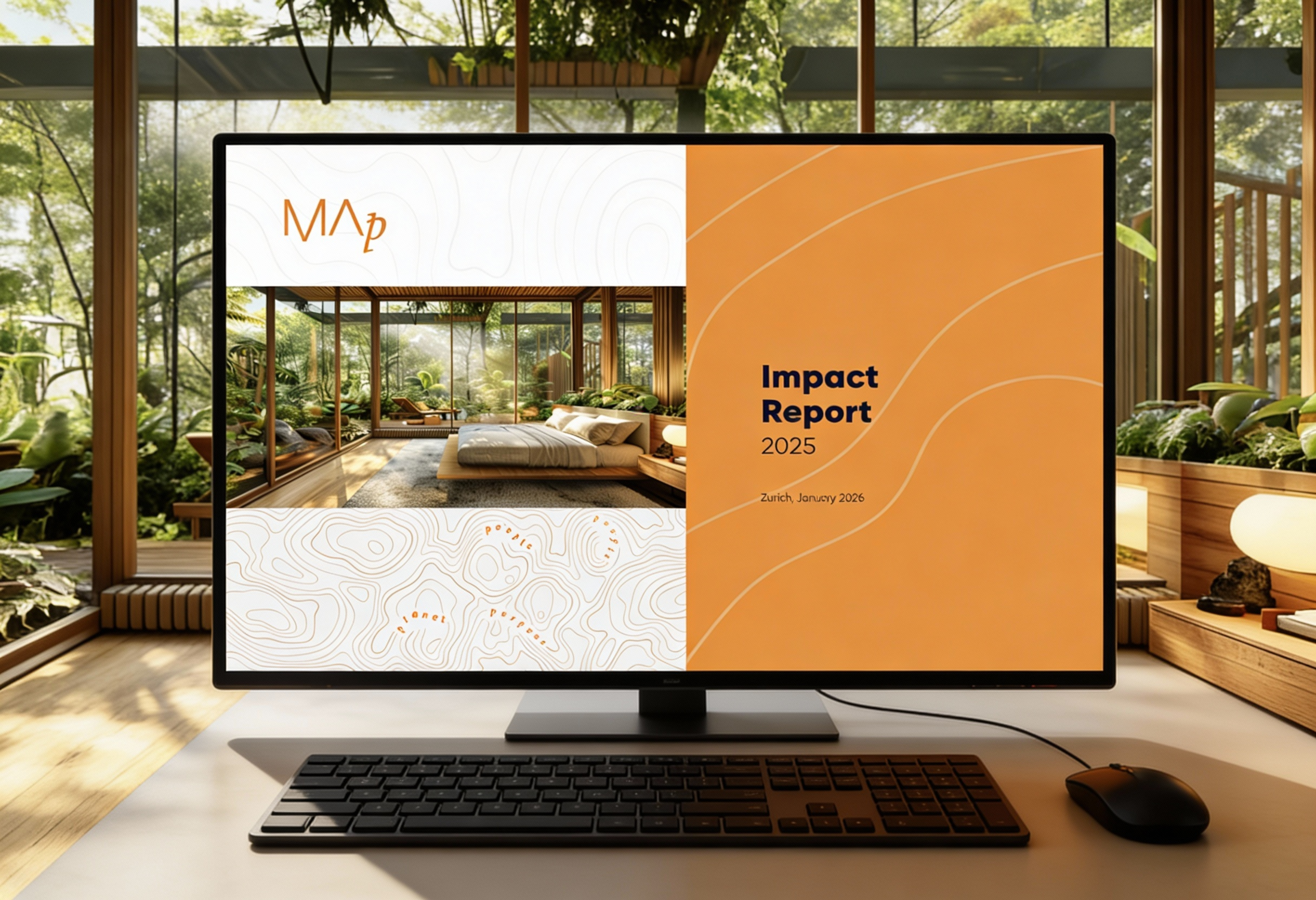
Our Impact Report 2025 reflects on exactly that: what we did, what worked, where we learned and how we measure progress through impact reporting – and what is next on the MAp.

At MAp, we are not in the business of buzzwords. As a Certified B Corporation, we hold ourselves to high standards – in strategy, governance and in how we treat people, planet and purpose.

Our Impact Report is how we stay accountable. But more than that, it is an invitation: to everyone we work with, partner with or simply cross paths with. To build, question and celebrate better ways of doing business.

Untertitel
Why impact matters – and how we measure it
Blog main image
MAp Impact Report 2025: impact reporting for sustainable hospitality
Paragraphs
There is no way back.
Only #onwards towards a future worth staying for.
– MAp Boutique Consultancy

How we measure our impact

We use the B Corp impact assessment lens across governance, workers, community, environment and customers – because impact should be clear, comparable and grounded in evidence.

The 2025 edition shares our progress across four key dimensions:

  • People – from our core team to the communities we serve
  • Planet – from low-impact decisions to long-term shifts
  • Profit – not as the goal, but as the enabler for good
  • Purpose – the reason we do what we do, and the compass that keeps us on track

And how are we doing that? By living our value of Positivity (yes, we do like our Ps 😊) – because Positivity is the energy and attitude that drives everything we do.

What you will find inside the report

  • Our focus areas and key milestones from 2025
  • What moved the needle, and what did not
  • The learnings we are taking forward into 2026
  • Our next priorities – with clarity on what is next

We also share where we missed the mark, what surprised us and why we stay fiercely optimistic. Because one thing is certain: there’s no going back. Only #onwards. ☻ 

Impact Report

MAp's Impact Report 2025

MAp’s Impact Report 2025 brings our year into focus – what we worked on, what moved the needle, and what we learned along the way. It shares how we measure impact through the B Corp lens, plus our priorities for what is next on the MAp.

Blog Block Image
MAp Impact Report 2025: impact reporting for sustainable hospitality

Add new comment

Comment

Order

Plain text

  • No HTML tags allowed.
  • Lines and paragraphs break automatically.
  • Web page addresses and email addresses turn into links automatically.
sharing is caring

Sustainability is no longer a nice-to-have – it's an essential part of every future-facing business, also in hospitality.

If your hotel plans to report in 2025 – or wants to be ready for a stronger 2026 report – now is the moment to make a start. Sustainability is not a nice-to-have, it's key for any future-facing business in hospitality. A sustainability report shows what you stand for, proves your values are real, and builds trust with guests, partners and your team.

This post walks you through six practical steps to begin or improve your reporting – no fluff, no green theatre, just clear, real-world advice for hotels with purpose.

Ready to get started today? Get your free guide here.

Untertitel
Six practical steps to pave the way for your hotel’s successful sustainability reporting
Blog main image
How to Write a Sustainability Report for Your Hotel
Paragraphs

What is a hotel sustainability report? And why do I need one?

Think of your sustainability report as a MAp of your hotel’s sustainability journey: why you started, where you are, where you want to go – and how you are getting there.

Yes, it includes facts and figures. But it is also a narrative – a chance to tell YOUR authentic story. Why have you started this journey? Why does the world (and its people) need your hotel? What are your (sustainability) objectives? What have you already done to reach them? What worked well? What challenges did you face? What are your next steps?

A good sustainability report makes your efforts visible and tangible. It shows your stakeholders (guests, team, investors, partners, community) what drives you and where you are heading. And it helps you to track progress.

In short: A sustainability report is not about being perfect. It's about being transparent, committed, and ready to do better.

Before you begin

Start with two things: define your sustainability goals and establish your starting point. Decide what matters most and what aligns with your hotel’s purpose and values. Set goals that are specific, measurable, achievable, relevant and time-bound. Whether you begin with carbon emissions, social impact or supply chains – clarity at the start makes every step easier later. Then measure where you stand: how sustainable is your hotel today? Take the assessment here.

A sustainability report
is like a really great scrapbook
MAp Boutique Consultancy

Step 1: Secure management commitment

A sustainability report succeeds when leadership sets the tone. Make it explicit that sustainability is core to your strategy, not a side project or a necessary evil. Clarify YOUR why – the change you want to see in the world – and translate that purpose into one-year goals with your team. Allocate the resources to deliver and hold the cadence.

Step 2: Appoint a dedicated person or team

You don't have to do everything on your own – and you shouldn't.
Assign someone (or a small team) to lead your hotel’s sustainability activities and the reporting process. Ideally, involve people from different departments: operations, housekeeping, kitchen, marketing, … 

Look for team members who bring both skills and motivation – whether it is data analysis, communication, or just a strong belief in doing better.

Already have a sustainability squad? Great! Then head to our free download The Sustainable Hotel Handbook: Introduction – it offers even more input for your journey.

Step 3: Select a sustainability reporting framework

You are not starting from scratch – and you do not have to reinvent the wheel. Several frameworks exist to help you structure your report:

Even if you do not adopt a framework in full, it can still spark useful ideas. Choose what fits your size, target group and purpose. Our free download shows you how to write your own sustainability report, aligned with the standards above.

Still searching for even more inspiration before you start yourself? Our Communication Handbook highlights best-practice examples from hotels that are already reporting. You might want to start there.

Hotel-Nachhaltigkeitsbericht – so gelingt er wirklich

Step 4: Engage your stakeholders

A strong report is not written in isolation. It reflects the perspectives of the people your hotel impacts: guests, employees, suppliers, local community members, investors – you name it.

Based on your reporting framework and the first information you added and filled in: ask questions. Digg deeper. Create feedback loops. Make room for dialogue. And communicate honestly about what you are doing – and why.

Trust grows when people feel seen and heard. That applies to sustainability, too.

Step 5: Use third parties to build trust

You do not have to prove everything on your own. Third-party verification adds credibility – and often, clarity.

External audits or certifications show that you are serious. They help you make reliable claims. And they often bring fresh ideas for improvement. For example, in 2021 we at MAp decided to walk the talk and become a certified B Corporation.

Each certification offers a structured path and sends a strong message: We care. And we are willing to be measured.

Step 6: Write and share your report

This is where everything comes together. Your sustainability report should lay out your commitments, actions, metrics and learnings – in a way that is both honest and understandable.

Share your purpose. Share your process. Share your numbers – and your next steps.

And remember: your report is not a one-time thing. It is part of your very personal and authentic sustainability journey. One that becomes more meaningful, visible and impactful over time.

The grand finale: Need a hand?

We know writing your first sustainability report can feel overwhelming. That is why we've created the free template:
The Sustainable Hotel Insights: How to Write a Sustainability Report for Your Hotel

It gives you structure, guiding questions and a head start. So you can focus on what matters: your content, your impact, your story.

And if you ever get stuck – we are happy to help! ☻ 

Thank you for embarking on this journey with us! Let’s build a more hospitable and purposeful Planet – together.

Free Download

Template for credible sustainability reporting in the hospitality sector

In this free template, you will find information, guidance and practical tips on how to prepare a sustainability report for your hotel.

Blog Block Image
How to Write a Sustainability Report for Your Hotel

Add new comment

Comment

Order

Plain text

  • No HTML tags allowed.
  • Lines and paragraphs break automatically.
  • Web page addresses and email addresses turn into links automatically.
Types
sharing is caring

In our MAp Client Stories we feature people we empower through our services – hospitality leaders who set new standards with bold ideas. We explore their paths, key learnings and the special something that makes their concepts stand out.

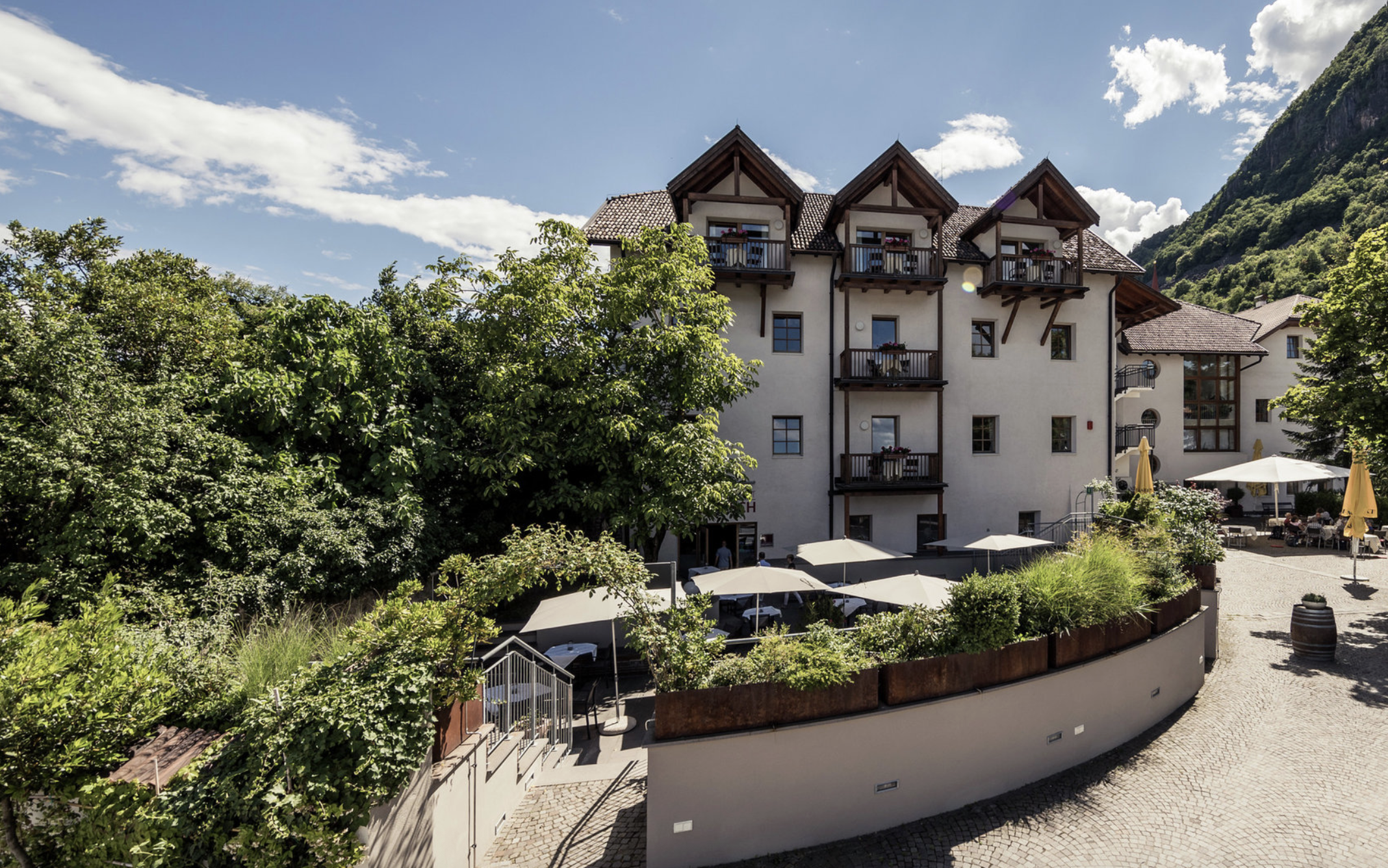
This time we speak with Christine Karadar, who leads Hotel Masatsch in Kaltern, where diversity is not an add-on – it is the concept. As a fully accessible hotel, restaurant and event venue run by Lebenshilfe South Tyrol, Masatsch creates spaces where people meet and connect – regardless of ability, background or circumstance. For guests, for employees and for the wider region. 

We support Hotel Masatsch with focused marketing and web services – sharpening their message, strengthening their website and amplifying what makes this place special.

Untertitel
MAp Client Stories: In conversation with Christine Karadar, host at inclusive Hotel Masatsch in Kaltern am See (South Tyrol)
Blog main image
Wie gelingt soziale Nachhaltigkeit im Hotelalltag – jenseits von Symbolik und Sonntagsreden?
Paragraphs
Everyone is welcome here
– with or without disabilities.
Christine Karadar, Hotel Masatsch

Christine, thank you for taking the time to speak with us today! Before we dive in: how did you first come to Masatsch? 

Christine: I had been following Hotel Masatsch with great interest for quite some time – I was fascinated by how this concept works. My background is actually in very different fields: I worked in event management and also in the social sector, especially on topics such as care and inclusion – how to better integrate people with disabilities into everyday life. 

For me, Masatsch has always been a prime example of how this can succeed. When I saw they were looking for new leadership, I applied – and got the job. Now I am fully immersed in this unique project. At first glance it is a social initiative, yes – but at the same time, it is a perfectly normal hotel for all guests. Everyone is welcome here – with or without disabilities.


Inclusion is part of daily life at Masatsch. What makes this place so special to you? And what do you do differently from a "classic" hotel? 

Christine: Hotel Masatsch really is a special place – it has a kind of energy, if I can put it that way. Even before I worked here, I often came by just to sit in the café or have lunch at the restaurant. And every time, I felt the same thing: this place just feels good. There is a kind of positive energy here. 

Now that I am part of the team, I feel it even more. What makes this place so unique is the work with our staff with disabilities. They bring such joy and enthusiasm to their work – it is contagious. You feel it the moment you arrive. 

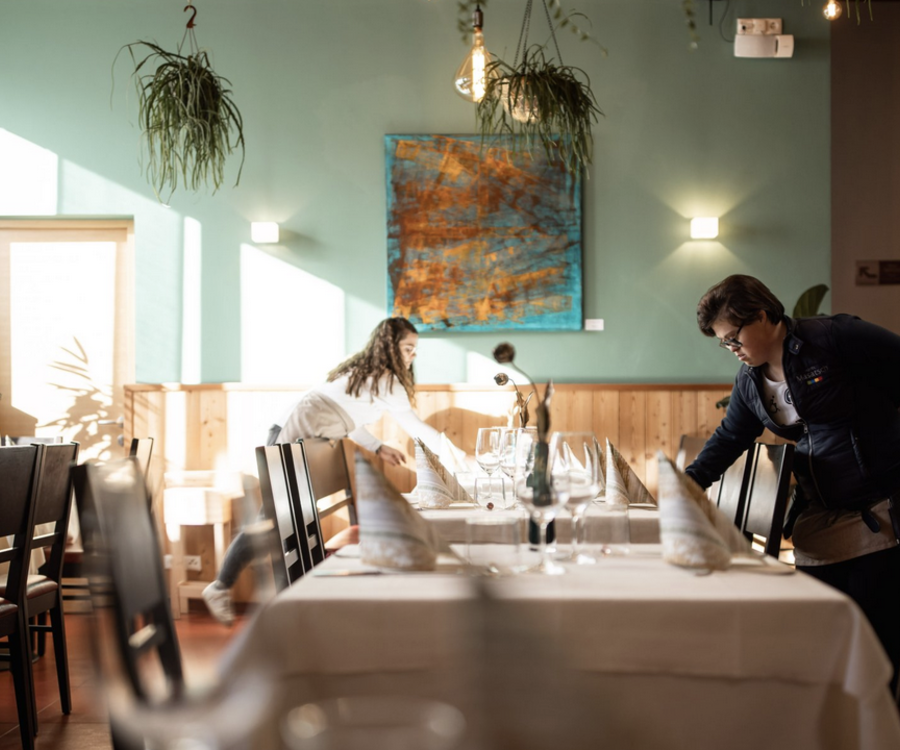
Every morning, one of our employees at the bar greets me with a coffee and a smile and says, "So good to see you!" Around 40 percent of our team – about 30 people – have disabilities. They work in the kitchen, service, housekeeping, or in our garden project, where we grow our own vegetables. Of course, this comes with daily challenges. We support, train, and accompany our team constantly. Many things have to be repeated and practiced often – almost like a school. But that is exactly what makes our work so meaningful.

So gelingt soziale Nachhaltigkeit im Hotelalltag

You have a very diverse team with different backgrounds and abilities. What does it take to make this work? And what can other hotels learn from it? 

Christine: To work here, one thing matters most: genuine interest in people – and empathy. Our team is diverse and full of different strengths. You have to be willing to share knowledge, support others, and practise things together until they stick. 

Our team leads – the head chef, the service managers – carry a lot of responsibility. They are not just supervisors, but coaches, motivators, mentors. They need to be patient and adapt to each person. The overall pace is a bit slower here – and that is a good thing. 

I often say: when you work here, you automatically shift down two gears. That creates space for real connection. What can other hotels learn from this? That inclusion is not a burden – it is a huge enrichment. When people with different abilities are truly integrated, the work environment becomes more patient, more respectful, more human. And guests feel that.


Many hotels want to become more inclusive but struggle to take the first step. What are the most common misconceptions – and what really matters? 

Christine: For me, social sustainability means not just including people with disabilities – but giving them real opportunities. The biggest misconception? That inclusion is an extra task. Something "on top". But it is not about being perfect – it is about mindset. 

It takes openness, patience, and a willingness to meet people at eye level. Once you take that step, something fundamental shifts: in the team, in your interactions, and in the entire culture of the business. That is what social sustainability really means to me.


Was there a moment when you thought: this is exactly why we are doing this? A memory or experience that stayed with you? 

Christine: Yes, absolutely. One moment from this summer stands out. We hosted a group from Germany – the Pfennigparade Foundation, which supports children and young people with severe disabilities. More than 20 people stayed with us for two weeks. It was a challenge, but also a very special experience. 

On their last evening, they organised a little farewell celebration for us. One of the girls – she was maybe nine years old – could not walk at all when she arrived. She used a walking frame and needed a lot of support. On the final evening, she suddenly walked up to me unaided, beaming with pride, and handed me a thank-you note for the whole team. She said these had been her best two weeks in a very long time. 

That moment really moved all of us. It reminded me why we do what we do. Moments like that show us that this work matters. It makes a difference.


Amazing, thank you for sharing! And to finish – our Quick 5, which we ask in every MAp Client Story:

  • A hotel that inspires you: Hotel Frida am Wald
  • A book or resource everyone should read if they want to be more sustainable: I honestly do not have one!
  • A destination on your to-travel list: Kyrgyzstan – it is at the top of my list.
  • quote to live by: “Go confidently in the direction of your dreams. Live the life you have imagined. As you simplify your life, the laws of the universe will be simpler.” – Henry David Thoreau, Walden (1854)
  • Your biggest wish for the future: A life full of meaningful experiences, connection, good health, and true friendship.

About Christine Karadar

Christine is the general manager of Hotel Masatsch in Kaltern, South Tyrol. She brings a background in event management and social work – and leads with a clear belief in people, inclusion, and the power of doing things differently. 

Hotel Masatsch is an inclusive, fully accessible hotel in Kaltern, near the Kalterersee in South Tyrol. Run by Lebenshilfe Südtirol, it offers barrier-free holidays for all guests – with or without disabilities – and creates meaningful encounters between people of all abilities. The hotel is especially designed for guests with mobility needs and specialises in wheelchair-accessible stays in the region.

Free Download

The Sustainable Hotel Insights. 6 Principles to make your hotel more socially sustainable

In this free guide you will receive a concise introduction to social sustainability in hotels – clear and directly actionable. The six principles set out concrete steps for guests and your team – from inclusive hospitality to holistic accessibility. Plus: a short best-practice example, key facts and resources to help you get started straight away.

Blog Block Image
Wie gelingt soziale Nachhaltigkeit im Hotelalltag – jenseits von Symbolik und Sonntagsreden?

Add new comment

Comment

Order

Plain text

  • No HTML tags allowed.
  • Lines and paragraphs break automatically.
  • Web page addresses and email addresses turn into links automatically.
Categories
sharing is caring

A good hotel is not defined by how many stars it has – but by how welcome it makes you feel. Sometimes that means offering a ramp. 

Sometimes a little extra time at check-in. Sometimes simply the feeling: This place respects me. And that's exactly where accessibility begins – in the mind, in the heart, in your attitude. Less about technology. More about true hospitality. 

It's not about ticking boxes. It is about asking: Who feels comfortable here? Who will come back – and who might not? 

This blog post invites you to rethink accessibility. Not as an obligation. But as a powerful opportunity to make your hotel more open, more human – and more welcoming to everyone who comes through your doors.

Untertitel
An invitation to rethink accessibility in hospitality
Blog main image
Barrierefreiheit im Hotel: Gastfreundschaft für alle
Paragraphs

Accessibility is a mindset, not a checklist

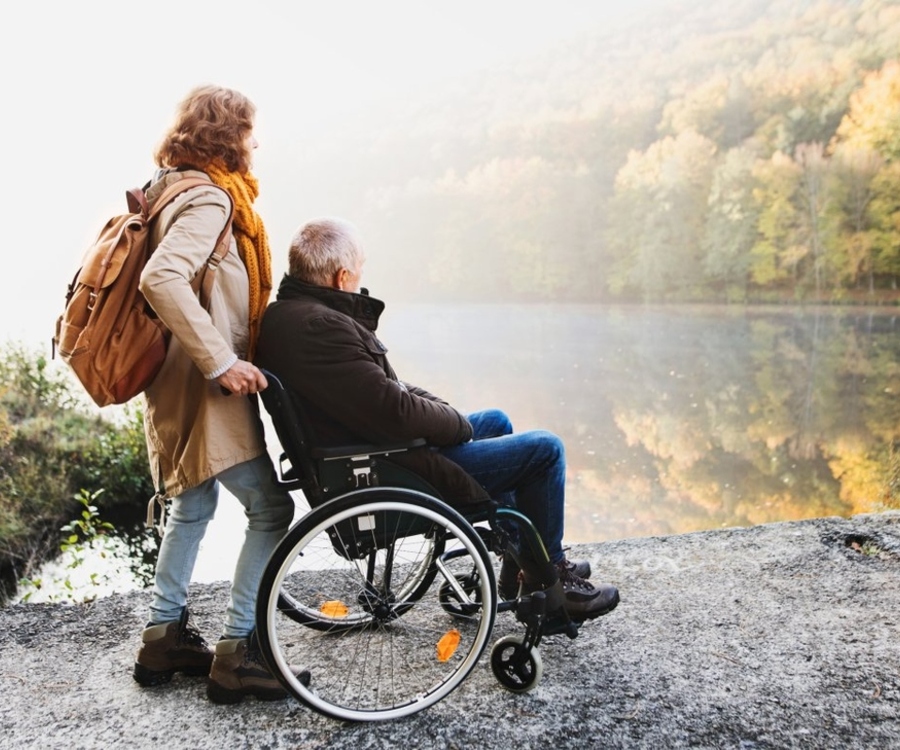
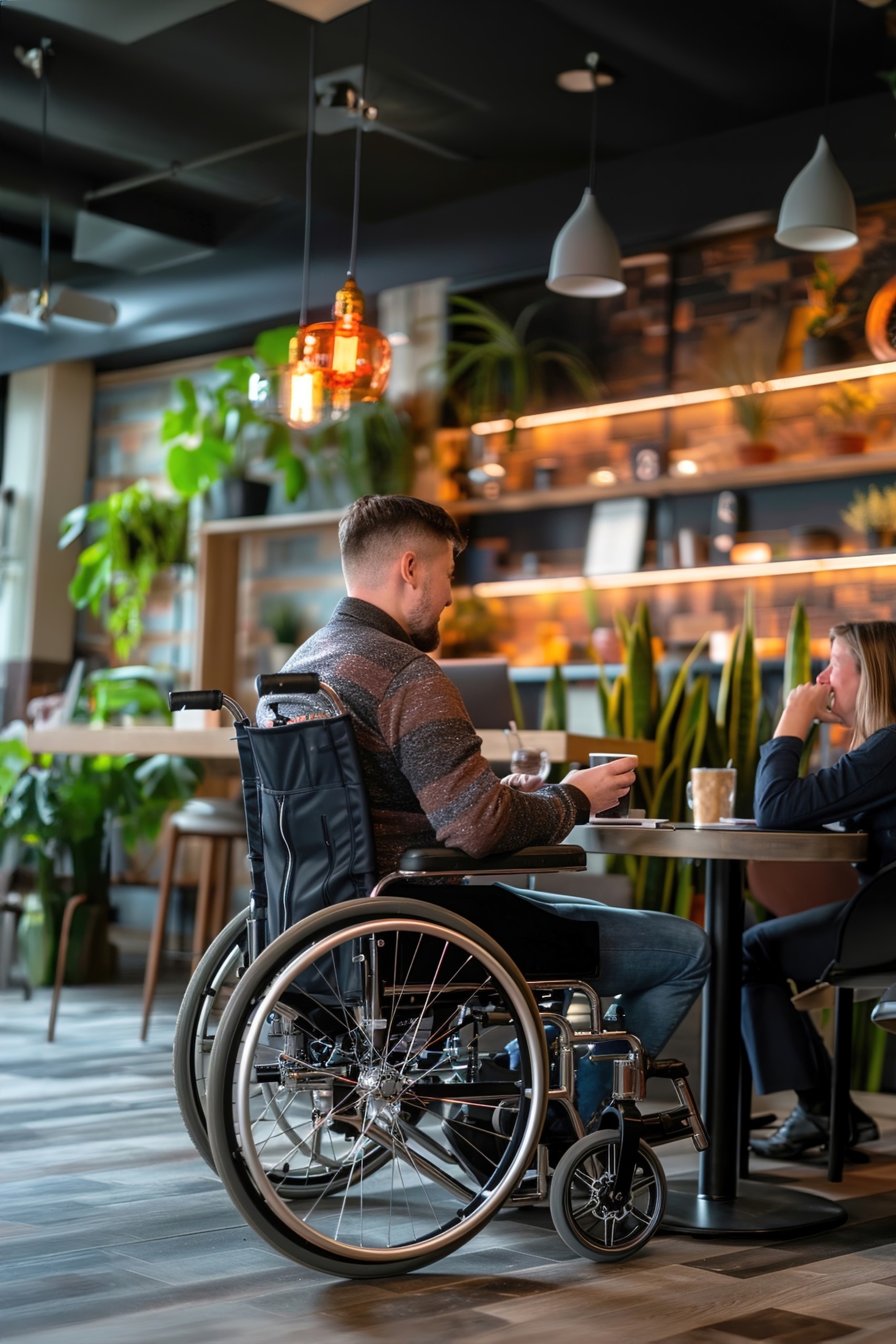
Accessibility is not just about someone in a wheelchair being able to enter your building. 

It's about making them want to. Because the reception is friendly. The signage is clear. The room is well thought out. And no one has to explain themselves. It's not about having perfect solutions. It is about a clear, honest intention: “We want you to feel at ease – just as you are.” 

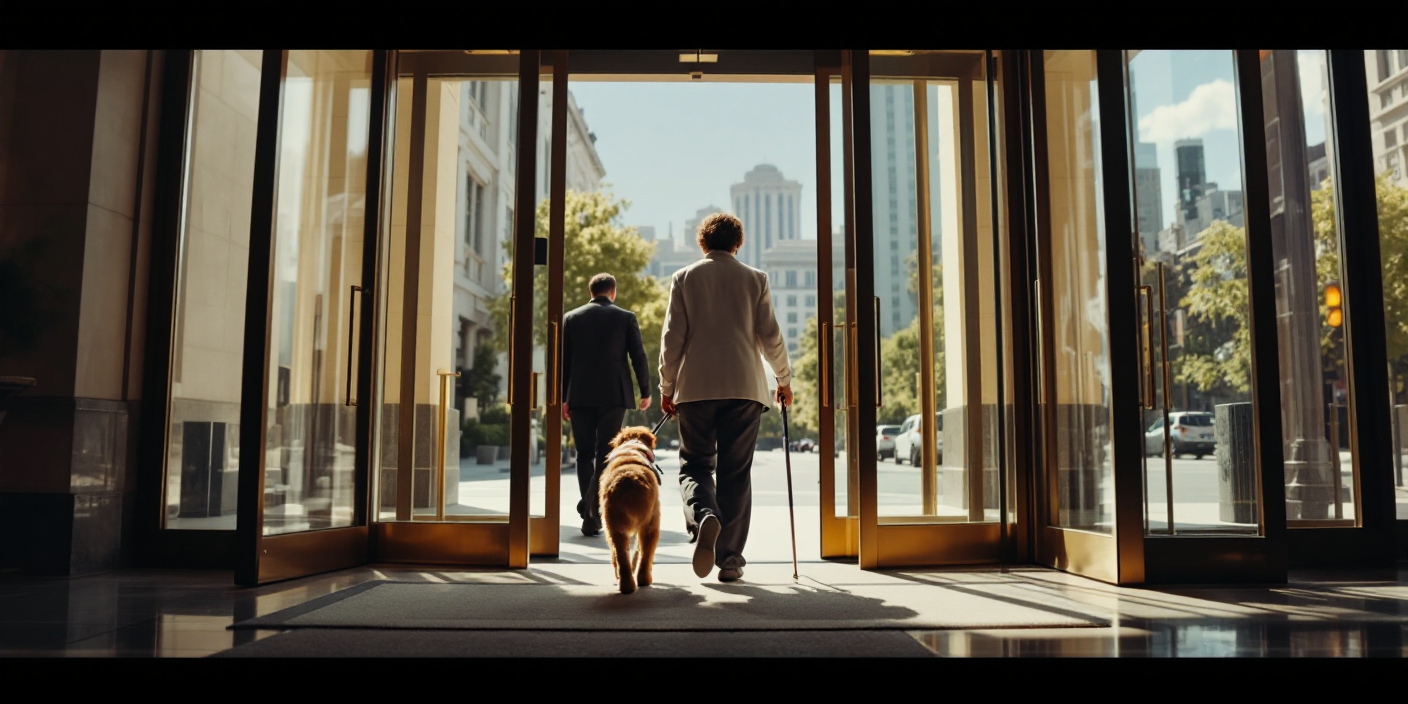
Whether neurodivergent, visually impaired, travelling with a personal assistant or caregiver or an assistance dog – true accessibility does not start with technical norms. It starts with understanding needs. It's not about treating someone as a special case – but about making them feel like a natural part of the picture. 

Accessibility is not a request. It is part of what real hospitality means. ☻ 

Five ways to start thinking differently about accessibility

1. Belonging over exception 

Inclusion starts where no one feels like an exception. Accessibility does not mean welcoming someone especially. It means remembering they might come – and making sure nothing stands in their way. Design spaces where people can move, orient themselves and feel safe – without having to explain themselves. 

Tip: Ask yourself: Where are barriers in your hotel? And how can you make belonging visible? Check your door widths. Offer quiet hours without music. Label allergens clearly. The list is long ;-)


2. Communication that connects

Accessibility often begins with a single word. Or the feeling of being understood – without having to explain. If guests cannot read, hear or process information quickly, they are left out. 

Language can exclude – or open doors. 
Simple wording, pictograms, clear check-in explanations – it is often the small things that make a big difference. Sometimes all it takes is a shift in perspective. 

Tip: Words reflect your mindset. Be mindful of phrases like “as you can see” or “have you heard?” Not everyone sees, hears or understands the way you do. That is where accessibility begins – not with complex instructions, but with language that includes everyone. Want to go deeper? Check out our Sustainable Hotel Handbook: Communication.

Barrierefreiheit im Hotel: Gastfreundschaft für alle

3. The first impression happens online

Before a guest enters your hotel, they have already been there – online. And that is where many great ideas fall apart: When websites are hard to read, bookings are complicated, or key information is hidden behind sleek design. 

Digital accessibility is not about tech. It is about respect. After all – what good is the perfect ramp if the path to it is confusing? 

Tip: Have someone test your website who struggles with orientation or invite someone from your community for a test stay at your hotel. You will learn a lot – and fast. For more, see our blog post on sustainable hotel websites.


4. Listening leads to insight

Sometimes you do not need a new concept. Just a good conversation. 

People living with limitations know exactly what they need. We just have to ask – openly, honestly, without fear. Guests who offer feedback. Team members who share experiences. Organisations that can support your journey. Listening does more than improving systems. It changes your perspective. 

Tip: Start small. Invite someone from your community to give feedback – maybe during a test stay, a walkthrough or an open conversation with your team.


5. A hotel that thinks ahead 

Accessibility does not mean having a protocol for every possible case. It means staying aware – and being ready. Ready to meet people’s needs in unexpected moments. 

A guest arrives with an assistance dog? 
A caregiver needs a separate bed in the same room? 
Someone wants to enjoy breakfast in peace, without sensory overload? 
Accessibility means: we may not have planned for it – but we are prepared. 

Tip: Bring accessibility into your team conversations – not as a list of rules, but as a shared mindset: “We ask one time too many – not one time too few. And we find solutions together.” 

Example (inspiration): Some supermarkets now offer autism-friendly shopping hours – dimmed lights, no music, no loud announcements, clear signage and a quieter checkout experience. That is what we call the curb-cut effect: small changes made for specific groups end up helping everyone.

Accessibility is not an extra
it is part of what real hospitality means.
MAp Boutique Consultancy

What you gain from accessibility? A lot.

Accessibility is not a limitation – it's an expansion. For your team. For your guests. For your positioning as a host who leads with purpose. Curb-cut effect, again: Designing with care for some often makes things better for all. From a clearly written menu to step-free access, subtitles and simple language – you reach more people, strengthen your brand and create guest experiences that leave a lasting impression. Because someone felt truly seen.

Conclusion

Accessibility is not about being perfect. And it does not have to be. At MAp Boutique Consultancy, we always say: progress over perfection.

That's true here as well. Start rethinking accessibility – today. Not through major renovations. But by choosing to notice more. By acting where you already can. And by creating a culture of welcome that includes everyone.

Want to go deeper? Download our free guide: 6 Principles for Social Sustainability in Hotels.
Or explore our The Sustainable Hotel Handbook: People.

#onwards

Free Download

The Sustainable Hotel Insights. 6 Principles to make your hotel more socially sustainable

In this free guide you will receive a concise introduction to social sustainability in hotels – clear and directly actionable. The six principles set out concrete steps for guests and your team – from inclusive hospitality to holistic accessibility. Plus: a short best-practice example, key facts and resources to help you get started straight away.

Blog Block Image
Barrierefreiheit im Hotel: Gastfreundschaft für alle

Add new comment

Comment

Order

Plain text

  • No HTML tags allowed.
  • Lines and paragraphs break automatically.
  • Web page addresses and email addresses turn into links automatically.
Categories
sharing is caring

Guests, partners and media expect more than warm words. Europe is tightening rules on misleading claims – a good thing. For hotels, the task is to shape hotel sustainability communication so it is true, understandable and useful – building trust, visibility and measurable results.

Untertitel
Practical steps to align with today’s rules
Blog main image
Hotel sustainability communication
Paragraphs

What we mean by good sustainability communication

We separate two layers: 

  • Sustainability communication – WHAT you communicate: facts, progress, goals, hotel green claims.
     
  • Sustainable communication – HOW you communicate: clear, inclusive, culturally sensitive, evidenced and free of greenwashing. 

You need both. Big labels without proof risk greenwashing. Staying silent about real progress becomes greenhushing. Our path: show what is true – and what improves next. That is how credible, search-strong communication in hospitality is built.

Communication is a skill
that you can learn
Brian Tracy

How to start communicating more sustainably right now

We created our own Communication Handbook for hotels – practical and built for teams. It contains ten principles. Here are three of them, with short guidance and concrete examples you can publish today.

1. Transparency

In short: Transparency means naming numbers, linking sources and showing real practice. No vague words, no empty promises. State where you stand – and what comes next. 

Example A – Breakfast: 

Wrong: “Our breakfast is eco-friendly.” 
Right: “Sixty percent of breakfast items are certified organic under [label]. Meet our suppliers here. Next goal: seventy percent by March 2026.” 

Example B – Energy: 

Wrong: “We are climate neutral.” 
Right: “Emissions 2024: 312 t CO₂e. Reduction target: minus forty‑two percent by 2027. Residual emissions are offset via [project], assured under [standard]."

2. Inspiration

In short: Inspiring means encouraging action rather than moralising. Show how measures improve the guest experience – and how team and community benefit. That is how sustainability storytelling becomes tangible. 

Example A – Sleep comfort: 

Wrong: “We care deeply about sustainability in our rooms.” 
Right: “Sleep well, choose well: bed linen from [maker] with [certificate]. Washed at forty degrees and air‑dried – saves around twenty‑nine percent energy per load. Daily change on request, otherwise every two nights.” 

Example B – Community: 

Wrong: “We support local producers.” 
Right: “Eighty‑two percent of ingredients come from within eighty kilometres. This week we work with [farm, town] and [farm, town]. On the menu: [two dishes] that show the season.”

3. Clarity

In short: Clarity makes decisions easy. Use guest words, keep one message per text and add a specific call to action. This reduces barriers – a plus for inclusive communication. 

Example A – Arrival: 

Wrong: “Accessible upon request. Please refer to the usual channels for arrival information.” 
Right: “No car needed – fourteen minutes by tram 7 from Central Station, stop at our door. Step‑free access to lobby and restaurant, lift width ninety centimetres, accessible junior suite with roll‑in shower. See the route now.” 

Example B – Call to action: 

Wrong: “Learn more.” 
Right: “See the menu and book a table” | “Compare rooms” | “Join our newsletter for updates on local producers”.

Start today

Choose one visible text – homepage, rooms or restaurant – and rewrite it with Transparency, Inspiration and Clarity. One purposeful line, one number with a source, one clear invitation. Publish – learn – improve. 

Make sure you are no longer guessing or risking greenwashing. Profit from credible sustainability communication. 

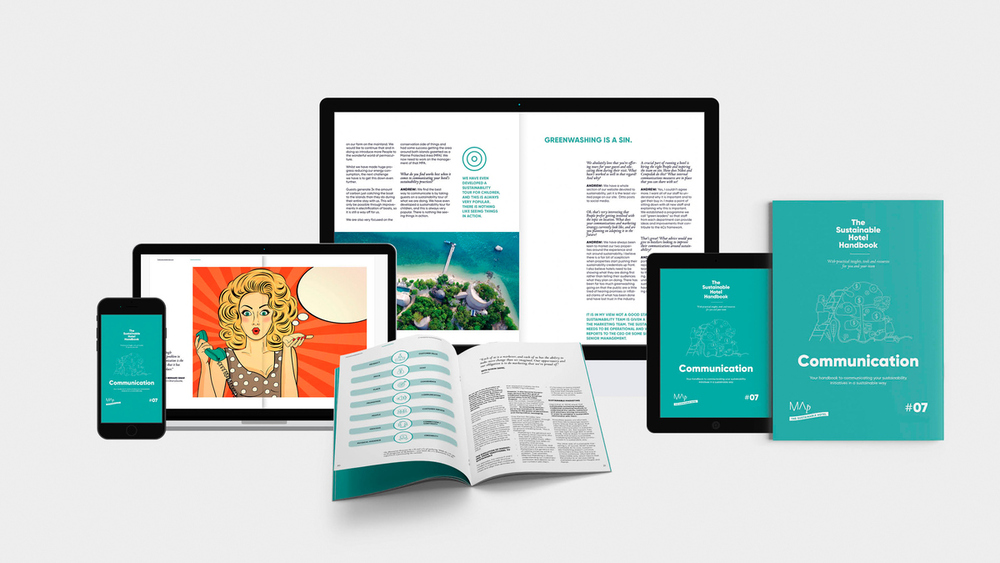
If you need support or would like more information – have a look at our Communication Handbook for hotels. 

Handbook

Hands-on Sustainability Communication Handbook for Hotels

Everything you need to communicate credibly – compact, practical and ready to use. With exercises, checklists and examples that save time and deliver impact – designed to align with current European Union regulations.

Check Top-Posts
Set to 1st Top-Post
Blog Block Image
Hotel sustainability communication

Add new comment

Comment

Order

Plain text

  • No HTML tags allowed.
  • Lines and paragraphs break automatically.
  • Web page addresses and email addresses turn into links automatically.
Types
sharing is caring

It is just about time – the MAp Trend Report ist back, or let’s say better: it’s already here for 2026. And honestly? At this point, we would not want to imagine ending a year and starting a new one without it! ☻

Each year, we take a deep dive into what is coming – and more importantly, what truly matters for hoteliers, hospitality brands and changemakers across the industry. 

Because let us be clear: trends are not a gimmick. They are signals and a gentle nudge that we all need to look ahead rather than behind. 

Those who wait to act until a trend is mainstream? They are already late. But those who pay attention early can invest smarter, adapt quicker, and stay ahead of the curve. 

This is exactly what the MAp Trend Report 2026 is here for. 
What to expect? No fluff, no trend theatre – just carefully selected insights with direct relevance for your business. From EU regulations and climate disclosures to bleisure travel and purpose-led positioning. 

Shall we take a look? #Onwards

Untertitel
What is shaping hotels in 2026: European Union sustainability reporting, the rise of bleisure, and practical uses of artificial intelligence
Blog main image
2026 Hotel Industry Trends: Sustainability, artifical Intelligence, Bleisure and smarter Operations
Paragraphs
The future belongs to hotels that are both
human and smart
MAp Boutique Consultancy

1. Reporting is getting real, EU regulations are tightening

We know – this might sound like one of those things you would rather not hear. It sounds like work. It sounds like complexity. But here is the good news: it does not have to be! 

In fact, for hotels that start early, sustainability reporting can become a powerful asset – not a burden. 

The Corporate Sustainability Reporting Directive (CSRD) and the European Sustainability Reporting Standards (ESRS) will require more and more companies to disclose how they impact People and Planet.

Even if your hotel is not directly affected (yet), you might be indirectly impacted: 

  • through corporate clients who demand reporting, 
  • through investors who require transparency, 
  • or through business partners who are already reporting themselves. 

In short: sustainability performance will soon become part of your business credentials.

What can you do now? 

  • Find out where you stand today. Our Sustainability Assessment is here to guide you.
  • Decide where to take action first – the areas you want to focus on and improve.
  • Decide whether to walk the path on your own – or bring in professional support to make the journey smoother.
  • Start tracking what truly matters – from energy and emissions (Scope 1 and 2) to your social impact.
  • Choose the right framework for your journey – B Corp, Greensign or others as your starting point. 

Our MAdvice: You do not need to have it all figured out. But you do need to begin.Those who build structures now will be ready – and ahead – when reporting becomes the new normal.


2. Bleisure travel is becoming the norm, not the niche

The line between work and leisure continues to blur – and bleisure travel (Business and Leisure travel = Bleisure) is becoming the norm, not the niche. In fact, the bleisure travel market is projected to nearly quadruple by 2034 (Presedence Research, 2025). 

What used to be a short business trip is now often extended into a weekend getaway. Or even a “workation” in a location that inspires. Guests are looking for places where they can plug in, but also fully switch off. 

What this means for hotels: You need to cater to both sides of the experience – smart and professional, warm and personal.

Think: 

  • ergonomic desks, great coffee and strong Wi-Fi
  • co-working lounges that invite connection wellness offerings,
  • flexible check-in/out, weekend extensions
  • local insider tips that turn a work trip into a memory 

And yes, bleisure travellers are valuable guests: They stay longer, spend more, and often return.

What you can do now? 

  • Review your room amenities and workspace features
  • Create bleisure packages (weekend extensions, 2+ nights with special rates), such as our client B5 Boutique Hotel in Lugano
  • Offer remote-work stays (weekly or monthly rates, with perks for longer stays)
  • Communicate clearly to both direct guests and, where relevant, corporate partners
  • Re-think your loyalty programmes for hybrid travellers who want flexibility and recognition

Our MAdvice: Design your offers around flexibility, purpose and experience – and you will win the travellers who want it all.

2026 Hotel Industry Trends: Sustainability, artifical Intelligence, Bleisure and smarter Operations

3. Artificial Intelligence is coming strong – but not to take your job

Forget the doom stories. In 2026, Artificial Intelligence is not coming for your jobs – it is coming for your to-do list. 

From guest communication to revenue management, hotels are starting to embrace AI as a practical, powerful support system (Thynk, 2024). And we are sure: The smartest ones are not using it to replace their people – they are using it to elevate them. 

Think: 

  • personalised email replies that actually save time
  • chatbots that handle FAQs while your team focuses on real care
  • automated pricing tools that take market trends into account 

The key? Let technology do what it does best – so your people can do what they do best.

What you can do now: 

  • Explore AI tools such as chatlyn tailored for hospitality
  • Start small: one task, one team, one experiment
  • Train your team to work with AI, not against it
  • Keep the human touch at the heart of every guest interaction 

Our MAdvice: Do not fear the tech. Lead WITH it. Because the future belongs to hotels that are both human and smart.

MAp’s Bonus Tip for 2026: Be the hotel that dares

One thing we know for sure: The future belongs to the hotels that dare. 

Trends are tools. But it is your stance that gives them meaning. The most exciting hotels in 2026 do not just follow the direction of the market – they sharpen it. They build with intention, communicate with courage, and turn values into real life action. 

So if you are working on something in 2026, do not play it safe. 
Dare to be different. 
Dare to be true. 
Dare to be the hotel only YOU and your team can be. 

That is what guests will remember and what makes a positive impact. 

We hope that this short glance ahead has provided you with empowering ideas and sustainable inspiration. Let's work together to make hotels even more innovative, sustainable, and future-proof. Thank you for joining us on our journey to shape the hotel industry of tomorrow. #onwards

Blog Block Image
2026 Hotel Industry Trends: Sustainability, artifical Intelligence, Bleisure and smarter Operations

Add new comment

Comment

Order

Plain text

  • No HTML tags allowed.
  • Lines and paragraphs break automatically.
  • Web page addresses and email addresses turn into links automatically.
sharing is caring

The MAp Book Club returns with a title that challenges the way we think about everyday choices. Because what better way to kick things off than with a book that makes you question your coffee, your clothes, your emails... and yes, your bananas. 

Mike Berners-Lee’s How Bad Are Bananas? is everything a climate book should be: smart, practical, un-preachy – and full of eyebrow-raising facts that shift your perspective and your choices.

Untertitel
Surprising climate truths about the carbon footprint of everyday things – and (spoiler alert) why bananas aren’t the bad guys.
Blog main image
Book Review: How bad are bananas
Paragraphs
we need to focus on what actually makes a difference,
not just what feels good
Mike Berners-Lee

Summary

We know that flying is bad for the planet. We’ve heard about plastic waste. But how much carbon does it take to send a text? Or to make a pair of jeans? 

How Bad Are Bananas? is one of those books that leaves you staring into your cup of coffee, wondering what invisible impact it carries. 

It’s not about doing less – it’s about doing things smarter. With surprising comparisons and jaw-dropping carbon maths, Berners-Lee helps us to understand what really matters in the climate conversation. Spoiler: it’s not the banana.

What does CO₂ even mean?

CO₂ – carbon dioxide – is one of the major greenhouse gases driving climate change. It’s released when we burn fossil fuels like oil, gas or coal – and through the things we produce, consume and waste. 

To compare emissions from different sources, we use a standard measure called CO₂e – carbon dioxide equivalent – which includes other powerful gases like methane and nitrous oxide. The numbers, shown in grams (g), kilograms (kg) or tonnes (t), help us to comprehend the climate cost of each action. 

For reference: 

  • 1 g CO₂e ≈ 7 seconds of driving
  • 100 g CO₂e ≈ 1 km by car
  • 1 kg CO₂e ≈ 10 km by car or a medium steak
  • 1 t CO₂e ≈ an average European’s emissions in 1 month

Key points

How Bad Are Bananas? doesn’t overwhelm you with stats – it tells carbon stories in g, kg and tonnes. A tangible, readable way to rethink our everyday choices. 

Some things are as bad as you thought (beef, frequent flying). Others are worse. And the rest? Far more innocent than you’d imagine.

Book Review: How bad are bananas

Here are the key takeaways that have stood out to us:

#1: Bananas aren’t that bad – but wasting them is. One banana has a surprisingly low footprint: around 110 g CO₂e – that’s about the same as a kilometre in a car or a cup of oat milk coffee. But throw it away, and that footprint becomes avoidable. Globally, food waste accounts for up to 10% of all emissions. 

#2: Buying new tech has a higher footprint than using it. A single smartphone generates 55-95 kg CO₂e during its production – the same as driving 400-700 km. Most of the footprint happens before you even switch it on. Keeping your phone for just one more year makes a measurable difference. 

#3: A simple t-shirt = 4 kg, jeans = 30+ kg CO₂e. A basic cotton T-shirt emits around 4 kg CO₂e. A pair of jeans? Due to water-hungry cotton, dyeing and global transport, over 30 kg CO₂e – about the same as a domestic flight. The carbon impact of the fashion industry is bigger than all international flights and shipping combined. 

#4: A text message? Nearly nothing. A Google search? Adds up fast. One SMS emits only 0.014 g CO₂e – practically nothing. But a single email with a large attachment? Around 50 g CO₂e – the same as driving 400 metres. Multiply that across your inbox, team and organisation, and it starts to matter. 

#5: Trains are greener – but not always. Yes, trains are generally more climate-friendly (and far safer) than cars. But if just two people are travelling together, driving an efficient car can have a lower footprint than taking a first-class train. 

#6: A bouquet a week? A tonne of trouble. A weekly bouquet of out-of-season, flown-in flowers can add up to 1.5 tonnes of CO₂e per year. Grown with artificial heat or flown across continents – either way, it’s bad news for the climate. 

#7: War is the most carbon-intensive human activity. Military operations and infrastructure have some of the highest emissions on the planet – yet they’re rarely discussed. It’s a sobering reminder that peace and sustainability are profoundly interconnected – and that a just, liveable future requires both.

MAp’s Favourite Quote

“But compared to 2010 I feel more hope, more fear and a good deal more urgency.”

Summary

If you see air-freight, avoid it. Vegan beats vegetarian for the climate. And when it comes to beef, lamb or hothouse-grown produce – think red flags, not green choices. 

How Bad Are Bananas? flips our understanding of climate impact on its head. It’s not about guilt – it’s about clarity. It shows us where we can make meaningful changes without losing our minds (or our love for bananas). 

At MAp, we believe that better decisions start with better questions. This book gives us exactly that. Questions that make us pause, reflect and choose better – not with pressure, but with purpose. 

Sustainability isn’t just a checklist. It’s a mindset. One that asks: How bad is it? And MAps out a better way forward. 

#onwards 

Your MAp team

Blog Block Image
Book Review: How bad are bananas

Add new comment

Comment

Order

Plain text

  • No HTML tags allowed.
  • Lines and paragraphs break automatically.
  • Web page addresses and email addresses turn into links automatically.
Categories
sharing is caring

We talk a lot about green buildings, zero-waste breakfast buffets and eco-friendly amenities – but did you know that also your hotel’s website can be sustainable? 

It might not be THE main cause of your carbon footprint, but from oversized files to inefficient hosting, the way your website is built and maintained can either contribute to the problem – or become part of the solution. 

The good news? A sustainable website doesn’t mean compromise. It means clarity, speed, better accessibility – and a digital presence that reflects your values.

Untertitel
Your hotel’s website can help to reduce carbon emissions, enhance guest experience, and tell a better story – sustainably.
Blog main image
How to Create a Sustainable Hotel Website That Guests (and the Planet) Will Love
Paragraphs

What makes a website sustainable?

Here are the key elements of a climate and social-conscious website:

#1: Lighter = greener

A lighter website consumes less data and energy – good for both the planet and your guests’ experience. 

How? 

  • Optimise image sizes
  • Remove unnecessary scripts
  • Avoid bloated design elements 

The result: faster loading times, lower emissions and a better user experience. A true win-win.

#2: Green hosting

Where your website is hosted matters. Opt for providers that run on 100% renewable energy or at least have transparent carbon offset policies. Look for green certifications or providers listed by organisations like The Green Web Foundation.

#3: Design for simplicity

Minimalist design isn’t just beautiful – it’s efficient: 

  • Fewer pages
  • Smarter navigation
  • Cleaner code 

All of this helps to reduce energy consumption and increase usability. Plus, simplicity improves conversion and guest satisfaction.

How to Create a Sustainable Hotel Website That Guests (and the Planet) Will Love

#4: Prioritise quality content

Every piece of content you publish uses up energy. So ask yourself: Does it need to be there? 

Long videos, endless image galleries and autoplay features let emissions soar. Prioritise: 

  • Quality over quantity
  • Compressed, efficient formats (e.g. SVG, WebP)
  • Static content where possible 

Bonus: sustainability-focused content builds trust with like-minded travellers.

#5: Sustainable visual and verbal content

A sustainable website reaches out to everyone — visually and verbally. 

For visuals:

  • Choose images that are inclusive, diverse and relatable to your entire audience.
  • Ask yourself: are your photos appropriate for all target groups? (Tip: In our People Handbook we share the example: if a woman in an image could just as well be replaced by a plant or a puppy, perhaps the image isn’t adding real representation.)  

For language: 

  • Avoid ableist language, for example phrases like “Do you see...” – not everyone is able to. 
  • Be mindful with abbreviations – keep them clear and accessible. 
  • Write alt tags for screen readers (not just for SEO). Rule of thumb: they’re for people who are visually impaired – not for Google. 
  • And last but not least: avoid greenwashing or greenhushing. Authentic communication matters. (More on this in our handbook to transparent sustainability communication).
The most sustainable website
is the one that does the most with the least.
@weareMAp

#6: Accessibility = inclusion = sustainability

A sustainable website isn’t just energy-efficient – it’s also accessible to everyone. This means designing for people with different needs, devices and abilities. Accessibility is a core part of digital sustainability, because it ensures your message reaches as many people as possible, without barriers.
 
Here’s what it can look like in practice: 
  • Text size adjustment for users with visual impairments 
  • Keyboard navigation and screen reader compatibility 
  • Language alternatives or translation features 
  • High-contrast modes for better readability 
  • Simple layouts that work across devices and bandwidths 
 
When you design with accessibility in mind, you’re not just complying with standards – you’re building a more inclusive, human-centred web. And that’s sustainability at its best.
 

#7: Monitor and measure

Tools like Website Carbon Calculator or Ecograder can help you track your site’s footprint. Measure, then improve – just like you would with any other part of your sustainability strategy.

The hospitality edge

For hotels, a sustainable website isn’t just technical – it’s part of the guest journey. It’s the first impression. A fast, green, values-aligned website says: we care.  

It can also become a powerful storytelling tool. Use it to highlight your initiatives, engage responsible travellers, and demonstrate your commitment – not just at your premises, but in your pixels. Take inspiration from the Príncipe Collection website, which was planned, designed and programmed by MAp.

Summary

Sustainability isn’t just something you install – it’s something you live, breathe and design for. That includes your digital space. 

Creating a sustainable hotel website is a practical step towards a lower-impact future – and a smarter, more engaging experience for your guests. It shows that your commitment goes beyond the obvious. It’s thoughtful, intentional, and woven into every detail – including your pixels. ☻

This is what it means to MAp out a better future.

Free Template

Write your hotel sustainability story in 3 simple steps (PDF)

This free template will guide you through each step in order to piece together your unique and authentic hotel sustainability story. It also includes an overview of the 10 Principles of Sustainable Communication.

Blog Block Image
How to Create a Sustainable Hotel Website That Guests (and the Planet) Will Love

Add new comment

Comment

Order

Plain text

  • No HTML tags allowed.
  • Lines and paragraphs break automatically.
  • Web page addresses and email addresses turn into links automatically.
Categories
sharing is caring

🎧 Prefer listening to reading? Listen to the article here. ▶️


For many hotels, communicating their sustainability practices to their guests and other stakeholders is a major pain point. Why? Because of the fear of greenwashing, a term that arises again and again when it comes to communicating sustainability.

Greenwashing refers to the practice of making false or misleading claims about the environmental benefits of a product or service in order to appeal to environmentally-conscious consumers. It’s about misleading consumers into thinking that a product or service is more environmentally friendly than it actually is.

As the threat of greenwashing is real, we see that nowadays companies even opt to downplay or not communicate their sustainability efforts at all in order to avoid being perceived as greenwashers. There’s even a term for this: Greenhushing, the deliberate concealment of information regarding the sustainability practices applied.

By greenhushing = by underreporting the sustainability steps your hotel is taking, the result is that guests and your other important stakeholders miss the chance to be informed, educated and inspired. Of course, sustainability is not a sales strategy, it’s a business strategy that involves implementing sustainability holistically into all aspects of your hotel. Therefore, when it comes to communicating sustainability to your guests and others, the most important thing you should know is this: sustainability communication must follow action! That’s the ultimate key to avoiding the trap of greenwashing.

Untertitel
What to avoid, what to say instead, and how to prove it — plus a free template to write a hotel sustainability story guests trust.
Blog main image
Greenwashing im Hotel vermeiden: Entwickle deine Nachhaltigkeits-Story
Paragraphs

What is Sustainability Communication? What is Sustainable Communication?

Before we embark on crafting your sustainability story, it’s important we understand the role communication plays in sustainability. As independent and boutique hotel consultants that create sustainable hotels, we tell our clients to always communicate sustainability in a sustainable way. What does this mean exactly? Let’s look at the terms “sustainability communication” and “sustainable communication.”

Sustainability communication is the act of consciously integrating sustainability into a communication strategy by telling stakeholders about your sustainability goals and efforts. The objective of sustainability communication is to raise awareness and understanding about sustainability and what your hotel is doing on the front, and to encourage action to support your initiatives. Sustainability communication is the WHAT = your unique sustainability story, which we will craft together in three steps further below.

Sustainable communication, on the other hand, is about HOW you communicate vs. WHAT you communicate. This means you are communicating in a socially-responsible and ecological manner, with no negative impact to society, the economy and the Planet. The objective of sustainable communication is therefore to reduce the environmental and social footprint of communication activities and to make sure that all can profit from it.

In The Sustainable Hotel Handbook: Communication, we outline 10 Principles of Sustainable Communication to guide marketing and communication professionals in crafting their sustainability stories in the right way. They include the important elements: transparency, inclusiveness, cultural sensitivity, clarity, responsibility, authenticity, progress, relevance, inspirational, ethical. While in the handbook we guide you through these principles with practical examples and checklists, we have included an overview in the template below, which we encourage you to download.

By communicating sustainability in a sustainable way and having the right sustainability story in place for your hotel, you build awareness for your brand, create a positive image of your hotel in the heads of guests, engage and motivate your employees, and better comply with reporting rules and regulations. Of course, you also avoid greenwashing.

Now let’s begin by following our four-step approach:

Sustainability communication
must follow action!

1. WRITE your hotel sustainability story

A captivating central story is the cornerstone of your communication strategy. It should build off your Purpose and be informed by your priorities. A compelling and authentic sustainability story captures what’s unique about sustainability at your hotel and touches on your overall approach to tackling it. It takes a strong stand or point of view and reflects your hotel’s unique personality.

Our practical template for download below will guide you in writing your hotel sustainability story! And the best part about it? It’s free!

Free template

Write your hotel sustainability story in three simple steps

A guided three-step template for clear, specific wording with space to add your evidence. Includes the Ten Principles of Sustainable Communication.

2. TAILOR the story to your stakeholders

When it comes to communication, the most efficient approach is the integrated communication method. Integrated communication ensures that, regardless of the channel or audience, the message is consistent and cohesive. Otherwise, you risk creating confusion and misunderstanding, which can result in a loss of trust or perception of inauthenticity.

Your central message is thus the red thread that runs through all your sustainability communications, making it consistent and coherent to your audience groups: Guest, Employees, Partners, Local community, Media, etc.

When it comes to messaging, we follow the “Know, Feel, Do” model, which is a simple and effective way to ensure People read your message, and that you inspire the correct emotion and encourage a desired action.

  • KNOW: What do you want them to know about your sustainability strategy? How does it impact them?
  • FEEL: What do you want them to feel about it?
  • DO: What actions do you want them to take as a result?

As a next step, take your central story and address the “Know, Feel, Do” for each key stakeholder group listed above. 

3. CHECK that your storytelling is aligned with the 10 Principles of Sustainable Communication

Once you have defined WHAT you are communicating = your sustainability story, you also have to make sure that you are telling your story in a sustainable way. The HOW is equally important. You can use the overview of the 10 Principles of Sustainable Communication in our free template as a checklist to make sure that your storytelling is transparent, inclusive, culturally sensitive, clear, responsible, authentic, progressive, relevant, inspirational and ethical.

4. TEST your hotel sustainability story

When it comes to getting your sustainability story done and dusted, the last step is a pretty straightforward one: test, test and test! Check how your messaging resonates with your stakeholders, gather feedback and make any necessary revisions to ensure your communication makes the kind of impact you want. Once you’re happy with it, you can build out supporting messages that go into more detail e.g. concrete actions you’re taking, specific targets you want to reach, or what you have achieved so far.

Including specific goals, targets and data within this extended narrative will demonstrate your commitment to sustainability and make it easier for People to trust you.

Congratulations, you now have your hotel sustainability story in place!

This story will serve as the basis of all your communications around your sustainability initiatives, and will make sure that it is not only consistent across all your channels, but credible too. By demonstrating credibility, you ultimately avoid the trap of greenwashing and increase the impact your sustainability initiatives have.

If you want to learn more about communicating sustainability in a sustainable way, check out The Sustainable Hotel Handbook: Communication, which we will be launching soon over on The Sustainable Hotel. In it, we guide you through not only building your sustainability story, but communicating it internally and externally, with insights into effective communications, practical tools such as exercises and checklists, as well as success stories and best practice examples. Check it out HERE.

Video URL
Blog Block Image
Avoid Greenwashing in Hotels: Craft Your Sustainability Story

Add new comment

Comment

Order

Plain text

  • No HTML tags allowed.
  • Lines and paragraphs break automatically.
  • Web page addresses and email addresses turn into links automatically.
Youtube stream image
Avoid Greenwashing in Hotels: Craft Your Sustainability Story