
sharing is caring

We talk a lot about green buildings, zero-waste breakfast buffets and eco-friendly amenities – but did you know that also your hotel’s website can be sustainable? 

It might not be THE main cause of your carbon footprint, but from oversized files to inefficient hosting, the way your website is built and maintained can either contribute to the problem – or become part of the solution. 

The good news? A sustainable website doesn’t mean compromise. It means clarity, speed, better accessibility – and a digital presence that reflects your values.

Untertitel
Your hotel’s website can help to reduce carbon emissions, enhance guest experience, and tell a better story – sustainably.
Blog main image
How to Create a Sustainable Hotel Website That Guests (and the Planet) Will Love
Paragraphs

What makes a website sustainable?

Here are the key elements of a climate and social-conscious website:

#1: Lighter = greener

A lighter website consumes less data and energy – good for both the planet and your guests’ experience. 

How? 

  • Optimise image sizes
  • Remove unnecessary scripts
  • Avoid bloated design elements 

The result: faster loading times, lower emissions and a better user experience. A true win-win.

#2: Green hosting

Where your website is hosted matters. Opt for providers that run on 100% renewable energy or at least have transparent carbon offset policies. Look for green certifications or providers listed by organisations like The Green Web Foundation.

#3: Design for simplicity

Minimalist design isn’t just beautiful – it’s efficient: 

  • Fewer pages
  • Smarter navigation
  • Cleaner code 

All of this helps to reduce energy consumption and increase usability. Plus, simplicity improves conversion and guest satisfaction.
How to Create a Sustainable Hotel Website That Guests (and the Planet) Will Love

#4: Prioritise quality content

Every piece of content you publish uses up energy. So ask yourself: Does it need to be there? 

Long videos, endless image galleries and autoplay features let emissions soar. Prioritise: 

  • Quality over quantity
  • Compressed, efficient formats (e.g. SVG, WebP)
  • Static content where possible 

Bonus: sustainability-focused content builds trust with like-minded travellers.

#5: Sustainable visual and verbal content

A sustainable website reaches out to everyone — visually and verbally. 

For visuals:

  • Choose images that are inclusive, diverse and relatable to your entire audience.
  • Ask yourself: are your photos appropriate for all target groups? (Tip: In our People Handbook we share the example: if a woman in an image could just as well be replaced by a plant or a puppy, perhaps the image isn’t adding real representation.)  

For language: 

  • Avoid ableist language, for example phrases like “Do you see...” – not everyone is able to. 
  • Be mindful with abbreviations – keep them clear and accessible. 
  • Write alt tags for screen readers (not just for SEO). Rule of thumb: they’re for people who are visually impaired – not for Google. 
  • And last but not least: avoid greenwashing or greenhushing. Authentic communication matters. (More on this in our handbook to transparent sustainability communication).
The most sustainable website
is the one that does the most with the least.
@weareMAp

#6: Accessibility = inclusion = sustainability

A sustainable website isn’t just energy-efficient – it’s also accessible to everyone. This means designing for people with different needs, devices and abilities. Accessibility is a core part of digital sustainability, because it ensures your message reaches as many people as possible, without barriers.
 
Here’s what it can look like in practice: 
  • Text size adjustment for users with visual impairments 
  • Keyboard navigation and screen reader compatibility 
  • Language alternatives or translation features 
  • High-contrast modes for better readability 
  • Simple layouts that work across devices and bandwidths 
 
When you design with accessibility in mind, you’re not just complying with standards – you’re building a more inclusive, human-centred web. And that’s sustainability at its best.
 

#7: Monitor and measure

Tools like Website Carbon Calculator or Ecograder can help you track your site’s footprint. Measure, then improve – just like you would with any other part of your sustainability strategy.

The hospitality edge

For hotels, a sustainable website isn’t just technical – it’s part of the guest journey. It’s the first impression. A fast, green, values-aligned website says: we care.  

It can also become a powerful storytelling tool. Use it to highlight your initiatives, engage responsible travellers, and demonstrate your commitment – not just at your premises, but in your pixels. Take inspiration from the Príncipe Collection website, which was planned, designed and programmed by MAp.

Summary

Sustainability isn’t just something you install – it’s something you live, breathe and design for. That includes your digital space. 

Creating a sustainable hotel website is a practical step towards a lower-impact future – and a smarter, more engaging experience for your guests. It shows that your commitment goes beyond the obvious. It’s thoughtful, intentional, and woven into every detail – including your pixels. ☻

This is what it means to MAp out a better future.

Free Template

Write your hotel sustainability story in 3 simple steps (PDF)

This free template will guide you through each step in order to piece together your unique and authentic hotel sustainability story. It also includes an overview of the 10 Principles of Sustainable Communication.


Blog Block Image
How to Create a Sustainable Hotel Website That Guests (and the Planet) Will Love

Add new comment

Comment

Order

Plain text

  • No HTML tags allowed.
  • Lines and paragraphs break automatically.
  • Web page addresses and email addresses turn into links automatically.
Categories
sharing is caring

🎧 Prefer listening to reading? Listen to the article here. ▶️


For many hotels, communicating their sustainability practices to their guests and other stakeholders is a major pain point. Why? Because of the fear of greenwashing, a term that arises again and again when it comes to communicating sustainability.

Greenwashing refers to the practice of making false or misleading claims about the environmental benefits of a product or service in order to appeal to environmentally-conscious consumers. It’s about misleading consumers into thinking that a product or service is more environmentally friendly than it actually is.

As the threat of greenwashing is real, we see that nowadays companies even opt to downplay or not communicate their sustainability efforts at all in order to avoid being perceived as greenwashers. There’s even a term for this: Greenhushing, the deliberate concealment of information regarding the sustainability practices applied.

By greenhushing = by underreporting the sustainability steps your hotel is taking, the result is that guests and your other important stakeholders miss the chance to be informed, educated and inspired. Of course, sustainability is not a sales strategy, it’s a business strategy that involves implementing sustainability holistically into all aspects of your hotel. Therefore, when it comes to communicating sustainability to your guests and others, the most important thing you should know is this: sustainability communication must follow action! That’s the ultimate key to avoiding the trap of greenwashing.

Untertitel
What to avoid, what to say instead, and how to prove it — plus a free template to write a hotel sustainability story guests trust.
Blog main image
Greenwashing im Hotel vermeiden: Entwickle deine Nachhaltigkeits-Story
Paragraphs

What is Sustainability Communication? What is Sustainable Communication?

Before we embark on crafting your sustainability story, it’s important we understand the role communication plays in sustainability. As independent and boutique hotel consultants that create sustainable hotels, we tell our clients to always communicate sustainability in a sustainable way. What does this mean exactly? Let’s look at the terms “sustainability communication” and “sustainable communication.”

Sustainability communication is the act of consciously integrating sustainability into a communication strategy by telling stakeholders about your sustainability goals and efforts. The objective of sustainability communication is to raise awareness and understanding about sustainability and what your hotel is doing on the front, and to encourage action to support your initiatives. Sustainability communication is the WHAT = your unique sustainability story, which we will craft together in three steps further below.

Sustainable communication, on the other hand, is about HOW you communicate vs. WHAT you communicate. This means you are communicating in a socially-responsible and ecological manner, with no negative impact to society, the economy and the Planet. The objective of sustainable communication is therefore to reduce the environmental and social footprint of communication activities and to make sure that all can profit from it.

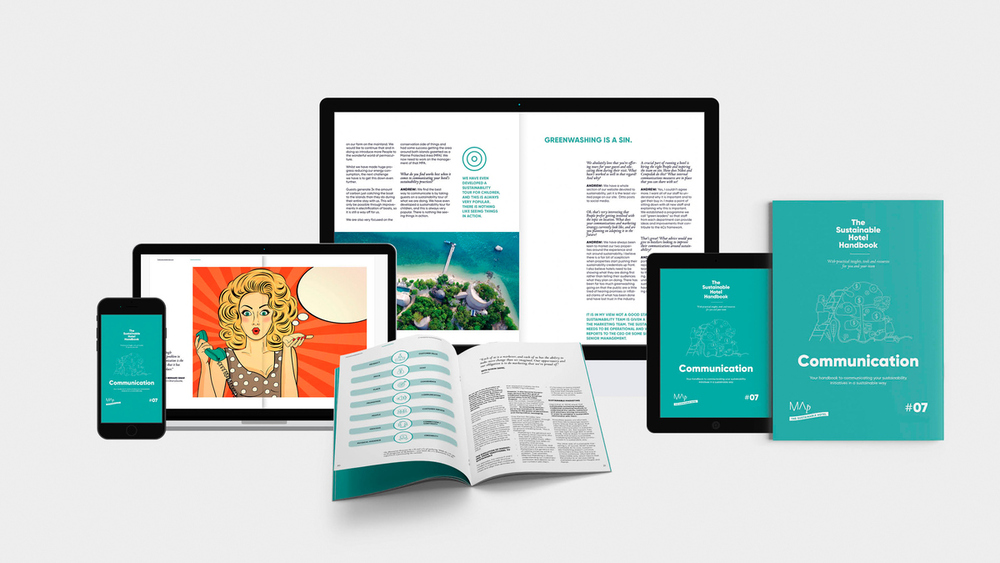
In The Sustainable Hotel Handbook: Communication, we outline 10 Principles of Sustainable Communication to guide marketing and communication professionals in crafting their sustainability stories in the right way. They include the important elements: transparency, inclusiveness, cultural sensitivity, clarity, responsibility, authenticity, progress, relevance, inspirational, ethical. While in the handbook we guide you through these principles with practical examples and checklists, we have included an overview in the template below, which we encourage you to download.

By communicating sustainability in a sustainable way and having the right sustainability story in place for your hotel, you build awareness for your brand, create a positive image of your hotel in the heads of guests, engage and motivate your employees, and better comply with reporting rules and regulations. Of course, you also avoid greenwashing.

Now let’s begin by following our four-step approach:

Sustainability communication
must follow action!

1. WRITE your hotel sustainability story

A captivating central story is the cornerstone of your communication strategy. It should build off your Purpose and be informed by your priorities. A compelling and authentic sustainability story captures what’s unique about sustainability at your hotel and touches on your overall approach to tackling it. It takes a strong stand or point of view and reflects your hotel’s unique personality.

Our practical template for download below will guide you in writing your hotel sustainability story! And the best part about it? It’s free!

Free template

Write your hotel sustainability story in three simple steps

A guided three-step template for clear, specific wording with space to add your evidence. Includes the Ten Principles of Sustainable Communication.
2. TAILOR the story to your stakeholders

When it comes to communication, the most efficient approach is the integrated communication method. Integrated communication ensures that, regardless of the channel or audience, the message is consistent and cohesive. Otherwise, you risk creating confusion and misunderstanding, which can result in a loss of trust or perception of inauthenticity.

Your central message is thus the red thread that runs through all your sustainability communications, making it consistent and coherent to your audience groups: Guest, Employees, Partners, Local community, Media, etc.

When it comes to messaging, we follow the “Know, Feel, Do” model, which is a simple and effective way to ensure People read your message, and that you inspire the correct emotion and encourage a desired action.

  • KNOW: What do you want them to know about your sustainability strategy? How does it impact them?
  • FEEL: What do you want them to feel about it?
  • DO: What actions do you want them to take as a result?

As a next step, take your central story and address the “Know, Feel, Do” for each key stakeholder group listed above. 

3. CHECK that your storytelling is aligned with the 10 Principles of Sustainable Communication

Once you have defined WHAT you are communicating = your sustainability story, you also have to make sure that you are telling your story in a sustainable way. The HOW is equally important. You can use the overview of the 10 Principles of Sustainable Communication in our free template as a checklist to make sure that your storytelling is transparent, inclusive, culturally sensitive, clear, responsible, authentic, progressive, relevant, inspirational and ethical.

4. TEST your hotel sustainability story

When it comes to getting your sustainability story done and dusted, the last step is a pretty straightforward one: test, test and test! Check how your messaging resonates with your stakeholders, gather feedback and make any necessary revisions to ensure your communication makes the kind of impact you want. Once you’re happy with it, you can build out supporting messages that go into more detail e.g. concrete actions you’re taking, specific targets you want to reach, or what you have achieved so far.

Including specific goals, targets and data within this extended narrative will demonstrate your commitment to sustainability and make it easier for People to trust you.

Congratulations, you now have your hotel sustainability story in place!

This story will serve as the basis of all your communications around your sustainability initiatives, and will make sure that it is not only consistent across all your channels, but credible too. By demonstrating credibility, you ultimately avoid the trap of greenwashing and increase the impact your sustainability initiatives have.

If you want to learn more about communicating sustainability in a sustainable way, check out The Sustainable Hotel Handbook: Communication, which we will be launching soon over on The Sustainable Hotel. In it, we guide you through not only building your sustainability story, but communicating it internally and externally, with insights into effective communications, practical tools such as exercises and checklists, as well as success stories and best practice examples. Check it out HERE.

Video URL
Blog Block Image
Avoid Greenwashing in Hotels: Craft Your Sustainability Story

Add new comment

Comment

Order

Plain text

  • No HTML tags allowed.
  • Lines and paragraphs break automatically.
  • Web page addresses and email addresses turn into links automatically.
Youtube stream image
Avoid Greenwashing in Hotels: Craft Your Sustainability Story
sharing is caring

It has simply become indispensable: our acclaimed MAp Trend Report, in which we take a look into the future of the hotel industry and sustainability together with you!

If you’ve read our 2023 and 2024 Hotel Trend Reports, you know that we examine both the big picture and the fine details. Our goal is to keep you well-informed and ensure your hotel stays cutting-edge as we move into 2025.

Are you ready to embark on this journey into the future with us? Let us inspire and empower you to lead your hotel into a new era of sustainability and hospitality in 2025!

Untertitel
Hotel trends that will drive and redefine the hospitality industry in 2025.
Blog main image
Die Top-Trends 2025 für die Hotellerie-Branche
Paragraphs

What is the definition of a hospitality trend?

Picture trends as the cool kids at the hospitality party, setting the vibe for the entire gathering. When we talk about hospitality trends, we're basically discussing "what's hot and happening" in the world of hotels and travel. Hospitality trends are evolving patterns and changes within the hospitality industry, reflecting shifts in consumer behaviour, technology, design, and service offerings. So, why should hoteliers pay attention to hospitality trends?

Trends serve as a compass guiding hoteliers through the ever-evolving hospitality landscape. Embracing these hotel trends means staying attuned to shifting guest preferences, technological advancements, and industry innovations. Hoteliers who strategically adapt to hotel trends can differentiate their properties, offering guests unique and appealing experiences that set them apart from competitors.

In short: Knowing and taking trends into account is key to making your hotel more appealing, attracting more guests and ultimately generating more revenue. That's why today we're giving you an insight into four important trends for sustainable hotels in 2025.

Purpose: Transformative guest experience

In 2025, it's no longer just about stylish sun loungers and new cocktail creations (although those have their place too, of course 😊). More and more travellers are looking for experiences that inspire them and help them grow personally – that's transformative travel, where relaxation and personal growth go hand in hand (SiteMinder, 2024). Imagine your guests not only packing their suitcases after staying at your hotel, but also taking away new insights from mindfulness workshops, creative retreats, or authentic cultural experiences.

This makes your hotel an (insiders') tip for all those who want more than just a break and are looking for more than just a vacation. Who wants to "just stay overnight" when you can gain something for your personal development apart from unwinding? Show your guests that they've come to the right place – for everything they need and for what they perhaps haven't even realised yet they were looking for.

3 steps your hotel can take to fulfil the desire for transformative guest experiences:

  • Workshops and retreats: Offer themed retreats that focus on personal development, such as mindfulness or creativity workshops.
     
  • Involve the local community: Integrate local and regional elements into your offering, for example, traditions, customs, recipes, art, etc., to offer guests authentic and transformative experiences.
     
  • Exchange and networking: Encourage exchange between guests through networking events or joint activities that enable your visitors to learn from each other and network.
The 2025 Top Trends for the Hotel Industry

People: Travelling for everyone – neurodiverse experiences

In 2025, the travel industry will become increasingly inclusive, especially within the neurodiverse spectrum (Lemongrass, 2024). This means: more offers tailored to the needs of neurodivergent people. Neurodivergent? These are people whose neurological development and functioning are unique in some way and differ from others. This includes, for example, people with autism, ADHD, or other neurological characteristics (HelloBetter, 2022).

This kind of diversity often requires special attention – and this is where hotels have the opportunity to stand out. Special services that make neurodivergent guests feel welcome and safe make all the difference. Whether through quiet retreats, a clear and well-organised daily structure, or specially trained staff – catering to these needs, hotels create a welcoming atmosphere that attracts not only new, but more importantly, loyal guests.

3 steps your hotel can take to attract neurodiverse people:

  • Sensory-friendly spaces: Design certain areas of the hotel, such as rooms or lounges, with calming colours, subdued lighting, and minimal acoustic disturbances. Provide noise-cancelling headphones or eye masks to create a tranquil and relaxing environment.
     
  • Customised itineraries: Develop packages or offers that cater to the needs of neurodivergent guests. This could include providing detailed information about the surroundings, low-stress activities, and the possibility to customise schedules for maximum flexibility.
     
  • Staff training: Provide training for your team to raise awareness of neurodivergent needs. This includes dealing with different communication styles, sensitivity to sensory overload, and the ability to respond individually to guests' wishes and requirements.
Trends are like a compass
that guides you through the ever-changing landscape of the hotel industry.
@weareMAp

Planet: Environmental sustainability through sustainable food options

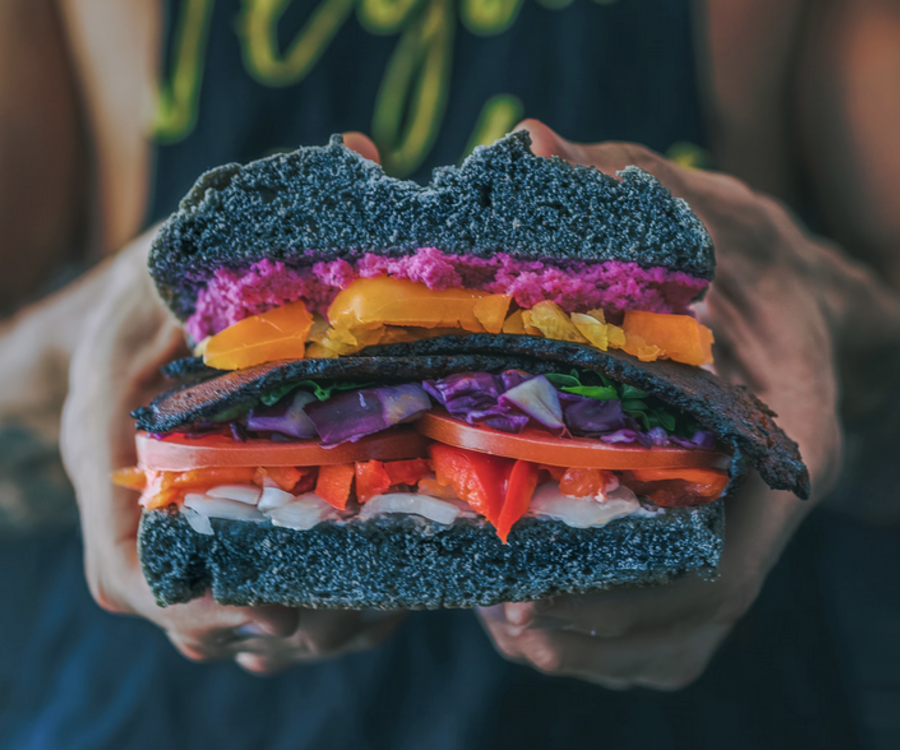
Sustainability on the plate will be a real game changer in 2025: more and more diners are making sure that their food not only tastes good, but is also sourced environmentally friendly and ethically responsibly (Mintel, 2024). Sustainable menus are therefore no longer just nice to have, but often a decisive factor when choosing a hotel. Many travellers want to minimise their ecological footprint without sacrificing indulgence – and preferably dine just as they would at home.

Hotels focussing on local, seasonal, and sustainable ingredients therefore certainly have a competitive edge. According to Booking.com's Sustainable Travel Report (2024), 75% of travellers intend to travel more consciously and sustainably in the next 12 months – and the menu is a major contributing factor.

Delicious sustainable options not only appeal to your guests' palates, but also to their environmental awareness – and that's a significant bonus!


3 steps your hotel can take to do something good for the planet with sustainable dining options:

  • Design sustainable menus: Offer vegan and vegetarian options in your hotel restaurant or at breakfast (at least two per category: starter, main course, dessert). Present this menu on your website or mention that you offer vegan and vegetarian options!
     
  • Be transparent: Inform your guests about the origin of ingredients. Focus on transparent communication by explaining how and where the food is produced and/or what its ecological footprint looks like. You should also integrate this information into your website.
     
  • Offer cooking classes and workshops: Organise workshops or cooking classes where guests learn how to cook more sustainably themselves. This not only creates a unique experience, but also promotes awareness for sustainable nutrition and food handling.
The 2025 Top Trends for the Hotel Industry

Profit: Virtual experiences prior to booking

Travellers increasingly want to take a virtual tour of their future holiday destination before they book – and this is where you come in! Virtual experiences not only facilitate the booking process, but can also boost your sales considerably. According to the unterwegs digital travel magazine, a full 78% of respondents attach great importance to being able to get a visual impression of the property and ambience before booking.

This is your chance to present your hotel in the best possible light, intrigue people, spark anticipation, and thus generate more bookings. How, you ask? Create a digital holiday experience on your website and on social media that gets your potential guests in the holiday mood online!

3 steps your hotel can take to generate more bookings through virtual experiences:

  • Offer virtual tours: Create 360-degree videos that allow potential guests to navigate through the rooms, lobby, restaurants, and other key areas of your hotel. Be sure to highlight different angles and details so guests get a full feel for the atmosphere and style of your hotel.
     
  • Use social media: Share interactive insights from your hotel with short videos and live tours on platforms such as Instagram and Facebook. Use Instagram stories or reels to present special offers and events or grant a peek behind the scenes. Encourage your followers to ask questions or take part in surveys to increase engagement.
     
  • Make your hotel website an experience: Turn your hotel website into an experience for visitors. Integrate elements such as virtual tours, image carousels, and informative pop-ups that guide guests through the various offers. Make sure that navigation is intuitive and user-friendly so that visitors can quickly find the information they are looking for – be it on room rates, amenities, or special events. This not only makes people want more, but also ensures that they stay on the hotel website longer, gain trust, and book!

Our MAdvice at the end: Desire for spontaneous adventures is on the rise! More and more travellers are booking holidays last-minute. Take advantage of this trend by offering last-minute deals and attractive last-minute promos – to perfectly cater to the thrill of the unplanned or late planners!


We hope that this short glance ahead has provided you with empowering ideas and sustainable inspiration. Let's work together to make hotels even more innovative, sustainable, and future-proof. Thank you for joining us on our journey to shape the hotel industry of tomorrow.

Here's to a year full of new opportunities and great sustainable experiences!

284 practical measures for implementing sustainability in the hotel industry

Small steps for great impact: We support you on your way to hotel sustainability.

Create a sustainable hotel that makes a positive impact for all, and delivers more profit and success for you.

Blog Block Image
The 2025 Top Trends for the Hotel Industry

Add new comment

Comment

Order

Plain text

  • No HTML tags allowed.
  • Lines and paragraphs break automatically.
  • Web page addresses and email addresses turn into links automatically.
sharing is caring

The urgency of addressing sustainability in the hospitality industry cannot be overstated, as its impact on the environment and local communities is significant. Therefore, in this actionable hotel sustainability blog post, we help hotels aspiring to make a meaningful impact on sustainability take the concrete steps toward achieving that goal.

Rooted in MAp’s framework of the 4 Ps of Sustainability — Purpose, People, Planet and Profit — this blog post outlines 25 key action steps for each P that can revolutionise the way hotels operate, emphasising that the journey towards sustainability doesn't have to be daunting or financially burdensome.

It’s built on the principle that every action, no matter how small, contributes to a more sustainable and responsible hospitality and travel industry.

Did you know? We compiled a full guide presenting 284 action steps to get you started on implementing hotel sustainability in a holistic, practical and #stepbystep way.

Untertitel
We guide you to implementing hotel sustainability by taking small steps with a big impact.
Blog main image
284 praktische Maßnahmen zur Umsetzung von Nachhaltigkeit in der Hotellerie
Paragraphs

Purpose

At MAp, we start every (sustainability) project with Purpose. It is the golden thread running through and connecting all other elements. And the sustainable steps your hotel takes reflects what your overall Purpose is.

But let’s be clear about what your Purpose actually is: Purpose is the reason your hotel exists – its overall WHY. It is the derived meaning that comes when you know that you created something that you believe matters – to yourself, to others, to society. Be aware, Purpose does not entail earning a Profit. It must go above and beyond making money and be broad, humanistic and socially-engaged, linking your hotel to a greater good. Your Purpose will be your guiding compass to making this world a better place and growing your business, at the same time.

WHY Purpose matters

  • Brings you clarity and clarity = power
  • Creates a culture of innovation
  • Attracts the right people (guests, employees, partners) for your hotel
  • Builds resilience through turbulent times
  • Delivers personal satisfaction to the hotelier

5 action steps to create a hotel with Purpose

1. Discover your personal Purpose
2. Define your hotel’s Purpose
3. Embed your Purpose into your hotel business
4. Prioritise your sustainability activities based on your Purpose: People, Planet or Profit
5. Activate your Purpose – because Purpose is a verb, not a noun!

People

The social dimension of sustainability, People, deals with the impact your hotel has on the society for which and in which it operates. It’s about being a good host, a helpful neighbour, a quality employer and partner, a responsible and reliable brand – while serving the direct and indirect needs of your stakeholders.

And who are those stakeholders? While there are many stakeholder groups involved in making a hotel project a success, in this blog post, we focus the action steps on four key groups that your hotel has a major impact on: 

  • Your guests
  • Your employees
  • Your partners
  • Your local community

Unfortunately, the hospitality and tourism industry has not always had a good reputation when it comes to its social impact. On a bright note, though, as the industry touches every human on earth in one way or the other, there is so much opportunity to positively contribute to the lives of your guests, your employees and partners, and your local community – now and in the future.

WHY People matter

  • Only teamwork makes the dream work
  • Money always comes from People
  • People will make or break your brand

5 action steps to serve your employees more inclusively

1. Achieve a 50/50 balance between men and women in your management
2. Give equal employment opportunities to People already residing in the local community
3. Give equal management positions to People already residing in the local community
4. Offer employment opportunities without discrimination by gender, race, disability, religion and more
5. Offer management opportunities without discrimination by gender, race, disability, religion and more

You may also download our free guide on how to write inclusive job ads here

Planet

We know that many hoteliers are aware of how closely connected their hotels are to their surrounding environments. However, the relationship between hotels and Planet is not a healthy one; hotels create enormous negative impacts on the environment all along their lifecycles.

Therefore, the ultimate goal of environmental sustainability is to minimise your hotel’s environmental impact on the region and the Planet at large through the following key elements:

  • Energy
  • Waste
  • Food
  • Water

By tackling these elements holistically, hotels are able to limit their environmental impact and achieve carbon neutrality. And by implementing smart environmental measures they realise significant savings too – a win-win!

WHY Planet matters

  • There is no Planet B
  • If you put Planet over Profit, your Profit will grow healthy as well
  • Act now to environmental regulations – or react later

5 action steps to combat food waste

1. Compost bio waste
2. Plant a biological garden
3. Cook to order and eliminate the buffet
4. Make smaller food portion sizes
5. Donate extra food

Learn more about the topic in our free waste guide

Every action, no matter how small,
contributes to a more sustainable and responsible industry.
@weareMAp

Profit

We won’t argue: Profit is important. Without it, your hotel will cease to exist. But what is also important is that the Profit earned is:

  • Achieved in a sustainable way = not at the cost of People and Planet
  • Distributed in a sustainable way = used to secure your hotel’s operationality in the future while also making this world a better place

Money is the lifeblood of your business, but it is not your reason for being – that’s what Purpose is for. But how can you pursue your Purpose if you are not profitable and financially strong?

That’s the paradox: organisations that only exist to earn a Profit don’t last long. But organisations that don’t prioritise Profit can’t survive long enough to fulfil their Purpose. In other words, in the context of sustainability: it’s hard to be green when you’re in the red!

WHY Profit matters

  • Profit allows for progress in your business
  • Profit enables you to uplift, empower and better serve your stakeholder groups
  • Profit makes the world a better place (when you share it with the world)

5 action steps to practice philanthropic giving

1. Donate a share of your Profit
2. Create an employee donation scheme
3. Match employees’ donations
4. Create a guest donation scheme
5. Match guests’ donations

Take action now!

Hotel Sustainability Action Plan

We have compiled a full guide presenting 284 action steps to get you started on implementing hotel sustainability in a holistic, practical and #stepbystep way.

Check Top-Posts
Set to 2nd Top-Post
Quote Author
MAp Boutique Consultancy
Quote Subtitle
contributes to a more sustainable and responsible hospitality and travel industry.
Quote Title
Every action, no matter how small,
Blog Block Image
284 action steps to become a sustainable hotel

Add new comment

Comment

Order

Plain text

  • No HTML tags allowed.
  • Lines and paragraphs break automatically.
  • Web page addresses and email addresses turn into links automatically.
Types
sharing is caring

What is hotel positioning? And who decides what the positioning of your hotel is? Understanding hotel positioning is paramount for independent hoteliers striving for success.

In this insightful blog post, we delve into the intricacies of hotel positioning — answering the fundamental questions of WHAT it entails and WHO holds the reins in determining your hotel's positioning strategy. Let’s get started!

Untertitel
Learn how to successfully position your hotel on the global map
Blog main image
The importance of strategic hotel positioning for independent hotel businesses MAp Boutique Consultancy
Paragraphs

What is hotel positioning?

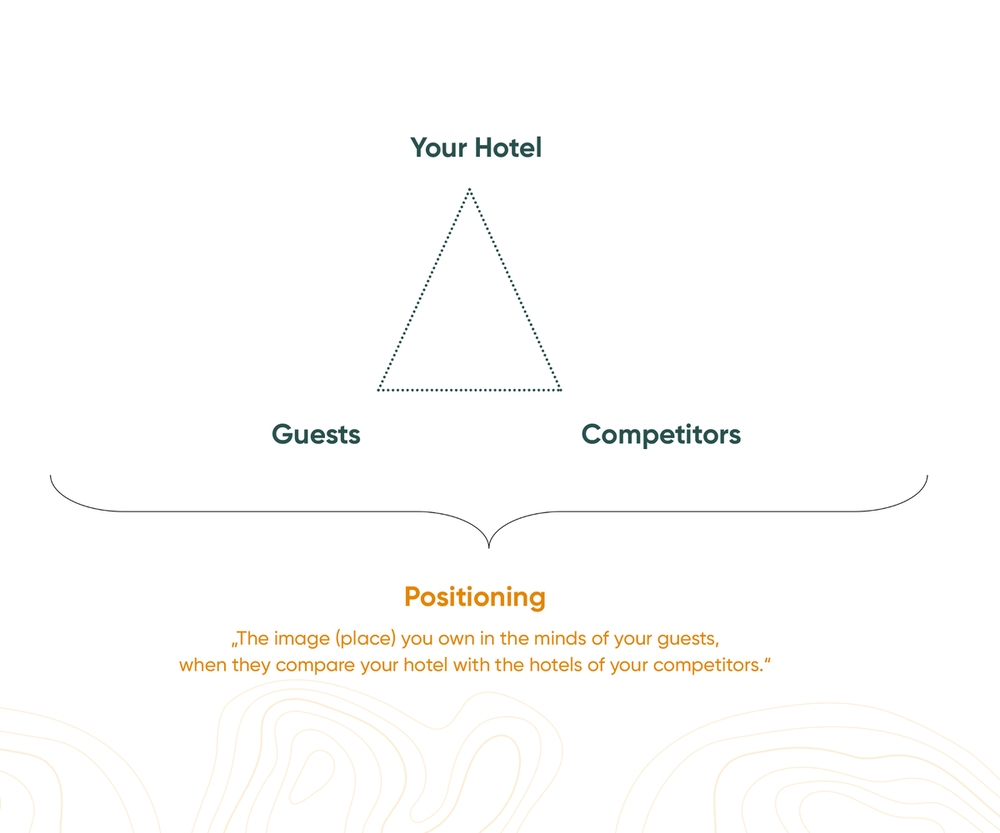
As you see in the following illustration, defining a hotel’s positioning is an essential part of every hotel concept we create at MAp Boutique Consultancy.

Once we know what your hotel’s unique Purpose is, and for which People your hotel exists, we embark on defining your hotel’s unique position on the MAp.

The importance of strategic hotel positioning for independent hotel businesses

Our hotel clients always get excited about this hotel positioning exercise. But, there is a small “downer” you should know: even if we strive to achieve a clear and unique hotel positioning, ultimately it is not us who decides what the hotel positioning is. The hotel positioning is defined by your People, above all, your guests, and this implies that your control over your hotel positioning is limited.

The importance of strategic hotel positioning for independent hotel businesses

This triangle is called the “Strategic Triangle” that serves to identify long-term business advantages or, as we call it, success potential. Sometimes it is also called the 3C Model, showing the tension field and interplay (therefore we use a triangle) that consists between Customer, Competitor and Company.

And: hotel positioning is the image (place) you own in the minds of your guests, when they compare your hotel with the hotels of your competitors.

If you aren’t different, then you’re in trouble

Now that you understand what hotel positioning is, let’s walk step-by-step in how we at MAp define a hotel’s unique positioning. The fact is, we are experiencing a crowded marketplace. Therefore, we aim to achieve a hotel positioning that:

  • Focuses on relevancy
  • Focuses on differentiation from competition
  • Is credible and attainable
  • Finds a place on the MAp where you / your services are the only answer for a specific someone Now as the last sentence implies, to create your unique hotel positioning you MUST DEFINE for WHOM you are working / WHO this specific someone is.

Only if you have your defined buyer personas ready (= your target guests) you can answer an important question: How do you find your unique position on the MAp? Therefore, if you haven’t defined your buyer personas yet – now’s the time to do it!

Even if we strive to achieve a clear and unique hotel positioning,
ultimately it is not us who decides what the hotel positioning is – it’s the guest.
@weareMAp

Finding your unique position on the MAp

Next, you have to know on which MAp to position your hotel. When working with clients, we like to use a simple and effective positioning matrix. For the purposes of this blog post, let’s keep it simple, and that means you should decide if your MAp is i.e. boutique luxury hotels, family hotels, boutique city hotels, etc.

Once you have defined in which segment to position your hotel, most often you’ll realise that you’re not the first to do so! Even if you’re tapping into a growing market and seeking to serve your specific audience better than your competitors, our MAp advice is to keep digging and to add a further niche into the mix. And, of course, to strive to add something new and exciting to the segment and the hospitality landscape at large. 

How to create a positioning statement

Once you’ve defined your position on the MAp, it’s time to put it down in words. You can do so by crafting a hotel positioning statement. We’ll give you MAp’s positioning statement as an example.

MAp Boutique Consultancy

TO… Innovative investors and boutique hoteliers that need direction, empowerment and support in getting their ventures off the ground, levelling up and setting a strong foundation for growth

MAp IS… the leader in developing and empowering sustainable and innovative hotels and brands

THAT… makes hotels matter by creating a better future for People and Planet.

What’s yours?

TO… __________________________ (target audience / buyer personas) ________(your hotel) IS… __________________________ (your position on the map) THAT… __________________________ (what you will do for your target audience / buyer personas)

And another blog post comes to an end. Maybe we can summarise what we’ve learned today about hotel positioning best with a quote from Simon Sinek:

“In order to stand out, we have to know what we stand for.”

We hope that after our time together, what YOU stand for is much clearer. And if not, please do not hesitate to contact us in order to find your unique hotel positioning on the MAp.


Hotelmarketing

We market your innovative and sustainable hotel

Through our hotel marketing services, we position your independent and boutique hotel on the global MAp – in a unique, sustainable and authentic way.

Blog Block Image
The importance of strategic hotel positioning for independent hotel businesses MAp Boutique Consultancy

Add new comment

Comment

Order

Plain text

  • No HTML tags allowed.
  • Lines and paragraphs break automatically.
  • Web page addresses and email addresses turn into links automatically.
sharing is caring

At MAp Boutique Consultancy, we support hotels in their launches and openings, ensuring that each establishment is equipped with the necessary tools for near-term and long-term success. Central to our strategy is the development of effective hotel websites, which are indispensable assets in modern hospitality marketing and communication.

In this blog post, we offer a guide to creating hotel websites tailored specifically for new openings. Whether you're embarking on a new venture or seeking to enhance your hotel’s existing digital presence, our aim is to help you achieve optimal results in this competitive landscape.

Untertitel
The 3 steps to launching your hotel website
Blog main image
How to create a first landing page for your new hotel MAp Boutique Consultancy
Paragraphs

When crafting hotel websites for new openings, there's a fundamental principle we at MAp adhere to every time: step-by-step. Why? Because each hotel launch comprises a multitude of distinct elements and puzzle pieces that gradually come together over time. This dynamic often means that launching a complete hotel website right from the start is rarely feasible.

On the other hand, the time constraint underscores the importance of swiftly launching your hotel website. This urgency is driven by the necessity to initiate your hotel sales and communication activities, while also configuring essential programmes and systems—many of which are intricately linked to your hotel website.

Create a unique website design
that matches your hotel positioning and speaks to your defined target audience.
@weareMAp

Step 1 – Create a landing page

The first step to tackle when launching a new hotel is to create a landing page. A landing (or launch page) is a simple page where you present the main information about your new hotel opening. It gives you a first presence in the World Wide Web and offers People the chance to learn more about your hotel, contact you or register already for your hotel newsletter.

However, this doesn’t mean your landing page needs to be simple. It’s important to be meticulous about using the right brand design, presenting your hotel in the best light (i. e. with beautiful renderings), and telling your unique story in an emotional way.

Step 2 – Set up your hotel website and system

Once your hotel landing page is online, and hopefully is already attracting attention and enrolling potential guests, employees and partners to your newsletter, you have to work on the following tasks and elements:

  • Full hotel website: Create a unique website design that matches your hotel positioning and speaks to your defined target audience. Also make sure that your tone of voice matches your hotel brand and that you clearly communicate why guests should stay at your hotel in a compelling and emotional way.
  • System and programmes: Start working early enough on all the other programmes that are connected with your hotel website. Be those your correspondence manager system, the property management system, channel manager, newsletter tool, etc. While your hotel landing page is online, you can organise the set-up and do the testing in the background.

Step 3 – Launch your new hotel website

The big day to make a big splash has come! And you should not waste the opportunity to make this launch event special. Some ideas to help you with your hotel website launch:

  • Create a launch countdown on your social media channels
  • Ask friends and partners to spread the word via their channels
  • Send a newsletter to your contacts to make them aware that your new website is online
  • Combine the hotel website launch with a real event
  • Inform press and media about your website launch

Are you in the process of launching or opening a new hotel and are needing a stand-out hotel website? Then don’t hesitate to contact us, we’d be excited to bring your unique hotel online and out into the world.

Set you apart from the sea of competition

We create your website

Through our hotel website services, we position your independent and boutique hotel on the global MAp – in a unique, sustainable and authentic way.

Blog Block Image
How to create a first landing page for your new hotel MAp Boutique Consultancy

Add new comment

Comment

Order

Plain text

  • No HTML tags allowed.
  • Lines and paragraphs break automatically.
  • Web page addresses and email addresses turn into links automatically.
Types
sharing is caring

Welcome to this blog post about an important topic close to our hearts: Hotel Marketing! It's not just an area of expertise for us; it's a passion that fuels our enthusiasm! So, let's dive into this subject. We'll explore the essence of marketing, debunk misconceptions, and unveil strategies tailored specifically to help small hotels and businesses to thrive. 

Untertitel
MAp specialises in empowering small and independent hotels, as well as businesses, to excel in their marketing endeavors
Blog main image
Hotelmarketing: Unsere Top 3 Tipps für kleine Hotels und Unternehmen MAp Boutique Consultancy
Paragraphs

Defining (Hotel) Marketing

As a hotel marketing agency, our initial step in any new collaboration is to establish a clear understanding of the dynamic landscape of marketing. It's essential to recognise that marketing has undergone substantial transformations over the past decades, adapting to changing consumer behaviours and technological advancements. Traditional marketing, the traditional method of developing, promoting and selling products or services, has been the cornerstone of marketing strategies for many years.

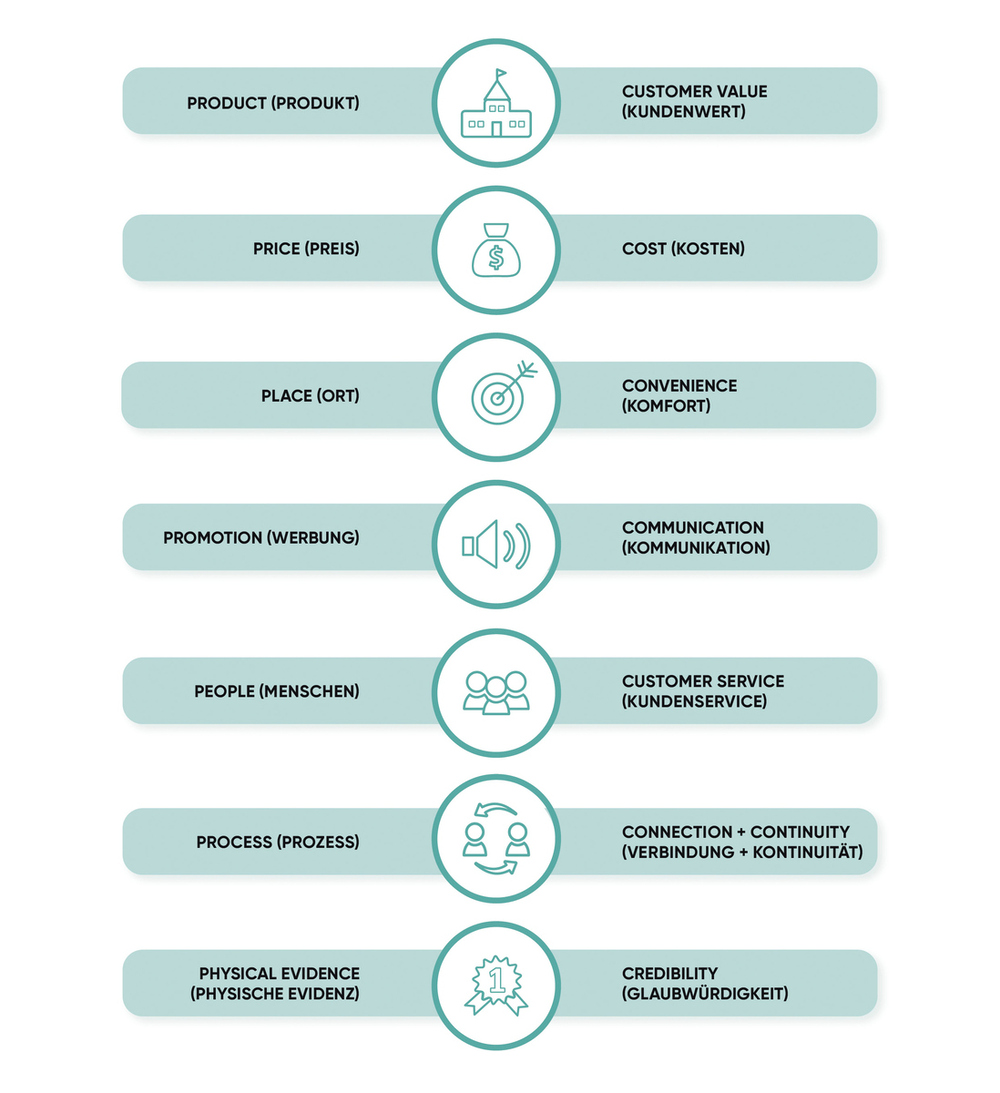
Initially focusing on the 4 Ps – Price, Product, Place, and Promotion – this approach has since evolved to encompass a broader spectrum and additional dimensions - like Physical Evidence, People, and Processes - forming what is commonly known as the 7 Ps.

However, it's crucial to acknowledge alternative perspectives in marketing. In 1973, Professor Koichi Shimizu introduced a paradigm shift with his innovative 7 Cs Compass Model. Unlike the company-centric focus of the Ps, the 7 Cs framework adopts a consumer-centric viewpoint, emphasising crucial elements such as Customer Value, Communication and Convenience (Carniel, 2022). This shift highlights the importance of aligning marketing strategies with the ever-changing needs and preferences of modern consumers.

Hotel Marketing: Our top 3 tips for small hotels and businesses
We encourage you to engage in marketing endeavours that you take pride in
– ones that address People's needs and contribute to creating a better world for everyone!
@weareMAp

For decades, the P and C models helped hotels and businesses to define their marketing mixes and align their marketing activities with their respective markets (as implied by the very term “MARKETing”).

However, it became increasingly apparent that the essence of traditional marketing began to veer away from its original intent – to glean insights from the market, develop products and services tailored to meet market needs, and enhance overall market value. Instead, there emerged a growing reliance on persuasion and manipulative messaging to compel consumers to purchase products or services.

Over the last decades, however, new marketing thought leaders have reshaped the definition and perception of marketing. Seth Godin (2019) defines marketing as follows in his ground-breaking book “This is Marketing”:

Marketing is the generous act of helping others become who they seek to become. Instead of selfish mass, effective marketing now relies on empathy and service. Marketing is not a battle, and it’s not a war, or even a contest. Marketing is the generous act of helping someone solve a problem. Their problem. Effective Marketing is about understanding our customers’ worldview and desires so we can connect with them. It’s focused on being missed when you’re gone, on bringing more than People expect to those who trust us. It seeks volunteers, not victims.

Our 3 Hotel Marketing tips for small hotels and businesses

1. Clearly define your hotel marketing budget

As a hotel marketing agency, we always say: you need to invest some money to make more money. And this totally applies to hotel marketing, where strategic investments yield substantial returns! Unfortunately, it’s too often that small and independent hotels never take the time to create a marketing budget.

Therefore, our MAdvice:

  • Define an annual marketing budget. As a rule of thumb, your hotel marketing budget should be between 8 and 12% of your hotel turnover.
  • Define the return on investment you expect, e.g. how many new guests, the ADR, the occupancy rate, etc.
  • And then, make sure to define HOW you will measure the ROI! Because, as we like to say to our clients: what you’re not measuring, you can’t optimise.

2. Hope is NOT a strategy

After defining your hotel marketing budget and your hotel marketing goals, it’s time to plan it out. Together with our clients, we start with a yearly plan and scheduling tasks, actions, outputs, per quarter. As a last step, we define top goals per month.

Our MAdvice: set monthly goals aligned with your quarterly goals. Be flexible about how you are going to reach them.

3. Don’t try to be everywhere – be specific

One of the biggest pitfalls we see hotels and small businesses fall into is trying to be “everywhere”. Let’s look at hotel social media to illustrate what we mean by this.

There are an array of social media channels out there, with every channel having its own rules, do’s and don’ts. All too often we see that hotel clients try to be on all of them, without realising that being specific and choosing the channels carefully, and planning the content out in detail on those important channels (= the channels your potential guests and clients are on), delivers much better results. Our guiding mantra at our hotel marketing agency is: Class over Mass!

Our MAdvice: choose your channels wisely, be focused and deliver the best content you can. Quality always wins in the long-run.

Bonus MAdvice: Don’t forget sustainability - and practice sustainable marketing!

As we highlighted earlier in this blog post, marketing encompasses seven key functions, often represented by the 7 Ps or 7 Cs. Let's delve into one of these functions in this concluding section: communication. Traditionally, marketing communication has been characterised as loud, paid, persuasive, and sometimes manipulative. However, if you aspire to elevate your hotel marketing for sustainable success, we at MAp advocate for one overarching principle: sustainability.
Sustainable Communication means you are communicating in a socially-responsible and ecological manner, with no negative impact to society, the economy and the Planet. The objective of Sustainable Communication is therefore to reduce the environmental and social footprint of communication activities and to make sure that all can profit from them.

We’re convinced that the future of marketing (AND hospitality) is sustainable, and you can learn more on this topic here. As always, we extend our gratitude for your commitment to #neverstoplearning.

After reading this blog post, we encourage you to engage in marketing endeavours that you take pride in – ones that address People's needs and contribute to creating a better world for everyone!

Hotel Marketing

We market your innovative and sustainable hotel

Through our hotel marketing services, we position your independent and boutique hotel on the global MAp – in a unique, sustainable and authentic way.

Blog Block Image
Hotel Marketing: Our top 3 tips for small hotels and businesses MAp Boutique Consultancy

Add new comment

Comment

Order

Plain text

  • No HTML tags allowed.
  • Lines and paragraphs break automatically.
  • Web page addresses and email addresses turn into links automatically.
Types
sharing is caring

Is it time to bring your new hotel project to market? To launch it in style and make a big splash? Then this blog post is for you, because you never get a second chance to make a first impression!

At MAp Boutique Consultancy, we have supported hotel developments and new hotel projects since the founding of our hotel agency, and so we share with you our top recommendations for success and pitfalls to avoid when launching a new hotel. #onwards

Untertitel
Our top recommendations for success and pitfalls to avoid when launching a new hotel
Blog main image
What to consider when opening a new hotel MAp Boutique Consultancy
Paragraphs

Our TOP 3 recommendations for a successful hotel opening

1. Create a hotel opening strategy starting at least one-year pre-opening

Having a hotel opening strategy in place early is crucial! At MAp, a hotel opening starts at least one year before the hotel opens and involves a wide range of areas, topics and tasks to consider.

  • From refining the hotel concept and positioning,
  • To creating and activating the hotel brand,
  • To setting up a successful launch campaign including communication and sales channels,
  • To searching for, identifying and onboarding the right partners,
  • To producing offline and online communication tools and materials, etc.

The earlier your hotel opening strategy is in place, the better! There’s a lot of work to be done!

2. Create an action plan:

What, Who, When, How Once your hotel opening strategy is in place, make it as tangible as possible and define clearly:

  • WHAT needs to be done,
  • By WHOM (responsibilities),
  • WHEN (time plan),
  • HOW (aligned with the hotel’s values)

Make sure all partners are briefed accordingly and everybody has the tools and resources needed to make it happen.

3. Monitor, optimise, push

During hotel openings, often our role at MAp consists of aligning all partners, monitoring results, optimising processes, and above all, pushing through so that things happen when they are supposed to per the hotel opening plan.

Why is it crucial to have that one person or responsible party closely monitor the process? Because the closer the hotel opening comes, the more we can compare it to finalising a puzzle. And if one puzzle piece is missing, the other parts aren’t able to do their work.

You never get a second chance
to make a first impression!
@weareMAp

3 Pitfalls to avoid when launching a new hotel project

After sharing with you our top three recommendations for opening a new hotel, let’s wrap this blog post up with the pitfalls we encounter most often during new hotel openings.

1. Running out of budget

Oh yes! You have budgeted well, but then, the closer you get to the hotel opening, the fewer the funds. Now the problem is that this hotel opening phase, the launch, is your only chance to make a first impression. So, if you’re not anymore able to run the campaigns, invest in the stylish website or bring on other partners, you truly miss a big chance, and this will hurt you in the long-run.

2. Required material is not available

How can you promote your hotel, if no renderings or photos are available? Or your key messages and pitchlines haven’t been created? We do agree that no hotel launch will be perfect and there will always be some missing pieces. But if essential basics, such as visual material, are missing, you won’t be able to push your new hotel in the market. Therefore, make sure to identify early enough what basics you need to launch your new hotel project successfully.

3. Construction gets delayed

We end this blog post with the most common pitfall when talking about new hotel developments. You’re set to open on date x, but construction gets delayed and all your great hotel opening ideas are becoming a mess. Therefore, we always make sure that we announce a concrete opening date as late as possible. For example, start by communicating Spring 2024, and communicate the concrete date of May 1, 2024 only when you know it’s an air-tight realistic and achievable date.

What else comes to your mind when talking about hotel openings? What are the pitfalls you have encountered during new hotel project launches? We are looking forward to reading your insights in the comments.

And if you are in the process of launching a new hotel and need some support, let us know – we are looking forward to hearing from you.

Hotel Marketing

We market your innovative and sustainable hotel

Through our hotel marketing services, we position your independent and boutique hotel on the global MAp – in a unique, sustainable and authentic way.

Blog Block Image
What to consider when opening a new hotel MAp Boutique Consultancy

Add new comment

Comment

Order

Plain text

  • No HTML tags allowed.
  • Lines and paragraphs break automatically.
  • Web page addresses and email addresses turn into links automatically.
Types
sharing is caring

In the ever-evolving hospitality industry, staying ahead of the competition and meeting the dynamic demands of travellers is paramount. One effective strategy that can breathe new life into a hotel's identity and boost its appeal is undergoing a hotel rebrand. But why is rebranding your hotel important, when should you consider it, and how does it work?

In this blog post, we’ll address these questions and provide you with a clear roadMAp for action, outlining five concrete steps to successfully rebrand your hotel. These steps will empower you to navigate the transformation process and make sure that your establishment remains a highly-desired choice for your guests.

Untertitel
When, why and how to successfully reinvent your hotel image
Blog main image
Hotel-Rebranding MAp Boutique Consultancy
Paragraphs

WHAT is a hotel brand?

First, let’s start with some basics: WHAT is a hotel brand? The answer to this question might seem obvious, but all too often as a hotel boutique consultancy, we realise at the beginning of a hotel branding or hotel rebranding process that it is misunderstood. Therefore, let’s start this blog post with a short definition of what a hotel brand is and what it is not:

A hotel brand is NOT only the hotel logo or the hotel visual design. A hotel brand encompasses a whole set of elements from the visual identity (i. e. your hotel logo, the type fonts you have chosen, the uniforms your employees are wearing), to the visual identity (i. e. your hotel name, slogan, tone of voice) to sensory branding (i. e. how your hotel smells and sounds). In addition to these tangible elements, it includes intangible ones too, like your hotel’s vision, mission and values, which make up your hotel brand’s foundation.

In other words, your hotel brand is the way your hotel products and services are perceived, and therefore, hotel branding encompasses every action your business takes that creates a unique identity in the minds of your potential audience and other People (such as team members, partners, the local population).

Altogether, your brand is a reason to choose your hotel over a competing hotel. That’s why at MAp we like to quote Steve Forbes: “Your brand is the single most important investment you can make in your business.”

WHEN to consider Hotel Rebranding

It’s essential to understand when and in which situations rebranding your hotel might be the right choice for you. Over the last decade working as a creative hotel agency, we have identified the following top 5 indicators that it might be time to reinvent your hotel brand:

1. Market Trends and Shifting Demands:

It's vital to keep a keen eye on market trends and shifting guest demands. Recognising new preferences and emerging opportunities in your target market can signal the need for rebranding of your hotel. Pay attention to guest feedback and reviews, as they often provide valuable insights into the need for change. Over the last years, one of the biggest market trends and shift in demands we have seen is “Sustainability”. Therefore, at MAp we are not only creating stylish and unique brands, but sustainable ones too. You can learn more about sustainable hotel branding in this blog post.

2. Hotel Life Cycle:

Consider where your hotel stands in its life cycle. Because rebranding can be a strategic move, moving your property i. e. from a new establishment to an established one. Or doing a rebranding can be a strategic choice when a hotel undergoes a change in ownership or management, it's often an opportune time to rebrand to reflect the new direction, vision and strategy of the hotel. The same goes for property renovations or expansion.

3. Declining Occupancy and Revenue:

If your hotel is consistently experiencing a decrease in occupancy rates and revenue, or a deluge of bad reviews, it may be time to rebrand to attract a different customer segment or revitalise your image. However, as a hotel creative agency that develops innovative and sustainable hotel concepts, we emphasise that when talking about declining occupancy and revenue the issue often lies deeper. If you are not clearly positioned in the market or do not have a distinctive hotel concept, a rebranding might not help you in the long-run without the strategic groundwork being done as well.

4. Outdated Brand Image:

If your visual identity and elements, such as logo or interior décor, no longer align with the target market's expectations or the current design trends, it may be time for a hotel rebrand to create a more contemporary and appealing image. Also, here it is important to check on the other brand elements and evaluate if they need a refresh too.

5. Market Competition:

Increased competition in your destination or segment may require you to rebrand to stand out and differentiate your hotel from others, showcasing unique features or experiences. This is also always a good time to check on your hotel positioning and hotel concept.

WHY Rebrand Your Hotel

So, why should you consider rebranding? The answer lies in the potential benefits.

  • To make sure that competition is not drowning you out: Rebranding can give your hotel a competitive edge. Not rebranding can leave you falling behind in a highly-dynamic industry.
  • To align with a new vision: Ensure that your branding aligns with your hotel's evolving vision. Case studies of successful rebranding efforts can serve as inspiration.
  • To reach your desired customers: If you're not attracting your desired customer demographic, it might be time for a rebrand. Understand how rebranding can directly impact the guest experience and how improved amenities and services can create lasting impressions.
  • To ensure boosting Profit: Rebranding isn't just about aesthetics; it's about the bottom line. Data shows that successful rebranding is likely to lead to increased Profit as well.

HOW: 5 Steps to Rebrand Your Hotel

Now that we've explored WHEN and WHY rebranding your hotel is essential, let's dive into the HOW - to ensure your transformation is not just an idea, but an effectively-implemented reality.

1. Evaluate your hotel concept and your hotel positioning:

As we say at MAp Boutique Consultancy, first the concept, then comes the rest. This means that you must be very clear about your strategic definition, your hotel positioning in the market, etc. Only then you can derive from it a hotel brand (or can conduct a hotel rebranding) that is sustainable and delivers long-term success.

2. Approach your rebranding holistically and collaborate with a creative agency or hotel consultancy:

Visual Identity and Design: Beautiful things make people happy. Therefore, in this area you can redefine a new or refresh your existing logo, colour schemes, type fonts, etc. Verbal Identity: Does your hotel brand “sound” like every other? Is your slogan strong or weak? Have you identified keywords and statements to repeat in your communications? Is it time to define your unique tone of voice? Sensory Branding: How does your hotel smell and feel? Does it reflect your hotel brand and is it curated? We have created a series of blog articles that gives you further insights on how your hotel can win at sensory branding.

When you recognise that your hotel needs a change or a refresh,
it's not an admission of fault but the first step towards enhanced success.
@weareMAp

3. Think toward the hotel rebrand implementation early on:

As you know by now, at MAp we create sustainable brands. This means that right at the start of a hotel rebranding process, we think about HOW to create a hotel brand that is flexible and can be implemented in a sustainable way = using resources in the most efficient way.

4. Communicate your hotel rebrand internally before you communicate it externally:

Ensure that your staff is well informed to align with the new brand identity. Explain why the hotel rebrand was necessary and how the new brand supports the strategic objectives of your hotel. Also make sure that relevant team members know how they must use and implement the new hotel brand.

5. Launch your new hotel brand the right way:

Use your hotel rebrand to make a big splash. Create an emotional story about the why and the what = what you are expressing with your new hotel brand, what you stand for (your Purpose) and for whom you are the best choice. Engage with both current and potential guests through various channels to generate anticipation. Find important insights about Storytelling HERE.

And then?

Once we launch a new hotel brand in the market, we continuously gather feedback and measure the success of the hotel’s rebranding efforts. This gives us important insights on how we can further optimise the hotel branding, and of course, the success of the hotel business.

Rebranding a hotel is a pivotal decision that should be approached with careful consideration and meticulous planning. A well-executed hotel rebranding effort can breathe new life into a property, attract a broader and more loyal customer base, and rejuvenate a hotel's financial performance. On the other hand, a mismanaged rebranding can lead to confusion, alienate existing customers, and result in significant financial losses. Therefore, getting rebranding right is of paramount importance.

Hotel Branding

Make your hotel matter

If your business is the body, your brand is the soul. MAp Boutique Consultancy crafts sustainable hotel and hospitality brands that are purpose-driven and sustainable, rooted in beauty and authenticity. That’s how we make your brand matter.

Blog Block Image
Hotel-Rebranding MAp Boutique Consultancy

Add new comment

Comment

Order

Plain text

  • No HTML tags allowed.
  • Lines and paragraphs break automatically.
  • Web page addresses and email addresses turn into links automatically.
sharing is caring

It happens regularly that we’re asked about WHAT MAp is. Are we a creative hotel agency? A hotel branding firm? A hotel marketing agency? Or are we a hotel consultancy?

Over the last 10 years, we’ve asked ourselves these questions too, and today we share with you our thoughts about WHAT successful hotel consulting is, HOW we approach hotel consulting at MAp and WHY and WHEN hoteliers should consider collaborating with a hotel consultancy.

Untertitel
What it is and why it might be for you
Blog main image
Hotel-Consulting Hotelberatung MAp Boutique Consultancy Zurich Switzerland
Paragraphs

When we started MAp approximately 10 years ago, we avoided the term “hotel consulting” or “hotel consultancy” nearly entirely. Why? Because coming from management and operational roles in boutique and independent hotels, we collaborated with many hotel or hospitality consulting firms and felt we got a lot of “blah blah blah” without any practical grip. That the ideas seemed to be good on paper, but there was no way (or not enough budget and/or wo-men power available) to make them work in real hotel life.

But then in 2020, we started our own rebranding and repositioning process, and by talking to clients and partners we realised that at the core of it all we ARE a hotel consulting agency offering an array of helpful services to independent and boutique hoteliers.

Only then, we added the term to our brand name “MAp Boutique Consultancy,” and officially labelled MAp a hotel consulting firm. However, not without first making sure that we approach hotel consulting in our own unique MAp style :-). 

HOW do we approach hotel consulting at MAp?

Based on our deep experience in operational and management roles in boutique and independent hotels, as well as in branding, marketing and web agencies, there are a few basic rules we follow at MAp when consulting hotels:

1. Our hotel consulting is practical and actionable!

Yes, as part of our hotel consulting services we share theoretical insights, market data, trend forecasts, etc. However, we elaborate the content in such a way that our clients and hoteliers can work with it = that they understand what all this means for their hotel operations and team members in terms of goals, action steps, initiatives, etc. If it is not practical and actionable – it is NOT happening.

2. #Stepbystep This is one of MAp’s core mantras for a reason!

Successful and sustainable hotel consulting is a process and needs to be adapted to operational realities as well as to the timing and rhythm of hotel clients. Only if the approached topics build on each other and hotel consulting is seen as a #stepbystep process, we can achieve sustainable success and keep the involvement and motivation of our clients and hotel team members high.

3. Everything is figuroutable.

Every hotel is a microcosm on its own. Sometimes it feels like a small little village with its own culture and dynamic. And even if there are some basic rules that apply to every hotel business, there are also individual problems that need to be addressed with tailormade solutions. And this is something we truly love about our job as hotel consultants: To dig deeper, to explore new options, to look at other industries, to find partners and the right inspiration. Because something we have proven over and over again to ourselves and to our clients is: Everything is figuroutable! Thank you Marie Forleo.

See hotel consulting not only as a potential tactic to solve your problems
but to bring your hotel and business to the next level.
@weareMAp

WHEN and WHY should hoteliers consider collaborating with a hotel consultancy?

Now of course you might ask: Is it time for me to collaborate with MAp as a hotel consultancy? The answer is yes, if:

1. You need expertise and knowledge.

That’s the number one reason that clients start collaborating with us. They need expertise they just don’t have in-house. For example, when they want to rebrand their hotel, strengthen or evaluate their hotel positioning, or the moment when they embark on a hotel development process.

2. You need an external point of view

As a hotel owner or manager, you are so deeply involved in operations or working for so many years in the same hotel, that you turn “operationally” blind. When you realise that you are not able anymore to evaluate situations in a subjective way, it’s time to bring in an outside perspective.

3. You need extra wo-men power and/or a sparring partner

Especially when collaborating with independent and boutique hotels, we see that we don’t only act as external consultants, but quickly turn into an external department that supports the management and various department heads with a wide array of services. We also realise how helpful it is for our clients to have someone sitting “outside” they can approach with questions and as a sparring partner.

We hope this blog post gave you some good insights on HOW we approach hotel consulting at MAp, and when it might be time for you to start a hotel consultation to optimise your results.

Before we sign off, our last piece of advice for you: Consider hotel consulting BEFORE the sh*t hits the fan. Unfortunately, we’re often approached by hoteliers when the situation is already more than dire and hotel consulting is equal to cost-cutting in order to survive in the short-term. Don’t let that happen and invest in hotel consulting and strategic guidance well ahead. See hotel consulting not only as a potential tactic to solve your problems but to bring your hotel and business to the next level.

4. Keep it positive and inspiring!

One thing we learned right away when we started our hotel consultancy is: the HOW often matters more than the WHAT. Of course, we must know our job and deliver expert advice, but one thing that attracted and retained clients over the years was our spirit of unshakable optimism and expressing this positivity in our work (BTW: positivity is one of our leading values). Therefore, the fourth of our basic rules of hotel consulting is to add positivity, playfulness, and some colour and inspiration to our work.

5. Set new goals and objectives every year.

As we mentioned earlier, hotel consulting is a process, and with some of our clients we collaborate for many years. Therefore, it is of utmost importance to keep it fresh and creative. To set new objectives at the beginning of every year to keep everybody involved motivated and thriving. It’s critical to continuously learn and grow together to achieve the best results.

Hotel Concept Development

First the concept, then comes the rest

A sustainable hotel concept helps you to gain clarity, use resources efficiently, plan ahead, stand out from the crowd, build alignment and, ultimately, create a better future for your hotel – and for people and planet.

Blog Block Image
Hotel-Consulting Hotelberatung MAp Boutique Consultancy Zurich Switzerland

Add new comment

Comment

Order

Plain text

  • No HTML tags allowed.
  • Lines and paragraphs break automatically.
  • Web page addresses and email addresses turn into links automatically.
Types