
sharing is caring

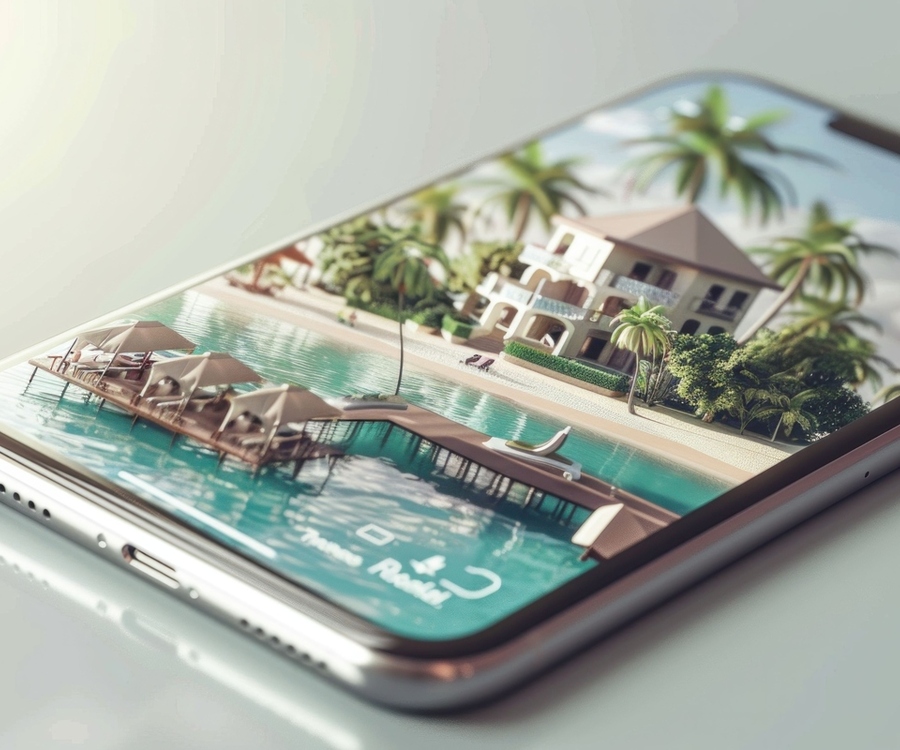
We talk a lot about green buildings, zero-waste breakfast buffets and eco-friendly amenities – but did you know that also your hotel’s website can be sustainable? 

It might not be THE main cause of your carbon footprint, but from oversized files to inefficient hosting, the way your website is built and maintained can either contribute to the problem – or become part of the solution. 

The good news? A sustainable website doesn’t mean compromise. It means clarity, speed, better accessibility – and a digital presence that reflects your values.

Untertitel
Your hotel’s website can help to reduce carbon emissions, enhance guest experience, and tell a better story – sustainably.
Blog main image
How to Create a Sustainable Hotel Website That Guests (and the Planet) Will Love
Paragraphs

What makes a website sustainable?

Here are the key elements of a climate and social-conscious website:

#1: Lighter = greener

A lighter website consumes less data and energy – good for both the planet and your guests’ experience. 

How? 

  • Optimise image sizes
  • Remove unnecessary scripts
  • Avoid bloated design elements 

The result: faster loading times, lower emissions and a better user experience. A true win-win.

#2: Green hosting

Where your website is hosted matters. Opt for providers that run on 100% renewable energy or at least have transparent carbon offset policies. Look for green certifications or providers listed by organisations like The Green Web Foundation.

#3: Design for simplicity

Minimalist design isn’t just beautiful – it’s efficient: 

  • Fewer pages
  • Smarter navigation
  • Cleaner code 

All of this helps to reduce energy consumption and increase usability. Plus, simplicity improves conversion and guest satisfaction.
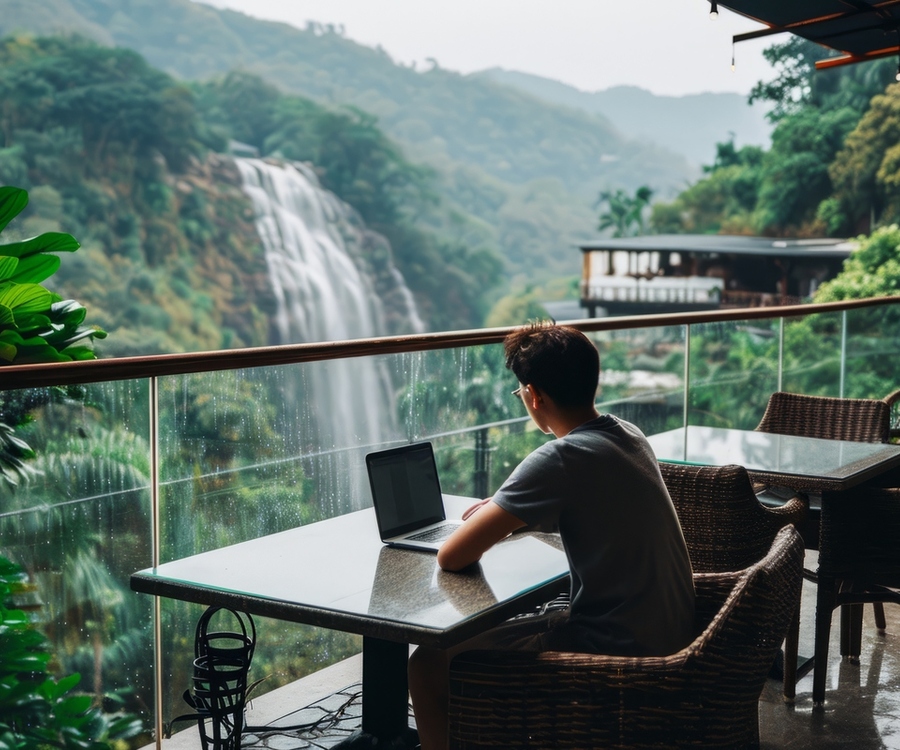
How to Create a Sustainable Hotel Website That Guests (and the Planet) Will Love

#4: Prioritise quality content

Every piece of content you publish uses up energy. So ask yourself: Does it need to be there? 

Long videos, endless image galleries and autoplay features let emissions soar. Prioritise: 

  • Quality over quantity
  • Compressed, efficient formats (e.g. SVG, WebP)
  • Static content where possible 

Bonus: sustainability-focused content builds trust with like-minded travellers.

#5: Sustainable visual and verbal content

A sustainable website reaches out to everyone — visually and verbally. 

For visuals:

  • Choose images that are inclusive, diverse and relatable to your entire audience.
  • Ask yourself: are your photos appropriate for all target groups? (Tip: In our People Handbook we share the example: if a woman in an image could just as well be replaced by a plant or a puppy, perhaps the image isn’t adding real representation.)  

For language: 

  • Avoid ableist language, for example phrases like “Do you see...” – not everyone is able to. 
  • Be mindful with abbreviations – keep them clear and accessible. 
  • Write alt tags for screen readers (not just for SEO). Rule of thumb: they’re for people who are visually impaired – not for Google. 
  • And last but not least: avoid greenwashing or greenhushing. Authentic communication matters. (More on this in our handbook to transparent sustainability communication).
The most sustainable website
is the one that does the most with the least.
@weareMAp

#6: Accessibility = inclusion = sustainability

A sustainable website isn’t just energy-efficient – it’s also accessible to everyone. This means designing for people with different needs, devices and abilities. Accessibility is a core part of digital sustainability, because it ensures your message reaches as many people as possible, without barriers.
 
Here’s what it can look like in practice: 
  • Text size adjustment for users with visual impairments 
  • Keyboard navigation and screen reader compatibility 
  • Language alternatives or translation features 
  • High-contrast modes for better readability 
  • Simple layouts that work across devices and bandwidths 
 
When you design with accessibility in mind, you’re not just complying with standards – you’re building a more inclusive, human-centred web. And that’s sustainability at its best.
 

#7: Monitor and measure

Tools like Website Carbon Calculator or Ecograder can help you track your site’s footprint. Measure, then improve – just like you would with any other part of your sustainability strategy.

The hospitality edge

For hotels, a sustainable website isn’t just technical – it’s part of the guest journey. It’s the first impression. A fast, green, values-aligned website says: we care.  

It can also become a powerful storytelling tool. Use it to highlight your initiatives, engage responsible travellers, and demonstrate your commitment – not just at your premises, but in your pixels. Take inspiration from the Príncipe Collection website, which was planned, designed and programmed by MAp.

Summary

Sustainability isn’t just something you install – it’s something you live, breathe and design for. That includes your digital space. 

Creating a sustainable hotel website is a practical step towards a lower-impact future – and a smarter, more engaging experience for your guests. It shows that your commitment goes beyond the obvious. It’s thoughtful, intentional, and woven into every detail – including your pixels. ☻

This is what it means to MAp out a better future.

Free Template

Write your hotel sustainability story in 3 simple steps (PDF)

This free template will guide you through each step in order to piece together your unique and authentic hotel sustainability story. It also includes an overview of the 10 Principles of Sustainable Communication.


Blog Block Image
How to Create a Sustainable Hotel Website That Guests (and the Planet) Will Love

Add new comment

Comment

Order

Plain text

  • No HTML tags allowed.
  • Lines and paragraphs break automatically.
  • Web page addresses and email addresses turn into links automatically.
Categories
sharing is caring

🎧 Prefer listening to reading? Listen to the article here. ▶️


For many hotels, communicating their sustainability practices to their guests and other stakeholders is a major pain point. Why? Because of the fear of greenwashing, a term that arises again and again when it comes to communicating sustainability.

Greenwashing refers to the practice of making false or misleading claims about the environmental benefits of a product or service in order to appeal to environmentally-conscious consumers. It’s about misleading consumers into thinking that a product or service is more environmentally friendly than it actually is.

As the threat of greenwashing is real, we see that nowadays companies even opt to downplay or not communicate their sustainability efforts at all in order to avoid being perceived as greenwashers. There’s even a term for this: Greenhushing, the deliberate concealment of information regarding the sustainability practices applied.

By greenhushing = by underreporting the sustainability steps your hotel is taking, the result is that guests and your other important stakeholders miss the chance to be informed, educated and inspired. Of course, sustainability is not a sales strategy, it’s a business strategy that involves implementing sustainability holistically into all aspects of your hotel. Therefore, when it comes to communicating sustainability to your guests and others, the most important thing you should know is this: sustainability communication must follow action! That’s the ultimate key to avoiding the trap of greenwashing.

Untertitel
What to avoid, what to say instead, and how to prove it — plus a free template to write a hotel sustainability story guests trust.
Blog main image
Greenwashing im Hotel vermeiden: Entwickle deine Nachhaltigkeits-Story
Paragraphs

What is Sustainability Communication? What is Sustainable Communication?

Before we embark on crafting your sustainability story, it’s important we understand the role communication plays in sustainability. As independent and boutique hotel consultants that create sustainable hotels, we tell our clients to always communicate sustainability in a sustainable way. What does this mean exactly? Let’s look at the terms “sustainability communication” and “sustainable communication.”

Sustainability communication is the act of consciously integrating sustainability into a communication strategy by telling stakeholders about your sustainability goals and efforts. The objective of sustainability communication is to raise awareness and understanding about sustainability and what your hotel is doing on the front, and to encourage action to support your initiatives. Sustainability communication is the WHAT = your unique sustainability story, which we will craft together in three steps further below.

Sustainable communication, on the other hand, is about HOW you communicate vs. WHAT you communicate. This means you are communicating in a socially-responsible and ecological manner, with no negative impact to society, the economy and the Planet. The objective of sustainable communication is therefore to reduce the environmental and social footprint of communication activities and to make sure that all can profit from it.

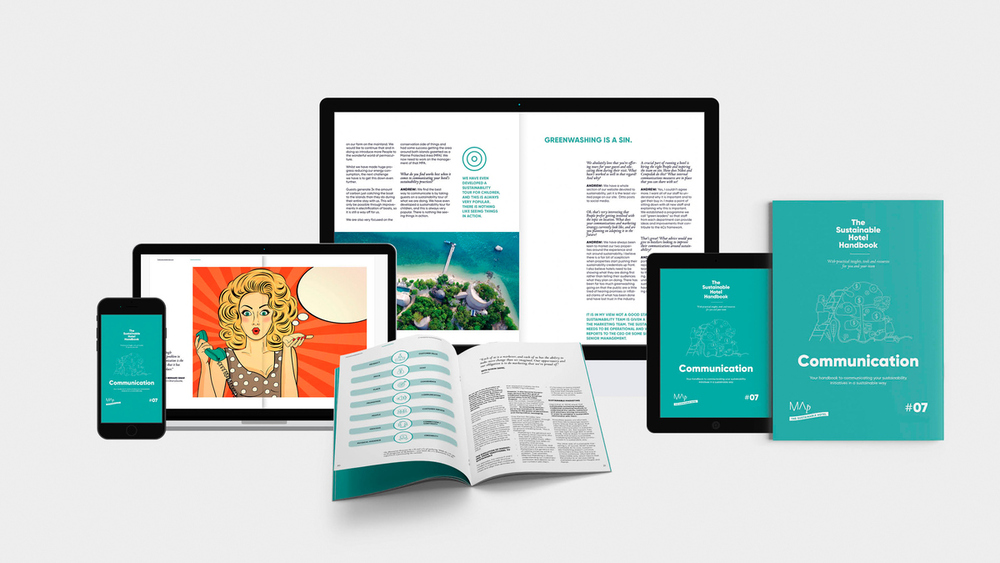
In The Sustainable Hotel Handbook: Communication, we outline 10 Principles of Sustainable Communication to guide marketing and communication professionals in crafting their sustainability stories in the right way. They include the important elements: transparency, inclusiveness, cultural sensitivity, clarity, responsibility, authenticity, progress, relevance, inspirational, ethical. While in the handbook we guide you through these principles with practical examples and checklists, we have included an overview in the template below, which we encourage you to download.

By communicating sustainability in a sustainable way and having the right sustainability story in place for your hotel, you build awareness for your brand, create a positive image of your hotel in the heads of guests, engage and motivate your employees, and better comply with reporting rules and regulations. Of course, you also avoid greenwashing.

Now let’s begin by following our four-step approach:

Sustainability communication
must follow action!

1. WRITE your hotel sustainability story

A captivating central story is the cornerstone of your communication strategy. It should build off your Purpose and be informed by your priorities. A compelling and authentic sustainability story captures what’s unique about sustainability at your hotel and touches on your overall approach to tackling it. It takes a strong stand or point of view and reflects your hotel’s unique personality.

Our practical template for download below will guide you in writing your hotel sustainability story! And the best part about it? It’s free!

Free template

Write your hotel sustainability story in three simple steps

A guided three-step template for clear, specific wording with space to add your evidence. Includes the Ten Principles of Sustainable Communication.
2. TAILOR the story to your stakeholders

When it comes to communication, the most efficient approach is the integrated communication method. Integrated communication ensures that, regardless of the channel or audience, the message is consistent and cohesive. Otherwise, you risk creating confusion and misunderstanding, which can result in a loss of trust or perception of inauthenticity.

Your central message is thus the red thread that runs through all your sustainability communications, making it consistent and coherent to your audience groups: Guest, Employees, Partners, Local community, Media, etc.

When it comes to messaging, we follow the “Know, Feel, Do” model, which is a simple and effective way to ensure People read your message, and that you inspire the correct emotion and encourage a desired action.

  • KNOW: What do you want them to know about your sustainability strategy? How does it impact them?
  • FEEL: What do you want them to feel about it?
  • DO: What actions do you want them to take as a result?

As a next step, take your central story and address the “Know, Feel, Do” for each key stakeholder group listed above. 

3. CHECK that your storytelling is aligned with the 10 Principles of Sustainable Communication

Once you have defined WHAT you are communicating = your sustainability story, you also have to make sure that you are telling your story in a sustainable way. The HOW is equally important. You can use the overview of the 10 Principles of Sustainable Communication in our free template as a checklist to make sure that your storytelling is transparent, inclusive, culturally sensitive, clear, responsible, authentic, progressive, relevant, inspirational and ethical.

4. TEST your hotel sustainability story

When it comes to getting your sustainability story done and dusted, the last step is a pretty straightforward one: test, test and test! Check how your messaging resonates with your stakeholders, gather feedback and make any necessary revisions to ensure your communication makes the kind of impact you want. Once you’re happy with it, you can build out supporting messages that go into more detail e.g. concrete actions you’re taking, specific targets you want to reach, or what you have achieved so far.

Including specific goals, targets and data within this extended narrative will demonstrate your commitment to sustainability and make it easier for People to trust you.

Congratulations, you now have your hotel sustainability story in place!

This story will serve as the basis of all your communications around your sustainability initiatives, and will make sure that it is not only consistent across all your channels, but credible too. By demonstrating credibility, you ultimately avoid the trap of greenwashing and increase the impact your sustainability initiatives have.

If you want to learn more about communicating sustainability in a sustainable way, check out The Sustainable Hotel Handbook: Communication, which we will be launching soon over on The Sustainable Hotel. In it, we guide you through not only building your sustainability story, but communicating it internally and externally, with insights into effective communications, practical tools such as exercises and checklists, as well as success stories and best practice examples. Check it out HERE.

Video URL
Blog Block Image
Avoid Greenwashing in Hotels: Craft Your Sustainability Story

Add new comment

Comment

Order

Plain text

  • No HTML tags allowed.
  • Lines and paragraphs break automatically.
  • Web page addresses and email addresses turn into links automatically.
Youtube stream image
Avoid Greenwashing in Hotels: Craft Your Sustainability Story
sharing is caring

The urgency of addressing sustainability in the hospitality industry cannot be overstated, as its impact on the environment and local communities is significant. Therefore, in this actionable hotel sustainability blog post, we help hotels aspiring to make a meaningful impact on sustainability take the concrete steps toward achieving that goal.

Rooted in MAp’s framework of the 4 Ps of Sustainability — Purpose, People, Planet and Profit — this blog post outlines 25 key action steps for each P that can revolutionise the way hotels operate, emphasising that the journey towards sustainability doesn't have to be daunting or financially burdensome.

It’s built on the principle that every action, no matter how small, contributes to a more sustainable and responsible hospitality and travel industry.

Did you know? We compiled a full guide presenting 284 action steps to get you started on implementing hotel sustainability in a holistic, practical and #stepbystep way.

Untertitel
We guide you to implementing hotel sustainability by taking small steps with a big impact.
Blog main image
284 praktische Maßnahmen zur Umsetzung von Nachhaltigkeit in der Hotellerie
Paragraphs

Purpose

At MAp, we start every (sustainability) project with Purpose. It is the golden thread running through and connecting all other elements. And the sustainable steps your hotel takes reflects what your overall Purpose is.

But let’s be clear about what your Purpose actually is: Purpose is the reason your hotel exists – its overall WHY. It is the derived meaning that comes when you know that you created something that you believe matters – to yourself, to others, to society. Be aware, Purpose does not entail earning a Profit. It must go above and beyond making money and be broad, humanistic and socially-engaged, linking your hotel to a greater good. Your Purpose will be your guiding compass to making this world a better place and growing your business, at the same time.

WHY Purpose matters

  • Brings you clarity and clarity = power
  • Creates a culture of innovation
  • Attracts the right people (guests, employees, partners) for your hotel
  • Builds resilience through turbulent times
  • Delivers personal satisfaction to the hotelier

5 action steps to create a hotel with Purpose

1. Discover your personal Purpose
2. Define your hotel’s Purpose
3. Embed your Purpose into your hotel business
4. Prioritise your sustainability activities based on your Purpose: People, Planet or Profit
5. Activate your Purpose – because Purpose is a verb, not a noun!

People

The social dimension of sustainability, People, deals with the impact your hotel has on the society for which and in which it operates. It’s about being a good host, a helpful neighbour, a quality employer and partner, a responsible and reliable brand – while serving the direct and indirect needs of your stakeholders.

And who are those stakeholders? While there are many stakeholder groups involved in making a hotel project a success, in this blog post, we focus the action steps on four key groups that your hotel has a major impact on: 

  • Your guests
  • Your employees
  • Your partners
  • Your local community

Unfortunately, the hospitality and tourism industry has not always had a good reputation when it comes to its social impact. On a bright note, though, as the industry touches every human on earth in one way or the other, there is so much opportunity to positively contribute to the lives of your guests, your employees and partners, and your local community – now and in the future.

WHY People matter

  • Only teamwork makes the dream work
  • Money always comes from People
  • People will make or break your brand

5 action steps to serve your employees more inclusively

1. Achieve a 50/50 balance between men and women in your management
2. Give equal employment opportunities to People already residing in the local community
3. Give equal management positions to People already residing in the local community
4. Offer employment opportunities without discrimination by gender, race, disability, religion and more
5. Offer management opportunities without discrimination by gender, race, disability, religion and more

You may also download our free guide on how to write inclusive job ads here

Planet

We know that many hoteliers are aware of how closely connected their hotels are to their surrounding environments. However, the relationship between hotels and Planet is not a healthy one; hotels create enormous negative impacts on the environment all along their lifecycles.

Therefore, the ultimate goal of environmental sustainability is to minimise your hotel’s environmental impact on the region and the Planet at large through the following key elements:

  • Energy
  • Waste
  • Food
  • Water

By tackling these elements holistically, hotels are able to limit their environmental impact and achieve carbon neutrality. And by implementing smart environmental measures they realise significant savings too – a win-win!

WHY Planet matters

  • There is no Planet B
  • If you put Planet over Profit, your Profit will grow healthy as well
  • Act now to environmental regulations – or react later

5 action steps to combat food waste

1. Compost bio waste
2. Plant a biological garden
3. Cook to order and eliminate the buffet
4. Make smaller food portion sizes
5. Donate extra food

Learn more about the topic in our free waste guide

Every action, no matter how small,
contributes to a more sustainable and responsible industry.
@weareMAp

Profit

We won’t argue: Profit is important. Without it, your hotel will cease to exist. But what is also important is that the Profit earned is:

  • Achieved in a sustainable way = not at the cost of People and Planet
  • Distributed in a sustainable way = used to secure your hotel’s operationality in the future while also making this world a better place

Money is the lifeblood of your business, but it is not your reason for being – that’s what Purpose is for. But how can you pursue your Purpose if you are not profitable and financially strong?

That’s the paradox: organisations that only exist to earn a Profit don’t last long. But organisations that don’t prioritise Profit can’t survive long enough to fulfil their Purpose. In other words, in the context of sustainability: it’s hard to be green when you’re in the red!

WHY Profit matters

  • Profit allows for progress in your business
  • Profit enables you to uplift, empower and better serve your stakeholder groups
  • Profit makes the world a better place (when you share it with the world)

5 action steps to practice philanthropic giving

1. Donate a share of your Profit
2. Create an employee donation scheme
3. Match employees’ donations
4. Create a guest donation scheme
5. Match guests’ donations

Take action now!

Hotel Sustainability Action Plan

We have compiled a full guide presenting 284 action steps to get you started on implementing hotel sustainability in a holistic, practical and #stepbystep way.

Check Top-Posts
Set to 2nd Top-Post
Quote Author
MAp Boutique Consultancy
Quote Subtitle
contributes to a more sustainable and responsible hospitality and travel industry.
Quote Title
Every action, no matter how small,
Blog Block Image
284 action steps to become a sustainable hotel

Add new comment

Comment

Order

Plain text

  • No HTML tags allowed.
  • Lines and paragraphs break automatically.
  • Web page addresses and email addresses turn into links automatically.
Types
sharing is caring

Just like any other journey you embark on in life, your hotel’s sustainability journey should be a deeply personal one. Embracing sustainability as a hotelier is not just about putting up a "green" facade – it involves identifying your greater Purpose and committing to values that go beyond profit. Your sustainability journey should reflect your hotel's unique concept, the vision and mission that defines your brand and the aspirations you have for the world. It's not about following a cookie-cutter path; it's about forging your own, deeply personal trail.

In this blog post, you’ll learn how to start your hotel sustainability journey by:

  • Knowing the benefits of hotel sustainability
  • Checking your starting point
  • Defining your Purpose
  • Moving forward #stepbystep
Untertitel
A step-by-step guide to creating a sustainable hotel
Blog main image
Wie du deine Reise hin zu einem nachhaltigen Hotel-Business erfolgreich beginnst
Paragraphs

1. Know the benefits of hotel sustainability

Before you get started, you should know that sustainability is not just good for people and planet – it’s good for business too. Here we lay out the benefits of creating a sustainable hotel - talk about motivation!

1. Increased Attractiveness: According to Booking.com's Sustainable Travel Report (2021), 83% of global travelers consider sustainable travel important, with 61% expressing a desire to travel more sustainably.

2. Enhanced Guest Loyalty: Sustainable hotels communicate a message that is increasingly relevant in society. Conscious travelers prefer to support like-minded establishments and are more likely to return to such accommodations due to enhanced guest experience.

3. Greater Resilience: In turbulent times, sustainable hotels are better equipped to handle challenges and risks stemming from changes like supply chains, regulatory requirements, legal issues, disputes and reputation risks.

4. Increased Investment: Both the public and private sectors are increasingly investing in companies that deliver greater benefits to the world and practice sustainable economics.

5. Inspiration and Added Value: Sustainable hotels not only offer added value to their guests but also attract and retain top talents. They gain the best employees and partners, increase long-term business value, and have the capacity to support local communities.

6. Cost Savings: Energy-efficient technologies and reduced resource consumption can lead to substantial cost savings over time.

7. Positive Brand Image and Competitive Advantage: A commitment to sustainability can improve hotels’ reputations and can set themselves apart in a crowded marketplace, providing a unique selling point.

Sustainability is not about following a cookie-cutter path;
it's about forging your own, deeply personal trail.
@weareMAp

2. Check your Starting Point

You now know why it's worthwhile to embark on the journey of creating a sustainable hotel. But now you’re likely left with the question: HOW? And, most importantly, where do you begin?

Don’t fret! We’ve got a helpful, free tool to answer that question, as where you start depends on your hotel’s current status quo. Take 10 minutes to complete MAp’s Sustainability Assessment. Through targeted questions on topics like energy efficiency, social responsibility and resource management, you’ll not only receive a detailed analysis of your current sustainability standing, but also gain valuable insights for future actions.

Your commitment to sustainable change begins here: Take the free assessment NOW.

Why you should take the Sustainability Assessment:

  • Understand the current level of sustainability in your hotel and discover the starting point for further development. • Delve deeper into the holistic aspects of hotel sustainability.
  • Generate initial ideas and insights into how your hotel can be made more sustainable and successful.
  • Find out which The Sustainable Hotel handbooks and resources can be most helpful.
  • Receive tailored recommendations for the next steps in sustainable hotel development.

3. Define your Purpose

Now that the starting point for your sustainability journey is clear, it’s time to define your Purpose. At MAp, we tackle hotel sustainability through the lens of the 4 Ps of Sustainability - Purpose, People, Planet, Profit - and the first P we always start with is Purpose.

By discovering your Purpose, you can focus your sustainability journey on what matters most for your hotel: your sustainability priority – whether that’s People, Planet or Profit. Your Purpose informs what path you take, keeps your eyes on the road and inspires you – and your team – to move forward with passion and persistence. For example, if your hotel’s Purpose is “To bring people back to nature,” your sustainability priority might be environmental sustainability, Planet.

To help you get to the heart of your Purpose, ask these questions: WHY do you do what you do? WHY are you embarking on this journey? WHAT change do you wish to make in this world?

We’ve got a whole handbook dedicated to Purpose to guide you in identifying yours, integrating it into your operations and sharing it with the world – check it out HERE.

4. Moving forward #stepbystep

Your Purpose serves as your guiding star, identifying your sustainability priority, be it social (People), environmental (Planet) or economic sustainability (Profit). As a next step, it’s time to tackle that P. But great news! We’ve got handbooks dedicated to each P, which provide deep insights into each area and what action steps you need to take in order to achieve sustainability in that area. Once you've successfully addressed your first priority P, it’s important to not forget the other areas of sustainability and address them #stepbystep too. After all, to create a truly sustainable hotel, your hotel has to be holistically sustainable – or else it falls short. Like we said at the beginning, sustainability is a journey! What’s most important is that you take the first step. With this, we hope it’s clear what step that is.

The Sustainable Hotel Roadmap

Use this interactive RoadMAp to guide your journey to implementing sustainable hotel practices.

In this free interactive RoadMAp, we guide you through the 4 steps that you should take in order to start your journey to implementing sustainable hotel practices.

Blog Block Image
How to Start your Hotel Sustainability Journey

Add new comment

Comment

Order

Plain text

  • No HTML tags allowed.
  • Lines and paragraphs break automatically.
  • Web page addresses and email addresses turn into links automatically.
Types
sharing is caring

🎧 Prefer listening to reading? Listen to the article here. ▶️


In the bustling world of hospitality, where travelers seek comfort, adventure, and memorable experiences, a new term has made its way into the spotlight: sustainability. But what exactly is a sustainable hotel, and why should it matter to both hoteliers and guests alike? Join us as we untangle the sustainability web in the hotel industry, and explore why sustainable hotels are more than just a passing trend.

At its core, a sustainable hotel is not just a place to rest your head and feel good. It's an embodiment of a commitment to a better, more responsible future. But what exactly does it mean to create a sustainable hotel? A sustainable hotel is a hotel that strives to promote sustainable development through its business practices. While the term "green hotel" is often used interchangeably, a sustainable hotel takes a more comprehensive approach to sustainability.

It weaves together three essential pillars: social sustainability (People), environmental sustainability (Planet), and economic sustainability (Profit). Let's break down each of these core pillars to better understand what it means to have a truly sustainable hotel.

Untertitel
Learn about the four pillars of hotel sustainability: People (social sustainability), Planet (environmental sustainability), Profit (economic sustainability) and Purpose: What defines a sustainable hotel today – and why it goes far beyond solar panels.
Blog main image
Was ist ein nachhaltiges Hotel?
Paragraphs

People: Social Sustainability

Social sustainability, the "People" pillar, is all about ensuring that a hotel's operations benefit both the local community and its partners and employees. Here, sustainability means fair treatment, diversity, and inclusion for the staff. It also means contributing positively to the surrounding community by creating jobs, supporting local businesses, and engaging in socially responsible initiatives. Sustainable hotels prioritise the well-being of their employees and strive to be good partners and neighbors within their communities.

Planet: Environmental Sustainability

The "Planet" pillar, or environmental sustainability, involves a commitment to minimising a hotel's impact on the environment. Sustainable hotels focus on reducing energy and water consumption, limiting waste, and implementing eco-friendly practices. They might invest in renewable energy sources, employ green building techniques, and use environmentally-friendly cleaning products. Additionally, they often engage in conservation efforts, such as water and energy-saving initiatives, waste recycling, and reducing single-use plastics. The aim is to protect the natural surroundings and preserve resources for future generations.

Sustainable hotels are not just about ticking eco-friendly boxes;
they're about creating a comprehensive and positive impact on the world.
@weareMAp

Profit: Economic Sustainability

Economic sustainability, or the "Profit" pillar, is about ensuring the financial stability and long-term viability of the hotel. Sustainable hotels understand that to continue their efforts in social and environmental sustainability, they must be financially sound. They aim to create a profitable business model that allows them to invest in eco-friendly technologies and initiatives, while also delivering a high-quality guest experience.

These hotels often find innovative ways to reduce costs, increase efficiency, and attract guests who appreciate and support their sustainability efforts.

Bonus Pillar: Purpose

While it’s not officially one of the pillars of sustainability, Purpose stands at the core of MAp’s sustainability framework. The definition is simple: Purpose is the WHY that drives you to do what you do – and love it! All sustainable hotels have a Purpose that drives them.

Why It Matters

Understanding these pillars of sustainability is crucial because they reflect a more profound commitment to the well-being of the planet, people and profitability. Sustainable hotels are not just about ticking eco-friendly boxes; they're about creating a comprehensive and positive impact on the world.

In the hustle and bustle of the travel industry, sustainability is a guiding star that points towards a more responsible, ethical, and eco-conscious future.

For hoteliers, it means embracing comprehensive responsibility, not only for environmental well-being, but also for their stakeholders and economic vitality. And for guests, choosing a sustainable hotel becomes an active role in fostering a brighter, more responsible future, impacting not just the environment but also the lives of those who live and work in the communities where they holiday. In case you want to learn more about the different aspects of hotel sustainability, our The Sustainable Handbook Collection is just right for you.

Free Hotel Sustainability Assessment

How sustainable is your hotel?

Learn where your hotel stands when it comes to sustainability by answering a few short questions about holistic sustainability: People, Planet, Profit and Purpose.

Video URL
Blog Block Image
What is a sustainable hotel?

Add new comment

Comment

Order

Plain text

  • No HTML tags allowed.
  • Lines and paragraphs break automatically.
  • Web page addresses and email addresses turn into links automatically.
Types
Youtube stream image
What is a sustainable hotel?
sharing is caring

Today we are very pleased to conduct this MAp meets with Luise Weinert, Bachelor student at the University of Applied Sciences Graubünden. Luise was our mentee for the last year and decided to dedicate her bachelor thesis to the topic of sustainability communication. In September 2023, she defended her thesis, receiving the highest number of points available.

As the client and co-advisor of this thesis, we are naturally very pleased about this. We would like to take this opportunity to thank Dr. rer. soc. Lena Pescia, lecturer in tourism management at the FHGR and advisor of the thesis, for the great cooperation. A big thank you also goes to Riccarda Ryffel, head of the FHGR mentoring programme, with whom we have been cooperating successfully for years.

Untertitel
MAp meets Luise Weinert, student at the University of Applied Sciences of the Grisons, to talk sustainability communication in the hotel industry.
Blog main image
This is how you communicate sustainability to your hotel guests.
Paragraphs

Dear Luise, congratulations on your excellent work and the successful completion of your studies. What sparked your interest in devoting your bachelor thesis to the topic of sustainability communication in the independent hotel industry?

Luise: Thank you very much! I really enjoy browsing hotel websites and researching information about potential travel accommodations. This passion started when I was working as a flight attendant, when I regularly stayed in hotels and developed a growing interest in the industry. During the mentoring programme, Magdalena then told me that hoteliers often don't know exactly how to communicate about sustainability. This realisation not only piqued my curiosity, but also strengthened my desire to learn more about the specific difficulties and opportunities that the independent hotel industry in particular faces in this area.

What was the aim of your study and what approach and/or methods did you use to reach your destination?

Luise: The aim of my bachelor thesis was to develop concrete recommendations for action that can help hoteliers to successfully communicate their sustainability initiatives. To achieve this goal, I took various steps. First, I analysed hotel websites on sustainable booking platforms to gain an initial insight into current communication. In the next step, I conducted qualitative interviews with hotel employees to gain deeper insights into the background of sustainability communication, including difficulties or already successfully-implemented sustainability measures in communication. I then conducted a short survey to verify the findings and transfer them to a larger number of hotels. As a further methodological step, I also conducted two interviews with experts in order to obtain additional input for the development of practical recommendations for action. These methodological steps gave me a comprehensive insight into the current hurdles and difficulties in the field of sustainability communication. Based on these findings, I was then able to derive practical recommendations for action.

What difficulties do independent hotels have in communicating their sustainability efforts? Where have you identified hurdles and challenges?

Luise: According to my research, the main challenge for hoteliers is a significant lack of resources, particularly in terms of time and staff. These limited resources pose a significant barrier when it comes to engaging intensively with the communication of sustainability initiatives. Another significant difficulty lies in the clear presentation of the numerous sustainability initiatives. Many hotels have already implemented a variety of measures, but clearly communicating these initiatives is a challenge. The question arises as to how hotels can present the diversity of their sustainable efforts in a way that is understandable and appealing to their guests. In addition, hoteliers are faced with the decision of which specific measures they should communicate at all. With so many sustainability initiatives, the choice can be complex as hotels need to ensure that their chosen focus matches the expectations of their target groups.

Many hotels are not aware of how much they pay for the water and energy used by their showers.
When we get a chance to look at their numbers, they are often very surprised when they realise the magnitude of the savings they could achieve by installing our products.
@JohannesMelin via @weareMAp

How can independent hotels ensure authentic and credible communication of their sustainability efforts? OR what options are there for communicating sustainability measures emotionally and incorporating the hotel personality?

Luise: To ensure authentic and credible communication, I recommend that hoteliers present concrete facts and figures to back up their sustainability initiatives. This could include, for example, the exact origin of the food or the proportion of organic food. Such specific information provides a solid foundation for communication and allows guests to understand the real impact of sustainability efforts.

Furthermore, it is advisable to present the development in a transparent manner. By showing progress visually, not only is the hotel's commitment made clear, but guests are also able to follow the positive development of the sustainability initiatives. Such visual transparency not only creates trust, but also allows guests to actively participate in the sustainability progress. If the hotel has recorded CO2 emissions data, this information should definitely be shared.

This is not only for the sake of authenticity of sustainability efforts, but also as an opportunity for guests to make conscious decisions. Disclosing CO2 emissions data gives guests insight into the environmental impact of their stay and allows them to make an informed choice.

What are your top 3 recommendations for hoteliers to communicate sustainability measures clearly, concisely and yet authentically to their guests?

Luise: A particularly challenging task for hotels is to clearly present their sustainability efforts. In this context, I recommend that hoteliers integrate a special subpage for sustainability topics on their websites. On this subpage, the various measures can be organised, for example according to social, economic and ecological dimensions of sustainability or chronologically. This clear structure makes it easier for guests to find relevant information and obtain comprehensive information.

I also suggest that hotels emphasise their unique personality in their communication. Independent hotels often carry a special personality and individuality that makes them unique. These distinctive characteristics are not only reflected in the hotel itself, but also in its sustainability story.

In this context, hotels could tell their own story to emphasise their uniqueness. This could include, for example, why sustainability communication is personally important for independent hotels. Another important aspect is that hotels communicate tangible and concrete information for guests. Hotels can do this effectively by talking about concrete measures that bring immediate benefits to guests or affect them directly. Examples of this could be sustainable transportation options, health-promoting aspects or measures in the areas of energy and water. By focusing on tangible aspects, communication not only becomes more transparent, but also more relevant and appealing to guests.

As always, our final MAp meets question: What makes a truly unique hotel experience for you personally?

Luise: I particularly appreciate it when a hotel is not just a place to stay, but also tells the stories of the region and the hotel itself. For example, I love it when local food is present in the hotel's offerings or when the rooms are decorated with works of art from the region. Such details give the stay a special touch and allow me to be not only a guest, but also part of the local culture and atmosphere.

About Luise Weinert:

Luise grew up in the Black Forest and has lived in Switzerland since 2017 . She completed her Bachelor's degree in Tourism with a focus on Service Design at the University of Applied Sciences Graubünden in fall 2023. During her part-time studies, she worked as a flight attendant for a Swiss airline. Since October 2023, she has been completing a university internship as part of a digitalisation project at the Swiss Federal Railways SBB. Connect with Luise on LinkedIn HERE.

Blog Block Image
This is how you communicate sustainability to your hotel guests.

Comments

Astrid Scheerer

Sehr gute und interessante Ausführung Luise

Add new comment

Comment

Order

Plain text

  • No HTML tags allowed.
  • Lines and paragraphs break automatically.
  • Web page addresses and email addresses turn into links automatically.
Categories
Types
sharing is caring

Today we couldn’t be more excited to talk with Martin Tauber, the Co-Founder and CEO of Guestnet. Guestnet is an innovative tech company based in South Tyrol, Italy, which provides independent hoteliers with a digital guest experience platform.

We’ve been working with the Guestnet system on behalf of our clients for quite a while, and have recently partnered with the Guestnet team through The Sustainable Hotel in order to promote our joint approach to making independent and boutique hotels more sustainable and innovative. Wonder how a digital guest experience platform can do so? Let’s find out from Martin.

Untertitel
MAp meets Martin Tauber - co-founder and CEO of Guestnet
Blog main image
MAp Boutique Consultancy MAp meets Martin Tauber
Paragraphs

Dear Martin, thank you for your time! First of all, can you tell us more about Guestnet? What’s your Purpose and what problem did you set out to solve with your innovative system?

Martin: Guestnet is a 'Guest Experience Platform' with which we digitise the entire guest journey. Our goal is to support hosts in digital guest communication and thereby strengthen the relationship with their guests. Informed and satisfied guests, optimised digital processes and additional in-house revenues through a web app that can be easily accessed by the guest in the personalised CI of the accommodation.

We have recently partnered to promote our joint effort in making the hospitality industry more sustainable and innovative. At Guestnet, what’s your approach to sustainability? And how do you support your clients on their sustainability journey through your software solution?

Martin: We see sustainability as an integral part of our business. Through digital communication, we significantly reduce paper consumption in accommodations. In addition, guests are well informed about sustainability initiatives of the accommodation and also involved, so that with the very popular function "cancel room cleaning", a small, visible contribution can be made and accommodations are relieved at the same time.

As you look back at the hotels you’ve worked with and how you’ve supported them on their journeys to becoming more sustainable: What has been your biggest learning so far?

Martin: One of the most important findings was that sustainability and profitability can go hand-in-hand. In addition to the immediately visible consequences of drastically reducing paper consumption through digital communication, hotels were able to greatly reduce the workload on staff by canceling room cleaning. On the one hand, this leads to lower costs and an improvement in operational processes, but also results in positive reviews from guests after their stay.

Hotels can drive their sustainability journey by reviewing their current practices and identifying areas for improvement.
Developing a sustainability plan with clear goals and strategies is important for this.
@MartinTauber via @weareMAp.

For every hotel it is important that their guests are well-informed and taken care of. What are your top three recommendations for hoteliers to make sure that their guests have all the information and support needed to ensure the best experience?

Martin: A very good question and I would like to answer it with the following three key points:

- Visibility: create visibility for your information by integrating it into the check-in process so guests can receive and view it before they arrive. Actively point out digital guest folders and other information sources at check-in. Further increase content visibility by placing QR codes in relevant locations to provide guests with easy access to information.

- Information: Make sure to bundle the most frequently asked guest inquiries and integrate them into a digital guest folder. This way, recurring questions can already be answered digitally and the reception desk can be relieved.

- Action: digital channels enable active marketing - use push notifications to point out spa treatment offers of the day or sell products via your in-house store. Guests can request services, buy products or place room service orders. The digital channel thus becomes a very relevant channel for in-house sales - fully automated and with all digital possibilities.

At MAp we are specialised in supporting independent hoteliers to become more innovative and sustainable, also through crafting unique hotel concepts and brands. What are your thoughts and observations on sustainability in the hospitality industry? What do you believe the future holds for the industry?

Martin: Sustainability is an increasingly important topic in the hotel industry. Hotels are increasingly focusing on environmentally-friendly practices such as energy and water conservation as well as social responsibility. Sustainable hotel concepts are becoming more popular as guests seek authentic experiences. The industry will continue to focus on innovative solutions to achieve sustainability goals. Overall, I expect sustainability to become the standard and the industry to evolve.

Do you have any recommendations for independent or boutique hoteliers on how they can start and / or advance their sustainability journeys?

Martin: Hotels can drive their sustainability journey by reviewing their current practices and identifying areas for improvement. Developing a sustainability plan with clear goals and strategies is important for this. From my perspective, communication internally and externally is a critical factor. Internally, it enables all employees to support and actively communicate the measures. Externally, it ensures that guests can be informed and involved.

What’s your biggest wish for the future?

Martin: My wish is to help even more hosts with their digital guest communication in order to relieve their employees and have more resources available for a unique guest experience. At the same time, we want to use technology to promote more sustainable tourism, where everyone has an awareness of sustainability and thus makes a small contribution to a more sustainable future. Our goal is to be the leading technological platform for this transformation and to accompany many hosts on this journey.

As always, our final MAp meets question: what makes a hotel experience a truly outstanding one for you personally?

Martin: Attention to detail and unobtrusive service make my hotel stay a real experience. On my city trips, I specifically look for boutique hotels with modern design in lively neighborhoods. I am always on the lookout for local wine bars and restaurants to discover the authentic culinary diversity of the city.

About Guestnet - Guest Experience Platform

Guestnet digitises the entire guest journey during the stay. In addition to the digital concierge on the guest's device, TV (Infoscreens & Room TV), print (morning mail, daily menu, weekly programme,...) and widgets (integration into website and correspondence systems) complete the multi-channel approach to provide the guest with all information. Result: Informed and satisfied guests, employee relief through optimised digital processes and increase of in-house revenues by advertising internal services. The leading hosts in DACH + South Tyrol successfully digitalise guest communication with Guestnet.

About Martin Tauber

Martin, who was born in South Tyrol, started implementing digital products at the age of 15. After working as a marketing consultant in Munich and winning the German Search Marketing Award, he joined the digital product company Marketing Factory as a partner in 2015. In 2018, this resulted in the Guest Experience Platform 'Guestnet', with which he has been working on the digitization of the hotel industry ever since.

MAp Boutique Consultancy Guestnet
Blog Block Image
MAp Boutique Consultancy MAp meets Martin Tauber

Add new comment

Comment

Order

Plain text

  • No HTML tags allowed.
  • Lines and paragraphs break automatically.
  • Web page addresses and email addresses turn into links automatically.
Types
sharing is caring

🎧 Prefer listening to reading? Listen to the article here. ▶️


Every two months we explore an important sustainability topic with our MAp community. With boutique and independent hoteliers, investors, consultants, students and other players in the hospitality industry in mind, we make our bi-monthly The Sustainable Hotel Insights as actionable and practical as possible. If you would like to receive these insights straight into your inbox and join the community, aka join us on the journey to a more purposeful and hospitable Planet, register here!

Untertitel
How communication becomes a mindset – and why it matters for sustainable hotels.
Blog main image
Insights: Was ist nachhaltige Kommunikation?
Paragraphs

About: Sustainable Communication

Sustainable communication is how you communicate: specific, respectful, and mindful of impact. Sustainability communication is what you communicate: your goals, actions, and progress. Hotels need both. This guide explains the difference, the core principles, and the wording that helps you avoid greenwashing.

Sustainable Communication is about
HOW you communicate.

Facts: Did you know

Greenwashing continues to stain the hospitality industry, with hotels making claims that are bigger than reality, and consumers are understandably distrusting as a result. Let’s look at these findings by The Sustainable Agency (2023) that show the perils of greenwashing and the risks of getting your sustainability communication wrong:

  • 42% of online sustainability claims were found to be “exaggerated, false or deceptive” in a high-profile study by the European Union.
  • 88% of consumers don’t immediately trust a brand that claims to be sustainable, showing the importance of walking and talking sustainability.
  • 30% of millennials will unfollow accounts that believe to be posting inauthentic content.
  • 90% of millennials – one of the demographics most invested in sustainable living – say authenticity is a top influence when deciding to buy.
  • 40% of people wouldn’t recommend a product to their friends and family if they felt a brand was falling short on its environmental claims.
  • 17% of people would actively discourage their friends and family from buying a product if they felt environmental claims were overstated.
  • 55% of people are looking for companies to explain the sustainability credentials of their product compared to alternatives – simply labelling your product ‘sustainable’ is no longer enough.
  • Companies who mislead online (including greenwashing) could face a fine equal to 10% of annual turnover under proposed legislation in the UK. More laws are likely to follow on questionable environmental claims made online.

Action: Our MAdvice on Sustainable Communication

To practice Sustainable Communication, it’s important to ensure your communication reflect the following:

1. TRANSPARENCY:
Promoting honesty, openness, and trust in your sustainability initiatives.

2. INCLUSIVENESS:
Promoting equality by supporting People of all backgrounds and avoiding discriminatory practices.

3. CULTURAL SENSITIVITY:
Prioritising understanding and respect of local cultures and traditions.

4. CLARITY:
Fostering engagement and building understanding among audience members.

5. RESPONSIBILITY:
Taking responsibility for your actions and avoiding harmful communication practices.

6. AUTHENTICITY:
Making your sustainability journey heartfelt and personal.

7. PROGRESS:
Continually improving your communication practices.

8. RELEVANCE:
Explaining how new sustainable products and services impact your stakeholders.

9. INSPIRATIONAL:
Keeping communications positive and inspiring.

10. ETHICAL:
Ensuring that you never Profit from difficult situations People might be in.

Free Template

Write your hotel sustainability story in three simple steps

A guided three-step template for clear, specific wording with space to add your evidence. Includes the Ten Principles of Sustainable Communication.

Video URL
Blog Block Image
MAp Boutique Consultancy Insights: What is Sustainable Communication?

Add new comment

Comment

Order

Plain text

  • No HTML tags allowed.
  • Lines and paragraphs break automatically.
  • Web page addresses and email addresses turn into links automatically.
Youtube stream image
Insights: What Is Sustainable Communication?
sharing is caring

Contact type

E-mail
onwards@MAp-consultancy.com
Company Name
MAp Boutique Consultancy
Street & Place
Zurich, Switzerland
Webform Title
Ready to make it happen?
Webform Subtitle
Let's work together
Webform Expression
Contact us now!
Paragraphs