sharing is caring

What is hotel positioning? And who decides what the positioning of your hotel is? Understanding hotel positioning is paramount for independent hoteliers striving for success.

In this insightful blog post, we delve into the intricacies of hotel positioning — answering the fundamental questions of WHAT it entails and WHO holds the reins in determining your hotel's positioning strategy. Let’s get started!
Untertitel
Learn how to successfully position your hotel on the global map
Blog main image
The importance of strategic hotel positioning for independent hotel businesses MAp Boutique Consultancy
Paragraphs

What is hotel positioning?

As you see in the following illustration, defining a hotel’s positioning is an essential part of every hotel concept we create at MAp Boutique Consultancy.

Once we know what your hotel’s unique Purpose is, and for which People your hotel exists, we embark on defining your hotel’s unique position on the MAp.

The importance of strategic hotel positioning for independent hotel businesses

Our hotel clients always get excited about this hotel positioning exercise. But, there is a small “downer” you should know: even if we strive to achieve a clear and unique hotel positioning, ultimately it is not us who decides what the hotel positioning is. The hotel positioning is defined by your People, above all, your guests, and this implies that your control over your hotel positioning is limited.
The importance of strategic hotel positioning for independent hotel businesses

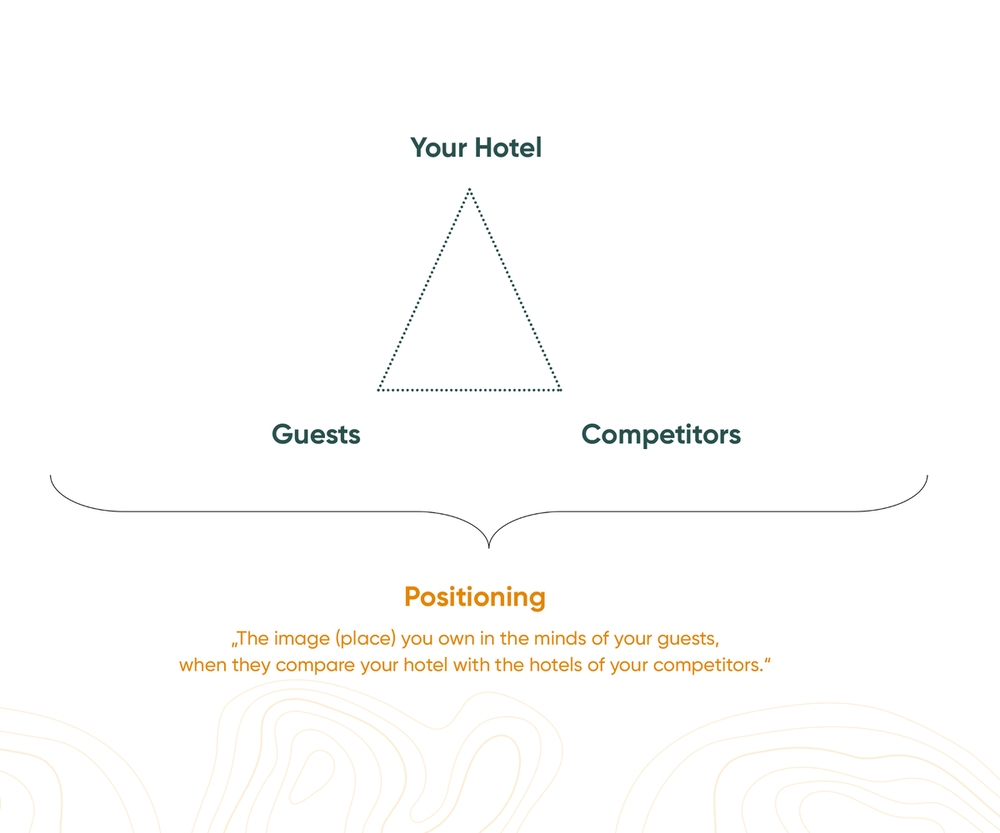
This triangle is called the “Strategic Triangle” that serves to identify long-term business advantages or, as we call it, success potential. Sometimes it is also called the 3C Model, showing the tension field and interplay (therefore we use a triangle) that consists between Customer, Competitor and Company.

And: hotel positioning is the image (place) you own in the minds of your guests, when they compare your hotel with the hotels of your competitors.

If you aren’t different, then you’re in trouble

Now that you understand what hotel positioning is, let’s walk step-by-step in how we at MAp define a hotel’s unique positioning. The fact is, we are experiencing a crowded marketplace. Therefore, we aim to achieve a hotel positioning that:

  • Focuses on relevancy
  • Focuses on differentiation from competition
  • Is credible and attainable
  • Finds a place on the MAp where you / your services are the only answer for a specific someone Now as the last sentence implies, to create your unique hotel positioning you MUST DEFINE for WHOM you are working / WHO this specific someone is.

Only if you have your defined buyer personas ready (= your target guests) you can answer an important question: How do you find your unique position on the MAp? Therefore, if you haven’t defined your buyer personas yet – now’s the time to do it!

Even if we strive to achieve a clear and unique hotel positioning,
ultimately it is not us who decides what the hotel positioning is – it’s the guest.
@weareMAp

Finding your unique position on the MAp

Next, you have to know on which MAp to position your hotel. When working with clients, we like to use a simple and effective positioning matrix. For the purposes of this blog post, let’s keep it simple, and that means you should decide if your MAp is i.e. boutique luxury hotels, family hotels, boutique city hotels, etc.

Once you have defined in which segment to position your hotel, most often you’ll realise that you’re not the first to do so! Even if you’re tapping into a growing market and seeking to serve your specific audience better than your competitors, our MAp advice is to keep digging and to add a further niche into the mix. And, of course, to strive to add something new and exciting to the segment and the hospitality landscape at large. 

How to create a positioning statement

Once you’ve defined your position on the MAp, it’s time to put it down in words. You can do so by crafting a hotel positioning statement. We’ll give you MAp’s positioning statement as an example.

MAp Boutique Consultancy

TO… Innovative investors and boutique hoteliers that need direction, empowerment and support in getting their ventures off the ground, levelling up and setting a strong foundation for growth

MAp IS… the leader in developing and empowering sustainable and innovative hotels and brands

THAT… makes hotels matter by creating a better future for People and Planet.

What’s yours?

TO… __________________________ (target audience / buyer personas) ________(your hotel) IS… __________________________ (your position on the map) THAT… __________________________ (what you will do for your target audience / buyer personas)

And another blog post comes to an end. Maybe we can summarise what we’ve learned today about hotel positioning best with a quote from Simon Sinek:

“In order to stand out, we have to know what we stand for.”

We hope that after our time together, what YOU stand for is much clearer. And if not, please do not hesitate to contact us in order to find your unique hotel positioning on the MAp.


Hotelmarketing

We market your innovative and sustainable hotel

Through our hotel marketing services, we position your independent and boutique hotel on the global MAp – in a unique, sustainable and authentic way.
Blog Block Image
The importance of strategic hotel positioning for independent hotel businesses MAp Boutique Consultancy

Add new comment

Comment

Order

Plain text

  • No HTML tags allowed.
  • Lines and paragraphs break automatically.
  • Web page addresses and email addresses turn into links automatically.
sharing is caring

At MAp Boutique Consultancy, we support hotels in their launches and openings, ensuring that each establishment is equipped with the necessary tools for near-term and long-term success. Central to our strategy is the development of effective hotel websites, which are indispensable assets in modern hospitality marketing and communication.

In this blog post, we offer a guide to creating hotel websites tailored specifically for new openings. Whether you're embarking on a new venture or seeking to enhance your hotel’s existing digital presence, our aim is to help you achieve optimal results in this competitive landscape.

Untertitel
The 3 steps to launching your hotel website
Blog main image
How to create a first landing page for your new hotel MAp Boutique Consultancy
Paragraphs

When crafting hotel websites for new openings, there's a fundamental principle we at MAp adhere to every time: step-by-step. Why? Because each hotel launch comprises a multitude of distinct elements and puzzle pieces that gradually come together over time. This dynamic often means that launching a complete hotel website right from the start is rarely feasible.

On the other hand, the time constraint underscores the importance of swiftly launching your hotel website. This urgency is driven by the necessity to initiate your hotel sales and communication activities, while also configuring essential programmes and systems—many of which are intricately linked to your hotel website.

Create a unique website design
that matches your hotel positioning and speaks to your defined target audience.
@weareMAp

Step 1 – Create a landing page

The first step to tackle when launching a new hotel is to create a landing page. A landing (or launch page) is a simple page where you present the main information about your new hotel opening. It gives you a first presence in the World Wide Web and offers People the chance to learn more about your hotel, contact you or register already for your hotel newsletter.

However, this doesn’t mean your landing page needs to be simple. It’s important to be meticulous about using the right brand design, presenting your hotel in the best light (i. e. with beautiful renderings), and telling your unique story in an emotional way.

Step 2 – Set up your hotel website and system

Once your hotel landing page is online, and hopefully is already attracting attention and enrolling potential guests, employees and partners to your newsletter, you have to work on the following tasks and elements:

  • Full hotel website: Create a unique website design that matches your hotel positioning and speaks to your defined target audience. Also make sure that your tone of voice matches your hotel brand and that you clearly communicate why guests should stay at your hotel in a compelling and emotional way.
  • System and programmes: Start working early enough on all the other programmes that are connected with your hotel website. Be those your correspondence manager system, the property management system, channel manager, newsletter tool, etc. While your hotel landing page is online, you can organise the set-up and do the testing in the background.

Step 3 – Launch your new hotel website

The big day to make a big splash has come! And you should not waste the opportunity to make this launch event special. Some ideas to help you with your hotel website launch:

  • Create a launch countdown on your social media channels
  • Ask friends and partners to spread the word via their channels
  • Send a newsletter to your contacts to make them aware that your new website is online
  • Combine the hotel website launch with a real event
  • Inform press and media about your website launch

Are you in the process of launching or opening a new hotel and are needing a stand-out hotel website? Then don’t hesitate to contact us, we’d be excited to bring your unique hotel online and out into the world.

Set you apart from the sea of competition

We create your website

Through our hotel website services, we position your independent and boutique hotel on the global MAp – in a unique, sustainable and authentic way.
Blog Block Image
How to create a first landing page for your new hotel MAp Boutique Consultancy

Add new comment

Comment

Order

Plain text

  • No HTML tags allowed.
  • Lines and paragraphs break automatically.
  • Web page addresses and email addresses turn into links automatically.
Types
sharing is caring

Welcome to this blog post about an important topic close to our hearts: Hotel Marketing! It's not just an area of expertise for us; it's a passion that fuels our enthusiasm! So, let's dive into this subject. We'll explore the essence of marketing, debunk misconceptions, and unveil strategies tailored specifically to help small hotels and businesses to thrive. 

Untertitel
MAp specialises in empowering small and independent hotels, as well as businesses, to excel in their marketing endeavors
Blog main image
Hotelmarketing: Unsere Top 3 Tipps für kleine Hotels und Unternehmen MAp Boutique Consultancy
Paragraphs

Defining (Hotel) Marketing

As a hotel marketing agency, our initial step in any new collaboration is to establish a clear understanding of the dynamic landscape of marketing. It's essential to recognise that marketing has undergone substantial transformations over the past decades, adapting to changing consumer behaviours and technological advancements. Traditional marketing, the traditional method of developing, promoting and selling products or services, has been the cornerstone of marketing strategies for many years.

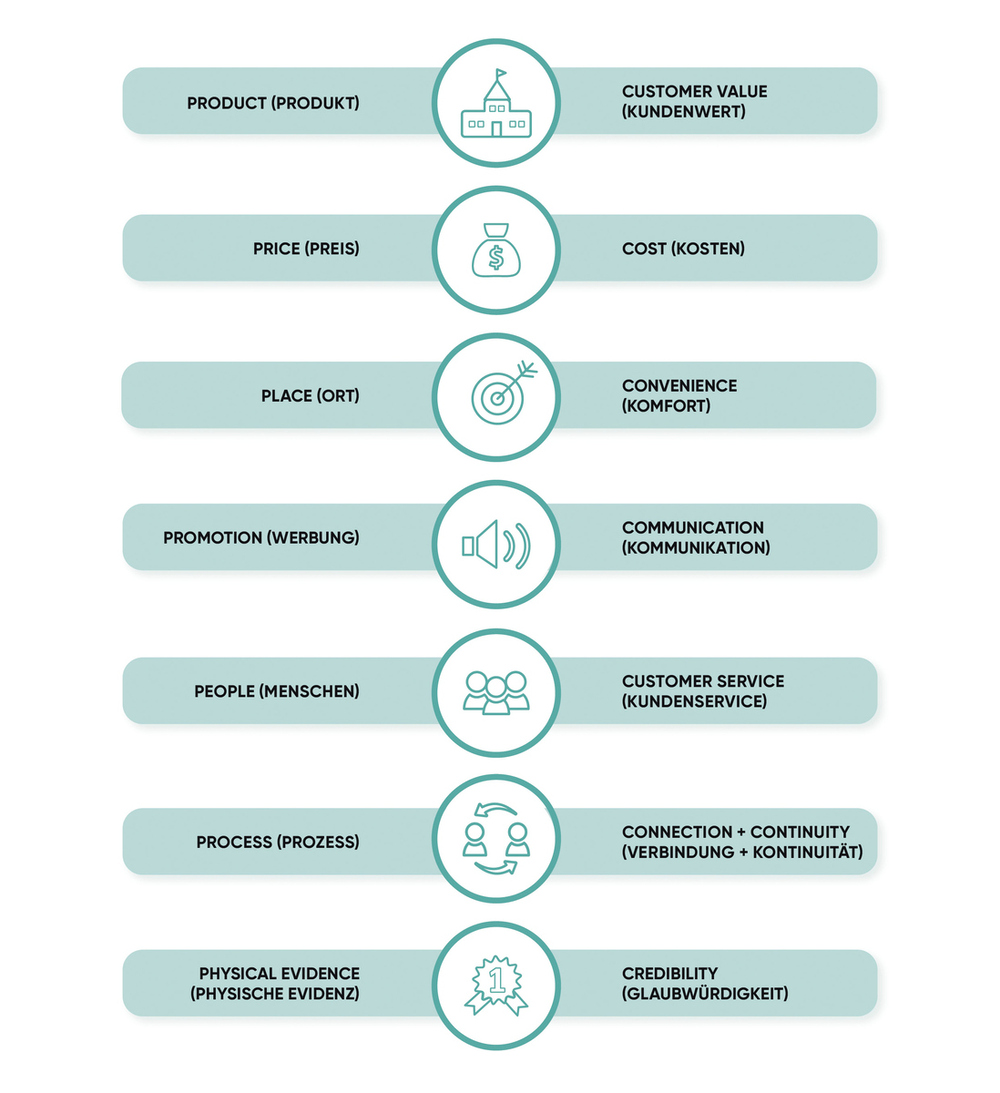
Initially focusing on the 4 Ps – Price, Product, Place, and Promotion – this approach has since evolved to encompass a broader spectrum and additional dimensions - like Physical Evidence, People, and Processes - forming what is commonly known as the 7 Ps.

However, it's crucial to acknowledge alternative perspectives in marketing. In 1973, Professor Koichi Shimizu introduced a paradigm shift with his innovative 7 Cs Compass Model. Unlike the company-centric focus of the Ps, the 7 Cs framework adopts a consumer-centric viewpoint, emphasising crucial elements such as Customer Value, Communication and Convenience (Carniel, 2022). This shift highlights the importance of aligning marketing strategies with the ever-changing needs and preferences of modern consumers.

Hotel Marketing: Our top 3 tips for small hotels and businesses
We encourage you to engage in marketing endeavours that you take pride in
– ones that address People's needs and contribute to creating a better world for everyone!
@weareMAp

For decades, the P and C models helped hotels and businesses to define their marketing mixes and align their marketing activities with their respective markets (as implied by the very term “MARKETing”).

However, it became increasingly apparent that the essence of traditional marketing began to veer away from its original intent – to glean insights from the market, develop products and services tailored to meet market needs, and enhance overall market value. Instead, there emerged a growing reliance on persuasion and manipulative messaging to compel consumers to purchase products or services.

Over the last decades, however, new marketing thought leaders have reshaped the definition and perception of marketing. Seth Godin (2019) defines marketing as follows in his ground-breaking book “This is Marketing”:

Marketing is the generous act of helping others become who they seek to become. Instead of selfish mass, effective marketing now relies on empathy and service. Marketing is not a battle, and it’s not a war, or even a contest. Marketing is the generous act of helping someone solve a problem. Their problem. Effective Marketing is about understanding our customers’ worldview and desires so we can connect with them. It’s focused on being missed when you’re gone, on bringing more than People expect to those who trust us. It seeks volunteers, not victims.

Our 3 Hotel Marketing tips for small hotels and businesses

1. Clearly define your hotel marketing budget

As a hotel marketing agency, we always say: you need to invest some money to make more money. And this totally applies to hotel marketing, where strategic investments yield substantial returns! Unfortunately, it’s too often that small and independent hotels never take the time to create a marketing budget.

Therefore, our MAdvice:

  • Define an annual marketing budget. As a rule of thumb, your hotel marketing budget should be between 8 and 12% of your hotel turnover.
  • Define the return on investment you expect, e.g. how many new guests, the ADR, the occupancy rate, etc.
  • And then, make sure to define HOW you will measure the ROI! Because, as we like to say to our clients: what you’re not measuring, you can’t optimise.

2. Hope is NOT a strategy

After defining your hotel marketing budget and your hotel marketing goals, it’s time to plan it out. Together with our clients, we start with a yearly plan and scheduling tasks, actions, outputs, per quarter. As a last step, we define top goals per month.

Our MAdvice: set monthly goals aligned with your quarterly goals. Be flexible about how you are going to reach them.

3. Don’t try to be everywhere – be specific

One of the biggest pitfalls we see hotels and small businesses fall into is trying to be “everywhere”. Let’s look at hotel social media to illustrate what we mean by this.

There are an array of social media channels out there, with every channel having its own rules, do’s and don’ts. All too often we see that hotel clients try to be on all of them, without realising that being specific and choosing the channels carefully, and planning the content out in detail on those important channels (= the channels your potential guests and clients are on), delivers much better results. Our guiding mantra at our hotel marketing agency is: Class over Mass!

Our MAdvice: choose your channels wisely, be focused and deliver the best content you can. Quality always wins in the long-run.

Bonus MAdvice: Don’t forget sustainability - and practice sustainable marketing!

As we highlighted earlier in this blog post, marketing encompasses seven key functions, often represented by the 7 Ps or 7 Cs. Let's delve into one of these functions in this concluding section: communication. Traditionally, marketing communication has been characterised as loud, paid, persuasive, and sometimes manipulative. However, if you aspire to elevate your hotel marketing for sustainable success, we at MAp advocate for one overarching principle: sustainability.

Sustainable Communication means you are communicating in a socially-responsible and ecological manner, with no negative impact to society, the economy and the Planet. The objective of Sustainable Communication is therefore to reduce the environmental and social footprint of communication activities and to make sure that all can profit from them.

We’re convinced that the future of marketing (AND hospitality) is sustainable, and you can learn more on this topic here. As always, we extend our gratitude for your commitment to #neverstoplearning.

After reading this blog post, we encourage you to engage in marketing endeavours that you take pride in – ones that address People's needs and contribute to creating a better world for everyone!

Hotel Marketing

We market your innovative and sustainable hotel

Through our hotel marketing services, we position your independent and boutique hotel on the global MAp – in a unique, sustainable and authentic way.
Blog Block Image
Hotel Marketing: Our top 3 tips for small hotels and businesses MAp Boutique Consultancy

Add new comment

Comment

Order

Plain text

  • No HTML tags allowed.
  • Lines and paragraphs break automatically.
  • Web page addresses and email addresses turn into links automatically.
Types
sharing is caring

Is it time to bring your new hotel project to market? To launch it in style and make a big splash? Then this blog post is for you, because you never get a second chance to make a first impression!

At MAp Boutique Consultancy, we have supported hotel developments and new hotel projects since the founding of our hotel agency, and so we share with you our top recommendations for success and pitfalls to avoid when launching a new hotel. #onwards

Untertitel
Our top recommendations for success and pitfalls to avoid when launching a new hotel
Blog main image
What to consider when opening a new hotel MAp Boutique Consultancy
Paragraphs

Our TOP 3 recommendations for a successful hotel opening

1. Create a hotel opening strategy starting at least one-year pre-opening

Having a hotel opening strategy in place early is crucial! At MAp, a hotel opening starts at least one year before the hotel opens and involves a wide range of areas, topics and tasks to consider.

  • From refining the hotel concept and positioning,
  • To creating and activating the hotel brand,
  • To setting up a successful launch campaign including communication and sales channels,
  • To searching for, identifying and onboarding the right partners,
  • To producing offline and online communication tools and materials, etc.

The earlier your hotel opening strategy is in place, the better! There’s a lot of work to be done!

2. Create an action plan:

What, Who, When, How Once your hotel opening strategy is in place, make it as tangible as possible and define clearly:

  • WHAT needs to be done,
  • By WHOM (responsibilities),
  • WHEN (time plan),
  • HOW (aligned with the hotel’s values)

Make sure all partners are briefed accordingly and everybody has the tools and resources needed to make it happen.

3. Monitor, optimise, push

During hotel openings, often our role at MAp consists of aligning all partners, monitoring results, optimising processes, and above all, pushing through so that things happen when they are supposed to per the hotel opening plan.

Why is it crucial to have that one person or responsible party closely monitor the process? Because the closer the hotel opening comes, the more we can compare it to finalising a puzzle. And if one puzzle piece is missing, the other parts aren’t able to do their work.

You never get a second chance
to make a first impression!
@weareMAp

3 Pitfalls to avoid when launching a new hotel project

After sharing with you our top three recommendations for opening a new hotel, let’s wrap this blog post up with the pitfalls we encounter most often during new hotel openings.

1. Running out of budget

Oh yes! You have budgeted well, but then, the closer you get to the hotel opening, the fewer the funds. Now the problem is that this hotel opening phase, the launch, is your only chance to make a first impression. So, if you’re not anymore able to run the campaigns, invest in the stylish website or bring on other partners, you truly miss a big chance, and this will hurt you in the long-run.

2. Required material is not available

How can you promote your hotel, if no renderings or photos are available? Or your key messages and pitchlines haven’t been created? We do agree that no hotel launch will be perfect and there will always be some missing pieces. But if essential basics, such as visual material, are missing, you won’t be able to push your new hotel in the market. Therefore, make sure to identify early enough what basics you need to launch your new hotel project successfully.

3. Construction gets delayed

We end this blog post with the most common pitfall when talking about new hotel developments. You’re set to open on date x, but construction gets delayed and all your great hotel opening ideas are becoming a mess. Therefore, we always make sure that we announce a concrete opening date as late as possible. For example, start by communicating Spring 2024, and communicate the concrete date of May 1, 2024 only when you know it’s an air-tight realistic and achievable date.

What else comes to your mind when talking about hotel openings? What are the pitfalls you have encountered during new hotel project launches? We are looking forward to reading your insights in the comments.

And if you are in the process of launching a new hotel and need some support, let us know – we are looking forward to hearing from you.

Hotel Marketing

We market your innovative and sustainable hotel

Through our hotel marketing services, we position your independent and boutique hotel on the global MAp – in a unique, sustainable and authentic way.
Blog Block Image
What to consider when opening a new hotel MAp Boutique Consultancy

Add new comment

Comment

Order

Plain text

  • No HTML tags allowed.
  • Lines and paragraphs break automatically.
  • Web page addresses and email addresses turn into links automatically.
Types
sharing is caring

In the ever-evolving hospitality industry, staying ahead of the competition and meeting the dynamic demands of travellers is paramount. One effective strategy that can breathe new life into a hotel's identity and boost its appeal is undergoing a hotel rebrand. But why is rebranding your hotel important, when should you consider it, and how does it work?

In this blog post, we’ll address these questions and provide you with a clear roadMAp for action, outlining five concrete steps to successfully rebrand your hotel. These steps will empower you to navigate the transformation process and make sure that your establishment remains a highly-desired choice for your guests.

Untertitel
When, why and how to successfully reinvent your hotel image
Blog main image
Hotel-Rebranding MAp Boutique Consultancy
Paragraphs

WHAT is a hotel brand?

First, let’s start with some basics: WHAT is a hotel brand? The answer to this question might seem obvious, but all too often as a hotel boutique consultancy, we realise at the beginning of a hotel branding or hotel rebranding process that it is misunderstood. Therefore, let’s start this blog post with a short definition of what a hotel brand is and what it is not:

A hotel brand is NOT only the hotel logo or the hotel visual design. A hotel brand encompasses a whole set of elements from the visual identity (i. e. your hotel logo, the type fonts you have chosen, the uniforms your employees are wearing), to the visual identity (i. e. your hotel name, slogan, tone of voice) to sensory branding (i. e. how your hotel smells and sounds). In addition to these tangible elements, it includes intangible ones too, like your hotel’s vision, mission and values, which make up your hotel brand’s foundation.

In other words, your hotel brand is the way your hotel products and services are perceived, and therefore, hotel branding encompasses every action your business takes that creates a unique identity in the minds of your potential audience and other People (such as team members, partners, the local population).

Altogether, your brand is a reason to choose your hotel over a competing hotel. That’s why at MAp we like to quote Steve Forbes: “Your brand is the single most important investment you can make in your business.”

WHEN to consider Hotel Rebranding

It’s essential to understand when and in which situations rebranding your hotel might be the right choice for you. Over the last decade working as a creative hotel agency, we have identified the following top 5 indicators that it might be time to reinvent your hotel brand:

1. Market Trends and Shifting Demands:

It's vital to keep a keen eye on market trends and shifting guest demands. Recognising new preferences and emerging opportunities in your target market can signal the need for rebranding of your hotel. Pay attention to guest feedback and reviews, as they often provide valuable insights into the need for change. Over the last years, one of the biggest market trends and shift in demands we have seen is “Sustainability”. Therefore, at MAp we are not only creating stylish and unique brands, but sustainable ones too. You can learn more about sustainable hotel branding in this blog post.

2. Hotel Life Cycle:

Consider where your hotel stands in its life cycle. Because rebranding can be a strategic move, moving your property i. e. from a new establishment to an established one. Or doing a rebranding can be a strategic choice when a hotel undergoes a change in ownership or management, it's often an opportune time to rebrand to reflect the new direction, vision and strategy of the hotel. The same goes for property renovations or expansion.

3. Declining Occupancy and Revenue:

If your hotel is consistently experiencing a decrease in occupancy rates and revenue, or a deluge of bad reviews, it may be time to rebrand to attract a different customer segment or revitalise your image. However, as a hotel creative agency that develops innovative and sustainable hotel concepts, we emphasise that when talking about declining occupancy and revenue the issue often lies deeper. If you are not clearly positioned in the market or do not have a distinctive hotel concept, a rebranding might not help you in the long-run without the strategic groundwork being done as well.

4. Outdated Brand Image:

If your visual identity and elements, such as logo or interior décor, no longer align with the target market's expectations or the current design trends, it may be time for a hotel rebrand to create a more contemporary and appealing image. Also, here it is important to check on the other brand elements and evaluate if they need a refresh too.

5. Market Competition:

Increased competition in your destination or segment may require you to rebrand to stand out and differentiate your hotel from others, showcasing unique features or experiences. This is also always a good time to check on your hotel positioning and hotel concept.

WHY Rebrand Your Hotel

So, why should you consider rebranding? The answer lies in the potential benefits.

  • To make sure that competition is not drowning you out: Rebranding can give your hotel a competitive edge. Not rebranding can leave you falling behind in a highly-dynamic industry.
  • To align with a new vision: Ensure that your branding aligns with your hotel's evolving vision. Case studies of successful rebranding efforts can serve as inspiration.
  • To reach your desired customers: If you're not attracting your desired customer demographic, it might be time for a rebrand. Understand how rebranding can directly impact the guest experience and how improved amenities and services can create lasting impressions.
  • To ensure boosting Profit: Rebranding isn't just about aesthetics; it's about the bottom line. Data shows that successful rebranding is likely to lead to increased Profit as well.

HOW: 5 Steps to Rebrand Your Hotel

Now that we've explored WHEN and WHY rebranding your hotel is essential, let's dive into the HOW - to ensure your transformation is not just an idea, but an effectively-implemented reality.

1. Evaluate your hotel concept and your hotel positioning:

As we say at MAp Boutique Consultancy, first the concept, then comes the rest. This means that you must be very clear about your strategic definition, your hotel positioning in the market, etc. Only then you can derive from it a hotel brand (or can conduct a hotel rebranding) that is sustainable and delivers long-term success.

2. Approach your rebranding holistically and collaborate with a creative agency or hotel consultancy:

Visual Identity and Design: Beautiful things make people happy. Therefore, in this area you can redefine a new or refresh your existing logo, colour schemes, type fonts, etc. Verbal Identity: Does your hotel brand “sound” like every other? Is your slogan strong or weak? Have you identified keywords and statements to repeat in your communications? Is it time to define your unique tone of voice? Sensory Branding: How does your hotel smell and feel? Does it reflect your hotel brand and is it curated? We have created a series of blog articles that gives you further insights on how your hotel can win at sensory branding.

When you recognise that your hotel needs a change or a refresh,
it's not an admission of fault but the first step towards enhanced success.
@weareMAp

3. Think toward the hotel rebrand implementation early on:

As you know by now, at MAp we create sustainable brands. This means that right at the start of a hotel rebranding process, we think about HOW to create a hotel brand that is flexible and can be implemented in a sustainable way = using resources in the most efficient way.
4. Communicate your hotel rebrand internally before you communicate it externally:

Ensure that your staff is well informed to align with the new brand identity. Explain why the hotel rebrand was necessary and how the new brand supports the strategic objectives of your hotel. Also make sure that relevant team members know how they must use and implement the new hotel brand.

5. Launch your new hotel brand the right way:

Use your hotel rebrand to make a big splash. Create an emotional story about the why and the what = what you are expressing with your new hotel brand, what you stand for (your Purpose) and for whom you are the best choice. Engage with both current and potential guests through various channels to generate anticipation. Find important insights about Storytelling HERE.

And then?

Once we launch a new hotel brand in the market, we continuously gather feedback and measure the success of the hotel’s rebranding efforts. This gives us important insights on how we can further optimise the hotel branding, and of course, the success of the hotel business.

Rebranding a hotel is a pivotal decision that should be approached with careful consideration and meticulous planning. A well-executed hotel rebranding effort can breathe new life into a property, attract a broader and more loyal customer base, and rejuvenate a hotel's financial performance. On the other hand, a mismanaged rebranding can lead to confusion, alienate existing customers, and result in significant financial losses. Therefore, getting rebranding right is of paramount importance.

Hotel Branding

Make your hotel matter

If your business is the body, your brand is the soul. MAp Boutique Consultancy crafts sustainable hotel and hospitality brands that are purpose-driven and sustainable, rooted in beauty and authenticity. That’s how we make your brand matter.

Blog Block Image
Hotel-Rebranding MAp Boutique Consultancy

Add new comment

Comment

Order

Plain text

  • No HTML tags allowed.
  • Lines and paragraphs break automatically.
  • Web page addresses and email addresses turn into links automatically.
sharing is caring

It happens regularly that we’re asked about WHAT MAp is. Are we a creative hotel agency? A hotel branding firm? A hotel marketing agency? Or are we a hotel consultancy?

Over the last 10 years, we’ve asked ourselves these questions too, and today we share with you our thoughts about WHAT successful hotel consulting is, HOW we approach hotel consulting at MAp and WHY and WHEN hoteliers should consider collaborating with a hotel consultancy.

Untertitel
What it is and why it might be for you
Blog main image
Hotel-Consulting Hotelberatung MAp Boutique Consultancy Zurich Switzerland
Paragraphs

When we started MAp approximately 10 years ago, we avoided the term “hotel consulting” or “hotel consultancy” nearly entirely. Why? Because coming from management and operational roles in boutique and independent hotels, we collaborated with many hotel or hospitality consulting firms and felt we got a lot of “blah blah blah” without any practical grip. That the ideas seemed to be good on paper, but there was no way (or not enough budget and/or wo-men power available) to make them work in real hotel life.

But then in 2020, we started our own rebranding and repositioning process, and by talking to clients and partners we realised that at the core of it all we ARE a hotel consulting agency offering an array of helpful services to independent and boutique hoteliers.

Only then, we added the term to our brand name “MAp Boutique Consultancy,” and officially labelled MAp a hotel consulting firm. However, not without first making sure that we approach hotel consulting in our own unique MAp style :-). 

HOW do we approach hotel consulting at MAp?

Based on our deep experience in operational and management roles in boutique and independent hotels, as well as in branding, marketing and web agencies, there are a few basic rules we follow at MAp when consulting hotels:

1. Our hotel consulting is practical and actionable!

Yes, as part of our hotel consulting services we share theoretical insights, market data, trend forecasts, etc. However, we elaborate the content in such a way that our clients and hoteliers can work with it = that they understand what all this means for their hotel operations and team members in terms of goals, action steps, initiatives, etc. If it is not practical and actionable – it is NOT happening.

2. #Stepbystep This is one of MAp’s core mantras for a reason!

Successful and sustainable hotel consulting is a process and needs to be adapted to operational realities as well as to the timing and rhythm of hotel clients. Only if the approached topics build on each other and hotel consulting is seen as a #stepbystep process, we can achieve sustainable success and keep the involvement and motivation of our clients and hotel team members high.

3. Everything is figuroutable.

Every hotel is a microcosm on its own. Sometimes it feels like a small little village with its own culture and dynamic. And even if there are some basic rules that apply to every hotel business, there are also individual problems that need to be addressed with tailormade solutions. And this is something we truly love about our job as hotel consultants: To dig deeper, to explore new options, to look at other industries, to find partners and the right inspiration. Because something we have proven over and over again to ourselves and to our clients is: Everything is figuroutable! Thank you Marie Forleo.

See hotel consulting not only as a potential tactic to solve your problems
but to bring your hotel and business to the next level.
@weareMAp

WHEN and WHY should hoteliers consider collaborating with a hotel consultancy?

Now of course you might ask: Is it time for me to collaborate with MAp as a hotel consultancy? The answer is yes, if:

1. You need expertise and knowledge.

That’s the number one reason that clients start collaborating with us. They need expertise they just don’t have in-house. For example, when they want to rebrand their hotel, strengthen or evaluate their hotel positioning, or the moment when they embark on a hotel development process.

2. You need an external point of view

As a hotel owner or manager, you are so deeply involved in operations or working for so many years in the same hotel, that you turn “operationally” blind. When you realise that you are not able anymore to evaluate situations in a subjective way, it’s time to bring in an outside perspective.

3. You need extra wo-men power and/or a sparring partner

Especially when collaborating with independent and boutique hotels, we see that we don’t only act as external consultants, but quickly turn into an external department that supports the management and various department heads with a wide array of services. We also realise how helpful it is for our clients to have someone sitting “outside” they can approach with questions and as a sparring partner.

We hope this blog post gave you some good insights on HOW we approach hotel consulting at MAp, and when it might be time for you to start a hotel consultation to optimise your results.

Before we sign off, our last piece of advice for you: Consider hotel consulting BEFORE the sh*t hits the fan. Unfortunately, we’re often approached by hoteliers when the situation is already more than dire and hotel consulting is equal to cost-cutting in order to survive in the short-term. Don’t let that happen and invest in hotel consulting and strategic guidance well ahead. See hotel consulting not only as a potential tactic to solve your problems but to bring your hotel and business to the next level.

4. Keep it positive and inspiring!

One thing we learned right away when we started our hotel consultancy is: the HOW often matters more than the WHAT. Of course, we must know our job and deliver expert advice, but one thing that attracted and retained clients over the years was our spirit of unshakable optimism and expressing this positivity in our work (BTW: positivity is one of our leading values). Therefore, the fourth of our basic rules of hotel consulting is to add positivity, playfulness, and some colour and inspiration to our work.

5. Set new goals and objectives every year.

As we mentioned earlier, hotel consulting is a process, and with some of our clients we collaborate for many years. Therefore, it is of utmost importance to keep it fresh and creative. To set new objectives at the beginning of every year to keep everybody involved motivated and thriving. It’s critical to continuously learn and grow together to achieve the best results.

Hotel Concept Development

First the concept, then comes the rest

A sustainable hotel concept helps you to gain clarity, use resources efficiently, plan ahead, stand out from the crowd, build alignment and, ultimately, create a better future for your hotel – and for people and planet.

Blog Block Image
Hotel-Consulting Hotelberatung MAp Boutique Consultancy Zurich Switzerland

Add new comment

Comment

Order

Plain text

  • No HTML tags allowed.
  • Lines and paragraphs break automatically.
  • Web page addresses and email addresses turn into links automatically.
Types
sharing is caring

We are delighted to host this MAp meets with our MAp Boutique Consultancy team member Lisa Flora. Lisa Flora has been part of the MAp team since April 2023 and successfully defended her Master's thesis (Sustainable Regional and Destination Development course) entitled "The design possibilities of rural space, in an urbanised world." at the end of 2023 #woohoo.

In the course of her thesis at the University of Innsbruck and UMIT Hall, Lisa Flora dealt intensively with the development opportunities of rural areas and researched the extent to which young people's lifestyles and current technological trends affect the relative competitive relationship between urban and rural areas in Germany.

Untertitel
MAp talks to our team member Lisa Flora about how rural communities can use technology to respond to the future aspirations of young people and thus become more attractive.
Blog main image
Technology as a driving force for positive rural community development MAp Boutique Consultancy MAp meets Lisa Flora Buchauer
Paragraphs

Dear Lisa Flora, once again a big CONGRATULATIONS on completing your Master's degree in Sustainable Regional and Destination Development! Can you give us a brief insight into how you methodically approached this major sustainability topic of "making rural areas more attractive for young people"?

Thank you very much and with pleasure! It was clear to me that the first thing I wanted to do was analyse statements from young people throughout Germany. That's why I carried out youth study analyses. The aim was to find out: what is particularly important to young people between the ages of 12 and 25 when planning their future? I then used the information gained from this to carry out a systematic literature analysis and focused on technological trends, rural areas and the wishes of young people. This is the short version, because a Master's thesis consists of many individual methodological steps that are probably not so exciting for our readers. But our MAp mantra also applies here: #StepByStep.

Now, of course, we are looking forward to the answer! What do young people in Germany want for their future? Or what do they expect?

Three aspects seem to be particularly important to young people in Germany when it comes to their future: Flexibility, social life and standard of living. All three aspects are related to both everyday private life and professional life. It can currently be observed that young people feel that they can mainly realise these ideas in a city or urban area. Unfortunately, young people are therefore considering rural communities less and less as a place to live.

An interim question Lisa Flora, why did you set your Master's thesis in Germany?

The topic affects many people, of course! But I find it particularly interesting in Germany because there have been active attempts since the 1990s to initiate a counter-movement to rural exodus. For example, attempts were made to create equal living conditions and opportunities for urban and rural areas with the so-called spatial planning programme. However, this has not been a great success. I found it exciting to find out how technology could be used to achieve these goals in the future.

However, the results can also be applied to comparable countries such as Austria.

Why was it important to you to research and better understand the dynamics of rural areas in an urbanised world? What significance does this topic have for society and, above all, for future developments?

In times when the focus is increasingly on urban centres, rural areas are increasingly being pushed into the background. We can see that this has led to a negative spiral in recent years: As population density decreases, the infrastructure network in rural areas tends to become "patchier". This in turn means that many rural communities are struggling with the decline in educational opportunities, catering facilities and the closure of doctors' offices and police stations. And this makes local people unhappy, which is why many see the solution as moving to the city.

For the future, I see it as crucial that this trend changes. Firstly, in terms of social cohesion, so that there is a balanced and fair society in which all citizens have access to the same resources, services and opportunities regardless of where they live. And secondly, to ensure a diverse economic structure and the preservation of cultural identities. But the list is long and varied!

Successful rural community development today is about using technology not just as infrastructure,
but as a catalyst for social interaction, education and professional opportunities
@Lisa Flora Buchauer via @weareMAp

To what extent do technological trends play a role in the development of rural communities?

In recent years, technological progress has had a major impact on our daily lives, whether in the countryside or in the city. We have integrated technology into our everyday lives to such an extent that it is hard to imagine life without the many opportunities it has created. Young people in particular are making completely new demands on their place of residence as a result.

However, as already mentioned, in many rural areas in Germany, the infrastructure - including the digital infrastructure - is not as good as in the city and it is therefore not possible to keep up with the urban offer.

In summary, this means that successful rural community development today consists of using technology not only as infrastructure, but also as a driver for social interaction, education and professional opportunities. By integrating technologies that reflect the individual wishes and dreams of future generations, rural communities can not only become more attractive, but also better tailored to the needs of the future.

Does the topic of sustainability also play a role in relation to your research results?

The topic of sustainability plays a crucial role in the context of rural areas and is of great importance for their long-term development. However, my research findings primarily emphasise the social aspect of sustainability. For young people, it seems to be particularly important for their personal future to live in a place that promotes social justice, strengthens the community and offers initiatives that improve quality of life. Always in the context of technological offerings and opportunities.

How can the findings of your master's thesis be put into practice? What are the top 5 concrete measures that can be taken to make rural areas more attractive to young people through technology?

What I like about my work is that I was able to identify concrete examples of implementation. Even simple measures can enhance rural areas for young people.

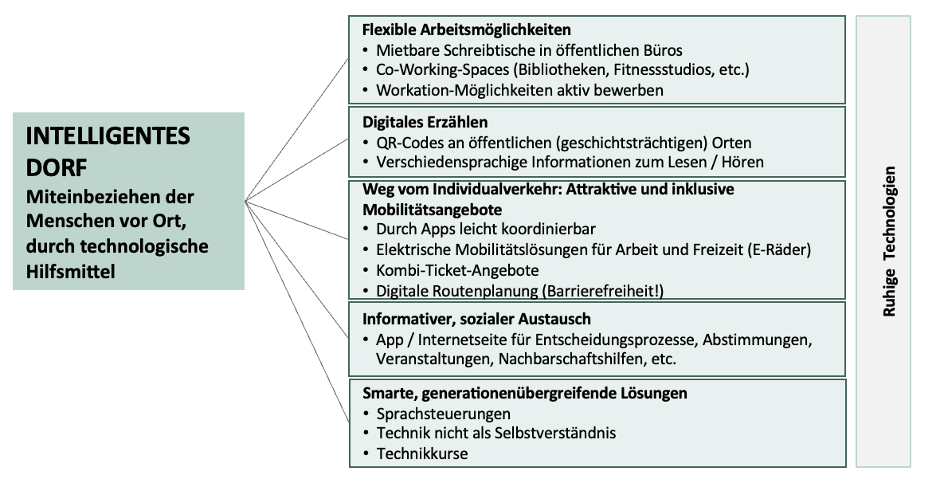
My top 5 recommendations for rural communities are:

1. Promotion of social infrastructure through technology:

Introducing digital platforms for information, announcements, voting and coordination of community activities and neighborhood assistance.

2. Improving mobility through technology-based solutions:

Introduction of coordinated mobility offers that can be controlled via an app. Combined ticket offers in particular increase attractiveness (combining car-sharing, buses, e-bikes, etc.). When planning digital routes, always offer barrier-free routes (suitable for wheelchairs, etc.) for comprehensive accessibility for all.

3. Creation of flexible working options and co-working spaces:

Provide creative workspaces (co-working spaces) to appeal to people with (increasingly common) flexible working models. Actively promoting rural areas as attractive places for "workation" also attracts young people.

4. Digital storytelling in places steeped in history:

Integrating technology to make stories and information accessible at historically significant places. The playful exchange of information generates interest among many young people. Use of QR codes to provide background information and emphasise the history of a place/street. (For example: Why is Jägergasse called what it is and what used to stand on such and such a street corner?)

5. Cross-generational technology accessibility:

Young people want to feel they can be happy where they live, even as they age. Therefore, creating inclusive technology solutions that are accessible to all age groups; providing technology courses, especially for older people, to improve their technological literacy. Introducing technology gradually and in consultation with the community for seamless integration.

Technologie als Impulsgeber für attraktive Dorfentwicklung

Source: Lisa Flora Buchauer

Of course, our final MAp meets question should not be missing today: What makes a truly unique hotel experience for you personally?

For me personally, a truly unique hotel experience is above all a "certain gut feeling". If I have a positive feeling when I first enter the hotel, I know it's something special.

A unique hotel experience for me is therefore a place that creates an emotional connection. And for me, such an emotional connection is created, for example, by offering various local experiences or creatively displaying the hotel's history in corridors / on the website.

And I have to admit: I'm also happy about the classic little chocolate on the bed pillow - preferably locally produced ;-)

About Lisa Flora Buchauer:

Lisa Flora was born in Innsbruck. Through her Bachelor's degree in Sociology and Master's degree in Sustainable Regional and Destination Development, holistic sustainability has become a matter close to her heart. She now lives in Zurich and is not only an expert in sustainability, but also a passionate coffee enthusiast and cyclist. Connect with her on LinkedIn.

Blog Block Image
Technology as a driving force for positive rural community development MAp Boutique Consultancy MAp meets Lisa Flora Buchauer

Add new comment

Comment

Order

Plain text

  • No HTML tags allowed.
  • Lines and paragraphs break automatically.
  • Web page addresses and email addresses turn into links automatically.
Categories
Types
sharing is caring


Are you eager to market your hotel more effectively to increase bookings and boost revenue?

Our 8-week coaching programme, led by the experts at MAp Boutique Consultancy, will refine your hotel concept and brand, strategically position your property, and elevate your marketing strategies, bringing growth and long-term success for your hotel business!

Weight
-82
Block Image
Hotel Marketing Accelerator: An 8-week coaching programme to grow your hotel business and achieve (more) success
Paragraphs
As seen on:

Ready to bring your hotel to the next level?

At MAp, our Purpose is driven by a deep passion for supporting independent and boutique hotels, coupled with our unwavering commitment to making this planet a better place for all.

Through this programme, we strive to amplify our impact in the hospitality industry by fostering the growth of standout, sustainable and successful hotels. We invite you to join us on this transformative journey!

Through 1-on-1 coaching with the MAp team, we'll equip you with comprehensive strategies and tools designed to strategically position and market your hotel - in under 8 weeks! Our approach is holistic and sustainable, aimed at making a significant and positive impact, and ensuring your success and long-term viability in this ever-evolving industry.

Hotel Marketing Accelerator: An 8-week coaching programme to grow your hotel business and achieve (more) success
10+
Years of consulting expertise
Hotel Marketing Accelerator: An 8-week coaching programme to grow your hotel business and achieve (more) success
1-on-1
Personalised coaching
Hotel Marketing Accelerator: An 8-week coaching programme to grow your hotel business and achieve (more) success
5
Available spots for 2024 / 2025

What is the Hotel Marketing Accelerator programme?

The Hotel Marketing Accelerator for hotels and hospitality businesses is a value-packed, 8-week programme consisting of the following modules. Here’s a sneak peek of what’s inside each module:

Module 1: Discovering your Success Potential

We embark on the journey by assessing your hotel's starting point and status quo, and uncovering the areas with the greatest potential for success for your hotel business.

Module 1 serves as an opportunity for mutual acquaintance, information exchange and comprehensive evaluation of where your hotel stands now and where you want it to be in the future. Includes:

  • Kick-off call 
  • Submission of questionnaire aimed at illuminating your hotel's current performance and standing
  • Analysis of the gathered data, crafting a bespoke coaching programme tailored specifically to your hotel’s needs
  • Identification of your hotel’s strategic success potential as it relates to its hotel concept, brand, positioning and marketing
  • Alignment and fine-tuning, so that our strategies align seamlessly with your goals before proceeding with the journey ahead

Outcome: We will have gained invaluable insights into your hotel's unique potential, identified key areas for improvement, and gained clarity on where your greatest opportunities for success lie, setting the foundation for our collaboration over the coming weeks.

Module 2: Sharpening your Hotel Concept + Hotel Brand

Through our decade of experience developing and collaborating with hotels worldwide, one crucial lesson stands out: you have to know what your hotel stands for, before you can make it stand out!

Module 2 is about enhancing your hotel’s unique concept and brand to make sure they meet the needs of your target audience, perform more competitively in the market and generate sustainable impact. Includes:

  • Definition of your hotel basics
  • Clarification of Purpose > your WHY
  • Clarification of brand elements
  • Identification of key buyer personas
  • Integration of the 4 Ps of Sustainability

Outcome: By the end of this module, you know what you stand for! You also gain important clarity around your hotel concept, brand and target groups, empowering you to create a hotel experience that resonates with your guests and positions your hotel as a market leader.

Module 3: Defining your Hotel Positioning

Based on your newly-refined hotel concept and hotel brand, and considering your strategic success potential, we identify your hotel’s unique position on the global MAp.

Module 3 is dedicated to hotel positioning, crystallising your hotel’s unique DNA to establish a clear and powerful presence in the market. Includes:

  • Definition of your existing hotel positioning
  • Sharpening of your hotel positioning based on your hotel concept, brand and success potential

Outcome: By the end of this module, you will attain a clear understanding of your hotel's distinctive positioning and a detailed roadmap to implement it effectively in the market, step-by-step.

Module 4: Optimising your Hotel Marketing

It’s time to look at how you sell and communicate your hotel: Are you addressing the right guests through the right channels?

Module 4 starts by assessing your existing hotel marketing strategies and activities, focusing on your sales and communication channels, in order to identify areas of improvement to help you achieve your new positioning and reach your target audience. Includes:

  • Assessment of your existing hotel marketing status quo, including strategies, activities and channel mixes
  • Identification of 5 sales and marketing priorities to kickstart improvement
  • Development of a tailored action plan 
  • Joint call and discussion

Outcome: By the end of this module, you'll have a tailored action plan encompassing 5 key priorities to help you execute your new marketing strategy, and drive enhanced engagement and revenue growth.

Module 5: Wrap-up + Coaching

The last module is all about you! Throughout our joint journey, perhaps you’ve identified several areas where you may require additional support and insights, or have lingering questions that need addressing.

Module 5 is about bringing closure to our coaching journey by providing personalised one-on-one coaching, addressing any remaining questions or concerns you may have, and offering tailored recommendations for your future success. Includes:

  • Personalised one-on-one coaching session tailored to your specific needs
  • Comprehensive review of identified areas requiring support or further insights
  • Joint call + discussion

Outcome: By the end of this module, you will have gained invaluable insights, clarity, and recommendations to propel you confidently toward your future success in the hospitality industry.

BONUS: The Sustainable Hotel Handbook - Collection

All participants get The Sustainable Hotel Handbook - Collection (value EUR 495) free of cost! Comprised of four comprehensive handbooks on the topics of Purpose, People, Planet, Profit, this important collection helps you to qualify your hotel as a sustainable one, in line with leading hotel certification programmes.

2024 Accelerator Coaching Programme to Master Your Hotel’s Positioning + Marketing
Hotel Marketing Accelerator: An 8-week coaching programme to grow your hotel business and achieve (more) success

Is the Hotel Marketing Accelerator right for me?

YES, this coaching programme is for you if you own, manage or run an independent or boutique hotel and are looking for outside guidance on branding, positioning and marketing. Together, we'll help you to:

  • Grow your hotel business and bring your hotel to the next level

  • Gain clarity and new direction

  • Stand out from the competition and make a distinct mark

  • Stay ahead of shifting guest demands and market dynamics

  • Implement sustainable practices into your business

  • Revitalise your brand image

  • Take advantage of transformative changes, such as new management or renovation

This is what you get

as a participant in the Hotel Marketing Accelerator.

Discounted price for 5 hotels!

Request your spot and benefit from a discounted price of EUR 4,900.00 (valued at EUR 7,600.00!)

Payment for the programme is made in three installments.
If you represent an NGO, please let us know, and we'll gladly offer you an enhanced pricing option.

Interested?

Get in touch with us!

Follow the link below to the questionnaire and share a little about your hotel with us. We'll contact you within the following days to schedule a start date. 

What makes the Hotel Marketing Accelerator so valuable?

The is the ultimate coaching programme to propel your hotel to new heights.

6

Frequently Asked Questions

You ask. We answer.

What does the coaching programme cost?

For 5 hotels our comprehensive Hotel Marketing Accelerator is offered at a special price of EUR 4,900.00, discounted from its total value of EUR 7,600.00. 

Bonus: All participants get The Sustainable Hotel Handbook - Collection (value EUR 495) free of cost in order to make this world a more hospitable and better place for ALL!

Do you offer special discounts for the coaching programme?

If you represent an NGO, please let us know, and we'll gladly offer you an enhanced pricing option.

Are all fees and costs included in the price?

Included 

Excluded 

  • Travel costs (if applicable)
  • Third-party costs such as design, photography, translations, etc. (if applicable)
What makes the coaching programme so valuable?

The is the ultimate coaching programme to propel your hotel to new heights.

Get tailored guidance

From refining your hotel concept and brand to developing strategic marketing plans, each module is designed to address your specific pain points and opportunities, ensuring that every aspect of your business receives the attention it deserves.

Identify your strategic positioning

By identifying your hotel's unique selling points and target audience, you'll learn how to differentiate yourself effectively and attract the right guests to your property.

Improve your sustainable impact

Through a holistic approach that considers social, environmental and economic sustainability, you'll discover how to create a hotel that thrives both now and in the future.

Receive expert advice

Benefit from the expertise of seasoned professionals at MAp Boutique Consultancy, who bring significant experience advising independent and boutique hotels to the table.

Gain actionable insights

You'll gain actionable insights that you can apply directly to your hotel business, allowing you to see immediate improvements in performance and profitability.

Elevate your marketing

Amplify your hotel's visibility and appeal in the marketplace with new-and-improved marketing strategy, activities and channel mixes.

What’s the timing of the coaching programme?

From start to finish, the Hotel Marketing Accelerator programme takes 8 weeks, which allows for a comprehensive exploration of key topics and strategies without overwhelming participants with too much information at once.

How flexible is the start date for participating in the programme?

We will jointly define a start date depending on what works best for your schedule.

How personalised is the coaching programme?

The Hotel Marketing Accelerator consists of pre-defined modules covering particular topics, each one taking 1-2 weeks each. Of course, the guidance, action steps and deliverables (and start date!) are all personalised to your exact needs and goals.

What kind of support and resources are available to participants throughout the duration of the programme?

Participants receive ongoing support from our team of experienced consultants through one-on-one coaching sessions, and access to valuable resources such as practical playbooks and handbooks.

Can participants expect ongoing support beyond the duration of the coaching program?

Participants will automatically become part of the MAp Community, where we offer free resources, webinars, expert talks, etc., to help hotels become more sustainable and excel in the hospitality industry. Of course, we remain available should you have any further questions!

How long does it typically take to see results from participating in the coaching program?

The timeline for seeing results can vary depending on individual circumstances, but participants will likely notice significant improvements in their hotel's performance within a few months of implementing the strategies and insights gained from the programme.

How does this coaching programme address sustainability within the hospitality industry?

Sustainability is a key focus of our coaching programme, and participants learn how to incorporate social, environmental and economic sustainability into their hotel concepts and brands, as well as their positioning and marketing strategies.

I am planning a new hotel, can I take part in this coaching programme?

Of course! All modules, strategies and actions from the programme apply to new hotels too, not just existing ones.

Who are the consultants?

MAp is a B Corp-certified boutique hotel consultancy dedicated to empowering independent and boutique hoteliers through branding, positioning and marketing services. Located in Zurich and women-lead, the MAp team adopts a holistic and sustainable approach to elevate the global impact of hotels. With a focus on people and purpose, MAp stands out for its innovative strategies and creative solutions, making hotels, businesses and brands matter.

Learn more about us here


The Hotel Sustainability Shop

Discover practical hotel sustainability tools and resources that make a real impact.

Create a thriving hotel business and learn more about holistic hotel sustainability with our practical handbooks, tools and resources. Let’s get started on the road to a more hospitable and purposeful Planet – together!

Types
Zero Price view
CHF 0.00
Erscheint nach ? Sekunden
3
Image Full Content
Hotel Marketing Accelerator: An 8-week coaching programme to grow your hotel business and achieve (more) success
sharing is caring

Today we are very pleased to conduct this MAp meets with Luise Weinert, Bachelor student at the University of Applied Sciences Graubünden. Luise was our mentee for the last year and decided to dedicate her bachelor thesis to the topic of sustainability communication. In September 2023, she defended her thesis, receiving the highest number of points available.

As the client and co-advisor of this thesis, we are naturally very pleased about this. We would like to take this opportunity to thank Dr. rer. soc. Lena Pescia, lecturer in tourism management at the FHGR and advisor of the thesis, for the great cooperation. A big thank you also goes to Riccarda Ryffel, head of the FHGR mentoring programme, with whom we have been cooperating successfully for years.

Untertitel
MAp meets Luise Weinert, student at the University of Applied Sciences of the Grisons, to talk sustainability communication in the hotel industry.
Blog main image
This is how you communicate sustainability to your hotel guests.
Paragraphs

Dear Luise, congratulations on your excellent work and the successful completion of your studies. What sparked your interest in devoting your bachelor thesis to the topic of sustainability communication in the independent hotel industry?

Luise: Thank you very much! I really enjoy browsing hotel websites and researching information about potential travel accommodations. This passion started when I was working as a flight attendant, when I regularly stayed in hotels and developed a growing interest in the industry. During the mentoring programme, Magdalena then told me that hoteliers often don't know exactly how to communicate about sustainability. This realisation not only piqued my curiosity, but also strengthened my desire to learn more about the specific difficulties and opportunities that the independent hotel industry in particular faces in this area.

What was the aim of your study and what approach and/or methods did you use to reach your destination?

Luise: The aim of my bachelor thesis was to develop concrete recommendations for action that can help hoteliers to successfully communicate their sustainability initiatives. To achieve this goal, I took various steps. First, I analysed hotel websites on sustainable booking platforms to gain an initial insight into current communication. In the next step, I conducted qualitative interviews with hotel employees to gain deeper insights into the background of sustainability communication, including difficulties or already successfully-implemented sustainability measures in communication. I then conducted a short survey to verify the findings and transfer them to a larger number of hotels. As a further methodological step, I also conducted two interviews with experts in order to obtain additional input for the development of practical recommendations for action. These methodological steps gave me a comprehensive insight into the current hurdles and difficulties in the field of sustainability communication. Based on these findings, I was then able to derive practical recommendations for action.

What difficulties do independent hotels have in communicating their sustainability efforts? Where have you identified hurdles and challenges?

Luise: According to my research, the main challenge for hoteliers is a significant lack of resources, particularly in terms of time and staff. These limited resources pose a significant barrier when it comes to engaging intensively with the communication of sustainability initiatives. Another significant difficulty lies in the clear presentation of the numerous sustainability initiatives. Many hotels have already implemented a variety of measures, but clearly communicating these initiatives is a challenge. The question arises as to how hotels can present the diversity of their sustainable efforts in a way that is understandable and appealing to their guests. In addition, hoteliers are faced with the decision of which specific measures they should communicate at all. With so many sustainability initiatives, the choice can be complex as hotels need to ensure that their chosen focus matches the expectations of their target groups.

Many hotels are not aware of how much they pay for the water and energy used by their showers.
When we get a chance to look at their numbers, they are often very surprised when they realise the magnitude of the savings they could achieve by installing our products.
@JohannesMelin via @weareMAp

How can independent hotels ensure authentic and credible communication of their sustainability efforts? OR what options are there for communicating sustainability measures emotionally and incorporating the hotel personality?

Luise: To ensure authentic and credible communication, I recommend that hoteliers present concrete facts and figures to back up their sustainability initiatives. This could include, for example, the exact origin of the food or the proportion of organic food. Such specific information provides a solid foundation for communication and allows guests to understand the real impact of sustainability efforts.

Furthermore, it is advisable to present the development in a transparent manner. By showing progress visually, not only is the hotel's commitment made clear, but guests are also able to follow the positive development of the sustainability initiatives. Such visual transparency not only creates trust, but also allows guests to actively participate in the sustainability progress. If the hotel has recorded CO2 emissions data, this information should definitely be shared.

This is not only for the sake of authenticity of sustainability efforts, but also as an opportunity for guests to make conscious decisions. Disclosing CO2 emissions data gives guests insight into the environmental impact of their stay and allows them to make an informed choice.

What are your top 3 recommendations for hoteliers to communicate sustainability measures clearly, concisely and yet authentically to their guests?

Luise: A particularly challenging task for hotels is to clearly present their sustainability efforts. In this context, I recommend that hoteliers integrate a special subpage for sustainability topics on their websites. On this subpage, the various measures can be organised, for example according to social, economic and ecological dimensions of sustainability or chronologically. This clear structure makes it easier for guests to find relevant information and obtain comprehensive information.

I also suggest that hotels emphasise their unique personality in their communication. Independent hotels often carry a special personality and individuality that makes them unique. These distinctive characteristics are not only reflected in the hotel itself, but also in its sustainability story.

In this context, hotels could tell their own story to emphasise their uniqueness. This could include, for example, why sustainability communication is personally important for independent hotels. Another important aspect is that hotels communicate tangible and concrete information for guests. Hotels can do this effectively by talking about concrete measures that bring immediate benefits to guests or affect them directly. Examples of this could be sustainable transportation options, health-promoting aspects or measures in the areas of energy and water. By focusing on tangible aspects, communication not only becomes more transparent, but also more relevant and appealing to guests.

As always, our final MAp meets question: What makes a truly unique hotel experience for you personally?

Luise: I particularly appreciate it when a hotel is not just a place to stay, but also tells the stories of the region and the hotel itself. For example, I love it when local food is present in the hotel's offerings or when the rooms are decorated with works of art from the region. Such details give the stay a special touch and allow me to be not only a guest, but also part of the local culture and atmosphere.

About Luise Weinert:

Luise grew up in the Black Forest and has lived in Switzerland since 2017 . She completed her Bachelor's degree in Tourism with a focus on Service Design at the University of Applied Sciences Graubünden in fall 2023. During her part-time studies, she worked as a flight attendant for a Swiss airline. Since October 2023, she has been completing a university internship as part of a digitalisation project at the Swiss Federal Railways SBB. Connect with Luise on LinkedIn HERE.

Blog Block Image
This is how you communicate sustainability to your hotel guests.

Comments

Astrid Scheerer

Sehr gute und interessante Ausführung Luise

Add new comment

Comment

Order

Plain text

  • No HTML tags allowed.
  • Lines and paragraphs break automatically.
  • Web page addresses and email addresses turn into links automatically.
Categories
Types
sharing is caring

🎧 Prefer listening to reading? Listen to the article here. ▶️ 


Owning a hotel is a life dream for many. However, the path to realising this dream is far from straightforward. Along the way, there are numerous challenges, obstacles, and pitfalls that can make or break your journey. This is where MAp’s expertise developing sustainable and innovative hotels comes into play.

With our MAdvice, we’ll show you how to turn that dream into reality, by helping you understand how to start a sustainable hotel business. From crafting a compelling hotel concept that sets you apart in a crowded market to creating a financial plan, this blog post will equip you with a well-defined roadmap.

The result? A hotel that embodies your vision, values and commitment to sustainability.

Untertitel
What it takes to create a hotel that is built with purpose – and for the future
Blog main image
Wie plane ich ein nachhaltiges Hotel?
Paragraphs

MAdvice 1: To launch and run a successful hotel business, you must start with your unique Hotel Concept

All too often, hoteliers and hospitality brand owners approach MAp for support only AFTER the (disappointing) launch of their new hotel. The reasons may vary: They don’t receive recognition in the market, they have difficulty attracting (the right) guests, they invest heavily in sales and communication but without the results they expect… the list goes on.
What 95% of these new hotel business owners have in common: they started the project with the wrong first step (have you heard the saying, “show me how your project starts, and I will tell you how it will end?”). When starting their hotel business, they look to architects and interior designers for plans, or go to design agencies for logos and hotel branding.

But what should be the first step in how to start a hotel? Developing your unique hotel concept! Your hotel's concept is the cornerstone upon which your sustainable hotel business will thrive. It's the essence of your brand, a reflection of your vision, and the blueprint for your hotel's future.

Investing the proper time, money and resources into developing a hotel concept will have the biggest return on your investment in the long-run.

So how do you create a hotel concept? Start with WHAT you would like to create - and answer the following questions. For what do you want to be known? For whom do you want to exist? What is your dream – your wish for the future? What kind of guests do you want to welcome in your hotel? What is your niche? What is your differentiator? What are you going to do to make this Planet a better place for all? Only when you know what your hotel stands for, can you start with the right architect or design agency, align them on your hotel concept, and bring it to life together.

If you wish to learn more about how to create a hotel concept, HERE’s our full blog post.

MAdvice 2: Get your basics right and plan for the long-run

At MAp, we work with hoteliers who have been in the hospitality industry for decades, and those who are entering the hospitality industry for the first time after finding success in other areas.

Those hotel owners who are successful and more profitable in the long run, get their basics right straight from the beginning, planning for sustainable and long-term success vs. fast return of investment.

It’s not difficult to find a hotel business plan template online somewhere that covers the most important facts. But from our experience, when putting your financial plan together, you should consider the following basics:

  • Most new hotel projects open later than expected. So, include various opening phases (from soft to official launch) and do not rely on cashflow generated during the first months of opening.
  • Calculate enough budget for the pre-opening phase: for pre-opening sales and communication, for hiring and training employees, for partnership and collaboration fees, etc. You only have one chance to make a first impression. However, all too often funds are not planned properly, and so in this most important phase, you’re not able to stand out in the market.
  • Pay yourself and your People well. From our experience working with family-run properties, we see that family members’ salaries are not calculated properly. This means that, if you were to look at the numbers closely, your business wouldn’t be a profitable one. Therefore, if you intend to run the hotel on your own: calculate your manager salary, as well as the salaries of all the family members involved in the business. If you intend to hand over the running of the hotel to a hotel manager, calculate that salary in.

Do the numbers add up? Does this new hotel project still make sense to you? Then #onwards to our last MAdvice

Starting a sustainable hotel business is a journey that requires careful planning,
unwavering commitment, and a forward-looking perspective.”
@MApBoutiqueConsultancy via @werareMAp

MAdvice 3: Successful hospitality projects rely on strong, long-term partners

In a world where things change overnight, you need strong, long-term partners whom you can trust and rely on to start your sustainable hotel business. One wrong partner can cost you time, money and nerves. Looking at your unique hotel concept: Who best align with your concept and can bring it to life? Which partners have the same values and ambitions as you? With whom do your feel comfortable talking and spending time (you don’t do business with companies, you always do business with People)? Who can move your projects to the next level vs. just execute them? Make sure to build a diverse team, because as recent studies show, diverse teams drive profit too!

Bonus MAdvice: Put sustainability at the centre of your new hotel business

We are firm believers that in order to succeed in the future, your hotel must be a sustainable hotel. The hospitality industry is evolving, and in this era of conscious consumerism, sustainability is no longer just a buzzword but a crucial aspect of any successful hotel business! Sustainable hotels are not only conscious stewards of our Planet and People, they also outperform their counterparts in numerous ways.

Sustainable hotels:

  • Appeal to a growing demographic of eco-conscious travellers
  • Enjoy cost savings through energy efficiency and waste reduction, contributing to improved financial performance
  • Better navigate turbulent times, like climate events and supply chain disruptions
  • Attract a loyal and expanding customer base
  • Benefit from enhanced brand reputation
  • Foster positive relationships with their surrounding communities, contributing to a thriving destination

In essence, sustainability is not just an ethical choice; it's a savvy business decision that drives your hotel’s success.

But how should you start a sustainable hotel?

Integrate MAp’s 4Ps framework – Purpose, People, Planet and Profit – into your hotel concept, making sustainability a central piece for your hotel brand, your products + services, and your sales + marketing. To learn how, head HERE.

Next, search for partners that excel in the field of sustainability, holding sustainability certifications and having the right network in place to make your hotel stand out in the market and create the most impact for People and Planet.

Starting a sustainable hotel business is a journey that requires careful planning, unwavering commitment, and a forward-looking perspective. By starting with a distinct hotel concept, ensuring your basics are rock-solid, and nurturing strong, long-term partnerships, you can set your sustainable hotel on the path to success.

Featured Service

Hotel Concept Development

All of the hotel concepts we create at MAp are sustainable hotel concepts. That means we put sustainability at the heart of the hotel concept and weave it into all of the elements of the hotel concept, using our very own framework for sustainability, titled the 4 Ps of Sustainability (Purpose, People, Planet, Profit). Thus, sustainability becomes a central piece for your hotel brand, your products + services, and your sales + marketing.

Video URL
Blog Block Image
How to Start a Sustainable Hotel Business

Add new comment

Comment

Order

Plain text

  • No HTML tags allowed.
  • Lines and paragraphs break automatically.
  • Web page addresses and email addresses turn into links automatically.
Types
Youtube stream image
How to Start a Sustainable Hotel Business