
sharing is caring

It is just about time – the MAp Trend Report ist back, or let’s say better: it’s already here for 2026. And honestly? At this point, we would not want to imagine ending a year and starting a new one without it! ☻

Each year, we take a deep dive into what is coming – and more importantly, what truly matters for hoteliers, hospitality brands and changemakers across the industry. 

Because let us be clear: trends are not a gimmick. They are signals and a gentle nudge that we all need to look ahead rather than behind. 

Those who wait to act until a trend is mainstream? They are already late. But those who pay attention early can invest smarter, adapt quicker, and stay ahead of the curve. 

This is exactly what the MAp Trend Report 2026 is here for. 
What to expect? No fluff, no trend theatre – just carefully selected insights with direct relevance for your business. From EU regulations and climate disclosures to bleisure travel and purpose-led positioning. 

Shall we take a look? #Onwards

Untertitel
What is shaping hotels in 2026: European Union sustainability reporting, the rise of bleisure, and practical uses of artificial intelligence
Blog main image
2026 Hotel Industry Trends: Sustainability, artifical Intelligence, Bleisure and smarter Operations
Paragraphs
The future belongs to hotels that are both
human and smart
MAp Boutique Consultancy

1. Reporting is getting real, EU regulations are tightening

We know – this might sound like one of those things you would rather not hear. It sounds like work. It sounds like complexity. But here is the good news: it does not have to be! 

In fact, for hotels that start early, sustainability reporting can become a powerful asset – not a burden. 

The Corporate Sustainability Reporting Directive (CSRD) and the European Sustainability Reporting Standards (ESRS) will require more and more companies to disclose how they impact People and Planet.

Even if your hotel is not directly affected (yet), you might be indirectly impacted: 

  • through corporate clients who demand reporting, 
  • through investors who require transparency, 
  • or through business partners who are already reporting themselves. 

In short: sustainability performance will soon become part of your business credentials.

What can you do now? 

  • Find out where you stand today. Our Sustainability Assessment is here to guide you.
  • Decide where to take action first – the areas you want to focus on and improve.
  • Decide whether to walk the path on your own – or bring in professional support to make the journey smoother.
  • Start tracking what truly matters – from energy and emissions (Scope 1 and 2) to your social impact.
  • Choose the right framework for your journey – B Corp, Greensign or others as your starting point. 

Our MAdvice: You do not need to have it all figured out. But you do need to begin.Those who build structures now will be ready – and ahead – when reporting becomes the new normal.


2. Bleisure travel is becoming the norm, not the niche

The line between work and leisure continues to blur – and bleisure travel (Business and Leisure travel = Bleisure) is becoming the norm, not the niche. In fact, the bleisure travel market is projected to nearly quadruple by 2034 (Presedence Research, 2025). 

What used to be a short business trip is now often extended into a weekend getaway. Or even a “workation” in a location that inspires. Guests are looking for places where they can plug in, but also fully switch off. 

What this means for hotels: You need to cater to both sides of the experience – smart and professional, warm and personal.

Think: 

  • ergonomic desks, great coffee and strong Wi-Fi
  • co-working lounges that invite connection wellness offerings,
  • flexible check-in/out, weekend extensions
  • local insider tips that turn a work trip into a memory 

And yes, bleisure travellers are valuable guests: They stay longer, spend more, and often return.

What you can do now? 

  • Review your room amenities and workspace features
  • Create bleisure packages (weekend extensions, 2+ nights with special rates), such as our client B5 Boutique Hotel in Lugano
  • Offer remote-work stays (weekly or monthly rates, with perks for longer stays)
  • Communicate clearly to both direct guests and, where relevant, corporate partners
  • Re-think your loyalty programmes for hybrid travellers who want flexibility and recognition

Our MAdvice: Design your offers around flexibility, purpose and experience – and you will win the travellers who want it all.

2026 Hotel Industry Trends: Sustainability, artifical Intelligence, Bleisure and smarter Operations

3. Artificial Intelligence is coming strong – but not to take your job

Forget the doom stories. In 2026, Artificial Intelligence is not coming for your jobs – it is coming for your to-do list. 

From guest communication to revenue management, hotels are starting to embrace AI as a practical, powerful support system (Thynk, 2024). And we are sure: The smartest ones are not using it to replace their people – they are using it to elevate them. 

Think: 

  • personalised email replies that actually save time
  • chatbots that handle FAQs while your team focuses on real care
  • automated pricing tools that take market trends into account 

The key? Let technology do what it does best – so your people can do what they do best.

What you can do now: 

  • Explore AI tools such as chatlyn tailored for hospitality
  • Start small: one task, one team, one experiment
  • Train your team to work with AI, not against it
  • Keep the human touch at the heart of every guest interaction 

Our MAdvice: Do not fear the tech. Lead WITH it. Because the future belongs to hotels that are both human and smart.

MAp’s Bonus Tip for 2026: Be the hotel that dares

One thing we know for sure: The future belongs to the hotels that dare. 

Trends are tools. But it is your stance that gives them meaning. The most exciting hotels in 2026 do not just follow the direction of the market – they sharpen it. They build with intention, communicate with courage, and turn values into real life action. 

So if you are working on something in 2026, do not play it safe. 
Dare to be different. 
Dare to be true. 
Dare to be the hotel only YOU and your team can be. 

That is what guests will remember and what makes a positive impact. 

We hope that this short glance ahead has provided you with empowering ideas and sustainable inspiration. Let's work together to make hotels even more innovative, sustainable, and future-proof. Thank you for joining us on our journey to shape the hotel industry of tomorrow. #onwards


Blog Block Image
2026 Hotel Industry Trends: Sustainability, artifical Intelligence, Bleisure and smarter Operations

Add new comment

Comment

Order

Plain text

  • No HTML tags allowed.
  • Lines and paragraphs break automatically.
  • Web page addresses and email addresses turn into links automatically.
sharing is caring

The MAp Book Club returns with a title that challenges the way we think about everyday choices. Because what better way to kick things off than with a book that makes you question your coffee, your clothes, your emails... and yes, your bananas. 

Mike Berners-Lee’s How Bad Are Bananas? is everything a climate book should be: smart, practical, un-preachy – and full of eyebrow-raising facts that shift your perspective and your choices.

Untertitel
Surprising climate truths about the carbon footprint of everyday things – and (spoiler alert) why bananas aren’t the bad guys.
Blog main image
Book Review: How bad are bananas
Paragraphs
we need to focus on what actually makes a difference,
not just what feels good
Mike Berners-Lee

Summary

We know that flying is bad for the planet. We’ve heard about plastic waste. But how much carbon does it take to send a text? Or to make a pair of jeans? 

How Bad Are Bananas? is one of those books that leaves you staring into your cup of coffee, wondering what invisible impact it carries. 

It’s not about doing less – it’s about doing things smarter. With surprising comparisons and jaw-dropping carbon maths, Berners-Lee helps us to understand what really matters in the climate conversation. Spoiler: it’s not the banana.

What does CO₂ even mean?

CO₂ – carbon dioxide – is one of the major greenhouse gases driving climate change. It’s released when we burn fossil fuels like oil, gas or coal – and through the things we produce, consume and waste. 

To compare emissions from different sources, we use a standard measure called CO₂e – carbon dioxide equivalent – which includes other powerful gases like methane and nitrous oxide. The numbers, shown in grams (g), kilograms (kg) or tonnes (t), help us to comprehend the climate cost of each action. 

For reference: 

  • 1 g CO₂e ≈ 7 seconds of driving
  • 100 g CO₂e ≈ 1 km by car
  • 1 kg CO₂e ≈ 10 km by car or a medium steak
  • 1 t CO₂e ≈ an average European’s emissions in 1 month

Key points

How Bad Are Bananas? doesn’t overwhelm you with stats – it tells carbon stories in g, kg and tonnes. A tangible, readable way to rethink our everyday choices. 

Some things are as bad as you thought (beef, frequent flying). Others are worse. And the rest? Far more innocent than you’d imagine.

Book Review: How bad are bananas

Here are the key takeaways that have stood out to us:

#1: Bananas aren’t that bad – but wasting them is. One banana has a surprisingly low footprint: around 110 g CO₂e – that’s about the same as a kilometre in a car or a cup of oat milk coffee. But throw it away, and that footprint becomes avoidable. Globally, food waste accounts for up to 10% of all emissions. 

#2: Buying new tech has a higher footprint than using it. A single smartphone generates 55-95 kg CO₂e during its production – the same as driving 400-700 km. Most of the footprint happens before you even switch it on. Keeping your phone for just one more year makes a measurable difference. 

#3: A simple t-shirt = 4 kg, jeans = 30+ kg CO₂e. A basic cotton T-shirt emits around 4 kg CO₂e. A pair of jeans? Due to water-hungry cotton, dyeing and global transport, over 30 kg CO₂e – about the same as a domestic flight. The carbon impact of the fashion industry is bigger than all international flights and shipping combined. 

#4: A text message? Nearly nothing. A Google search? Adds up fast. One SMS emits only 0.014 g CO₂e – practically nothing. But a single email with a large attachment? Around 50 g CO₂e – the same as driving 400 metres. Multiply that across your inbox, team and organisation, and it starts to matter. 

#5: Trains are greener – but not always. Yes, trains are generally more climate-friendly (and far safer) than cars. But if just two people are travelling together, driving an efficient car can have a lower footprint than taking a first-class train. 

#6: A bouquet a week? A tonne of trouble. A weekly bouquet of out-of-season, flown-in flowers can add up to 1.5 tonnes of CO₂e per year. Grown with artificial heat or flown across continents – either way, it’s bad news for the climate. 

#7: War is the most carbon-intensive human activity. Military operations and infrastructure have some of the highest emissions on the planet – yet they’re rarely discussed. It’s a sobering reminder that peace and sustainability are profoundly interconnected – and that a just, liveable future requires both.

MAp’s Favourite Quote

“But compared to 2010 I feel more hope, more fear and a good deal more urgency.”

Summary

If you see air-freight, avoid it. Vegan beats vegetarian for the climate. And when it comes to beef, lamb or hothouse-grown produce – think red flags, not green choices. 

How Bad Are Bananas? flips our understanding of climate impact on its head. It’s not about guilt – it’s about clarity. It shows us where we can make meaningful changes without losing our minds (or our love for bananas). 

At MAp, we believe that better decisions start with better questions. This book gives us exactly that. Questions that make us pause, reflect and choose better – not with pressure, but with purpose. 

Sustainability isn’t just a checklist. It’s a mindset. One that asks: How bad is it? And MAps out a better way forward. 

#onwards 

Your MAp team

Blog Block Image
Book Review: How bad are bananas

Add new comment

Comment

Order

Plain text

  • No HTML tags allowed.
  • Lines and paragraphs break automatically.
  • Web page addresses and email addresses turn into links automatically.
Categories
sharing is caring

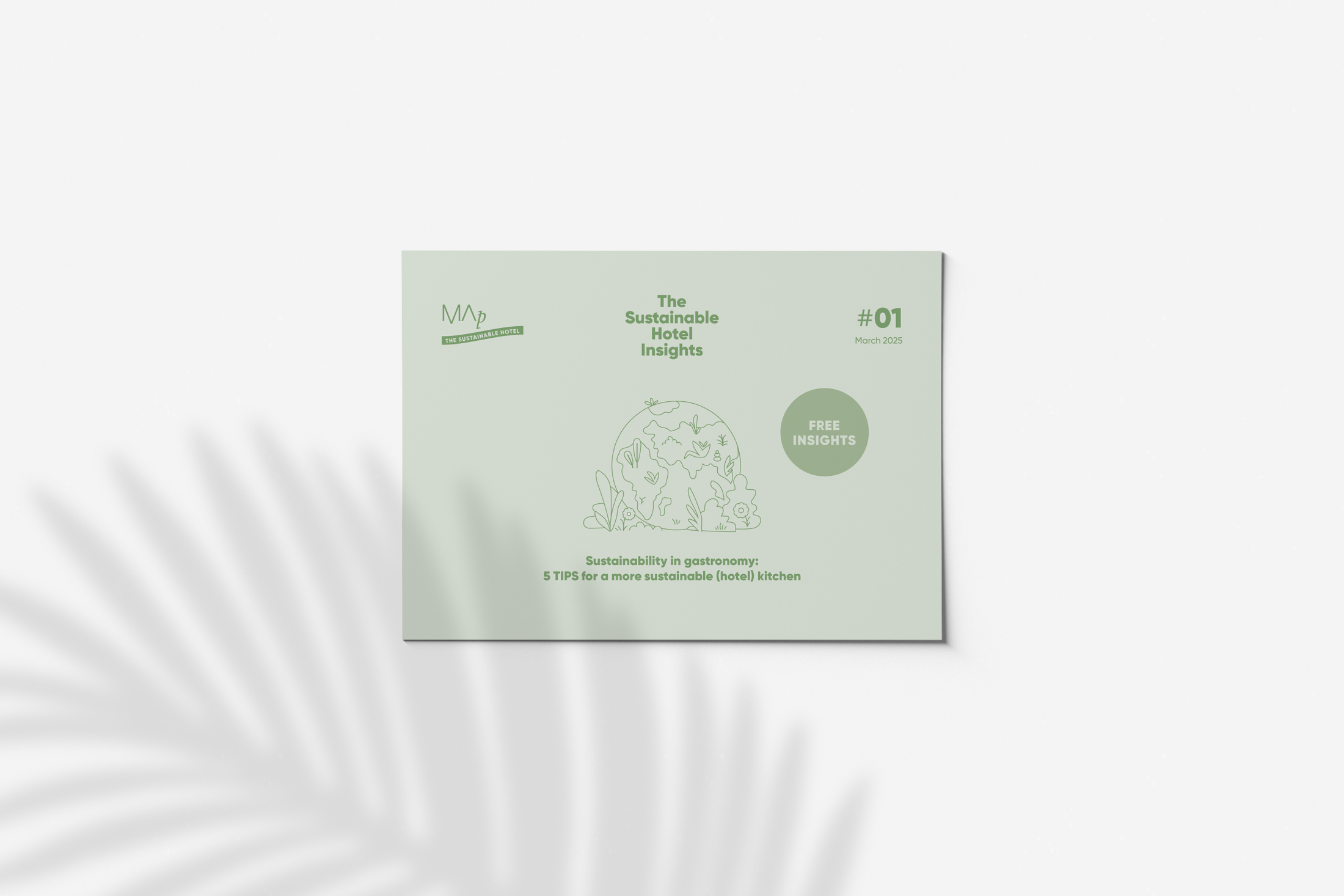
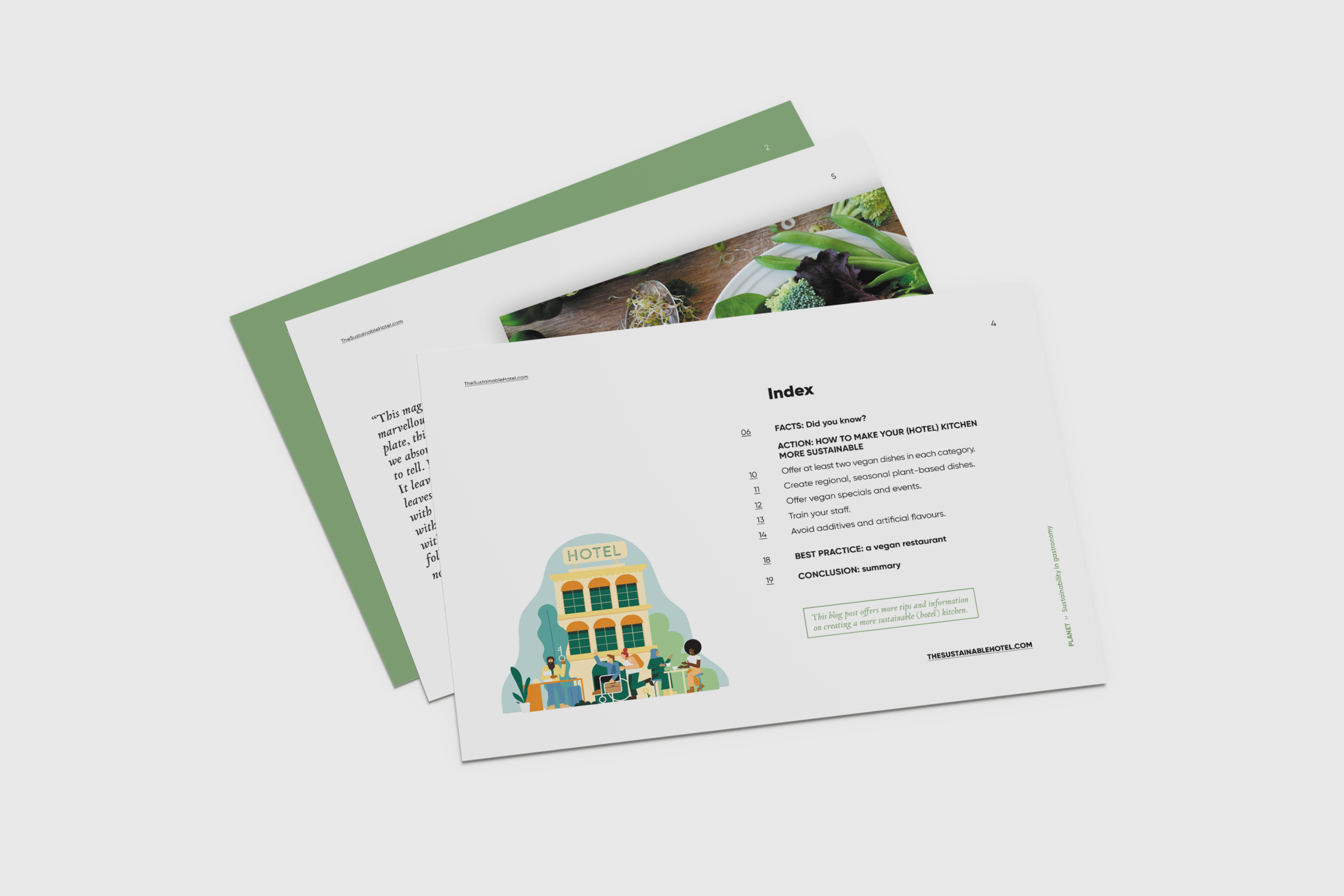
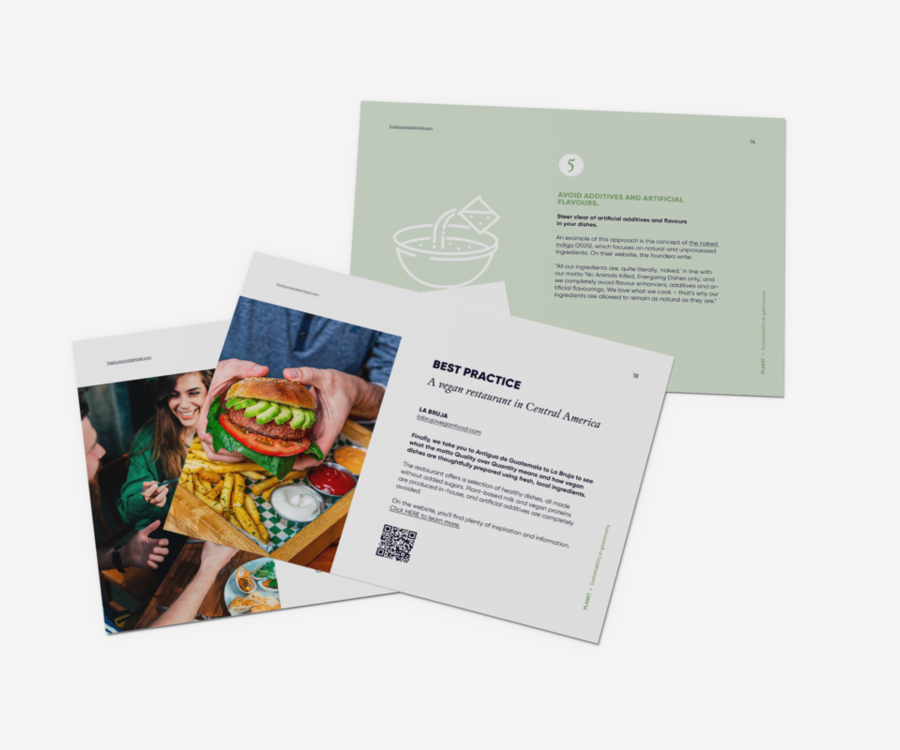
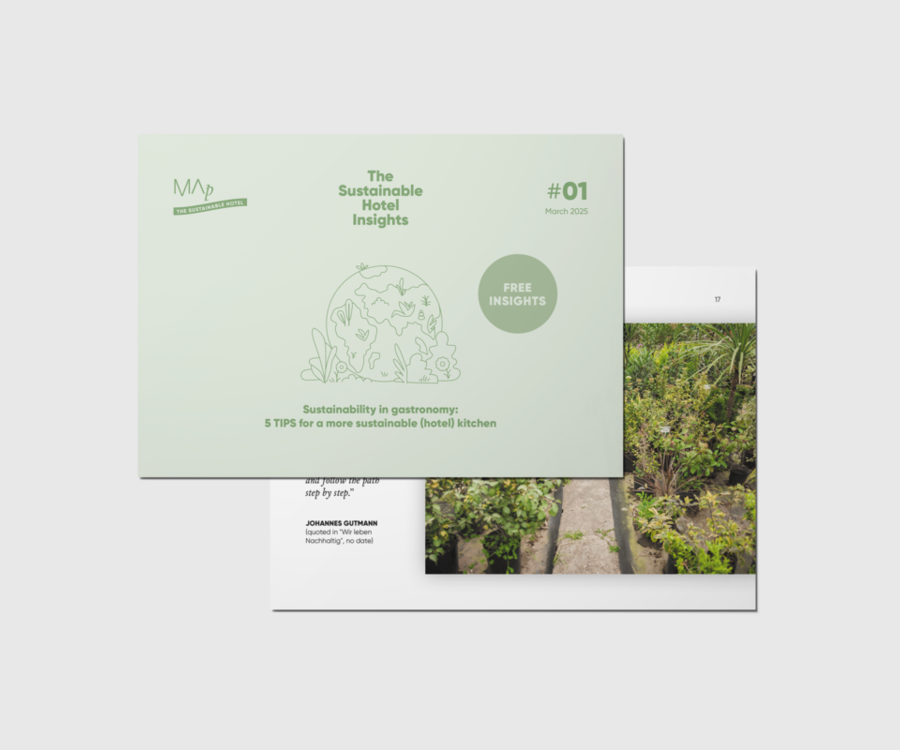
This free PDF file provides information, guidance and tips regarding sustainability in the (hotel) kitchen.

CHF 0.00

Available for download.

Weight
-86
Block Image
Sustainability in Hospitality: 5 Tips for a More Sustainable (Hotel) Kitchen
Main image
Sustainability in Hospitality: 5 Tips for a More Sustainable (Hotel) Kitchen
Paragraphs

5 Tips for a More Sustainable (Hotel) Kitchen

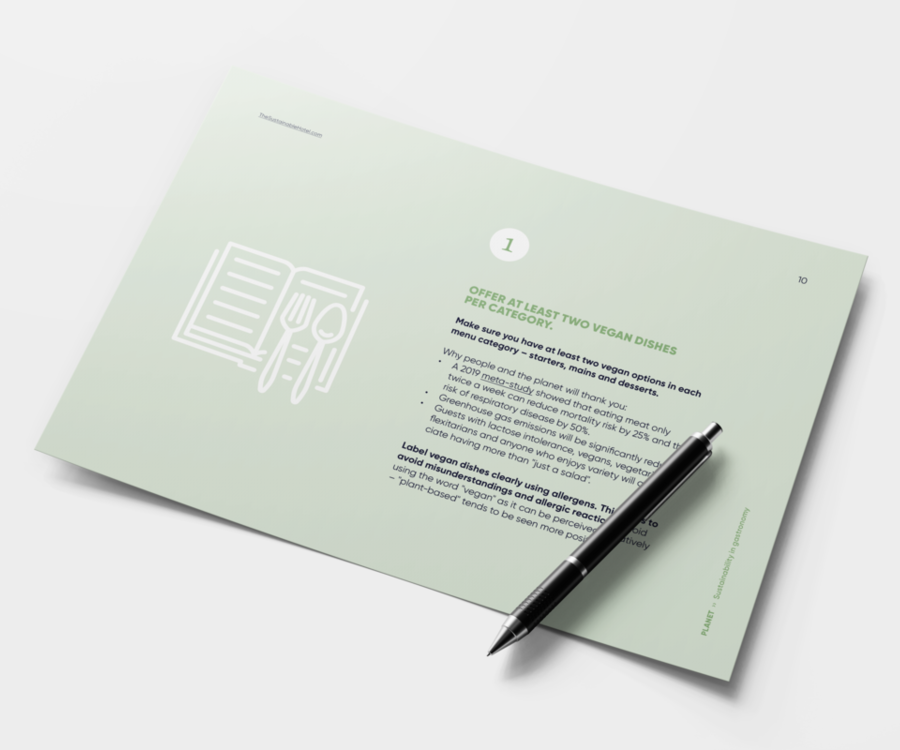
The way hotels and restaurants design their menus not only matters for our planet, but also for guests’ health and future generations' quality of life. That’s why we have created this practical guide – to empower you with our five top tips for a sustainable (hotel) kitchen, background information and practical insights.

Included in the guide:

  • What males people give up meat?
  • How can hotel and restaurant managers benefit from this shift?
  • How can you make sure your menu is to the liking of (almost) everybody?
  • What can you do to make your (hotel) kitchen more sustainable?


Sustainability in Hospitality: 5 Tips for a More Sustainable (Hotel) Kitchen

About Balteschwiler Consulting

Balteschwiler Consulting offers tailored concepts for the hospitality industry – from introducing seasonal, regional and plant-based dishes to using eco-friendly cleaning and care products, as well as offering staff training. Through team workshops, Balteschwiler Consulting provides the knowledge needed to reduce your ecological footprint while increasing guest satisfaction.

Untertitel
We’ll show you how to make your (hotel) kitchen more sustainable in five simple steps.
Why you need it
  • 5 clear action steps for a sustainable (hotel) kitchen
  • Better understanding of meat consumption and its impact
  • The path to a sustainable (hotel) kitchen with this practical and free PDF guide
  • Information about a best-practice example, links to further must-read resources to support you on your #onwards journey
Zero Price view
CHF 0.00
Erscheint nach ? Sekunden
3
FREE DOWNLOADS
sharing is caring

The MAp Boutique Consultancy book club is back! And it is back with a bang, because “Doing Good Better” by William MacAskill was a mind-opening and highly-inspirational read for the MAp team. In this blog post, we’re excited to share our top insights so that we can all start embracing this radical new way of making a difference – NOW!

Untertitel
Effective altruism and a radical new way to make a difference
Blog main image
Buchempfehlung: „Gutes besser tun“ von William MacAskill
Paragraphs

Summary

In his ground-breaking book “Doing Good Better”, MacAskill explains the concept of “Effective Altruism” and asks the question, “How can I make the biggest difference I can?” To answer this question he uses concepts we’ve hardly ever seen so far in the field of doing good: evidence, careful reasoning and a scientific approach. His search for truth shows that so far, many of us “just did good” without assessing if we chose the right investment = if we were using our resources in the most effective way. MacAskill also busts some myths about the concepts of green living, climate offsetting, fairtrade, etc., showing us in a fact-based and impartial way, that what we thought or were told was best for the word, in truth, isn’t.

Key Points

At MAp, we believe in the power and goodness of people. That was one reason why we developed our hotel sustainability platform: to empower hoteliers, consultants, students, business owners, etc. to do good. To make a difference. To make this Planet a more purposeful and hospitable place for all. However, the so-often overlooked challenge William MacAskill addresses in his book is: How can we ensure that, when we try to help others and do good, we do so as effectively as possible? Because the truth is: The best charities are hundreds of times more effective at improving lives than merely “good” charities. This means, by knowing the principles of effective altruism, we all can be hundreds of times more effective in creating positive impact for People and Planet.

Here are the 3 key take-aways you need to know:

#1: The effective altruist’s approach to making a difference consists of five key questions

There are five key questions you should ask yourselves when thinking like an effective altruist:

1. How many People benefit, and by how much?
This implies: we need to make fact-based decisions about how much benefit we can make by doing different charitable activities / supporting different charities.

2. Is this the most effective thing you can do?
Search for science-based evidence and do not go for “merely” very good programmes, if the very best ones are hundreds of times better. HERE is a great resource for identifying the best charities and non-profits.

3. Is this area neglected?
Your money makes the most difference when you invest in a neglected area vs. an area where a lot of funding already goes to. As an example, we could say that investing in malaria health programmes is more effective than in cancer research programmes.

4. What would have happened otherwise?
Looking at evidence, some programmes don’t do good, but cause harm over the long run. Or they don’t create as much impact as you would imagine. For example, this applies to the decisions you take when choosing a career: sometimes you can do good better when you donate money while working at a “normal” job vs. working at an NGO, which often is thought of as the best thing you could do.

5. What are the chances of success, and how good would success be? 
Some activities are effective not because they’re likely to make a difference, but because their impact is so great if they do make a difference. To illustrate this, MacAskill uses the example of climate change: “If it is happening and we don’t take action, millions of lives will be lost and the world economy will lose trillions of dollars. If climate change isn’t happening and we do take action, the costs are much lower. We would have wasted some amount of resources developing low-carbon technology and slowed economic progress a bit, but it wouldn’t, literally, be the end of the world.”

#2: The law of diminishing returns implies you focus on long-time tested activities

MacAskill defines the law of diminishing returns in his book as follows: “If we want to do as much good as we can, we’ve got to ask which cause to focus on. The law of diminishing returns provides a useful rule of thumb for comparing causes. If a specific area has already received a great deal of funding and attention, then we should expect it to be difficult for us to do a lot of good by devoting additional resources to that area. In contrast, within causes that are comparatively neglected, the most effective opportunities for doing good have probably not been taken.” MacAskill then outlines that our response to natural disasters is one of the clearest cases of how, when it comes to charity, we mostly follow our gut and not science. When a disaster strikes, we (and every else) think “emergency” and donate money or resources to that cause, forgetting that emergencies happen all the time around us. But we get accustomed to poverty and the fact that, every day, People die from easily preventable diseases like AIDS, malaria, or tuberculosis, which therefore receive less ongoing funding.

MAp Boutique Consultancy - The Sustainable Hotel - Zurich

#3: Don’t believe everything that sounds good, or let’s bust some myths 

We very often fail to think as carefully about helping others as we could, mistakenly believing that applying data and rationality to a charitable endeavour robs the act of virtue.
And that means we pass up opportunities to make a tremendous difference.
@MacAskill via @weareMAp

Myth 1: Ethical Consumerism is always good and sweatshop products must be avoided

Companies in the fashion industry claim to be “sweatshop free” and other companies ask consumers to practice “ethical consumerism” = to spend more money in order to assure that workers at the factories are treated better. Now, as we’ve learned in point #1, there are five questions we must ask as an effective altruist, one being: What would have happened otherwise?

And MacAskill’s scientific research shows a painful truth: “We assume that if People refuse to buy goods from sweatshops, these factories will succumb to economic pressure and go out of business, in which case their employees will find better employment elsewhere. But that’s not true. In developing countries, sweatshop jobs are the good jobs. The alternatives are typically worse, such as backbreaking, low-paid farm labour, scavenging, or unemployment.”

By looking at this example, we have to realise that to practice effective altruism, we have to leave our “rich-world-perspective” and accept that some things unimaginable to us are better to the world than we expected. Or in this case, sweatshops are good for poor countries and if we boycott them we make People in poor countries worse off.

“We should certainly feel outrage and horror at the conditions sweatshop laborers toil under. The correct response, however, is not to give up sweatshop-produced goods in favour of domestically produced goods. The correct response is to try to end the extreme poverty that makes sweatshops desirable places to work in the first place,” says MacAskill.

Myth 2: By buying Fairtrade-certified products, we do good

Fairtrade certification is an attempt to give higher pay to workers in poor countries and has been heavily advertised as “the” solution in our western society. Producers get the certification when they meet certain criteria, such as paying workers a minimum wage, complying to safety requirements, etc. What’s less known: Most producers that can meet the criteria are from comparatively rich countries like Mexico and Costa Rica, which are ten times richer than the very poorest countries, like Ethiopia. Knowing about diminishing returns of investment, this means that we do more good buying uncertified coffee from Ethiopia than Fairtrade coffee from Costa Rica. We also should be aware that there are middlemen involved who take a share of the “Faitrade price”, or that we even don’t know how much the higher price translates into higher wages or how much money goes to the farmers who work for the Fairtrade-certified organisations. Furthermore, consistent findings indicate that Fairtrade certification does not even improve the lives of agriculture workers. Given this, there is little altruistic reason to buy Fairtrade products.

Myth 3: Buying locally does work - offsetting does not!

MacAskill states straight away that buying locally-produced goods is overhyped, as only 10% of the carbon footprint of food comes from transportation, whereas 80% comes from production. This means that WHAT type of food you buy is much more important than whether that food is produced locally or internationally.

Taking this into account, the most effective ways to cut down your emissions are:

  • To reduce your intake of meat (especially beef)
  • To reduce the amount you travel
  • To use less electricity and gas in the home

However, MacAskill also mentions that the most effective way to reduce your emissions is called offsetting: rather than reducing your own greenhouse gas emissions, you pay for projects that reduce or avoid greenhouse gas emissions elsewhere.

MacAskill explains that his organisation, Giving What We Can, studied more than 100 organisations and came to the result that Cool Earth is the most effective organisation when talking about offsetting of greenhouse gas emissions. Cool Earth uses donated money to help economically develop rainforest communities - to a point where they do better by not selling their land to loggers. This means that when you donate to Cool Earth and practice effective carbon offsetting, overall your life contributes nothing to climate change.


Conclusion

We conclude this blog post by answering an important question: What should you do right now?

We’ve compiled our top three suggestions:

1. Establish a habit of regular giving. GiveWell is an organisation MacAskill mentions throughout his book, and its goal is to produce the world’s top research on where to give - free and for everyone. This means you can have a look and find out which charities are the most effective right now and start giving to them on a regular basis.

2. Sign up to the effective altruism mailing list. That way you can learn more about effective altruism and about how to get involved in the community, and read stories of People putting effective altruism into practice.

3. Tell others about effective altruism. Because if you can get one person to make the same changes you make, you’ve doubled your impact.

Thank you for reading until the end, and let’s all move #onwards to do good better!
Your MAp team

Blog Block Image
Book review: Doing Good Better by William MacAskill by MAp Boutique Consultancy

Add new comment

Comment

Order

Plain text

  • No HTML tags allowed.
  • Lines and paragraphs break automatically.
  • Web page addresses and email addresses turn into links automatically.
Categories
Types
sharing is caring

Once you know what your personal carbon footprint is, you have a better understanding of what you can alter in your day-to-day to reduce your impact on the environment. And knowing that, you'll have a better understanding for what you can do at the hotel-level too.

Types
Topic TopCat
Weight
0