
sharing is caring

The MAp Boutique Consultancy book club is back! And it is back with a bang, because “Doing Good Better” by William MacAskill was a mind-opening and highly-inspirational read for the MAp team. In this blog post, we’re excited to share our top insights so that we can all start embracing this radical new way of making a difference – NOW!

Untertitel
Effective altruism and a radical new way to make a difference
Blog main image
Buchempfehlung: „Gutes besser tun“ von William MacAskill
Paragraphs

Summary

In his ground-breaking book “Doing Good Better”, MacAskill explains the concept of “Effective Altruism” and asks the question, “How can I make the biggest difference I can?” To answer this question he uses concepts we’ve hardly ever seen so far in the field of doing good: evidence, careful reasoning and a scientific approach. His search for truth shows that so far, many of us “just did good” without assessing if we chose the right investment = if we were using our resources in the most effective way. MacAskill also busts some myths about the concepts of green living, climate offsetting, fairtrade, etc., showing us in a fact-based and impartial way, that what we thought or were told was best for the word, in truth, isn’t.

Key Points

At MAp, we believe in the power and goodness of people. That was one reason why we developed our hotel sustainability platform: to empower hoteliers, consultants, students, business owners, etc. to do good. To make a difference. To make this Planet a more purposeful and hospitable place for all. However, the so-often overlooked challenge William MacAskill addresses in his book is: How can we ensure that, when we try to help others and do good, we do so as effectively as possible? Because the truth is: The best charities are hundreds of times more effective at improving lives than merely “good” charities. This means, by knowing the principles of effective altruism, we all can be hundreds of times more effective in creating positive impact for People and Planet.

Here are the 3 key take-aways you need to know:

#1: The effective altruist’s approach to making a difference consists of five key questions

There are five key questions you should ask yourselves when thinking like an effective altruist:

1. How many People benefit, and by how much?
This implies: we need to make fact-based decisions about how much benefit we can make by doing different charitable activities / supporting different charities.

2. Is this the most effective thing you can do?
Search for science-based evidence and do not go for “merely” very good programmes, if the very best ones are hundreds of times better. HERE is a great resource for identifying the best charities and non-profits.

3. Is this area neglected?
Your money makes the most difference when you invest in a neglected area vs. an area where a lot of funding already goes to. As an example, we could say that investing in malaria health programmes is more effective than in cancer research programmes.

4. What would have happened otherwise?
Looking at evidence, some programmes don’t do good, but cause harm over the long run. Or they don’t create as much impact as you would imagine. For example, this applies to the decisions you take when choosing a career: sometimes you can do good better when you donate money while working at a “normal” job vs. working at an NGO, which often is thought of as the best thing you could do.

5. What are the chances of success, and how good would success be? 
Some activities are effective not because they’re likely to make a difference, but because their impact is so great if they do make a difference. To illustrate this, MacAskill uses the example of climate change: “If it is happening and we don’t take action, millions of lives will be lost and the world economy will lose trillions of dollars. If climate change isn’t happening and we do take action, the costs are much lower. We would have wasted some amount of resources developing low-carbon technology and slowed economic progress a bit, but it wouldn’t, literally, be the end of the world.”

#2: The law of diminishing returns implies you focus on long-time tested activities

MacAskill defines the law of diminishing returns in his book as follows: “If we want to do as much good as we can, we’ve got to ask which cause to focus on. The law of diminishing returns provides a useful rule of thumb for comparing causes. If a specific area has already received a great deal of funding and attention, then we should expect it to be difficult for us to do a lot of good by devoting additional resources to that area. In contrast, within causes that are comparatively neglected, the most effective opportunities for doing good have probably not been taken.” MacAskill then outlines that our response to natural disasters is one of the clearest cases of how, when it comes to charity, we mostly follow our gut and not science. When a disaster strikes, we (and every else) think “emergency” and donate money or resources to that cause, forgetting that emergencies happen all the time around us. But we get accustomed to poverty and the fact that, every day, People die from easily preventable diseases like AIDS, malaria, or tuberculosis, which therefore receive less ongoing funding.
MAp Boutique Consultancy - The Sustainable Hotel - Zurich

#3: Don’t believe everything that sounds good, or let’s bust some myths 

We very often fail to think as carefully about helping others as we could, mistakenly believing that applying data and rationality to a charitable endeavour robs the act of virtue.
And that means we pass up opportunities to make a tremendous difference.
@MacAskill via @weareMAp

Myth 1: Ethical Consumerism is always good and sweatshop products must be avoided

Companies in the fashion industry claim to be “sweatshop free” and other companies ask consumers to practice “ethical consumerism” = to spend more money in order to assure that workers at the factories are treated better. Now, as we’ve learned in point #1, there are five questions we must ask as an effective altruist, one being: What would have happened otherwise?

And MacAskill’s scientific research shows a painful truth: “We assume that if People refuse to buy goods from sweatshops, these factories will succumb to economic pressure and go out of business, in which case their employees will find better employment elsewhere. But that’s not true. In developing countries, sweatshop jobs are the good jobs. The alternatives are typically worse, such as backbreaking, low-paid farm labour, scavenging, or unemployment.”

By looking at this example, we have to realise that to practice effective altruism, we have to leave our “rich-world-perspective” and accept that some things unimaginable to us are better to the world than we expected. Or in this case, sweatshops are good for poor countries and if we boycott them we make People in poor countries worse off.

“We should certainly feel outrage and horror at the conditions sweatshop laborers toil under. The correct response, however, is not to give up sweatshop-produced goods in favour of domestically produced goods. The correct response is to try to end the extreme poverty that makes sweatshops desirable places to work in the first place,” says MacAskill.

Myth 2: By buying Fairtrade-certified products, we do good

Fairtrade certification is an attempt to give higher pay to workers in poor countries and has been heavily advertised as “the” solution in our western society. Producers get the certification when they meet certain criteria, such as paying workers a minimum wage, complying to safety requirements, etc. What’s less known: Most producers that can meet the criteria are from comparatively rich countries like Mexico and Costa Rica, which are ten times richer than the very poorest countries, like Ethiopia. Knowing about diminishing returns of investment, this means that we do more good buying uncertified coffee from Ethiopia than Fairtrade coffee from Costa Rica. We also should be aware that there are middlemen involved who take a share of the “Faitrade price”, or that we even don’t know how much the higher price translates into higher wages or how much money goes to the farmers who work for the Fairtrade-certified organisations. Furthermore, consistent findings indicate that Fairtrade certification does not even improve the lives of agriculture workers. Given this, there is little altruistic reason to buy Fairtrade products.

Myth 3: Buying locally does work - offsetting does not!

MacAskill states straight away that buying locally-produced goods is overhyped, as only 10% of the carbon footprint of food comes from transportation, whereas 80% comes from production. This means that WHAT type of food you buy is much more important than whether that food is produced locally or internationally.

Taking this into account, the most effective ways to cut down your emissions are:

  • To reduce your intake of meat (especially beef)
  • To reduce the amount you travel
  • To use less electricity and gas in the home

However, MacAskill also mentions that the most effective way to reduce your emissions is called offsetting: rather than reducing your own greenhouse gas emissions, you pay for projects that reduce or avoid greenhouse gas emissions elsewhere.

MacAskill explains that his organisation, Giving What We Can, studied more than 100 organisations and came to the result that Cool Earth is the most effective organisation when talking about offsetting of greenhouse gas emissions. Cool Earth uses donated money to help economically develop rainforest communities - to a point where they do better by not selling their land to loggers. This means that when you donate to Cool Earth and practice effective carbon offsetting, overall your life contributes nothing to climate change.


Conclusion

We conclude this blog post by answering an important question: What should you do right now?

We’ve compiled our top three suggestions:

1. Establish a habit of regular giving. GiveWell is an organisation MacAskill mentions throughout his book, and its goal is to produce the world’s top research on where to give - free and for everyone. This means you can have a look and find out which charities are the most effective right now and start giving to them on a regular basis.

2. Sign up to the effective altruism mailing list. That way you can learn more about effective altruism and about how to get involved in the community, and read stories of People putting effective altruism into practice.

3. Tell others about effective altruism. Because if you can get one person to make the same changes you make, you’ve doubled your impact.

Thank you for reading until the end, and let’s all move #onwards to do good better!
Your MAp team


Blog Block Image
Book review: Doing Good Better by William MacAskill by MAp Boutique Consultancy

Add new comment

Comment

Order

Plain text

  • No HTML tags allowed.
  • Lines and paragraphs break automatically.
  • Web page addresses and email addresses turn into links automatically.
Categories
Types
sharing is caring

Villa Viva is a project of Viva con Agua, a non-profit organisation that supports charitable water projects worldwide. The Hamburg hotel pursues a long-term social business approach. Among other things, this means that at least 40% of all Villa Viva's profits go to Viva con Agua. These funds are not only used to build wells, but also contribute to the realisation of the vision "Water for All".

Topics
Types
Topic TopCat
Weight
0
sharing is caring

🎧 Prefer listening to reading? Listen to the article here. ▶️


In the bustling world of hospitality, where travelers seek comfort, adventure, and memorable experiences, a new term has made its way into the spotlight: sustainability. But what exactly is a sustainable hotel, and why should it matter to both hoteliers and guests alike? Join us as we untangle the sustainability web in the hotel industry, and explore why sustainable hotels are more than just a passing trend.

At its core, a sustainable hotel is not just a place to rest your head and feel good. It's an embodiment of a commitment to a better, more responsible future. But what exactly does it mean to create a sustainable hotel? A sustainable hotel is a hotel that strives to promote sustainable development through its business practices. While the term "green hotel" is often used interchangeably, a sustainable hotel takes a more comprehensive approach to sustainability.

It weaves together three essential pillars: social sustainability (People), environmental sustainability (Planet), and economic sustainability (Profit). Let's break down each of these core pillars to better understand what it means to have a truly sustainable hotel.

Untertitel
Learn about the four pillars of hotel sustainability: People (social sustainability), Planet (environmental sustainability), Profit (economic sustainability) and Purpose: What defines a sustainable hotel today – and why it goes far beyond solar panels.
Blog main image
Was ist ein nachhaltiges Hotel?
Paragraphs

People: Social Sustainability

Social sustainability, the "People" pillar, is all about ensuring that a hotel's operations benefit both the local community and its partners and employees. Here, sustainability means fair treatment, diversity, and inclusion for the staff. It also means contributing positively to the surrounding community by creating jobs, supporting local businesses, and engaging in socially responsible initiatives. Sustainable hotels prioritise the well-being of their employees and strive to be good partners and neighbors within their communities.

Planet: Environmental Sustainability

The "Planet" pillar, or environmental sustainability, involves a commitment to minimising a hotel's impact on the environment. Sustainable hotels focus on reducing energy and water consumption, limiting waste, and implementing eco-friendly practices. They might invest in renewable energy sources, employ green building techniques, and use environmentally-friendly cleaning products. Additionally, they often engage in conservation efforts, such as water and energy-saving initiatives, waste recycling, and reducing single-use plastics. The aim is to protect the natural surroundings and preserve resources for future generations.

Sustainable hotels are not just about ticking eco-friendly boxes;
they're about creating a comprehensive and positive impact on the world.
@weareMAp

Profit: Economic Sustainability

Economic sustainability, or the "Profit" pillar, is about ensuring the financial stability and long-term viability of the hotel. Sustainable hotels understand that to continue their efforts in social and environmental sustainability, they must be financially sound. They aim to create a profitable business model that allows them to invest in eco-friendly technologies and initiatives, while also delivering a high-quality guest experience.

These hotels often find innovative ways to reduce costs, increase efficiency, and attract guests who appreciate and support their sustainability efforts.

Bonus Pillar: Purpose

While it’s not officially one of the pillars of sustainability, Purpose stands at the core of MAp’s sustainability framework. The definition is simple: Purpose is the WHY that drives you to do what you do – and love it! All sustainable hotels have a Purpose that drives them.

Why It Matters

Understanding these pillars of sustainability is crucial because they reflect a more profound commitment to the well-being of the planet, people and profitability. Sustainable hotels are not just about ticking eco-friendly boxes; they're about creating a comprehensive and positive impact on the world.

In the hustle and bustle of the travel industry, sustainability is a guiding star that points towards a more responsible, ethical, and eco-conscious future.

For hoteliers, it means embracing comprehensive responsibility, not only for environmental well-being, but also for their stakeholders and economic vitality. And for guests, choosing a sustainable hotel becomes an active role in fostering a brighter, more responsible future, impacting not just the environment but also the lives of those who live and work in the communities where they holiday. In case you want to learn more about the different aspects of hotel sustainability, our The Sustainable Handbook Collection is just right for you.

Free Hotel Sustainability Assessment

How sustainable is your hotel?

Learn where your hotel stands when it comes to sustainability by answering a few short questions about holistic sustainability: People, Planet, Profit and Purpose.

Video URL
Blog Block Image
What is a sustainable hotel?

Add new comment

Comment

Order

Plain text

  • No HTML tags allowed.
  • Lines and paragraphs break automatically.
  • Web page addresses and email addresses turn into links automatically.
Types
Youtube stream image
What is a sustainable hotel?
sharing is caring

It happened quickly, but we’re already in the last months of 2023 (yes, we also can’t believe it!). After the positive feedback we received on last year’s hospitality trend report, we’ve researched the top trends for a sustainable hotel business in 2024 - so you don’t have to!

In this trend report, you’ll learn the sustainable hotel trends in 2024, which include: Purposeful business travelHyper-local experiencesGreenwashing and Monitoring.

Untertitel
These trends will redefine the hotel and hospitality industry
Blog main image
Die Top-Trends 2024 für ein nachhaltiges Hotel-Business
Paragraphs

What is the definition of a hospitality trend?

Picture trends as the cool kids at the hospitality party, setting the vibe for the entire gathering. When we talk about hospitality trends, we're basically discussing "what's hot and happening" in the world of hotels and travel. Hospitality trends are evolving patterns and changes within the hospitality industry, reflecting shifts in consumer behavior, technology, design, and service offerings. So, why should hoteliers pay attention to hospitality trends?

Trends serve as a compass guiding hoteliers through the ever-evolving hospitality landscape. Embracing these hotel trends means staying attuned to shifting guest preferences, technological advancements, and industry innovations. Hoteliers who strategically adapt to hotel trends can differentiate their properties, offering guests unique and appealing experiences that set them apart from competitors.

This not only enhances guest satisfaction but also drives higher occupancy rates and revenue. In essence, keeping a keen eye on hospitality trends is akin to possessing a valuable tool that can elevate a hotel's reputation, attract more guests, and contribute to its financial success. For the purposes of this trend report, we’ve focused on one trend that’s here to stay: sustainability. That’s why we’ve brought together the top trends for sustainable hotel businesses in 2024. Let’s dive in!

Purpose: Purposeful Business Travel

According to central findings from the latest Annual Global Report and Forecast published by the Global Business Travel Association (GBTA), a remarkable 82% of travelers reported that business travel is very or moderately worthwhile in achieving their business objectives. This underscores the emerging trend of "Purposeful Business Travel."

Business travelers now expect more than just meetings and conferences; they are seeking meaningful experiences and opportunities that go beyond mere business transactions. Combining meetings with purposeful leisure means that travelers stay longer, engage in more activities, and take steps to make “the most of their carbon emissions." Being attractive to this travel group thereby creates loyal customers, expands the target audience, and helps achieve new reach.

3 things your hotel can do to leverage this hotel trend:

  • Clearly present your own WHY. Studies demonstrate that this significantly enhances the perceived attractiveness of your hotel. You'll connect with purpose-driven business travelers when you authentically exhibit your own sense of purpose. If you encounter any difficulties in doing so, we've crafted a complete handbook on the topic of purpose to guide you in defining it and communicating it with the world.
  • Create customised packages that include bundled business services like arranging (sustainable) transportation, with other offerings like wellness and healthy dining options. Offer discounts and incentives for extended stays to help them make the most out of their visits.
  • Provide information on how business travelers can offset their carbon emissions and refer to organisations such as Cool Earth. Not only does this demonstrate your commitment to environmental responsibility, but it also directly appeals to purpose-driven business travelers.

People: Hyper-local Experiences

The Marketing and Tourism Teacher Delmar José Ribeiro Sábio emphasises the hospitality trend of hyper-local experiences in 2024. This means that guests are actively seeking out unique and authentic experiences. It's no longer just about ”taking a vacation” - places are chosen more consciously, with a desire to immerse themselves in the authentic local culture, history and cuisine.

But hasn't it always been this way? Well, it’s become even more focused and small-structured now. There's actually a distinction between local and hyper-local: "Local" pertains to towns and cities, whereas "hyper-local" encompasses neighborhoods.

3 things your hotel can do to leverage this hotel trend:

  • Actively promote community-driven initiatives, such as art exhibitions, farmers markets, or charity events, and encourage guests to get involved during their stay. For example, you can provide a customised neighborhood map, created by a local artist, where guests can see what's going on around them.
  • Collaborate with local chefs and food producers to offer hyper-local dining experiences within your hotel. Host pop-up restaurants or chef's tables that exclusively feature locally-sourced ingredients, giving guests a taste of the authentic local cuisine.
  • Appeal to the (hyper-)local population as well. For instance, consider inviting local artists to showcase their work in your lobby or opening your restaurant to non-guests, making your hotel the neighbourhood hangout. This not only resonates with the local community but also enhances your guests' experience, as they appreciate the authentic atmosphere of being among locals.
Hospitality trends are evolving patterns and changes within the hospitality industry,
reflecting shifts in consumer behavior, technology, design, and service offerings.
@weareMAp

Planet: Greenwashing

At MAp, we are strong advocates for businesses and brands that prioritise honesty, regardless of the circumstances. Companies that consistently maintain transparency tend to outperform their competitors. And this principle extends to the hotel industry. But let's not mince words and address the undeniable fact: Greenwashing in the hospitality industry is gaining ground.

Greenwashing refers to hotels falsely promoting themselves as eco-friendly or sustainable without implementing genuine environmentally-conscious practices. Greenwashing is a trend that needs to be countered. This is achieved by employing successful sustainability communication.

By communicating sustainability in a sustainable way and having the right sustainability story in place for your hotel, you build awareness for your brand, create a positive image of your hotel in the heads of guests, engage and motivate your employees, and better comply with reporting rules and regulations. And of course, you also avoid greenwashing.

3 things your hotel can do to leverage this hotel trend:

  • Seek recognised sustainability certifications to validate your sustainability initiatives and assure guests of your commitment. You can learn more about Certifications on our Resources page HERE.
  • Don’t be vague about the information you give. Your communication should be clear, honest and transparent, including concrete examples of what you are doing. In this context, it is important to keep the 10 Principles of Sustainable Communication in mind.
  • Focus on the experiences you create, not on impressing your guests. The hotel industry relies heavily on the guest experience. That's why it's essential to pay attention to what guests truly encounter during their stay. What's the use of making big promises upfront if the real experience doesn't match? It can damage your reputation very fast. So trust in the saying: "Honesty is the best policy."

If you want to learn more about greenwashing, we have dedicated a whole separate blog post to the topic.


Profit: Monitoring

Of course, sustainability isn't just about having a purpose and being environmentally + socially responsible. It’s also about ensuring profitability; after all sustainable hotels achieve more financial success due to decreased costs and increased performance (as a result of higher occupancy rates, and more). Monitoring sustainability efforts is a key hotel trend that can help hotels strike a balance between sustainable consciousness and financial success.

3 things your hotel can do to leverage this hotel trend:

  • Monitor aspects such as resource consumption, energy efficiency, waste reduction, and water conservation. By doing so, hotels can identify areas where they can cut costs, reduce waste, and minimise their environmental footprint.
  • Set realistic targets for improvement by making data-driven decisions. Whether it's through advanced building management systems, real-time data analytics, or guest feedback, hotels can fine-tune their operations to maximise both environmental and financial benefits.
  • Explore creative methods of guest interaction through monitoring, such as integrating gamification elements into the water usage display in the shower. Motivate guests to be part of the sustainability journey, ultimately leading to positive financial outcomes for your business.

That’s a wrap on this year’s top hotel trends for sustainable hotel businesses in 2024. Thanks for tuning in and your interest in making a difference – for the hospitality industry and the world!

The Sustainable Hotel Collection

Make your hotel a sustainable hotel!

Create a sustainable hotel that makes a positive impact for all, and delivers more profit and success for you.

Blog Block Image
The Top Trends for a Sustainable Hotel Business in 2024

Add new comment

Comment

Order

Plain text

  • No HTML tags allowed.
  • Lines and paragraphs break automatically.
  • Web page addresses and email addresses turn into links automatically.
sharing is caring

🎧 Prefer listening to reading? Listen to the article here. ▶️


We are women who love to travel the world and see new things. So, today’s blog post is one that really matters to us and should matter to you as well. Why? Because the latest statistics indicate that women influence 85% of all consumer purchases and account for 58% of online sales. Not only that, most travel agents or team members working in tour operator businesses happen to be female too.

It seems that many hotels have already implemented facilities and services specifically designed to meet the needs of female travellers who are travelling for business, pleasure, leisure, solo or with others. Great, we hear you say. Well, sort of. We believe there still is some way to go. This blog post will shed light on the features your hotel needs to best appeal to and exceed the expectations of today’s modern female traveller.

We believe the secret is to view your hotel through the eyes of a woman. Think about the little things that will make that all-important difference.

Untertitel
Put HER at the centre of your (hotel) world for greater success
Blog main image
MAp Boutique Consultancy – How hotels can cater to female solo travellers
Paragraphs
We believe the secret is to view your hotel through the eyes of a woman. Think about the little things
that will make that all-important difference.
via @weareMAp

Care for HER safety

Security, safety and discretion are of utmost importance to female guests. You as hotelier can make us women feel safe by offering (among other things) secure on-site parking, allocating us in rooms close to lifts and not on the ground floor, illuminating your hallways well, double-locking hotel doors, manning your reception 24/7 and making sure your receptionists are not announcing room numbers out loud.

Some hotels go the extra mile and offer all-female staff support which escort solo female travellers to their room or deliver room service to them. Richard Branson’s Virgin Hotel in Chicago takes it one step further. The hotel features special privacy doors allowing female travellers to order room service and having it conveniently delivered to the room – all without the need to interact with the hotel staff.

Upgrade your rooms for HER

Cornell Center for Hospitality* found that women are more concerned about getting a good night’s sleep than their male counterparts. This implies that to improve female guest satisfaction, your mattresses should be adjustable in firmness and with high-quality hypoallergenic bedding. Offering a pillow menu is another highlight (oh yes, thanks to Savvy Sleepers there are even anti-aging satin pillowcases available to prevent wrinkles and hair breakage).

Women (and not just the women!) enjoy living a healthy lifestyle. You can improve their travel experience with some in-room workout facilities and yoga mats; offer the possibility of in-room spa treatments as well as provide great coffee and an enticing herbal tea selection.

Choose an upscale skin care line, have a full-length mirror in the room as well as an enlarged and well-lit magnification make-up mirror. Ensure there are cotton pads available, enough wardrobe space with skirt hangers, satin-padded hangers and why not even a sliding show rack (think of all the Jimmy Choo’s that would thank you for it ;-)?

Last but not least, get slippers and bathrobes in the right sizes and remove the gigantic sizes from the room. Have towels that are big enough to be used as hair-drying turbans and high-powered hair dryers. Another hint: curling irons and hair straighteners will truly win your female guests' hearts – we promise you!

PS: A small but important side note for all hotels and resorts in romantic destinations: when a female solo traveller (applicable to male solo travellers as well) checks in, please check your in-room communication and facilities. Remove the invitation for romantic couple dinners and treatments, and exchange them with relaxation and detox offers (or whatever you have prepared for your solo travellers). Remove the second pair of slippers, bathrobes and amenities in general. Make them feel that the room is perfect for one – they will appreciate it.

Tailor your food & beverage offering to HER

It’s commonplace for hotels to offer healthy menu choices throughout the day that are nutritionally balanced, as well as a beverage selection that includes infused waters, fresh juices, etc. To make a greater impact, think about offering smaller portions for female guests, so that they can enjoy an appetizer and a dessert as well.

Make an effort in your restaurants to offer your lone female diners the option between joining a communal dining table or a discreet corner table, so that they feel comfortable and at ease.

One more thing: taking care of your female travellers' needs does not mean segregating them from other guests. We are not fans of women-only floors, gyms or spas in hotels. Instead, we believe that the adjustments we mention in this blog post won’t disturb but be appreciated by many other guests as well, regardless of gender.

Talk to HER

As we all know, women are different. So is their use of technology while booking and travel planning, as well as on social media platforms. Important to keep in mind is that they love to share travel intelligence and are big into rating hotels.

Make an effort to tailor and target your communication on your website and social media channels to your female guests, and mention the facilities and services you offer especially for HER.

One last thing that is dear to our hearts and we really want to emphasise is hotel photography. Long gone are the days when women appear in ads and photographs simply as the sweet companion of greying, successful (travelling) men. Show (and you’ll automatically reach out to) real women, independent business-women, female artists, single moms – feature the female buyer persona you would like to welcome in your hotel.

Women will appreciate the extra attention you give them. Take their needs into consideration and they will turn into loyal customers and come back again and again.

We hope this blog post has given you some useful insights and information. Now we are excited to hear from you: What do you believe female travellers need? Which hotel have you been to where they truly tailored the experience to female guests? Thanks for sharing!

Your MAp team

*Brownell, J. (2011). Creating value for women business travellers: Focusing on emotional outcomes. Cornell Hospitality Report, 11(12), 6-17.

Video URL
Blog Block Image
MAp Boutique Consultancy - How hotels can cater to female solo travellers

Add new comment

Comment

Order

Plain text

  • No HTML tags allowed.
  • Lines and paragraphs break automatically.
  • Web page addresses and email addresses turn into links automatically.
Categories
Types
Youtube stream image
It’s a woman’s world!
sharing is caring

No, we're not talking about Rihanna’s hit song! Umbrella brands are those names used by a range of different but related products. Increasingly important for our hotel clients, and no doubt you, we want to share our 5 key pieces of MAdvice.

But first we want to take you back to 2014. Our client approached us with a very specific request: he needed our support in creating an innovative, distinctive and impactful hotel umbrella brand. Fast forward to today: Pulse Hotels & Resorts is in full swing and their first property, Kandima Maldives, is generating a huge buzz in the market and fabulous media coverage.

Creating this hotel brand from scratch was exciting and challenging at the same time. If you are planning a visionary hotel umbrella brand, this blog post is for you. Here are our five key questions you need to answer to build a successful hotel umbrella brand that generates value for customers, as well as service and cost benefits for you:

Blog main image
MAp Boutique Consultancy - How to create your umbrella brand within the hospitality industry
Paragraphs
The more differentiated and distinctive your hotel umbrella brand is,
the less likely your customer will switch to a substitute.
via @weareMAp

1 – Do I really need a hotel umbrella brand?

It’s not a simple undertaking. In fact, it’s far from it. Creating a hotel umbrella brand means that you have an additional brand to take care of, which of course results in extra administrative, operational and business costs as well. Not only that, you will need to invest additional time and resources to make sure that the hotel umbrella brand is respected and reflected in your sub-brands always and in all ways. However, if you plan to unite diverse hotel brands under one umbrella, a well-designed and holistically implemented hotel umbrella brand will enable you to gain credibility and trust, build brand awareness, achieve brand recall, and above all, establish an emotional connection with customers and ultimately generate higher returns on investment.

2 – What are the goals for my hotel umbrella brand?

It’s time to get down to the nitty-gritty detail. What issues are you struggling with that the envisioned hotel umbrella brand is solving for you? Back in 2014, we realised that by creating Pulse Hotels & Resorts, our client would benefit from a stronger standing and impact in the market with an umbrella brand in place for the launch of its first property. Furthermore, the defined and implemented hotel umbrella brand structure would facilitate the launch of additional properties as well as enable benefits from operational synergies. Your answer may differ as the reasons for creating a hotel umbrella brand vary. However, be clear on your specific goals because they lay the foundation for all the steps that follow.

3 – How will the individual sub-brands relate to each other?

When looking at global players, the different sub-brands are all branded in the same way, have the same standard and the same set of amenities. Think of Accor Hotels as the umbrella brand and ibis as its sub-brand. Only by hearing the name “ibis” do you exactly know what the logo looks like, and what bath amenities and general operational standards you can expect.

From the beginning, it was clear that for Pulse Hotels & Resorts, we wanted to follow another approach. Our promise to guests is that all of the sub-brands hold the same brand values and deliver innovative experiences in their segment. However, at the same time, they are branded individually, appeal to other guest segments and are refreshingly different in their own specific ways.

4 – What is at the heart of my hotel umbrella brand?

Don’t forget what hotel branding is all about: it’s about identifying the true nature of your hotel umbrella brand, and consequently as well as continuously, differentiate it from others. Why? Because the more differentiated and distinctive your hotel umbrella brand is, the less likely your customer will switch to a substitute.

If you opt for uniform sub-brands, the core of your hotel brand might be to clearly define your buyer personas and afterward derive a standardised classification, facilities and services from it. For example, the budget 4-star hotel group for Millennial business travellers with contemporary business facilities and 100% natural amenities.

At the core of Pulse Hotels & Resorts – a hotel brand that prides itself on being innovative and forward-thinking – are innovative and forward-thinking brand values: “The Pulse Hotels & Resorts values are at the very core of the company. They reflect what the company is about, how it conducts itself and where it strives to be: smart, playful, rooted, responsible and human.”

5 – How do I implement and bring to life the hotel umbrella brand?

Our MAdvice: start from the top. Start with defining the basics for your hotel umbrella brand. Only when you are clear on your objectives, architecture/strategy and brand core, can you start working on the sub-brands.

This approach also led us to develop two very distinctive sub-brands for Pulse Hotels & Resorts after the hotel umbrella brand had been defined. Kandima Maldives, the first Pulse Hotels & Resorts property that opened in 2017, is a game-changing lifestyle (desti)nation where guests are invited to relax, reconnect, refresh and rediscover their sense of adventure. Hiriyafushi, the second Pulse Hotels & Resorts property, sets new standards in high-end hospitality in the Maldives through its innovative concept and approach, offering guests a premium luxury experience that is second to none.

Our final MAdvice: think long-term. Don’t think of your hotel umbrella brand as an object that is created, launched and immediately generates returns. Think of it as a living being that needs dedication, patience, and guidance to define its personality. It is something that grows over time and needs to prove its qualities to people (guests, partners, employees) before it creates an emotional connection and ultimately generates returns.

Blog Block Image
MAp Boutique Consultancy - How to create your umbrella brand within the hospitality industry

Add new comment

Comment

Order

Plain text

  • No HTML tags allowed.
  • Lines and paragraphs break automatically.
  • Web page addresses and email addresses turn into links automatically.
Types
sharing is caring

🎧 Prefer listening to reading? Listen to the article here. ▶️ 


Owning a hotel is a life dream for many. However, the path to realising this dream is far from straightforward. Along the way, there are numerous challenges, obstacles, and pitfalls that can make or break your journey. This is where MAp’s expertise developing sustainable and innovative hotels comes into play.

With our MAdvice, we’ll show you how to turn that dream into reality, by helping you understand how to start a sustainable hotel business. From crafting a compelling hotel concept that sets you apart in a crowded market to creating a financial plan, this blog post will equip you with a well-defined roadmap.

The result? A hotel that embodies your vision, values and commitment to sustainability.

Untertitel
What it takes to create a hotel that is built with purpose – and for the future
Blog main image
Wie plane ich ein nachhaltiges Hotel?
Paragraphs

MAdvice 1: To launch and run a successful hotel business, you must start with your unique Hotel Concept

All too often, hoteliers and hospitality brand owners approach MAp for support only AFTER the (disappointing) launch of their new hotel. The reasons may vary: They don’t receive recognition in the market, they have difficulty attracting (the right) guests, they invest heavily in sales and communication but without the results they expect… the list goes on.

What 95% of these new hotel business owners have in common: they started the project with the wrong first step (have you heard the saying, “show me how your project starts, and I will tell you how it will end?”). When starting their hotel business, they look to architects and interior designers for plans, or go to design agencies for logos and hotel branding.

But what should be the first step in how to start a hotel? Developing your unique hotel concept! Your hotel's concept is the cornerstone upon which your sustainable hotel business will thrive. It's the essence of your brand, a reflection of your vision, and the blueprint for your hotel's future.

Investing the proper time, money and resources into developing a hotel concept will have the biggest return on your investment in the long-run.

So how do you create a hotel concept? Start with WHAT you would like to create - and answer the following questions. For what do you want to be known? For whom do you want to exist? What is your dream – your wish for the future? What kind of guests do you want to welcome in your hotel? What is your niche? What is your differentiator? What are you going to do to make this Planet a better place for all? Only when you know what your hotel stands for, can you start with the right architect or design agency, align them on your hotel concept, and bring it to life together.

If you wish to learn more about how to create a hotel concept, HERE’s our full blog post.

MAdvice 2: Get your basics right and plan for the long-run

At MAp, we work with hoteliers who have been in the hospitality industry for decades, and those who are entering the hospitality industry for the first time after finding success in other areas.

Those hotel owners who are successful and more profitable in the long run, get their basics right straight from the beginning, planning for sustainable and long-term success vs. fast return of investment.

It’s not difficult to find a hotel business plan template online somewhere that covers the most important facts. But from our experience, when putting your financial plan together, you should consider the following basics:

  • Most new hotel projects open later than expected. So, include various opening phases (from soft to official launch) and do not rely on cashflow generated during the first months of opening.
  • Calculate enough budget for the pre-opening phase: for pre-opening sales and communication, for hiring and training employees, for partnership and collaboration fees, etc. You only have one chance to make a first impression. However, all too often funds are not planned properly, and so in this most important phase, you’re not able to stand out in the market.
  • Pay yourself and your People well. From our experience working with family-run properties, we see that family members’ salaries are not calculated properly. This means that, if you were to look at the numbers closely, your business wouldn’t be a profitable one. Therefore, if you intend to run the hotel on your own: calculate your manager salary, as well as the salaries of all the family members involved in the business. If you intend to hand over the running of the hotel to a hotel manager, calculate that salary in.

Do the numbers add up? Does this new hotel project still make sense to you? Then #onwards to our last MAdvice

Starting a sustainable hotel business is a journey that requires careful planning,
unwavering commitment, and a forward-looking perspective.”
@MApBoutiqueConsultancy via @werareMAp

MAdvice 3: Successful hospitality projects rely on strong, long-term partners

In a world where things change overnight, you need strong, long-term partners whom you can trust and rely on to start your sustainable hotel business. One wrong partner can cost you time, money and nerves. Looking at your unique hotel concept: Who best align with your concept and can bring it to life? Which partners have the same values and ambitions as you? With whom do your feel comfortable talking and spending time (you don’t do business with companies, you always do business with People)? Who can move your projects to the next level vs. just execute them? Make sure to build a diverse team, because as recent studies show, diverse teams drive profit too!

Bonus MAdvice: Put sustainability at the centre of your new hotel business

We are firm believers that in order to succeed in the future, your hotel must be a sustainable hotel. The hospitality industry is evolving, and in this era of conscious consumerism, sustainability is no longer just a buzzword but a crucial aspect of any successful hotel business! Sustainable hotels are not only conscious stewards of our Planet and People, they also outperform their counterparts in numerous ways.

Sustainable hotels:

  • Appeal to a growing demographic of eco-conscious travellers
  • Enjoy cost savings through energy efficiency and waste reduction, contributing to improved financial performance
  • Better navigate turbulent times, like climate events and supply chain disruptions
  • Attract a loyal and expanding customer base
  • Benefit from enhanced brand reputation
  • Foster positive relationships with their surrounding communities, contributing to a thriving destination

In essence, sustainability is not just an ethical choice; it's a savvy business decision that drives your hotel’s success.

But how should you start a sustainable hotel?

Integrate MAp’s 4Ps framework – Purpose, People, Planet and Profit – into your hotel concept, making sustainability a central piece for your hotel brand, your products + services, and your sales + marketing. To learn how, head HERE.

Next, search for partners that excel in the field of sustainability, holding sustainability certifications and having the right network in place to make your hotel stand out in the market and create the most impact for People and Planet.

Starting a sustainable hotel business is a journey that requires careful planning, unwavering commitment, and a forward-looking perspective. By starting with a distinct hotel concept, ensuring your basics are rock-solid, and nurturing strong, long-term partnerships, you can set your sustainable hotel on the path to success.

Featured Service

Hotel Concept Development

All of the hotel concepts we create at MAp are sustainable hotel concepts. That means we put sustainability at the heart of the hotel concept and weave it into all of the elements of the hotel concept, using our very own framework for sustainability, titled the 4 Ps of Sustainability (Purpose, People, Planet, Profit). Thus, sustainability becomes a central piece for your hotel brand, your products + services, and your sales + marketing.

Video URL
Blog Block Image
How to Start a Sustainable Hotel Business

Add new comment

Comment

Order

Plain text

  • No HTML tags allowed.
  • Lines and paragraphs break automatically.
  • Web page addresses and email addresses turn into links automatically.
Types
Youtube stream image
How to Start a Sustainable Hotel Business
sharing is caring

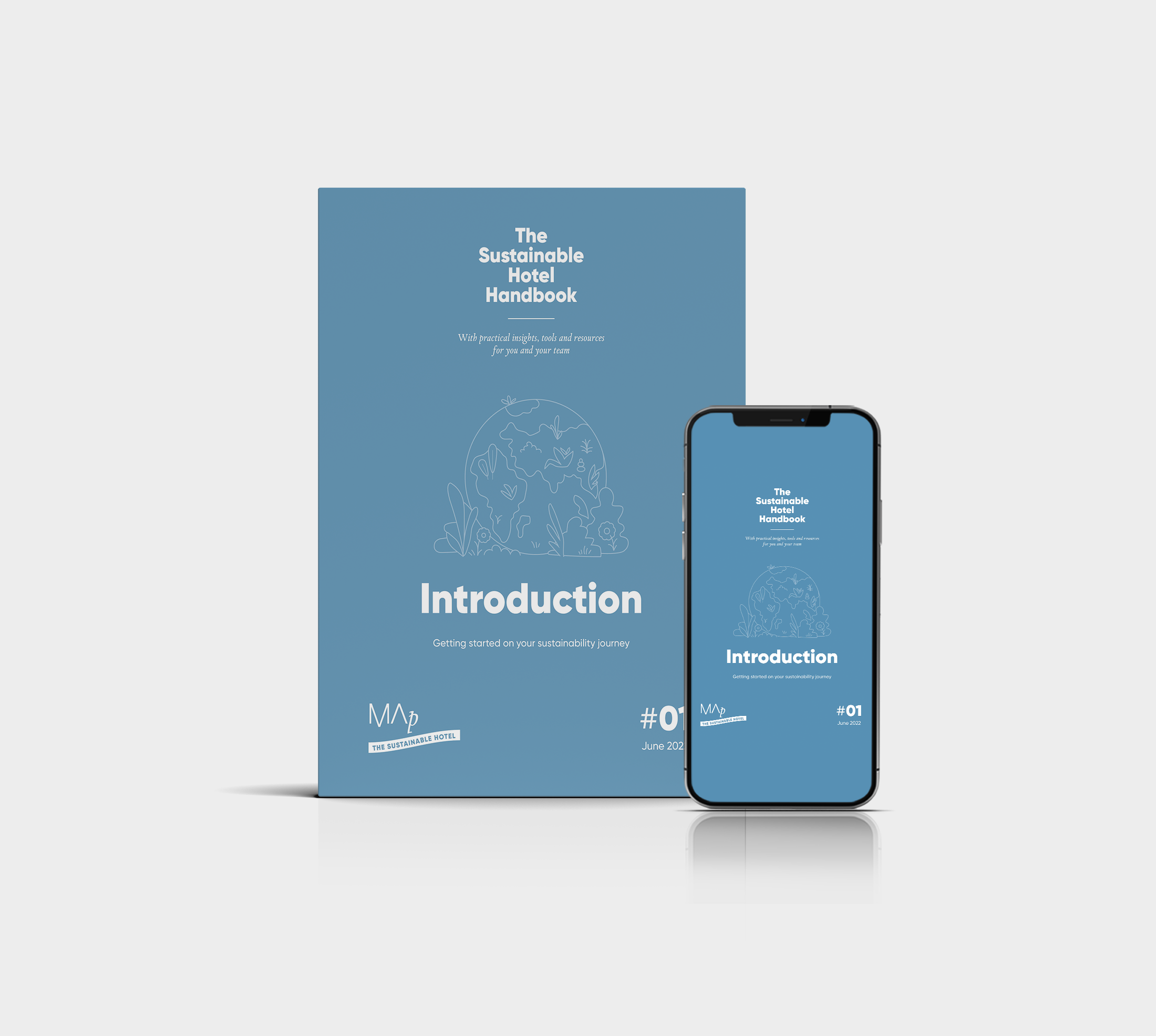
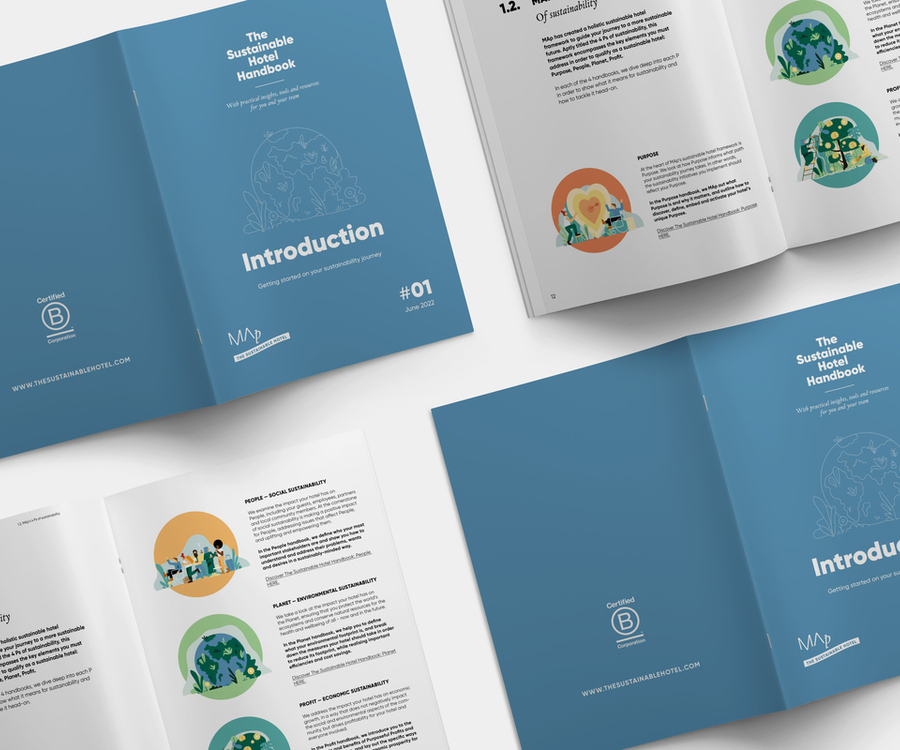
The varying definitions of the word “sustainability” often leads to confusion, misunderstanding, and unfortunately, greenwashing. In this handbook, you’ll learn what exactly a sustainable hotel is based on MAp’s 4Ps of Sustainability and the UN SDGs, and also what hotel sustainability means for your hotel operations – to get you going in the right direction.

CHF 0.00

Available in digital format.

Weight
-90
Block Image
MAp Boutique Consultancy - The Sustainable Hotel Handbook: Introduction
Main image
MAp Boutique Consultancy - The Sustainable Hotel Handbook: Introduction
Paragraphs

Understanding Hotel Sustainability

Sustainability is a complex topic, so we’ve taken every effort to make it as approachable, practical and actionable as possible. To make hotel sustainability happen, you must first understand what the term exactly means.

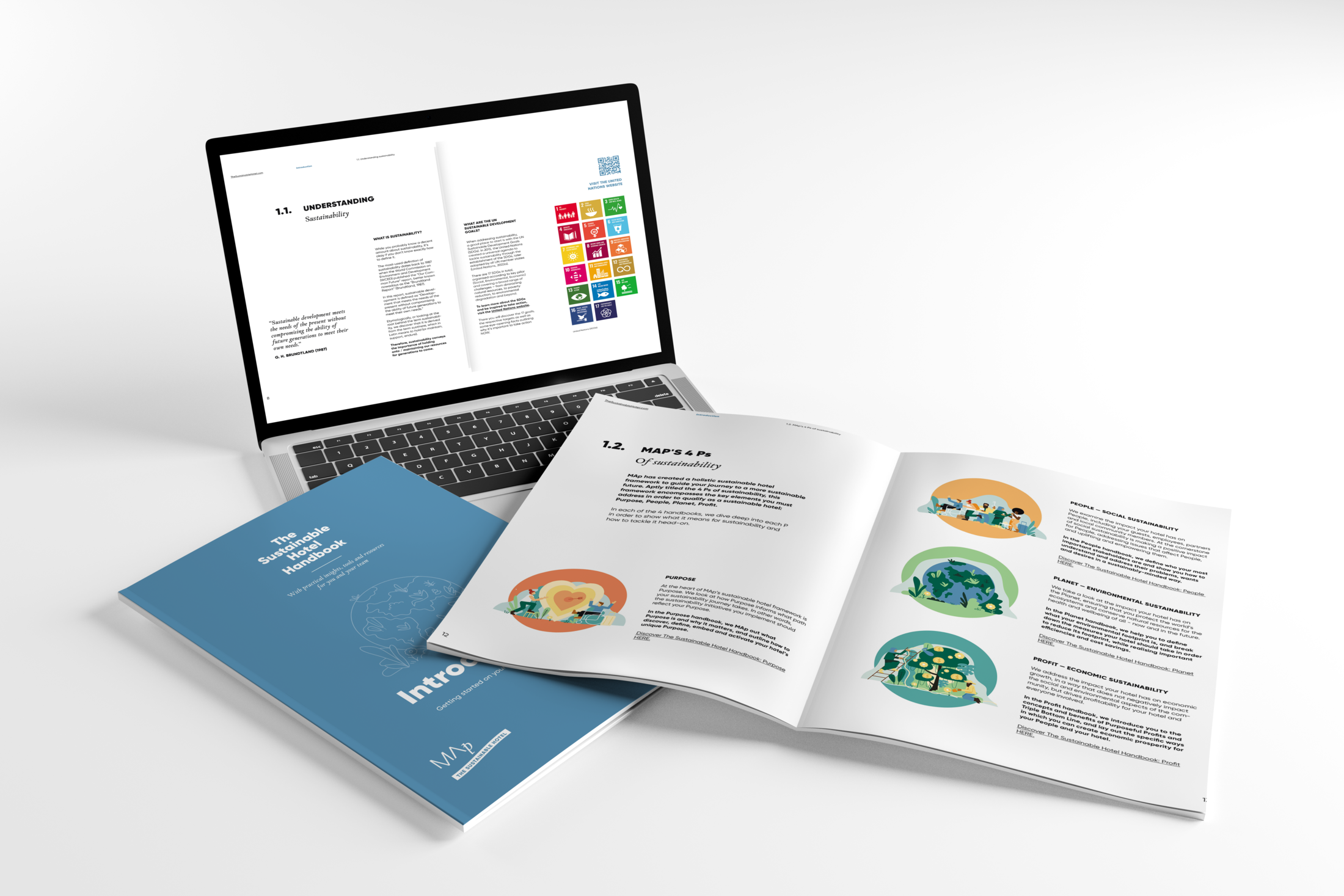
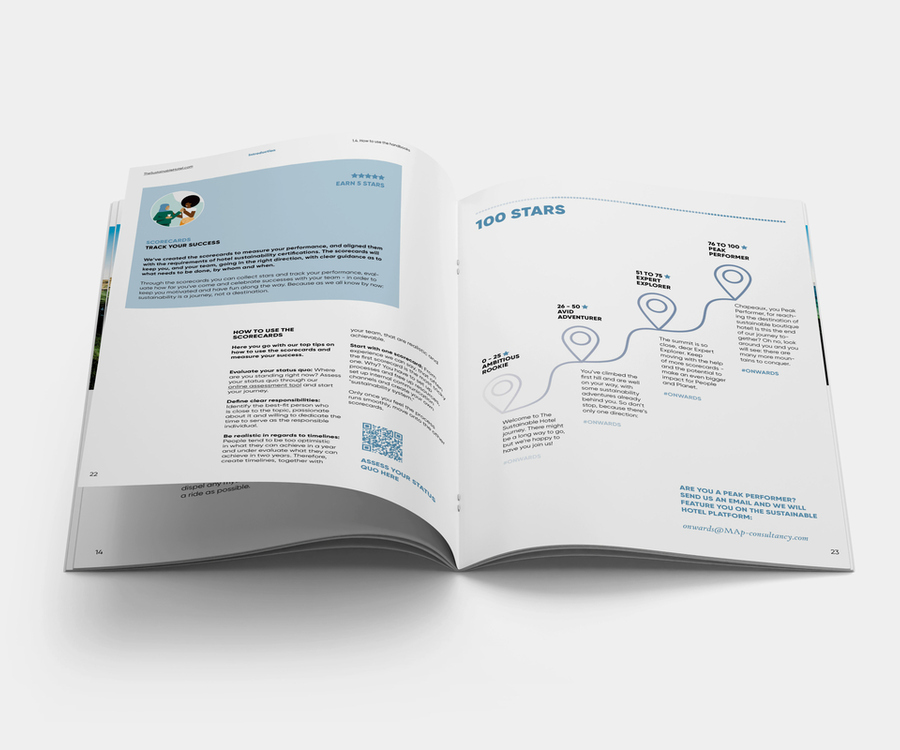
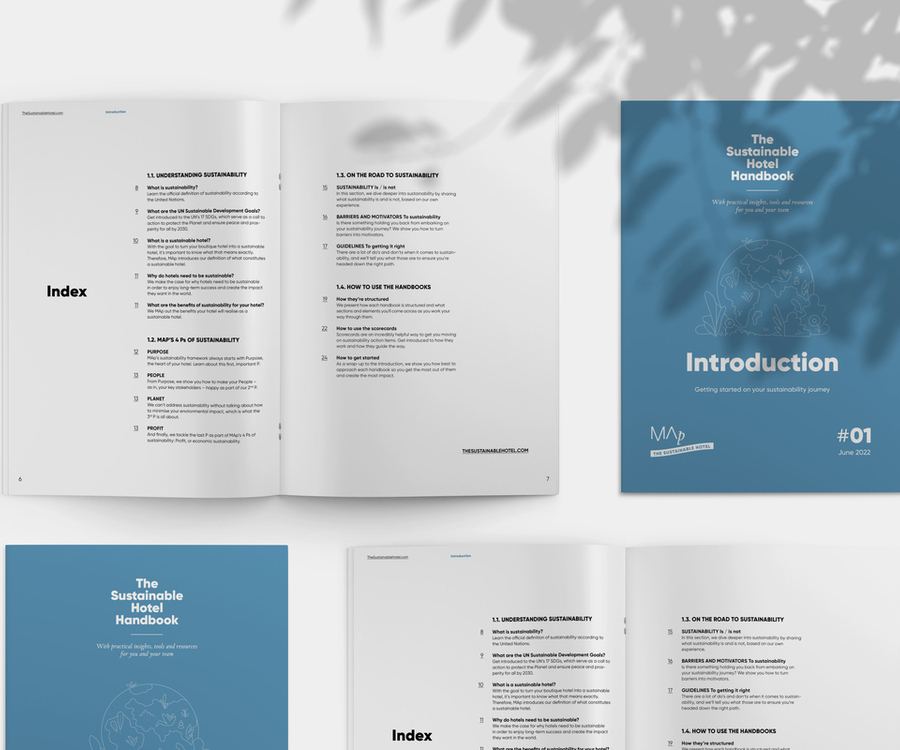
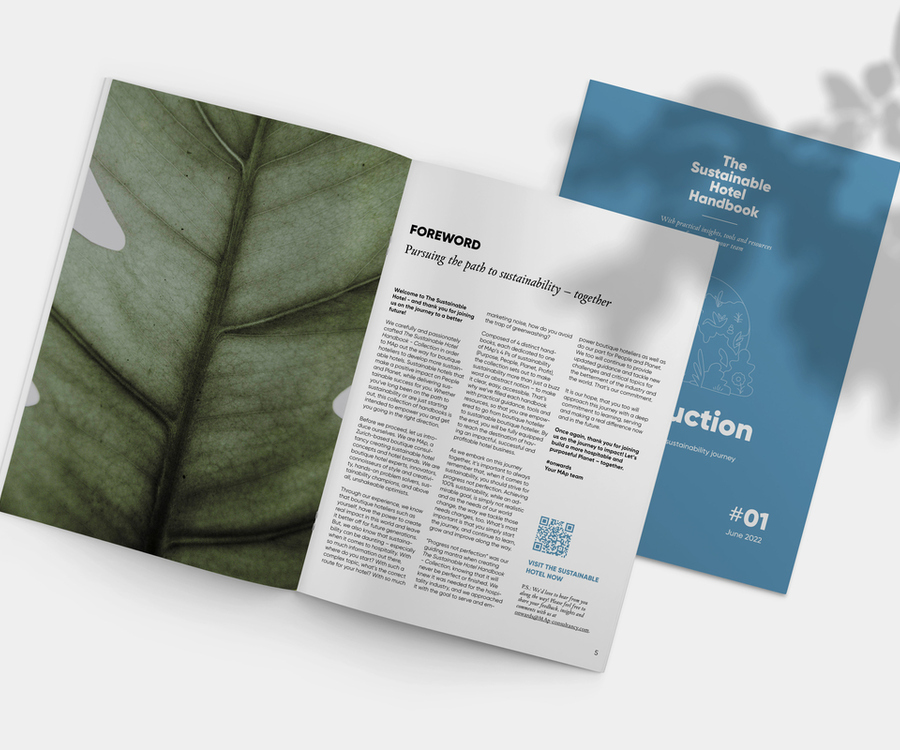
With our Introduction handbook, we give you all the information you need to find your way through the jungle of myths and misinformation when it comes to sustainability. In order to do that, we introduce you to the United Nation's 17 SDGs and MAp’s 4 Ps of Sustainability. We also highlight what makes a sustainable hotel, why it's relevant, and the benefits it brings for your hotel.

You may choose to read the Introduction handbook alone to get an overview of sustainability and learn the most important basics. Or you may choose to read it in combination with our other free resources, our RoadMap, or as a first step in working through The Sustainable Hotel handbooks.


What’s included:

  • An introduction to MAp’s 4Ps of Sustainability and the UN SDGs
  • Frequently-asked questions about sustainability
  • An overview of the benefits that come with having a sustainable hotel
  • Explanations about what sustainability is and what it is not
  • An exposition of sustainability myths and how to overcome them
  • Guidelines to help you start your sustainability journey NOW
  • MAp advice based on MAp’s years of expertise advising sustainable hotels
What people say about The Sustainable Hotel
The Sustainable Hotel Handbook: Introduction
Untertitel
Get started on your hotel sustainability journey.
Why you need it
  • You'll gain a clear overview of the topic of sustainability, and particularly, hotel sustainability.
  • You’ll learn why sustainability is so important for your hotel business and the world.
  • You'll get the necessary motivation-kick to start your journey to sustainability.
  • You’ll get tips and recommendations to help you do sustainability right.
  • You can either combine it with our other free resources and the RoadMap, or use it as the initial step in working through our other The Sustainable Hotel Handbooks.
Zero Price view
CHF 0.00
Erscheint nach ? Sekunden
3
FREE DOWNLOADS
sharing is caring

Great news for those who prefer listening over reading: Our favourite blog posts are now available as audio! Perfect for on the go, during sports, or relaxing on the couch!

Weight
-96
Block Image
Our favourite blog posts – now available to listen to! 🎧
Paragraphs

Episodes

Episode 1: How to Start a Sustainable Hotel Business

In this episode, we’ll explore how you can make your dream of owning a hotel a reality. We’ll guide you through developing a sustainable hotel concept, standing out in the market, and successfully starting your hotel business—with a clear focus on sustainability.

Listen to this episode on YouTube or read the accompanying blog post.

Episode 2: What is a sustainable hotel?

This blog post covers the three fundamental pillars of sustainability in hospitality: social (People), environmental (Planet), and economic (Profit) sustainability. We’ll explore what it means to run a truly sustainable hotel and how these aspects are interconnected.

Listen to this episode on YouTube or read the accompanying blog post.


Episode 3: What is a hotel concept and why do you need one?

In this episode, we discuss the importance of a clear and creative hotel concept for a hotel’s success. We explain how such a concept not only provides strategic direction but also defines brand values and characteristics to position the hotel sustainably and successfully in the competitive hospitality industry.

Listen to this episode on YouTube or read the accompanying blog post.

Episode 4: What is sustainable communication?

In this episode, we explore sustainable communication: how to communicate responsibly to avoid negative impacts on society, the economy, and the planet. We discuss ways to reduce the ecological and social footprint of your communication.

Listen to this episode on YouTube or read the accompanying blog post.

Episode 5: How to avoid greenwashing

In this episode, we discuss the challenges of sustainability communication for hotel owners. We talk about how to avoid greenwashing and communicate your sustainability initiatives authentically and transparently to guests and stakeholders.

Listen to this episode on YouTube or read the accompanying blog post.

Episode 6: A sustainable hotel concept

In this episode, we explore the importance of a holistic sustainable hotel concept. We explain why a sustainable and forward-thinking concept is essential for success in the hotel industry and how it provides strategic direction to stand out in the competitive market.

Listen to this episode on YouTube or read the accompanying blog post.

Episode 7: How hotels can cater to female travellers

In this episode, we discuss how hotels can better cater to the needs of female travellers. We explore what your hotel must offer to meet the expectations of modern female guests – whether they are travelling for business, leisure, or enjoying a relaxing solo trip.

Listen to this episode on YouTube or read the accompanying blog post.

Who is this Blogcast for?

This blogcast is for anyone who wants to shape the future of hospitality – from independent and boutique hoteliers to investors, consultants, and students looking to understand and apply sustainability in hotels.

What does the Blogcast cover?

Our blogcast is all about sustainability in hospitality. We talk about what truly makes a hotel sustainable, how to avoid greenwashing, what female travellers expect, and much more. Look forward to exciting insights, practical tips, and inspiring stories!

Why should I listen to this Blogcast?

Because you'll get practical advice, exciting insights, and inspiring ideas all about sustainability in hospitality! Whether you run a hotel, invest in one, or are simply curious, our blogcast helps you understand sustainability, develop strategies, and better connect with your guests.

Our favourite blog posts – now available to listen to! 🎧
Untertitel
Listen to hotel sustainability insights anytime, anywhere.
Why you need it

GOOD REASONS TO TUNE INTO OUR BLOGCAST:

  • Sometimes, listening is just more fun than reading ☻
  • You can learn anytime, anywhere – whether commuting, working out, or relaxing at home
  • We provide valuable insights and tips that you can apply immediately in your hotel business
  • Discover best practices and expert knowledge from the industry
  • We make complex topics easy to understand and exciting – no heavy theory, just practical and actionable advice
  • Gain insights and guidance you’ll get from The Sustainable Hotel Handbook: Collection
Zero Price view
CHF 0.00
Banner Dachzeile
Podcast
Banner Text

Jetzt auf YouTube anhören!

Erscheint nach ? Sekunden
1
Image Full Content
Our favourite blog posts – now available to listen to! 🎧