sharing is caring

Every two months we explore an important sustainability topic with our MAp community. With boutique and independent hoteliers in mind, we make our bi-monthly The Sustainable Hotel Insights as actionable and practical as possible. If you would like to receive these insights straight into your inbox and join the community, aka join us on the journey to a more purposeful and hospitable Planet, register here!

Untertitel
The Sustainable Hotel Insights – Edition 3
Blog main image
Insights: Sustainable Hotel Practices 2023
Paragraphs

ABOUT: Sustainable Hotel Practices

For the hospitality industry, there’s only one way #onwards into the future – and that’s with sustainability! Sustainable hospitality is about those hotels (and other hospitality businesses) that strive to create a positive impact in this world by promoting sustainable hotel practices.

While many refer to themselves incorrectly as “green hotels,” sustainable hotels take on a more holistic approach to sustainability. For us at MAp, a truly sustainable hotel is guided by a clear Purpose and addresses the three core pillars of sustainability: social (People), environmental (Planet) and economic (Profit). These four pillars come together to form our sustainability framework, titled MAp’s 4Ps of Sustainability.

What we’ve learned throughout the years working with independent and boutique hoteliers: the more practical the guidance on how to become a sustainable hotel, the better. Therefore, in this Insights and in the related FREE resources – our webinar on Sustainable Hotel Management 2023 and the Sustainability RoadMAp - we support you #stepbystep to successfully manage sustainability in 2023 and beyond.

FACTS: Did you know?

Let us present you with some interesting facts about why you should holistically implement sustainability into your independent or boutique hotel, along MAp’s 4Ps of Sustainability:

Purpose: Did you know that recent studies have found that 8 in 10 (82%) consumers say they’ve taken action to support a company when they believed in its Purpose (Zeno Group, 2020)? Studies have also shown that brands recognised for high-commitment to Purpose have grown at more than twice the rate of others (Kantar Consulting, 2020).

People: Did you know that the benefits of diversity in the workplace are significant? According to a recent study (McKinsey & Company, 2020), companies with ethnoracial diversity practices were 36% more likely to achieve higher profitability than less diverse companies.

Planet: Did you know that with the trend „Neo-Ecology,“ environmental sustainability is becoming a social movement and an economic factor? It's not anymore about whom to blame or renunciation - it’s about what we gain as a society. With the fusion of People and technology, we no longer see environmental sustainability as a problem, but as the key to a neo-ecological future (Zukunftsinstitut, 2023). This will alter the logic of hospitality brands and marketing.

Profit: Did you know that the 17th SDG is all about partnering? And for good reason! Many hotels have been individual players for decades, but the future belongs to those who understand the advantages and benefits of partnerships and community, combining strengths and knowledge to solve our bigger problems. Together, we can achieve so much more.

Stop seeing yourself or your hotel as an individual player.
Reach out to existing partners, find NEW ones and start to create synergies and a bigger impact together.

ACTION: Our MAdvices on Sustainable Hotel Practices in 2023

Inspired by our webinar on Sustainable Hotel Management and the Sustainability RoadMAp, here you go with our 4 MAdvices on Sustainable Hotel Practices in 2023:

Take this Purpose action in 2023 and #Beyond: Start with Purpose
Get clear on what is that one thing that you and your team really want to achieve, change or serve in 2023.

Take this People action in 2023 and #Beyond: Build a strong and diverse team
Identify what the diversity make-up of your hotel staff is, then ask what your hotel is doing to promote diversity further. For example, what kind of message does your non-verbal communication convey? Are your job ads inclusive? If you said no to the latter, HERE you can get access to our FREE PDF about writing attractive and inclusive job ads.

Take this Planet action in 2023 and #Beyond: Review your communication…
...and make sure you start with your Purpose, avoid greenwashing, and keep it positive and ethical. One last important MAdvice: NEVER try to profit at the expense of others, e.g. from difficult situations People are in.

Take this Profit action in 2023 and #Beyond: Build sustainable partnerships
Stop seeing yourself or your hotel as an individual player. Reach out to existing partners, find NEW ones and start to create synergies and a bigger impact together.

Free webinar

Sustainable Hotel Management

In this free webinar, learn what you can do as an independent or boutique hotelier to find the right approach to sustainable hotel practices.

Blog Block Image
Insights: Sustainable Hotel Practices 2023

Add new comment

Comment

Order

Plain text

  • No HTML tags allowed.
  • Lines and paragraphs break automatically.
  • Web page addresses and email addresses turn into links automatically.
sharing is caring

As hotel experts, MAp spotlights the megatrends that will change the hotel landscape in 2023 and the years to come. These megatrends are centred on sustainability and in line with MAp’s sustainability framework, The 4 Ps of Sustainability. Read on to learn what they are!

Welcome to 2023!

As we like to do every January, it’s time to look forward to what we can expect in the coming year. In this sustainability blog post, we share MAp’s forecasts on the megatrends that will not only define this year but have a direct impact on the hospitality industry and your hotel business in particular.

But hang on, megatrends? Aren’t all trends intrinsically “mega”? In fact, there is a difference between a megatrend and a trend. Let’s explore further:

German-based research centre Zukunftsinstitut (2023a) describes megatrends as the biggest drivers of change that cause epochal changes, which can be seen on a global scale and in all societal areas, such as the economy, consumer behaviour, value shift, politics and more. Megatrends are complex and dynamic, and importantly, NOT short-lived phenomena or simply “in fashion” – they are here to stay. So better to keep a close eye out. Trends, on the other hand, are smaller-scale ,and there is never a guarantee that a trend observed in the present will continue in the future.

So, what are the 4 megatrends that will shape the hospitality industry in 2023 and the years ahead? And what can boutique hoteliers do now to respond to these epochal changes?

Working along MAp’s sustainability framework – the 4 Ps of Sustainability (Purpose, People, Planet and Profit) – we have chosen four megatrends that we see gaining traction and importance through our consultancy practice. And these are sure to be important for the sustainable success of your boutique hotel in 2023.

#onwards

Untertitel
MAp’s outlook into this year’s megatrends and the sustainable action steps to take in order to create bigger impact
Blog main image
4 Megatrends, die das Hotel- und Gastgewerbe im Jahr 2023 und darüber hinaus prägen werden
Paragraphs
Megatrends [are] the biggest drivers of change that cause epochal changes, which can be seen on a global scale and in all societal areas,
such as the economy, consumer behaviour, value shift, politics and more.

1. PURPOSE: Purposeful Business

A few years back, research by The British Academy (2019) made a strong case for change in the business world, stating general loss of trust among consumers and the shortcomings of the current capitalist business approach, as well as the damaging impact on People and Planet. Since then, the practise of purposeful business has seen a major upheaval, in which companies take responsibility and bring meaning to their existence beyond the mere purpose of making money. More recent studies found that 8 in 10 (82%) consumers said they took action to support a company when they believed in its Purpose (Zeno Group, 2020) and that brands recognised for high-commitment to Purpose have grown at more than twice the rate of others (Kantar Consulting, 2020).

What Purposeful Business means for your hotel:

  • Having a strong Purpose (as in, knowing the reason for your hotel’s existence and its overarching WHY) has the promise to transform and pushes you to strive for something better - be that a better world, a better way to do business, a better employer or whatever you believe is important. Ultimately, purposeful business is about delivering more than Profit for your hotel.
  • The Bain & Company (2023) calls purposeful business “the secret weapon in the new war for talent.”  And we’re not surprised.  Sure, your hotel employees want the basics (a fair salary, feeling safe in the workplace and more). But these are just “qualifiers” as to whether your employees are satisfied or dissatisfied with your hotel. But for them to stay at your hotel, employees need their jobs to have Purpose, too. They want to be part of completing a worthwhile mission (aka your hotel’s Purpose).

Take this ONE action:

Ask yourself, what is that one thing that you and your team really want to achieve, change, or serve in 2023? What is the reason for existence for your hotel? We know it’s difficult to get you started on thinking about these things, and that’s why we wrote a whole handbook about finding your hotel’s Purpose. Finding your Purpose, your WHY, will – as studies prove – not only increase your Profit, it will also increase the attractiveness of your hotel as an employer as well as increase team spirit. In the end, as human beings, we all want to do great and meaningful work.

2. PEOPLE: Gender Shift

In many areas of life, People are increasingly shedding familiar gender roles, and awareness of the value of diversity in business and politics is growing. The megatrend, Gender Shift (Zukunftsinstitut, 2023b), is essentially about the questions of identity, stereotyping and new relationship- and family models. The discussions and answers to these questions are changing social perceptions and communications. As a result, inclusiveness and diversity are gaining stronger importance in the workplace.

What Gender Shift means for your hotel:

  • In a challenging job market, diverse and inclusive hiring can be your game-changer. Because when you think about it, diversity is simply an effort to accommodate the full range of the human experience (and what’s not to love about that?). So, gender shift in the hospitality industry is about building more inclusive and diverse teams. This means having a variety of races, genders, ethnicities, ages, backgrounds and more represented within your hotel staff – and celebrating those special differences.
  • That said, equal opportunity employment should not be just a step to bolster your employer branding but rather a core of your hotel’s hiring practices and living culture.
  • Using inclusive language means your People (guests, employees, partners and the local community) are more likely to feel like they belong and can be their authentic selves.
  • We all know that speech isn’t always necessary to convey a very specific message. Thus, “silent” bias might still very well be found in your social media, photographs, videos or other visuals around your hotel.

Take this ONE action:

Take off the blurred glasses and start looking around your hotel with a fresh set of eyes: What is the make-up of your hotel staff? What message conveys the non-verbal communications in your hotel? Are there any situations that consistently show members of any group as superior or inferior? Make sure that your hotel, and especially its communications, welcomes ALL People. And take a special look at your hotel photography. As the Gisler Protocol (2023) so eloquently states: whenever you look at the female role in photos and you can replace her with a flower pot or a puppy, then it is definitely discriminatory.

3. PLANET: Neo-Ecology

In the past, discussion and debates about the ecological dimension of sustainability were characterised by the question of who to blame, renunciation and, of course, greenwashing. But now researchers (Zukunftstinstitut, 2023c) are certain that the megatrend, Neo-Ecology, will shape this century like no other.  Why Neo? The term ecology comes from biology and originally referred to the science of the interrelationships between living beings and their environment. However, the prefix Neo (ancient Greek for new) accentuates the advanced understanding of ecology, which is rather the totality of the interrelationships between living beings and their environment as well as the combination of the environment and the economy.

Today, environmental awareness and sustainability are increasingly advancing from an individual lifestyle and consumer trend to a social movement - and to a central economic factor that influences all entrepreneurial spheres. It is no longer about renunciation but about what we gain. In a sense, it describes the emergence of a new business ethic. Even more so, when we adopt sustainable and pragmatic approaches to solutions that involve the fusion of People and technology, we no longer see it as a problem, but as the key to a neo-ecological future.

What Neo-Ecology means for your hotel:

  • Your People are increasingly becoming globally responsible, and this will not only transform society from the ground up but also alter the logic of hospitality brands and marketing.
  • Stop explaining to your guests why you don’t change towels every day or why you banned plastic straws. To be honest, these trivial measures are already expected of you anyways and your guests know the importance of them. Instead, focus on HOW you communicate your sustainability actions - going beyond the expectations.
  •  And yes, green tech is not only a buzzword. The growth markets of the green tech industry include energy efficiency as well as sustainable mobility concepts. As more technologies emerge, successful entrepreneurs (such as you are) should be encouraged to inform themselves regularly about new helpful tools and devices. What are innovations or technological advances that you can implement at your hotel that will be good for People and Planet (and eventually for your Profit too)?

Take this ONE action:

Look at how you communicate your sustainability activities. As our expert Martin Stockburger shared with us in our Profit handbook, it is important to communicate in a non-dogmatic way, in a conversational tone and in an easy-to-read and honest manner. It is completely okay to also mention what you have struggled with and what challenges you have faced as part of your sustainability journey.

4. PROFIT: Kindness Economy

A few decades (or even years) ago, we would not have believed that economy and friendliness could go hand-in-hand. After all, everything in economics is about growth, competition and Profit. But now there is much to suggest that the economy is entering a friendlier phase based on real human values, such as respect, understanding and care: a true "Kindness Economy". This new economy is nice - to ourselves and our People, to the Planet and to our Profit (in that order). The Corona pandemic already showed us that it’s possible in a radical but effective way, influenced by a growing awareness for the environment and the future quality of life.

What Kindness Economy means for your hotel:

  • Failure and success will be determined by those hotels that (don't) give a f*ck. Because guests no longer only look at price, but also question the product’s origin, the hotel’s culture and many other intangible social factors. Thus, successful hotels take a very clear approach, which we coined at MAp one of our basic sustainability mantras: Purpose + People = Profit.                                              
  • Many hotels have been individual players for decades, but the future belongs to those who understand the advantages and benefits of partnerships and community. Together, they can achieve so much more. Partnering will be a crucial success factor in a world where changes don’t happen overnight. Not for nothing, it is also the 17th SDG.

Take this ONE action:

Get in touch with your partners and your local community. Discuss how you can serve your (and their) Purpose and what you want to achieve together in 2023. This also includes to stop seeing yourself as an individual player in an ever more complex market. Find partners with similar values and goals and start to create synergies and a bigger impact.

Talking about Profit, we have one more extra advice and action to offer: over the last years, the rules of economy have changed. Re-investment in your business is still a basic economic rule. However, this year, we recommended to our boutique hotelier clients to shift their investment efforts from hotel hardware to hotel humans. In the end, hospitality is a People-for-People business, so reinvest in YOUR People (in salaries, raises, benefits, growth opportunities, etc.) and do not forget to reinvest in yourself as well. As the leader and manager of your boutique hotel, you have to understand where the economy is going and get up to speed ASAP.

The prosperity of tomorrow’s hotels is based on new values - having a Purpose, being inclusive and diverse, communicating authentically and partnering up and being kind in order to do better for People and Planet. These aren’t just passing trends - they’re here to stay, and every business, in hospitality and beyond, will need to adapt as a result. Therefore, as sustainability becomes increasingly important and a measure of a hotel’s worth and success, follow the action steps we outline herein to help move you forward on the path to impact.

To assist you further, we’ve created a series of practical sustainability handbooks for boutique hoteliers, titled The Sustainable Hotel Handbook – Collection, which you can find here.

SOURCES:

Bain & Company. (2023). Purposeful Work: The Secret Weapon in the New War for Talent. Retrieved from https://www.bain.com/insights/purposeful-work-the-secret-weapon-in-the-new-war-for-talent/

Gislerprotokoll. (2023). Abschnitt: Kein Mensch ist eine Topfplanze. Retrieved from https://www.gislerprotokoll.ch

Kantar Consulting. (2020). Purpose 2020. Purpose led-growth. https://www.kantar.com/Inspiration/Brands/The-Journey-Towards-Purpose-Led-Growth

Portas, M. (2021). How to thrive in the new Kindness Economy. Retrieved from https://www.penguin.co.uk/books/445415/rebuild-by-portas-mary/9781787635166

The British Academy. (2019). Principles for Purposeful Business. Retrieved from https://www.thebritishacademy.ac.uk/publications/future-of-the-corporation-principles-for-purposeful-business/

Zeno Group. (2020). 2020 Zeno Strenght of Purpose Study. Retrieved from https://www.zenogroup.com/insights/2020-zeno-strength-purpose

Zukunftsinstitut. (2023a). Die Megatrends. Retrieved from https://www.zukunftsinstitut.de/dossier/megatrends/

Zukunftsinstitut. (2023b). Der Megatrend Gender Shift. Retrieved from https://www.zukunftsinstitut.de/dossier/megatrend-gender-shift/

Zukunftsinstitut. (2023c). Der Megatrend Neo-Ökologie. Retrieved from https://www.zukunftsinstitut.de/dossier/megatrend-neo-oekologie/

Blog Block Image
4 megatrends that will shape the hospitality industry in 2023 and beyond

Add new comment

Comment

Order

Plain text

  • No HTML tags allowed.
  • Lines and paragraphs break automatically.
  • Web page addresses and email addresses turn into links automatically.
Types
sharing is caring

Today we are happy to sit down with Pavlina Pavlova PhD, a Bulgarian-born entrepreneur, and a non-profit advocate. Pavlina is passionate about the circular economy, and especially, developing circular solutions for the business world. She holds an academic background in environmental impact and sustainability, and supports companies in getting involved in a circular economic future through disruptive collaboration and transformation.

We got to know Pavlina through our work with The Sustainable Hotel, and right from the beginning we were on the same page: there is only one way #onwards – and that’s the sustainable way. That’s why we met to discuss her view on sustainability, what she has learned on her own sustainability journey, as well as what her recommendations for the hospitality industry, and specifically, for boutique hoteliers are.

Untertitel
MAp meets Pavlina Pavlova
Blog main image
Sustainability is an ongoing journey – be brave and improve constantly
Paragraphs

Dear Pavlina, it is so great to talk to you – a real expert in the field of circular economy. First of all, could you let our readers know how you started on your own sustainability journey? What has been your biggest learning so far?

Pavlina: Dear MAp team, thanks for the invitation – it’s a pleasure to be here. I started my journey learning about nature and wildlife from my mother, who was also a scientist. I have always been fascinated by living systems, and thus decided to study environmental sciences. I guess back then I imagined working in conservation, but later I realised the results from classical academic work are not tangible in the short-term, and thus decided to “get my hands dirty”, built a company myself and am supporting others on their sustainability journeys now. My biggest learning is to be true and opportunistic and follow my beliefs. No one would guess 10 years ago that today I would be codesigning products.

Please tell us: what is a circular economy? What are its core principles as well as some helpful examples?

Pavlina: There are many definitions for the circular economy, but I guess the most understandable is - this is a framework that designs out waste and keeps products and materials in use for as long as possible.

The circular economy is a framework that designs out waste
and keeps products and materials in use for as long as possible.
@wearemapeople

At MAp we are specialised in crafting sustainable hotel concepts and brands. What are your thoughts and observations on sustainability in the hospitality industry? What do you believe the future holds for the industry?

Pavlina: I feel that there is a movement around the topic of sustainability in every industry – customers are becoming more aware and are demanding solutions. The tourism industry and hospitality industry are also affected by the changing climate and social inequalities worldwide, and therefore hotel owners are looking for solutions in the space. Unfortunately, many of the solutions are still only marketing driven and not really tackling the root cause of the problems. I believe in the future, customers will become even more attuned and will be able to differentiate between green wishing and -washing and true sustainability, and those doing it only for marketing purposes will lose their popularity.

Do you have any recommendations for boutique hoteliers on how they can start and / or advance their sustainability journeys?

Pavlina: Start as soon as possible – you still have a competitive advantage as a first mover. Sustainability is here to stay and will be soon the new normal, and today’s niche market will take over conventional hospitality. It is an ongoing journey – be brave and improve constantly.

When we started working on The Sustainable Hotel, we were surprised to learn how many people still hold misconceptions about sustainability, e.g. that sustainability is expensive, complicated, only about the Planet, etc. What are the most common misconceptions you encounter while working with business owners?

Pavlina: The classical one – circular economy is just recycling. Another one that makes me laugh – this is not going to work, because it doesn’t work today.

What’s your biggest wish for the future?

Pavlina: That businesses shift from doing less (or no) harm to doing good for nature and society – the so-called regenerative economy.

As always, our final MAp meets question: what makes a hotel experience a truly outstanding one for you personally?

Pavlina: Personal attitude and of course visible sustainability efforts!

Blog Block Image
Sustainability is an ongoing journey – be brave and improve constantly

Add new comment

Comment

Order

Plain text

  • No HTML tags allowed.
  • Lines and paragraphs break automatically.
  • Web page addresses and email addresses turn into links automatically.
Types
sharing is caring

Every two months we explore an important sustainability topic with The Sustainable Hotel community. With boutique hoteliers in mind, we make our bi-monthly Insights as actionable and practical as possible. If you would like to receive these insights straight into your inbox and join us on the journey to a more purposeful and hospitable Planet, register here.

Untertitel
The Sustainable Hotel Insights – Edition 2
Blog main image
The 6 ELEMENTS of inclusive and attractive job ads
Paragraphs

ABOUT: Employees

Your employees are key to your hotel’s long-term, sustainable success. After all, they’re the ones who ensure the smooth running of your hotel and who act as your brand ambassadors. That’s why you want to ensure you have the best ones working for you and that you keep them on for the long run.

But between the dried up labour market and “The Great Resignation,” in which employees are quitting at record numbers, we know all too well it’s hard to find employees - let alone hire those who are perfect for your hotel.

FACTS: Did you know?

In a recent American Hotel & Lodging Association survey, 91% of hotels said they’re struggling to fill open positions (AHLA, 2022)

In the same survey, 87% of respondents said they’re experiencing a staffing shortage, with 36% describing their shortages as severe (AHLA, 2022)

One in five workers have quit or plan to quit their jobs by the end of 2022 (PwC, 2022)

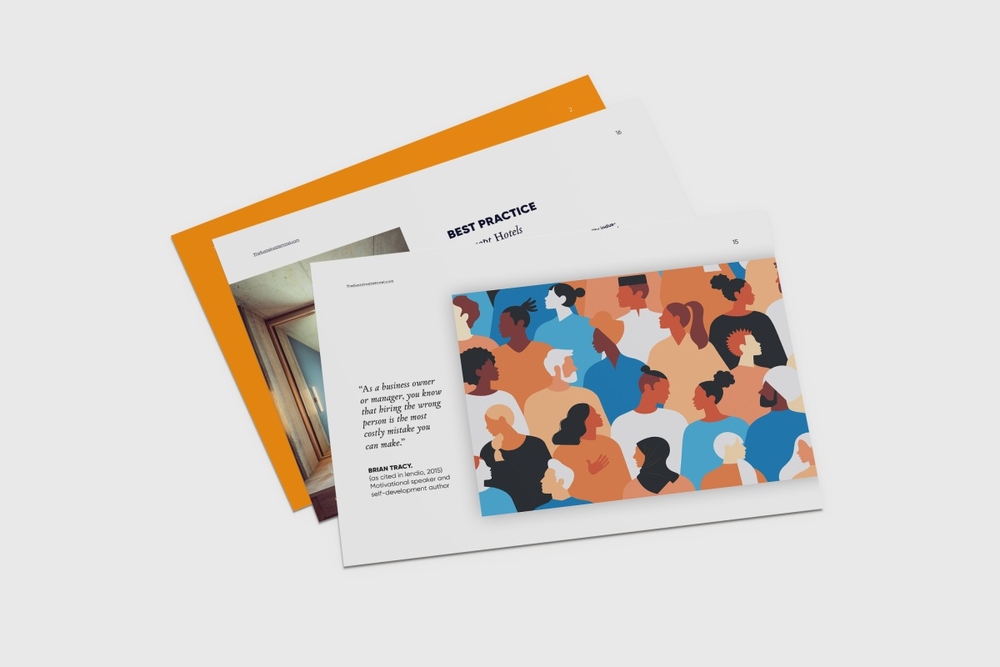
As a business owner or manager, you know that hiring the wrong person
is the most costly mistake you can make.
Brian Tracy

ACTION: Our MAdvices on how to find and hire the right People

Know who’s on your team first. Investigate the make-up of your current team in order to identify gaps where you can hire more diverse talent. Your goal = to hire 50% People representing diverse backgrounds (which should be reflective of your community’s demographics).

Have a Purpose. Having a Purpose in place will not only help your hotel to stick out, but attract those People who identify with that Purpose and want to contribute to its success.

Define your ideal candidate. Create an Ideal Candidate Profile that outlines your ideal candidate’s Behaviour/Attitude/Values, Skills/Experience, Goals, Needs (what they look for in a job) and Offerings (what your hotel can give them in return).

Use inclusive language in your job ad. Craft a job ad that uses inclusive language in order to appeal to a broader audience. To help you with this, download The Sustainable Hotel Insights: Job Ads HERE.

Cast a wide net. Market your job listings on different channels in order to reach more diverse candidates: set up an employee referral programme, reach out to hospitality schools, contact job programmes, post in groups where diverse candidates congregate, post on (local) job boards, hire a headhunter and promote on your online channels.

Assess the fit. In addition to the standard interview questions, ask the candidates the following questions to see if they meet the Ideal Candidate Profile you created: “What are your goals for the role?”, “What are your values?”, “Our Purpose is X – how can you contribute to it?”, “What matters most to you in a job?”

Make an offer. Ensure your job offer includes benefits and offerings that meet those needs outlined by your candidate, which will motivate them to want to work for you long-term.

Insights

The Sustainable Hotel Insights: Job Ads

Download this FREE guide and discover the 6 elements of inclusive and attractive job ads. 

BEST PRACTICE: Hotel con Corazón

Hotel Con Corazón (“Hotel with a Heart”) is a social impact hotel brand that invests its Profits (approximately 75%) in education and work. With two locations in the developing regions of Oaxaca, Mexico, and Granada, Nicaragua, guests who stay at Hotel Con Corazón support local communities to build a better future. Since 2008, the Profits of the hotels have enabled Hotel Con Corazón to support an average of 250 students per year through its education programmes.

Learn more about Hotel Con Corazón HERE.

The 6 ELEMENTS of inclusive and attractive job ads
Quote Author
Helen Keller
Quote Subtitle
Together we can do so much.
Quote Title
Alone we can do so little,
Blog Block Image
The 6 ELEMENTS of inclusive and attractive job ads

Add new comment

Comment

Order

Plain text

  • No HTML tags allowed.
  • Lines and paragraphs break automatically.
  • Web page addresses and email addresses turn into links automatically.
Categories
sharing is caring

At MAp, we strive to make this Planet a more purposeful and hospitable place for all. We achieve this by empowering independent and boutique hoteliers, hospitality brands and investors to create hotels that are innovative, sustainable and successful through our range of MAp solutions, from end-to-end consulting services in marketing, branding and positioning to practical handbooks, tools and resources. As a B Corp-certified hotel boutique consultancy, sustainability is at our core, and we weave it into the hotel concepts and hotel brands we create. 

Linktext
LEARN MORE ABOUT US!
MEET THE MAP TEAM
Untertitel
MApping out a better future.
Paragraphs
MAp Boutique Consultancy - The Sustainable Hotel Platform

(Y)our Hotel Sustainability Platform

The Sustainable Hotel is a one-stop-shop for all things hotel sustainability, built for independent and boutique hoteliers, investors, consultants and even students seeking to understand hotel sustainability and implement it into their work. On our hotel sustainability platform, you’ll find FREE tools and resources, handbooks, checklists and guides to make this planet a more purposeful and hospitable place for all.

We put you on the MAp.

Our international team serves hotelier clients across the world, but what’s the one thing they all have in common? They are visionaries and dreamers, forward-thinkers and changemakers - we get to the heart of what drives them and create winning and sustainable strategies with this in mind. We are equal-parts strategists and creatives, handcrafting our solutions with an eye toward detail, a deep sense for beauty and style (yes, our design work really is THAT good), and a mind for innovation and long-term impact.

We are a certified B Corporation

Over the past several years of change and opportunity, we at MAp have been busy charting our course #onwards. We are therefore thrilled to report a major milestone in our journey: B Corp Certification! MAp is the only B Corp-certified hotel consultancy in Switzerland, and one of only 5,000 companies worldwide to meet the highest standards of verified social and environmental performance.

We focus on educating future leaders + changemakers

We focus on educating future leaders + changemakers

We create leading-edge online courses through our partner Kordie, regularly contribute our knowledge and insights in webinars and podcasts and lecture and mentor at top universities

'Good enough' stopped being good enough a long time ago.

So why not be great?

Seth Godin
TAG IT
#HotelConsulting
#StrategicConsulting
#HotelConsultany
#Hospitality Consulting
#SustainabilityConsultants
#HotelConceptCreators
#MApBoutiqueConsultancy
#MAp
#Onwards
Show Blocks
sharing is caring

Every two months we explore an important sustainability topic with The Sustainable Hotel community. With boutique hoteliers in mind, we make our bi-monthly Insights as actionable and practical as possible. If you would like to receive these insights straight into your inbox and join us on the journey to a more purposeful and hospitable Planet, register here.

Untertitel
The Sustainable Hotel Insights – Edition 1
Blog main image
How to reduce the (food) waste your hotel produces
Paragraphs

ABOUT: (Food) Waste

From plastic straws to food buffets, the amount of waste and food waste hotels produce is significant! Therefore, in this first Insights edition and in our free guide, The Sustainability Hotel Insights: Waste, we show you how to reduce waste and food waste in your boutique hotel.

Waste is a key element of environmental sustainability (Planet), one of the 4 Ps of sustainability, which is why it’s critical to address this important topic.

FACTS: Did you know?

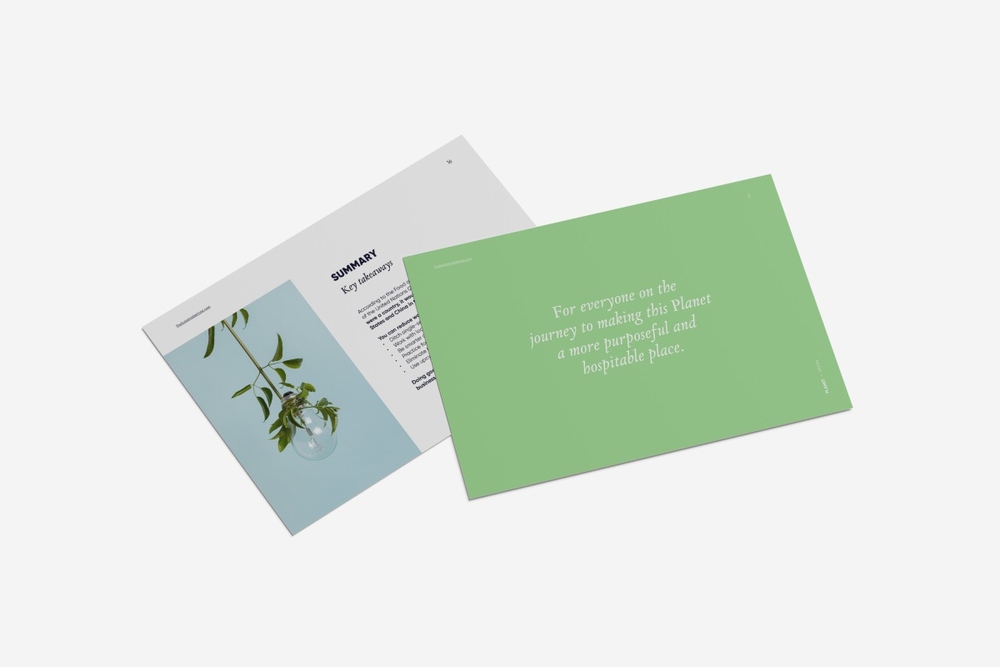
Did you know that in hospitality, food and beverage waste account for a huge amount of waste? According to the Food and Agriculture Organization of the United States (2013), up to 30%! If food waste were a country, it would come in third after the United States and China in terms of global warming.1

That’s quite significant!

What mankind must know is that human beings cannot live without Mother Earth,
but the planet can live without humans.
Evo Morales

ACTION: Our MAdvices on how to reduce (food) waste NOW

In our FREE PDF guide we share a total of 6 ways to reduce your boutique hotel’s (food) waste.

The first action step is to ditch single-serve plastic.

You’ve certainly heard this one before, and maybe you’ve already taken some steps in this direction by eliminating plastic straws. But it’s time to focus on reusable and refillable items (such as shampoo dispensers and water bottles), and ridding your hotel of plastic-wrapped anything.


Want to learn more?
Here are a few reasons why you should download our FREE guide:

  • Get 6 clear action steps to reduce your (food) waste NOW
  • Gain an understanding about the topic and its implications
  • Start your zero waste journey with this actionable and free PDF
  • Get access to best practice examples, must-reads and further resources that can support you in moving #onwards
Free Insights

The Sustainable Hotel Insights: Waste

Download this FREE guide in order to reduce waste and food waste in your boutique hotel NOW.

Insights: 6 ways to reduce (food) waste in your hotel NOW


SOURCES

FAO. (2013). Food wastage footprint & Climate report. LINK.

Quote Author
Helen Keller
Quote Subtitle
Together we can do so much.
Quote Title
Alone we can do so little,
Blog Block Image
How to reduce the (food) waste your hotel produces

Add new comment

Comment

Order

Plain text

  • No HTML tags allowed.
  • Lines and paragraphs break automatically.
  • Web page addresses and email addresses turn into links automatically.
Categories
sharing is caring

Excerpt: Over the past several years of change and opportunity, we at MAp have been busy charting our course onwards. We are therefore thrilled to report a major milestone in our journey: B Corp Certification! That’s right, MAp, a boutique consultancy that creates sustainable hotel concepts and brands, has put its own sustainability bona fides to the test! Spoiler alert: We did it! Thanks in no small part to the great support of the B Lab team in Switzerland (thanks Nora!)

Untertitel
It’s official: MAp Achieves B Corp Certification
Blog main image
We mean sustainable business!
Paragraphs

At MAp, we love journeys. In 2020, we made a conscious decision with our rebrand to become more purpose-driven. Our steadfast motivation is to create purposeful hotels, businesses and brands for a better future for people and planet. To practice what we preach, we set off to achieve B Corp Certification, putting our own sustainability practices to the test!

Along the way, there were countless twists and turns and we learnt many things: We implemented  numerous new processes and checklists, developed our own sustainability playbook, and profited from many practical insights we’re keen to pass along to clients.

In the end, one thing is clear: We couldn’t have done it without our clients and partners in  sustainability! Thank you so much for being there every step of the way!

But what exactly is B Corp Certification?

Certified B Corporations are companies who meet the highest standards of verified social and environmental performance, transparency and accountability.

B Corp Certification is the only certification that measures a company’s entire social and environmental performance. The B Impact Assessment (BIA) evaluates how a company’s operations and business model impact its workers, community, environment, and customers. From a company's supply chain and input materials to its charitable giving and employee benefits, B Corp Certification proves that a business is meeting the highest standards of verified performance.

In achieving B Corp Certification, MAp has now joined nearly 5000 companies (including noted  brands like Patagonia, Danone, Alpro, etc.) committed to using business as a force for good. Furthermore, we’ve set a benchmark for ourselves to “walk the walk” when it comes to sustainability, underscoring our position as a leader in this topic for our business and hotel clients!

Is your hotel ready for change?

We know what it’s like to be at the start of a journey. The goals of achieving a purpose-driven brand and creating a sustainable impact are there on the horizon for your business: You want to both stand out and stand for something!

Our platform, The Sustainable Hotel, provides a roadmap for hotels keen to change the way they do business for a more sustainable future through tools, guides and services. 

The first step for interested boutique hoteliers is to register for The Sustainable Hotel newsletter. After all, if you’re serious about “being the change you want to see in the world,” the way forward is to join the many other businesses who have placed their trust in MAp to transform their sustainability approach (both internally and externally) and to promote their achievements.

Let’s do great things together and spread the word!

Quote Author
Helen Keller
Quote Subtitle
Together we can do so much.
Quote Title
Alone we can do so little,
Blog Block Image
MAp Boutique Consultancy - Certified B Corporation

Add new comment

Comment

Order

Plain text

  • No HTML tags allowed.
  • Lines and paragraphs break automatically.
  • Web page addresses and email addresses turn into links automatically.
Types
sharing is caring

If you’ve followed our boutique hospitality consultancy for a while, then you know that Purpose sits at the core of everything we do. And we’ve made it our mission to empower our hospitality clients to identify their unique and authentic Purpose, and reflect that in the sustainable hospitality concepts and purposeful brands they create. Let's take a deeper look at the Purpose-driven organisations shaping today’s economy. 


Untertitel
How Your Desire for Impact, Personal Growth and Community Is Changing the World
Blog main image
The Purpose Economy
Paragraphs
The organisations that will perform well in this new economy are those that empower individuals to have a certain self-awareness about Purpose,
and connect it to their own organisation's Purpose.
@weareMApeople

Summary

Thirty-five years ago, author Aaron Hurst’s own uncle Marc Porat coined the term “Information Economy,” predicting the rise of Silicon Valley and the internet giants. Since that time, Hurst, CEO of Imperative and Founder of Taproot Foundation, has observed an economic shift emerging from the need for Purpose, which he terms “The Purpose Economy.” In his book, Hurst makes the case for why our economy is becoming more Purpose-driven and how organisations (including hospitality businesses and boutique hotels) can thrive in light of this shift. Hurst draws upon his experience catalysing the pro bono service market, research, case studies and personal anecdotes, to reveal how this new economy is making an impact – for people and planet!

Key Points

#1: There are different types of Purpose: Personal Purpose, Social Purpose and Societal Purpose.

Personal Purpose is the pursuit of passion; something deeply personal. As Hurst puts it, “We find Purpose when we do things we love, attempt new challenges, and express our voice to the world.” Social Purpose is about creating meaningful connections; sharing your Purpose with people you love. And research shows that Purpose is better when shared - after all, relationships provide more meaning to humans than anything else out there. Lastly, there is Societal Purpose: making a bigger impact on society as a whole. And that doesn’t mean you have to end world hunger – you can derive Societal Purpose through your existing work if you’re able to connect it to the bigger picture.

#2: There are different types of Purposeful organisations: values-driven organisations, excellence-driven organisations and impact-driven organisations.

Hurst has identified three types or Purpose-driven organisations. There is the values-driven organisation, where values are embedded into the organisation’s core and drive all decision-making. There is the organisation that strives to build excellence, where the Purpose is its craft and its focus on producing quality work. And lastly, there is the impact-driven organisation, which seeks to take responsibility for and have a more positive impact on its stakeholders, people and planet.

#3: There are different ways to embed Purpose into your organisation: through customers, through employees and through the supply chain.

Hurst notes that there are three ways in which Purpose is typically emphasised within an organisation. The first is by delivering Purpose to customers through a service or product that gives them a greater personal, social or societal Purpose. The next is by giving employees a sense of Purpose through their work. And the last approach to Purpose is building it into the supply chain - considering the people and companies with which you partner, practicing fair trade principles, empowering local communities, etc. The organisations that will perform well in this new economy are those that empower individuals to have a certain self-awareness about Purpose, and connect it to their own organisation's Purpose.

Application

How can your organisation lead with Purpose? Hurst has some recommendations:

  • Remove silos by combining functions to be in service of the larger community as a whole
  • Community organise in a way that motivates and leads people to lead themselves
  • Build community leaders by empowering and engaging your people
  • Work without managers by creating a culture of coaching and support that doesn’t require top-down hierarchy
  • Make your leaders conductors by pointing people in the right direction, instead of pushing them in the right direction

MAp's Favourite Quote

“Purpose is not a noun, it is a verb. It is about how we work. We experience purpose when we do something that’s greater than ourselves. We experience purpose when we push ourselves and grow. We experience purpose as part of a community.”

Conclusion

Thanks for following along on our boutique hospitality consultancy’s never-ending path to Purpose! We’d love to hear from you! What do you think about “The Purpose Economy?” How is your hospitality business or boutique hotel adapting to thrive in this new era? Comment below.

Lastly, support a local bookshop by buying “The Purpose Economy” here: https://bookshop.org/.


Blog Block Image
The Purpose Economy

Add new comment

Comment

Order

Plain text

  • No HTML tags allowed.
  • Lines and paragraphs break automatically.
  • Web page addresses and email addresses turn into links automatically.
Categories
Types
sharing is caring

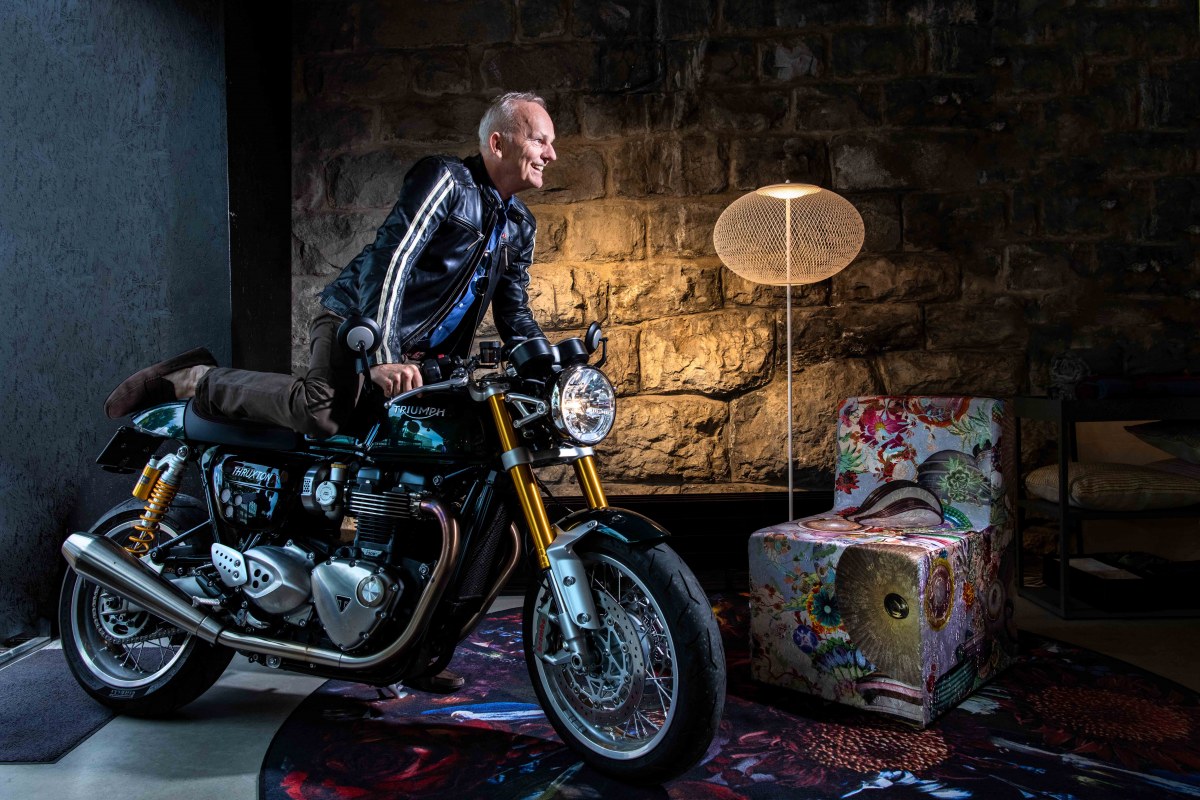
Finally! It’s been a few years since our last MAp meets with our partner, Karsten Schmidt-Hoensdorf, owner of the Zurich design studio IDA14. For everyone interested: HERE you can discover and read our last conversation.

For more than 25 years, Karsten and his team have been developing “extraordinary design for extraordinary rooms.” Their focus is on hospitality, residential and corporate projects in the fields of architecture, interior architecture and design.

Karsten recently informed us he’s incorporating more and more sustainable design into his work - so it was high time to meet for a new interview.

Untertitel
MAp meets Karsten Schmidt-Hoensdorf, owner of the Zurich design studio IDA14
Blog main image
MAp meets Karsten Schmidt-Hoensdorf, owner of the Zurich design studio IDA14
Paragraphs

Dear Karsten, we are very happy that we finally managed to sit down together. Since it’s likely not all readers were present at our last conversation, could you please give us a brief insight into your work and IDA14?

I am very pleased to receive the invitation to an interview from you, Magdalena, and MAp! For me it is an inspiration and an invitation to reflect on my work with you! In a nutshell, I work with my team of mostly around 10 young interior designers and architects on mainly hotel projects. We see ourselves as a boutique style design and architecture studio: the team size is deliberately kept manageable, our clients are mostly smaller - individual hotels or small hotel chains in Switzerland.

This has to do with the small-scale hotel structure in Switzerland on the one hand, but also with our preference for individuality on the other. The mutual appreciation is often more noticeable here than in international hotel groups. I see my work in this context as a contribution to a high-quality hotel culture, as it has historically emerged in Switzerland.

Here I am addressing a point that is important to me: as we all know, culture does not only take place in the opera. Culture is diverse, a high-quality craft; the maintenance of traditional knowledge and the respectful handling of it are an important part of my motivation to always tackle new projects without lapsing into repetitive thinking and acting.

Personally, I have been working in this profession for almost 30 years. As described in my first interview with you, I was interested in art, history, literature and politics from an early age. This interest in the world and my study of history and politics before studying architecture are probably the driving force and also the basis for my work as a specialist author. I write in the relevant media on topics related to the hotel industry. I am concerned with the social context of the industry. Here you can read developments and observe trends that go far beyond the usual understanding of design and architecture.

I have worked as a consultant for hotel chains like Swissôtel around the world. I also support various hotels with my knowledge of the correct interior design conception and proportioning. But also banks like Credit Suisse for larger projects.

One topic that we have talked about a lot recently is sustainability. How do you integrate this into your work? Was there a moment or maybe a place for you that put you on this path?

When I'm looking for a place or time where and when my interest in sustainability began, it seems to me to be a natural development, a kind of evolutionary design process.

I remember that many years ago, design, visually tangible aesthetics, was dominant and central. In Switzerland, there was traditionally an additional attitude that valued aspects such as material authenticity and high-quality craftsmanship.

As Director Interior Design, I spent several years for a Swiss 5 * hotel brand on all continents, briefing and coaching the design and architecture teams on many renovation and new construction projects. I clearly realized how much we differ in continental Europe and especially in Switzerland from the mostly Anglo-Saxon design firms that implement large hotel projects around the world. Fascinating and for me an absolute exception in this context was my collaboration with a Japanese interior designer. During a renovation project in Japan, I saw how close we got to each other in our views on architecture and design. That's why I'm really looking forward to my upcoming trip to Japan, for which I have made craft, architecture and design - in addition to nature - the central themes of my travel planning. And of course the anticipation is great: the trip has been "on hold" for a year and a half and I hope it happens in the next year.

We keep our fingers crossed that your trip to Japan will finally work out. If we stay in the future: which principles and trends do you think will become more and more important in design?

The principles are complex and will continue to develop. There are various labels and certificates for sustainability, also in the hotel industry. Magdalena, you showed me the sophisticated label B Corp, on which you focus with your company: I am now dealing with it, I respect the effort and will pursue it.

As far as our daily work in planning interior design is concerned, various basic principles of sustainability meet my quality standards. For example, when selecting products and materials, researching how sensible and justifiable the use is in terms of energy use and ethical principles in production and transport. I also value material authenticity, which also connects to recyclability. The extraction and, above all, the processing of raw materials should also take place regionally if possible. For example when using wood and stone.

Handicrafts are right at the top of my list of preferences: As far as I am concerned, I am talking about a high-quality culture that will hopefully gain in importance again and find a place in economic thinking. I love good handicrafts and often take the opportunity to visit handicraft businesses. For me, this also includes glass manufacturers such as Barovier & Toso on Murano, with a continuous company history since the 15th century. Or lighting companies like Louis Poulsen in Copenhagen, who not only produce everything themselves in Denmark, but also invite their employees to daily work breaks with music and gymnastics.

I see these European companies as regional; for me regionality is not a question of national borders, but of possibilities. Therefore, there will probably also be products in the future that come from far away, from Asia, Africa, South and North America.

As already mentioned, research is important here: How and under what conditions was production carried out? To what extent have ethical standards been adhered to in a credible manner, e.g. in terms of working conditions and human dignity, animal welfare and environmental pollution.

As far as future trends in terms of sustainability are concerned, I hope for positive social developments: It cannot be that everyone has to acquire a doctorate to understand sustainability. For me, sustainability and our major crises speak to simple feelings: those who are with themselves also have easy access to an understanding of sustainability. “We are one world” is a question of awareness, not education.

My interest in sustainability
seems to me to be a natural development, a kind of evolutionary design process.
Karsten Schmidt-Hoensdorf, IDA14
via @weareMApeople


What do you say to those people who believe that it is simply impossible to be both design-oriented and sustainable? How do you create beautiful places and spaces that are sustainable for mankind and our earth in the long-term?

We have gone through many changes in good taste in human history. The 25,000-year-old stone sculpture of Venus von Willendorf is the first known sculptural representation of a human ideal: a very fat woman. It represented an ideal of beauty, because in times of hunger and cold it was a dream to be well fed. From today's point of view, being overweight would be seen as a problematic undesirable development ... Ideals of beauty can therefore survive if they are no longer appropriate, if they contradict knowledge. I believe in a collective, universal sense of aesthetics. Just as all people understand laughing and crying, regardless of their culture, there are also similarities in the perception of beautiful and ugly, of friendly and hostile.

Many of our readers work in the hotel industry: What are the 5 most important things hotels should do to make their interiors more sustainable?

Anyone planning to hire an interior designer must take the time to clarify, in conversation and on the basis of reference projects, whether and how sustainability is part of the design process of the relevant design office. If you want to take action yourself, you should consult with good regional craft businesses and choose the right partners. There are very good and sustainable furniture manufacturers in Switzerland and in neighbouring countries. Companies such as De Sede, Horgen Glarus, Embru, Alias, Girsberger and others promise longevity; But not only that: after many years of use, they also restore this furniture. A hotel may pay a higher price than with no-name products from somewhere, but these last for decades. The lifespan of a piece of furniture is an important criterion for sustainability. As a rule, this furniture is carefully designed and exudes a high level of quality, which guests are happy to take note of.

This also and especially applies to leather furniture: high-quality companies communicate exactly where the cowhide comes from and how and with which chemicals it was tanned. For me it is like eating: If a frozen pizza with a meat topping does not cost CHF 3.50, it is clear to everyone that there cannot be any respectful animal husbandry or appreciation ...

I am critical of the current inflationary hype around plastic recycling: I ask manufacturers exactly about their processes of extraction of plastic and how and where the processing and transport take place. We have a plastic litter problem in the world. But does processing into more or less short-lived products make sense? Does that solve a problem or does it create a new one?

What other sustainable measures are there? Before renovating hotels and restaurants, I check whether all furniture really needs to be disposed of. We are working on a project in Ticino, where a technically sophisticated secretary looked old-fashioned in the rooms. But lacquered in matte black, supplemented with modern, silver-coloured fittings and a cool table lamp, it now looks like a newborn - a lifestyle element that is beginning its second life.

The triad of downcycling, recycling and upcycling should be part of the research into possibilities. Good designers should find solutions that are convincingly sustainable and meet high design standards.

What are your hopes for the hospitality industry in terms of sustainability?

The hotel and catering industry are facing major challenges and have to question their traditional and previously well-functioning business models. Much of sustainability is familiar to them through the F&B area: regionality and good products as a prerequisite for success, clear communication and declaration of products and services.

The contemporary and respectful treatment of employees is moving more into the foreground, new working time models are required.

I hope that these challenges will lead to a rethinking with positive effects for the future: higher motivation of employees through cooperative management; Trust of guests and employees in the company, achieved through honest communication; and the avoidance of “green washing”, as one honestly strives for sustainability and makes this visible.

Karsten, you already know our final MAp meets question. Because even after all these years this revolves around our core service - the development of sustainable hotel concepts and hotel brands. What makes a hotel stay unique for you personally?

Like my partner, I am a passionate restaurant and hotel connoisseur.

We study various offers online and choose carefully. If the hotel and the restaurant are then an experience, give me a unique, non-exchangeable memory, then I'll come back home happy! This happiness requires employees who make me feel a real “welcome”. Rooms that surprise, with details and as an overall impression. Rooms that exude a warm and friendly atmosphere and at the same time have a contemporary, modern design, maybe sometimes even taken to the limit in an unforgettable way ... Hotels and restaurants whose food is tempting in the morning, at noon and in the evening.

Places that trigger longing when I later remember them.

About Karsten Schmidt-Hoensdorf:

After studying history and political science in Toulouse and Munich, he turned to architecture and completed a degree in interior design. For years, Karsten was a consultant for hotel developments and renovations for Swissôtel Hotels & Resorts worldwide in the position of Director Interior Design and now lectures on topics such as: managing processes in design development and quality criteria in design.

MAp boutique consultancy meets Karsten Schmidt-Hoensdorf, IDA14

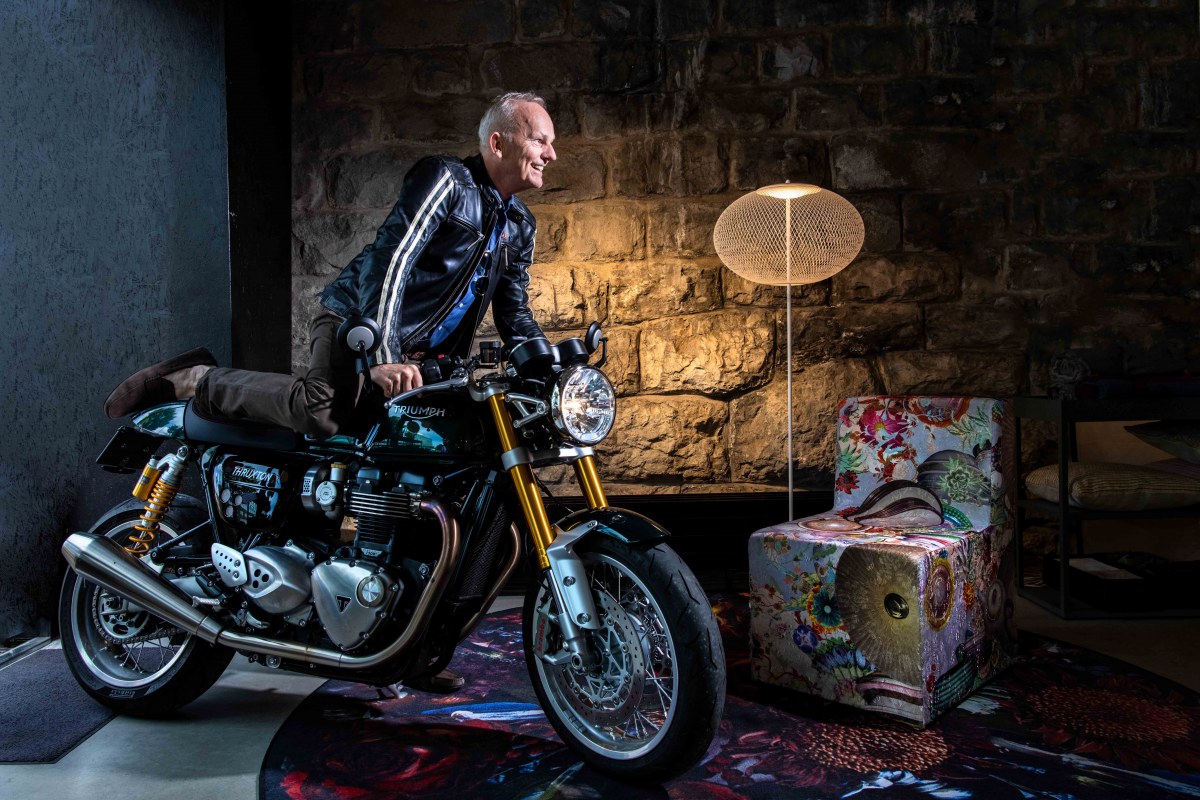
Main blog image: Photographer Marion Nitsch for Lunax

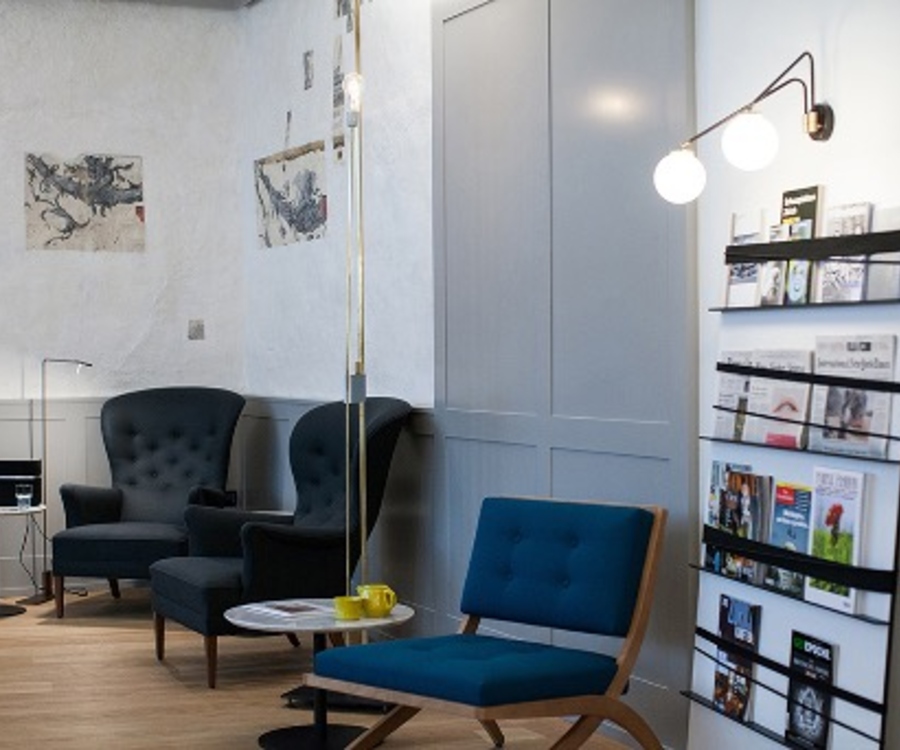
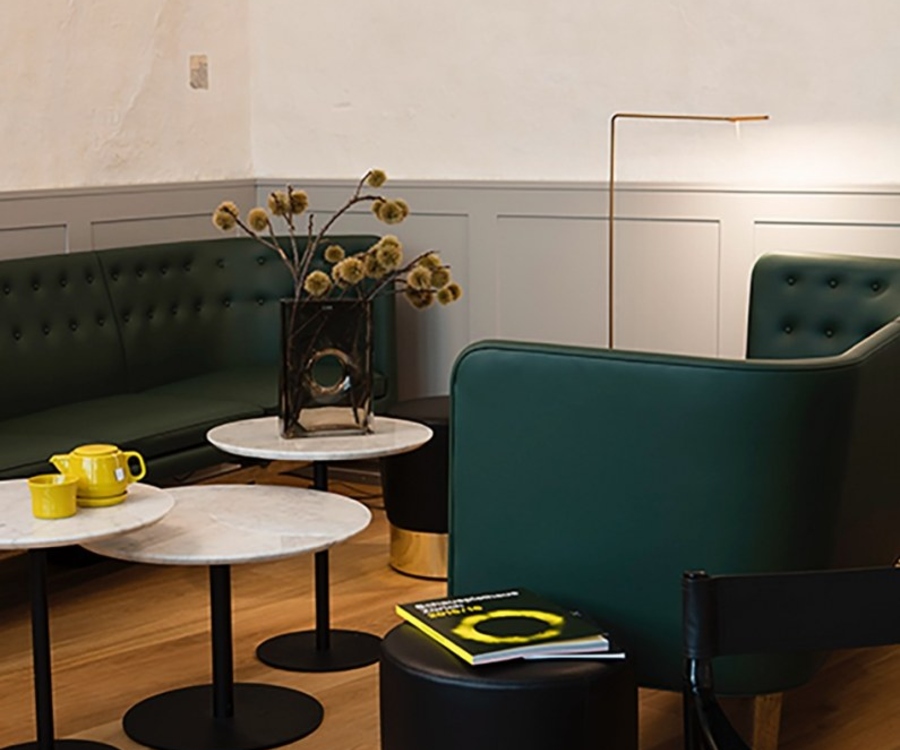
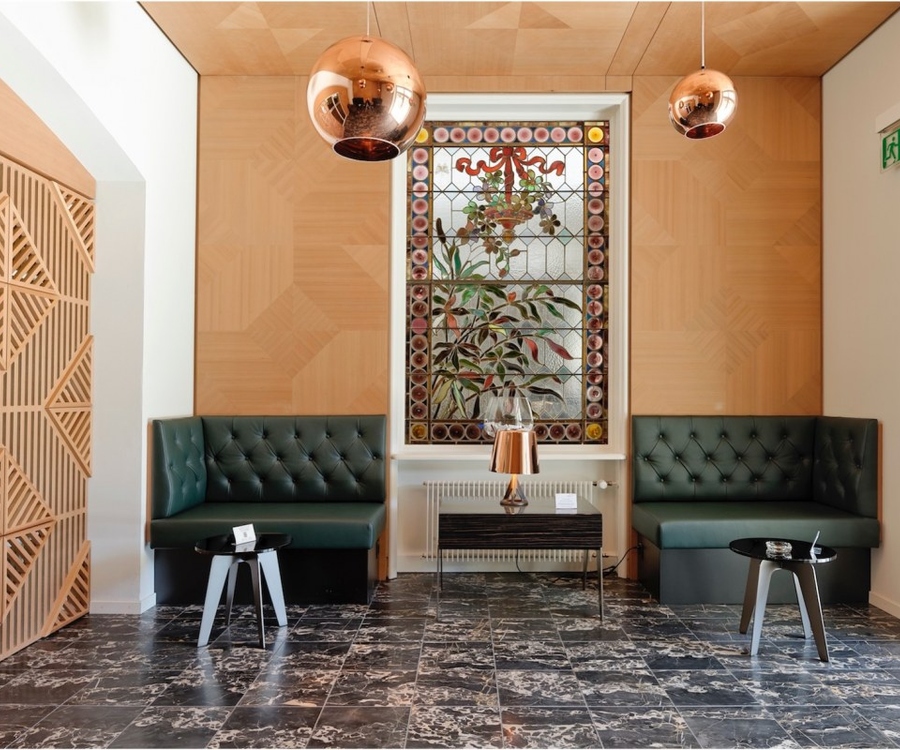
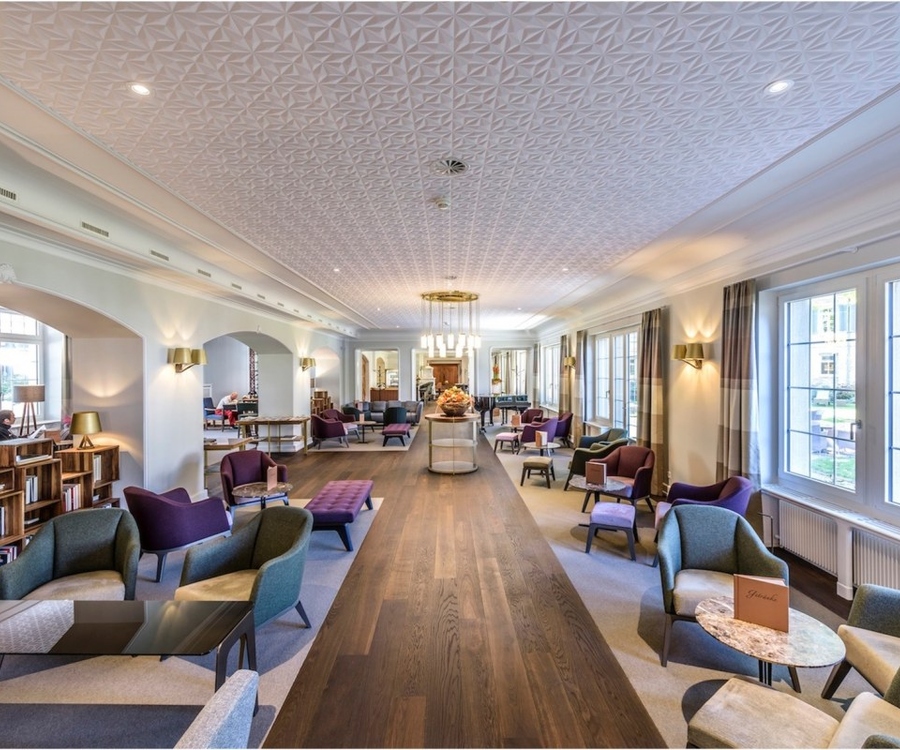
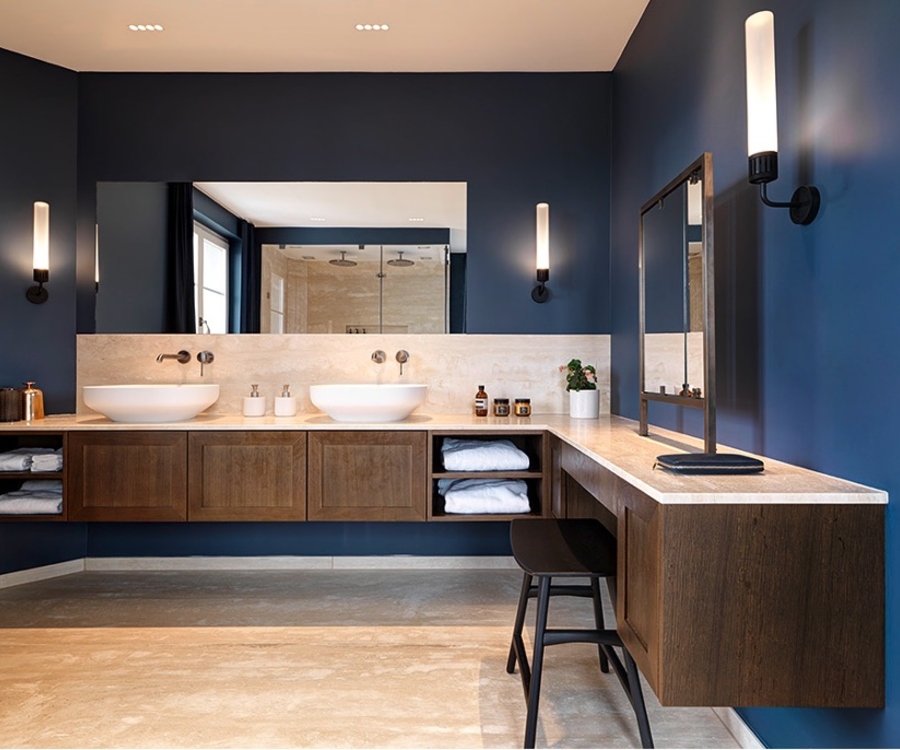
Photos 1 and 2: Marktgasse Hotel, Zurich
Award winning: Best Hotel Concept DACH, AIT Award
Photographer: Bruno Helbling

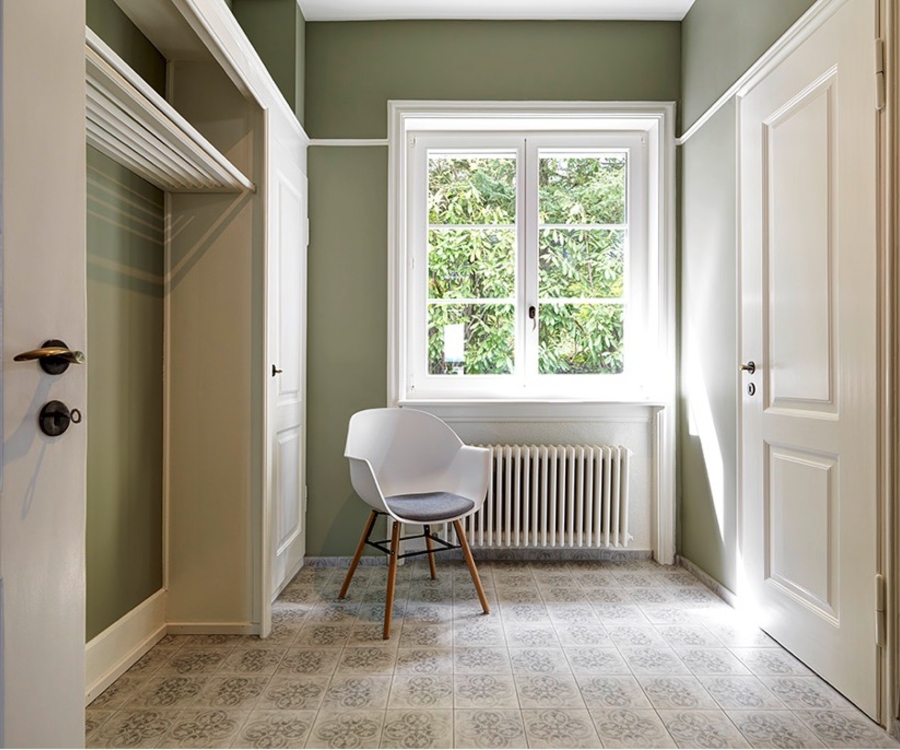
Photos 3, 4 and 5: Kurklinik Bad Schinznach, Switzerland Photographer:Dominik Golob und Felix Wey

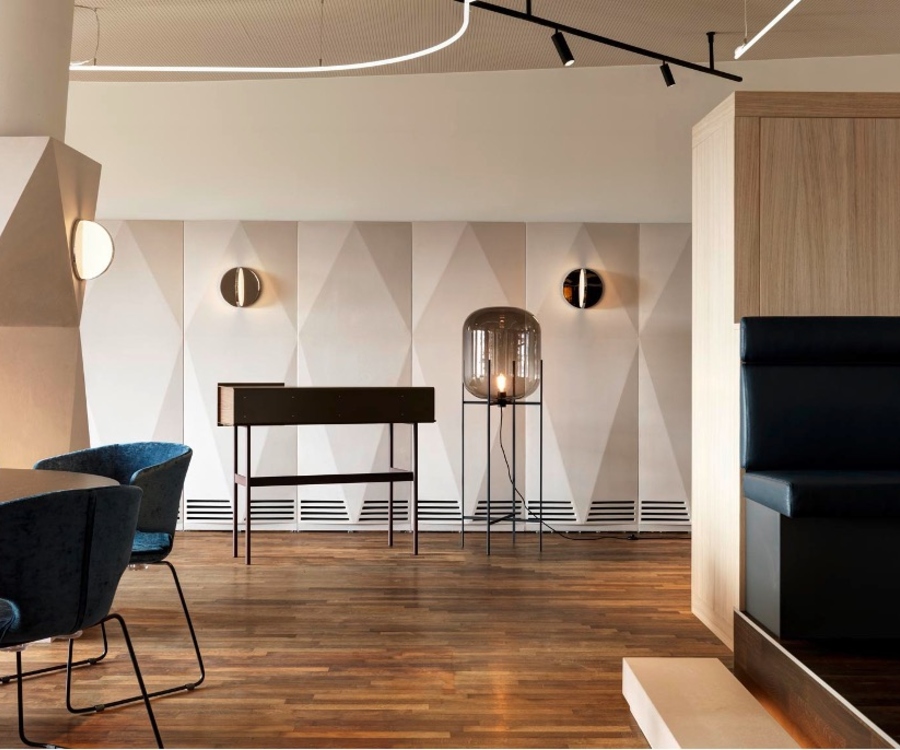
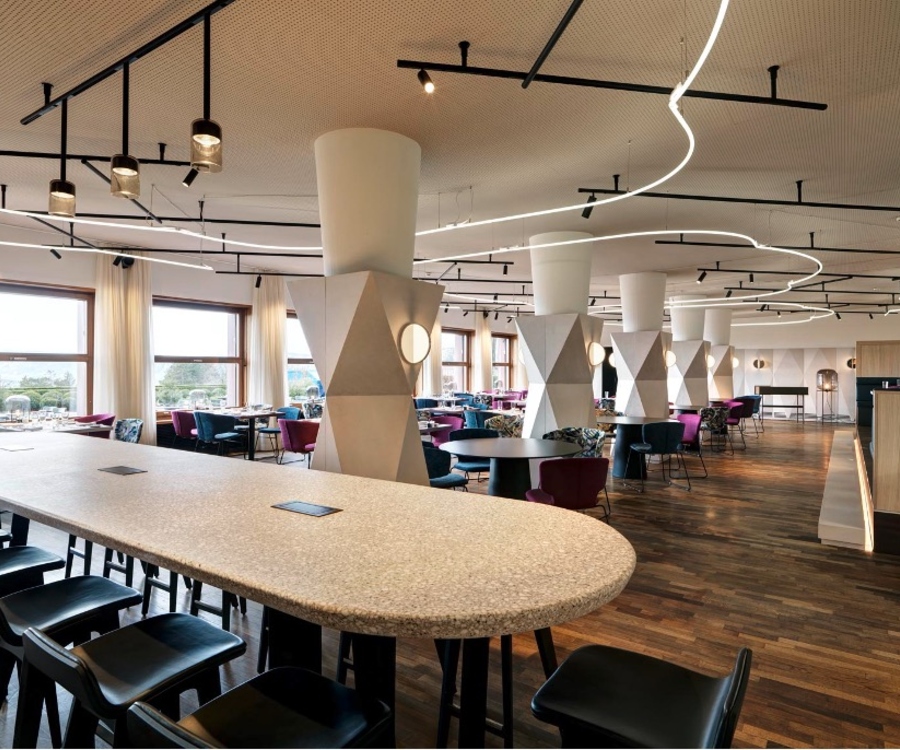
Photos 6 and 7: Sorell Hotel Zürichberg, Zurich
Photographer: Bruno Helbling

Photos 8 and 9: Single-family house Kilchberg, Zurich
Photographer: Bruno Helbling

Blog Block Image
MAp meets Karsten Schmidt-Hoensdorf, owner of the Zurich design studio IDA14

Add new comment

Comment

Order

Plain text

  • No HTML tags allowed.
  • Lines and paragraphs break automatically.
  • Web page addresses and email addresses turn into links automatically.
Types
sharing is caring

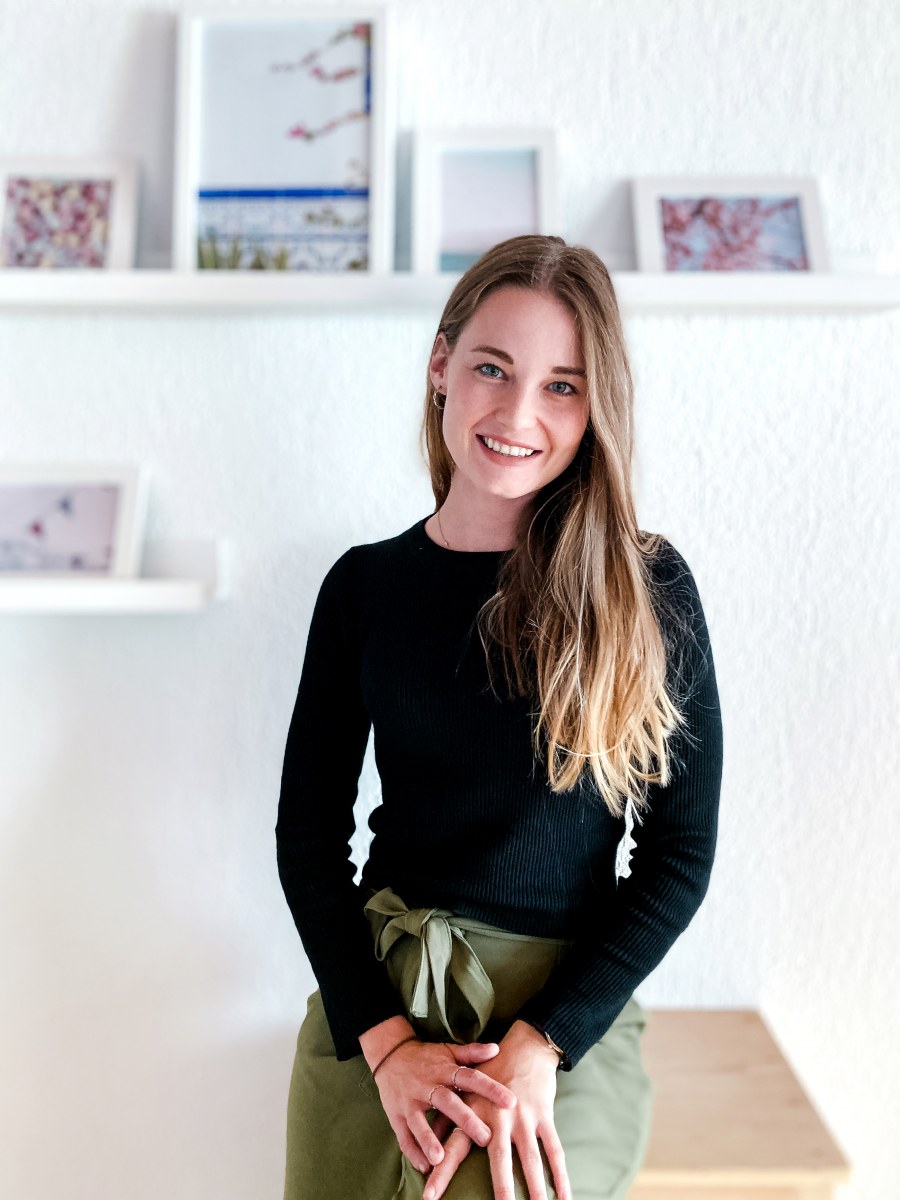
Today we are happy to sit down with one of our student mentees, Jennifer Renggli, an undergraduate at the University of Applied Sciences of the Grisons. Jennifer recently defended her thesis “Concept development in Swiss unaffiliated hotels” successfully with the highest score! During the joint mentoring year, Jennifer’s love grew towards our favourite topic – hotel concepts – and she therefore decided to dedicate her thesis to it (and that means: a LOT of work).

For this thesis, we at MAp acted as co-advisor. So, before we dive in, a big thank you goes out to Prof. Norbert Hörburger, deputy head of research & services ITF at the University of Applied Sciences of the Grisons, and the advisor of the thesis. Furthermore, we also want to thank Riccarda Ryffel who’s in charge of the mentoring programme and the reason why we got in touch with Jennifer in the first place. The great collaboration during our mentoring year gave rise to the idea that Jennifer, with our support, tackle her BSc thesis. Now we learn more about the great result and many insights gleaned during this process. 

Untertitel
MAp meets Jennifer Renggli, student at the University of Applied Sciences of the Grisons
Blog main image
The hotel concept is like a puzzle.
Paragraphs

Dear Jennifer, congratulations on receiving top marks on your thesis! As you noted in your thesis, hotel concept development has barely been addressed in academic literature, so why did you choose to tackle it as the subject of your bachelor thesis? What sparked your interest – besides our close contact during your mentoring year?

Thank you very much! I remember a conversation with a fellow student who enthusiastically told me about your work at MAp. My first thought was: “Hotel concept creators? Is there such a thing?" As probably many others, I had never heard of hotel concept development. A bitter conclusion when you consider that the subject is all the more important nowadays. After all, the hotel industry is facing completely different challenges than it was 10 years ago, when free WiFi was a unique selling point.

During my time as a flight attendant, I had the privilege of staying in many well-known hotels around the world. In contrast to the hotel chains, which can pull a suitable brand out of the drawer for every guest need, independent hotels have to develop their "concept" themselves.

The complexity already begins here; a hotel concept sounds fancy, everyone claims to have one, but in truth the term is abstract and difficult to define. So on the one hand there was the hotel concept development, which from a theoretical point of view is almost undefined, and on the other hand there was the urgency for unique and competitive hotel concepts in practice. A paradox that was made for research work ;-)

The hotel concept is like a puzzle.
To solve it, you need a methodical approach and creative imagination.
via @weareMApeople


Before we get into it, how would you define what a hotel concept is? And why is it so critical to the strategic planning process for hotels?

The simple answer is: a tailor-made and long-term oriented document for the strategic direction of the hotel project. However, this definition would not do justice to the term “hotel concept.” A hotel is much more than a restaurant and overnight accommodation. It is a place of encounter, interaction and sensory experiences. Furthermore, it is also a property and a business model where the needs and expectations of a wide variety of stakeholders meet. As a result, a harmonious interplay of so-called hard and soft factors is required in order to develop a coherent and holistic hotel concept.

The hotel concept is like a puzzle. To solve it, you need a methodical approach and creative imagination. Specifically, a strategic basis is required. This results from a well-founded analysis of the market, environment and trends. An individual concept can then be formed from this, which takes into account aspects such as architecture, design, sensors but also the direct and indirect influences on people and the environment. The result of this development process is a clear “raison d’être” for the hotel project.

What did your study set out to achieve? And what approach and methods did you use to reach this destination, i.e. your overall aim?

Although there are numerous studies on hotel management and project development, to the best of my knowledge, hotel concept development has not been discussed much in theory or in practice. Consequently, with my thesis I wanted to make a small but significant contribution to this existing knowledge gap.

To do this, I wanted to research how the industry understands the term “hotel concept” and how widespread hotel concept development is in the Swiss hotel industry. To this end, I conducted interviews with industry experts, hotel owners and managers. The research focus was on non-branded hotels in rural areas. The exploratory nature of my research enabled me to develop a deep understanding of the topic and to gain insights into the status quo of hotel concept development.

You interviewed both industry experts and hotel managers/owners: what did your findings reveal in terms of their understanding of what hotel concepts are and their practical use? What did you deduce from this?

Basically, the industry experts as well as the hotel owners and managers found it difficult to define a hotel concept in words. This is because a concept is more often associated with an idea than with a strategic document. It is not uncommon for the concept to be understood as part of the business plan in practice.

While the industry experts are generally of the opinion that a hotel concept should be as holistic as possible, hotel owners and managers primarily associate it with their hotel product. For example, they named the extraordinary interior design or the diverse gastronomic offer as important for “their” hotel concept. It was noticeable that the questioned hoteliers developed their concept based on experience, assumptions and gut feeling. Some even honestly admitted that nothing was planned in their hotel, but simply made. This approach is contrary to the expert opinion and the current literature, which suggests that a concept should be based on facts. As a result, it was not surprising that in the five out of six hotel projects examined, no written hotel concept was developed using a strategic planning process.

These facts strongly suggest that written hotel concepts are the exception rather than the rule in the Swiss hotel industry (unless an external consulting agency is involved). A possible reason for this is the fact that the purpose and benefits of hotel concepts are simply too unknown in the hotel industry.

What do you see as the risks to not having a proper hotel concept in place for hotel managers/owners? As it relates to the hospitality industry as a whole, what can we do to mitigate these risks and ensure hotel concept development becomes more commonplace?

Hotel projects are usually long-term, costly and risky projects. I believe that if you want to sail to a distant destination, you need to know the right course to actually get there. Only very few people manage to steer “on gut feeling,” so navigation is the only solution. This guiding document is a holistic hotel concept for all stakeholders involved. Without a hotel concept, however, those stakeholders and partners involved run the risk of losing the course or missing the right one from the start. This may only show up after the opening in the form of operational and financial difficulties. That is why it is important to deal with the hotel concept at a very early stage of the hotel project, regardless of whether it is a new building or renovation.

I see a great opportunity here for hotel consulting agencies as well as industry associations and universities, which can take up the topic further and spread the necessary know-how. For example, students at the Graubünden University of Applied Sciences develop a hotel concept directly on a case study. As young professionals, they can use this knowledge to bring new impulses to companies.

Now that you’ve successfully defended your thesis, what are your post-graduation goals and plans? How do you want to change the hospitality industry?

During my research time, I received great positive feedback and interest from the interviewees surveyed. I'm pleased because it shows that the industry is already rethinking. As a practitioner, however, it is important for me not to lose an understanding of the daily challenges in practice, despite having all the theoretical basics. After all, we don't just want hotel concepts that sound good on paper, but also ones that work in everyday business over the long term. This is a tightrope walk that I will certainly take on in the future.

As always, our final MAp meets question: what makes a hotel experience a truly outstanding one for you personally?

Being a “guest” is always a very personal experience for me and it becomes unforgettable when I am in harmony with the place and the people around me. It doesn't matter whether it's a luxury resort or a guesthouse - because the feeling of "arriving" is not created by star categories or brands, but from the heart.

About Jennifer Renggli:

Jennifer graduated from the University of Applied Sciences of the Grisons in Chur with a bachelor’s degree in Tourism and holds a Federal Vocational Certificate as a Media Technician. Having caught the travel bug on her first solo trip to Indonesia, she lived in the United Arab Emirates until 2018 and worked as a cabin crew member for an international airline. She takes joy in writing about her travel memoirs and is a regular in dinky coffee shops.

Blog Block Image
The hotel concept is like a puzzle.

Comments

Ricky Sharma

Nice! This opens up my view of the hotel industry. Many new and previously undiscussed points there!

Karsten Schmidt-Hoensdorf

Thanx, interesting challenging points of interest identified and discussed!

Add new comment

Comment

Order

Plain text

  • No HTML tags allowed.
  • Lines and paragraphs break automatically.
  • Web page addresses and email addresses turn into links automatically.
Types