
sharing is caring

If you’ve followed our boutique hospitality consultancy for a while, then you know that Purpose sits at the core of everything we do. And we’ve made it our mission to empower our hospitality clients to identify their unique and authentic Purpose, and reflect that in the sustainable hospitality concepts and purposeful brands they create. Let's take a deeper look at the Purpose-driven organisations shaping today’s economy. 



Untertitel
How Your Desire for Impact, Personal Growth and Community Is Changing the World
Blog main image
The Purpose Economy
Paragraphs
The organisations that will perform well in this new economy are those that empower individuals to have a certain self-awareness about Purpose,
and connect it to their own organisation's Purpose.
@weareMApeople

Summary

Thirty-five years ago, author Aaron Hurst’s own uncle Marc Porat coined the term “Information Economy,” predicting the rise of Silicon Valley and the internet giants. Since that time, Hurst, CEO of Imperative and Founder of Taproot Foundation, has observed an economic shift emerging from the need for Purpose, which he terms “The Purpose Economy.” In his book, Hurst makes the case for why our economy is becoming more Purpose-driven and how organisations (including hospitality businesses and boutique hotels) can thrive in light of this shift. Hurst draws upon his experience catalysing the pro bono service market, research, case studies and personal anecdotes, to reveal how this new economy is making an impact – for people and planet!

Key Points

#1: There are different types of Purpose: Personal Purpose, Social Purpose and Societal Purpose.

Personal Purpose is the pursuit of passion; something deeply personal. As Hurst puts it, “We find Purpose when we do things we love, attempt new challenges, and express our voice to the world.” Social Purpose is about creating meaningful connections; sharing your Purpose with people you love. And research shows that Purpose is better when shared - after all, relationships provide more meaning to humans than anything else out there. Lastly, there is Societal Purpose: making a bigger impact on society as a whole. And that doesn’t mean you have to end world hunger – you can derive Societal Purpose through your existing work if you’re able to connect it to the bigger picture.

#2: There are different types of Purposeful organisations: values-driven organisations, excellence-driven organisations and impact-driven organisations.

Hurst has identified three types or Purpose-driven organisations. There is the values-driven organisation, where values are embedded into the organisation’s core and drive all decision-making. There is the organisation that strives to build excellence, where the Purpose is its craft and its focus on producing quality work. And lastly, there is the impact-driven organisation, which seeks to take responsibility for and have a more positive impact on its stakeholders, people and planet.

#3: There are different ways to embed Purpose into your organisation: through customers, through employees and through the supply chain.

Hurst notes that there are three ways in which Purpose is typically emphasised within an organisation. The first is by delivering Purpose to customers through a service or product that gives them a greater personal, social or societal Purpose. The next is by giving employees a sense of Purpose through their work. And the last approach to Purpose is building it into the supply chain - considering the people and companies with which you partner, practicing fair trade principles, empowering local communities, etc. The organisations that will perform well in this new economy are those that empower individuals to have a certain self-awareness about Purpose, and connect it to their own organisation's Purpose.

Application

How can your organisation lead with Purpose? Hurst has some recommendations:

  • Remove silos by combining functions to be in service of the larger community as a whole
  • Community organise in a way that motivates and leads people to lead themselves
  • Build community leaders by empowering and engaging your people
  • Work without managers by creating a culture of coaching and support that doesn’t require top-down hierarchy
  • Make your leaders conductors by pointing people in the right direction, instead of pushing them in the right direction

MAp's Favourite Quote

“Purpose is not a noun, it is a verb. It is about how we work. We experience purpose when we do something that’s greater than ourselves. We experience purpose when we push ourselves and grow. We experience purpose as part of a community.”

Conclusion

Thanks for following along on our boutique hospitality consultancy’s never-ending path to Purpose! We’d love to hear from you! What do you think about “The Purpose Economy?” How is your hospitality business or boutique hotel adapting to thrive in this new era? Comment below.

Lastly, support a local bookshop by buying “The Purpose Economy” here: https://bookshop.org/.

 

Blog Block Image
The Purpose Economy

Add new comment

Comment

Order

Plain text

  • No HTML tags allowed.
  • Lines and paragraphs break automatically.
  • Web page addresses and email addresses turn into links automatically.
Categories
Types
sharing is caring

If you’ve explored MAp’s website, you’ve probably come across the phrase “Everything is figureoutable.” No, we did not make up the term “figureoutable” – it comes from Marie Forleo’s acclaimed book. And this little phrase has had a big impact on us! It’s a mantra that’s helped us to solve our clients’ challenges, navigate COVID times and inspire our rebrand. And we try to instil it into our clients too, encouraging them to always choose the path of positivity!

Piggybacking off last month’s inspirational book “The One Thing,” which teaches us the importance of narrowing down and focusing in on that most important thing (family, career, health, etc.), Marie’s “Everything is Figureoutable” presents the playbook for how best to accomplish it.

Have you identified your one thing but need that extra boost to get it done? Then read on to learn how!


Untertitel
MAp's favourite mantra
Blog main image
Everything is Figureoutable
Paragraphs
“Everything is Figureoutable” is more than just a mentality; it’s a practical, actionable discipline
to help guide you through life and achieve your one thing.
@weareMApeople

Summary

The main idea behind “Everything is Figureoutable,” obviously, is that everything in life is figureoutable! Whatever it is you want to achieve, whatever that ONE thing is, there is always a way to achieve it – no matter the obstacles you face or excuses you come up with. According to Marie, it’s about training your brain to think more positively and break down any dream into manageable steps. In her book, she presents those 9 key steps to figuring out any obstacle in life, and gives the reader practical Insight to Action Challenges or exercises to help make them happen. What you’ll discover: “Everything is Figureoutable” is more than just a mentality; it’s a practical, actionable discipline to help guide you through life and achieve your one thing.

Key Steps

#1: Train your brain

To achieve results, you need to train your brain for growth by eliminating excuses, trying new things and surrounding yourself by those who inspire. And, be willing to put in the work toward achieving your one thing.

#2: Believe

Everything in life starts with a belief, so don’t be scared to believe in your dream. Because people believed in their dreams is the reason why there’s good music, nice cars, delicious restaurants – and so much more to enjoy.

#3: Eliminate excuses

You – and only you - are responsible for your life. Every time you say you can’t do something, it’s not because you actually can’t, it’s because you won’t. So get rid of the excuses.

#4: Deal with fear

Fear is only a danger when it stops you from pursuing your dream. The antidote to fear is action, because only by acting does your dream have the chance of becoming reality.

#5: Define your dream

Here’s the connection to “The One Thing”: figure out what it is you want, paint that picture in your head and never give up until you have it. 

#6: Start before you're ready

There is never a good time to start pursuing your one thing; there will always be obstacles and challenges. But again, action is the antidote to fear, so jump into the uncertainty.

#7: Aim for progress not perfection

Perfection is unattainable. Instead, focus on simply progressing, because progress puts you into a productive mindset and sets you free from the stress and burden of being perfect.

#8: Refuse to be refused

There will always be people intent on bringing you down. Don’t let them! Be the person who refuses to give up despite people telling you that you’re not talented enough, that your dream is dumb, etc.

#9: Remember the world needs your special gift

You have a special gift that no one else has, so don’t keep it from the world. Embrace your differences and use them to help change the world in a way only you can.

Application

In order to help you apply the learnings of this book and take the steps toward achieving your dream, we recommend going through the Insights to Action Challenges that are found at the end of each chapter.

These challenges are questions and prompts to get you thinking – really thinking – about your dream and how you’ll achieve it. Sit down with a pad of paper and pen and go through them one by one! You’ll surely have some illuminating AHA moments and breakthroughs.

MAp's Favourite Quote

“You can do whatever you set your mind to if you just roll up your sleeves, get in there, and do it. Everything is figureoutable.”

Conclusion

We sincerely hope this book will change your attitude and motivate you to act! If you haven’t done so already, we recommend reading “The One Thing” and follow it up with this inspiring book so that you’re motivated to figure out how you’ll achieve your one thing – then go out and actually do it! 

Lastly, to be further inspired by Marie Forleo, head here: https://everythingisfigureoutable.com


All photos taken from https://everythingisfigureoutable.com

Blog Block Image
Everything is Figureoutable

Add new comment

Comment

Order

Plain text

  • No HTML tags allowed.
  • Lines and paragraphs break automatically.
  • Web page addresses and email addresses turn into links automatically.
Categories
Types
sharing is caring

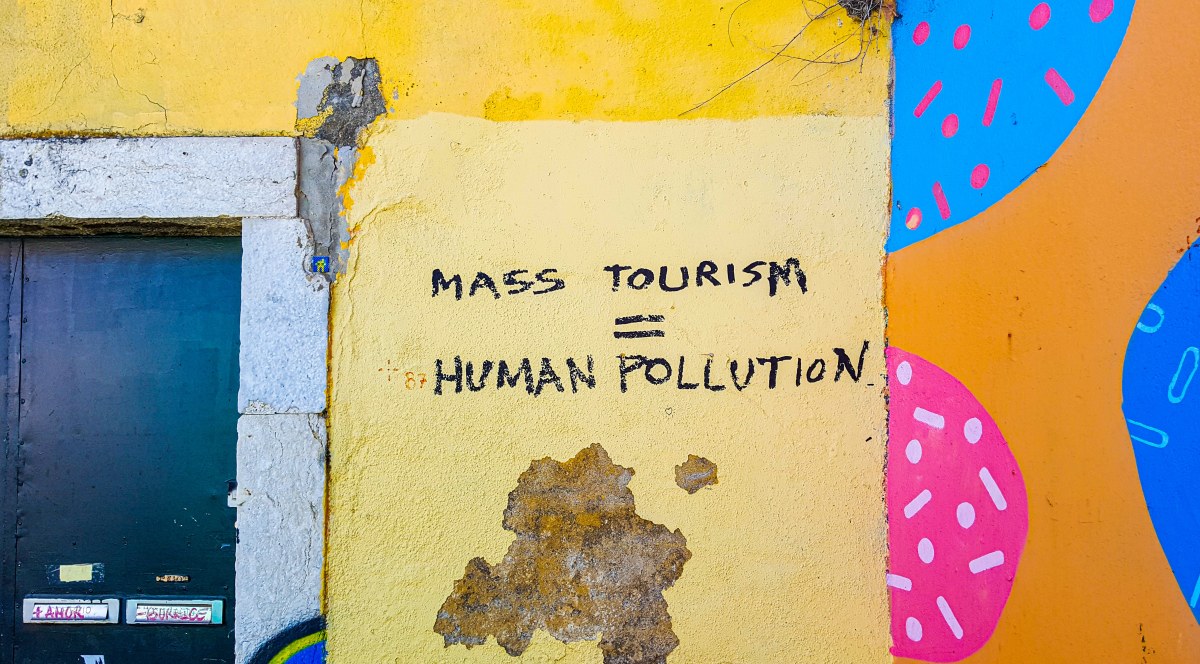
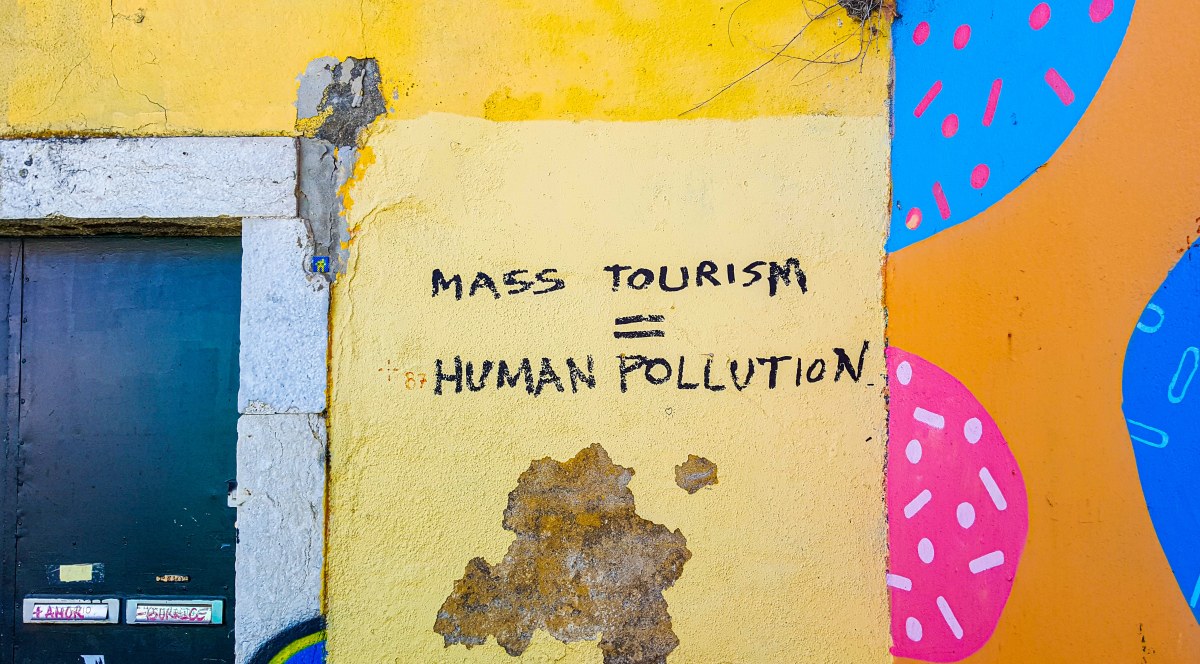
The world is bracing for the reopen of travel, as vaccinations roll out across the globe and countries lift their border restrictions. But do we want to go back to the old – and, even worse, unsustainable - ways of travel? In the fourth edition of our monthly book club, we read Elisabeth Becker’s “Overbooked: The Exploding Business of Travel and Tourism,” which investigates the many dimensions of the travel industry and its far-reaching ramifications on the global economy, world cultures and the environment.

Do you work in the travel industry or are you simply a passionate traveller? Then read on to learn why responsible travel is more important than ever.


Untertitel
The Exploding Business of Travel and Tourism
Blog main image
Overbooked
Paragraphs
Small improvements to your travel plans and conscious decisions
make all the difference over time.
@weareMApeople

Summary

Becker is a former correspondent for The New York Times, who spent five years criss-crossing the globe to measure the impact of the tourist trade. The result is “Overbooked,” part travelogue and part examination, exploring how what was once a hobby became a giant industry, employing 1 in 10 people globally and becoming the main source of income for many countries across the world. Becker looks at case studies both good and bad: eco-tourism in Costa Rica and business travel in France, to the destruction of Angkor Wat and the over-tourism plaguing Venice. The book is eye-opening in its facts and data, and makes an impassioned plea for why sustainable tourism is imperative for the future. However, after reading the book, we felt that Becker falls short of offering real solutions to the problems she observed as well as giving the reader the tools he or she needs to be a responsible traveller.

Key Points

#1: It’s easy to be blind to the effects of tourism.

Tourism is both enriching and destructive, leaving winners and losers in its wake. But most vacationers are blissfully unaware of the toll their vacation can have in moments and places on the local population and the environment at large. Why is that? Despite its size, the tourism industry is a largely neglected topic - unlike the oil or pharmaceutical industries, for example, which come under immense scrutiny from governments and the media. Instead, it is still seen as a 'soft' issue, relegated to the travel pages. Because of this, vacationers simply don’t know how to travel in the most responsible manner.

#2: Travel journalism perpetuates this problem.

Becker contends that travel journalism is compromised, serving a PR function rather than tackling the adverse effects of mass tourism. In return for free flights, stays, meals and tours, travel journalists are expected to write rave reviews and less inclined to provide critical commentary on a place. After all, not only will they not be invited back, but they may lose out on other invitations in the future. The singular goal for travel writing has been to help vacationers pursue their dream of a perfect trip.

#3: Governments can make or break a country’s tourism industry.

As Becker states, “Tourism is that rare industry whose ‘product’ is a country.” This gives governments the ultimate decision-making power. Governments can choose to “preserve cultural sites or allow them to be destroyed; they can set aside wilderness areas or issue permits to build resorts along a deserted beach...”

They are also the main sales force for tourism. Becker has found that governments that have chosen to remove themselves from the tourism business, such as the United States, which resigned from the U.S. World Tourism Organisation in 1996, have suffered as a result. France and Costa Rica, on the other hand, have taken proactive measures to protect their countries while growing their respective tourism industries.

Application

When you plan your next trip, skip the glossy magazines and really research the destination – the good, the bad, the ugly – in order to have a more well-rounded perspective of the place and better inform your buying decisions - with the goal to have the most positive impact possible. Nowadays you can rely on online resources promoting sustainable tourism, such as cooperations for hotels and accommodations that are local, green and sustainable (i.e. eco suites).

We all know, to travel sustainably is a work in progress. So, as we say at MAp, take it step-by-step. Small improvements to your travel plans and conscious decisions make all the difference over time.

MAp's Favourite Quote

“Taken together, all of our innocent vacations and trips have changed lives and the fortunes of nations.”

Conclusion

We hope this exposé into the travel industry was enlightening for you and will help you in the future to consider your impact on local economies, cultural heritage and the environment when you set foot in a new place. We’d love to hear which country case studies you found to be most interesting – please comment below.

Lastly, support a local bookshop by buying “Overbooked” here: https://bookshop.org/


Blog Block Image
Overbooked

Add new comment

Comment

Order

Plain text

  • No HTML tags allowed.
  • Lines and paragraphs break automatically.
  • Web page addresses and email addresses turn into links automatically.
Types
sharing is caring

With the arrival of March comes the third edition of our monthly book club. This month, we’re happy to spotlight one of the best books every business owner, hotelier and marketer should read: “Marketing: A Love Story” by Bernadette Jiwa. This small book, coming in at just 110 pages, packs a big punch, stocked full of smart insights and winning techniques to ensure our ideas as hoteliers, business owners, and of course, marketers, resonate.

Want to create marketing that matters to your customers and guests? Then read on to learn how!


Untertitel
How to matter to your customers
Blog main image
Marketing: A Love Story
Paragraphs
The bottom line: forget analytics and quick wins,
seek connection before you seek results!
@weareMApeople

Summary

Jiwa, a global authority on storytelling in business and marketing, is the author of eight renowned books on the subject, with “Marketing: A Love Story” her most easy-to-digest book yet. That’s because it’s a compilation of short but powerful blog posts lifted from her website, thestoryoftelling.com. Each blog post underlines a critical point: the importance of mattering to our customers. Jiwa contends that while marketing has become a necessary evil for all companies, we can look at it in other ways: marketing as solving problems, marketing as a way of seeing the world through our customers’ eyes, marketing as a means of understanding what people need and want, marketing as a way of doing better work. The bottom line: forget analytics and quick wins, seek connection before you seek results!

Key Points

#1: Don’t tell customers what you do, even if you do it really well.

The biggest mistake marketers (and product developers) can make is focusing too much on the product or service they offer and not enough on the customer. This mind-set has to change. Appreciate what your customers’ wants and needs are, and do your best to present solutions. Customers are no longer interested in what you are offering them (even if it is the best); they are interested in how your product or service makes them feel. They need to know that you understand what matters most to them.

#2: And in line with that, your competitive advantage is what your customers believe – not your product/service.

Competitive advantage is an intangible thing; it’s not about the unique feature your product offers or your cheaper rates. It’s not what you tell customers. Jiwa puts it best: “Customers don’t often pay for the actual value the product delivers. If they did, $4 cups of coffee wouldn’t exist, and people wouldn’t buy Macs even though they cost more than PCs. People pay for the intangible value, for what they experience and what they care about.”

#3: Don’t confuse awareness with impact.

In a world where it’s harder to get attention, gaining mind share is a priority for every company. The misconception is that if you can get a few more people to know about your company, you’ll be set. But instead, better to approach it by thinking, why will one person care that you are there in the first place? As Jiwa states, “What’s more important than building awareness is what you plan to do with it once you’ve got it, because top of mind is not the same thing at all as close to heart.”

#4: Don’t fear the competition, be the competition.

Companies obsess too often about what the competition is doing. Instead, channel this obsession to your customers. Obsess over what your customers are doing and then determine how you could help them do it with more ease. According to Jiwa: “Becoming the competition doesn’t always mean using the same old rules to beat others at their own game. Focusing on the tiniest gap in your customers’ desires might be a better strategy.” The message: act as if you are a market of one.

#5: Sell your story.

It’s not difficult to come up with a great idea. But it is, however, difficult to articulate clearly why that great idea should matter to the right people. As a place to start, simply fill in the blanks: “We do _________ so that you can do/feel/be _________.”

Application

Whether creating products or services, or marketing products or services, always ask yourself one critical question:

Why should your customer care about this?

You need to give people a reason to stop and listen to your song.

MAp's Favourite Quote

“What if, instead of spending all that time and money on deciding how to tell customers who we are, we spent more time and money on being who they want us to be?”

Conclusion

We hope “Marketing: A Love Story” gives you a new perspective on what it means to be a marketer. Share with us your favourite wisdom nuggets from the book! And, lastly, support a local bookshop by buying it here: https://bookshop.org/.


Blog Block Image
Marketing: A Love Story

Add new comment

Comment

Order

Plain text

  • No HTML tags allowed.
  • Lines and paragraphs break automatically.
  • Web page addresses and email addresses turn into links automatically.
Categories
Types