
sharing is caring
What we do, what we don't, and what we're figuring out.
We are in the middle of our B Corp recertification. New standards, new requirements – one of them: a publicly available climate action plan. At the same time, we are building something we have never built before: an AI-powered coaching programme for boutique hotels.
These two things collided at the right moment.
Because here is what nobody talks about: every time we open Claude, ChatGPT, Gemini or any other AI tool, we are using energy. Real energy. Water for cooling. Servers running around the clock. The tools that help us work smarter and faster come with an environmental cost – and as a B Corp, we cannot just look the other way.
So we stopped. We looked at how we work. And we wrote it down.
What climate action looks like for a boutique consultancy
We are not a factory, we do not produce physical goods, we do not have a fleet of vehicles or a warehouse. Our biggest environmental impacts come from three things: how we travel, how we use digital tools and how we influence the hotels we work with.
That last one matters most. Through our consulting, our coaching, our handbooks and The Sustainable Hotel platform, we reach hundreds of hoteliers every year. If we can help them operate more sustainably – energy, food, waste, local sourcing – our indirect impact far outweighs our direct footprint.
That does not mean we get to ignore our own.
Our commitment
We support the global ambition to limit global warming to 1.5°C. Not because a certification asks us to, but because our purpose – to make this planet a more purposeful and hospitable place for all – means nothing if we do not walk the talk!

What we actually do
Travel
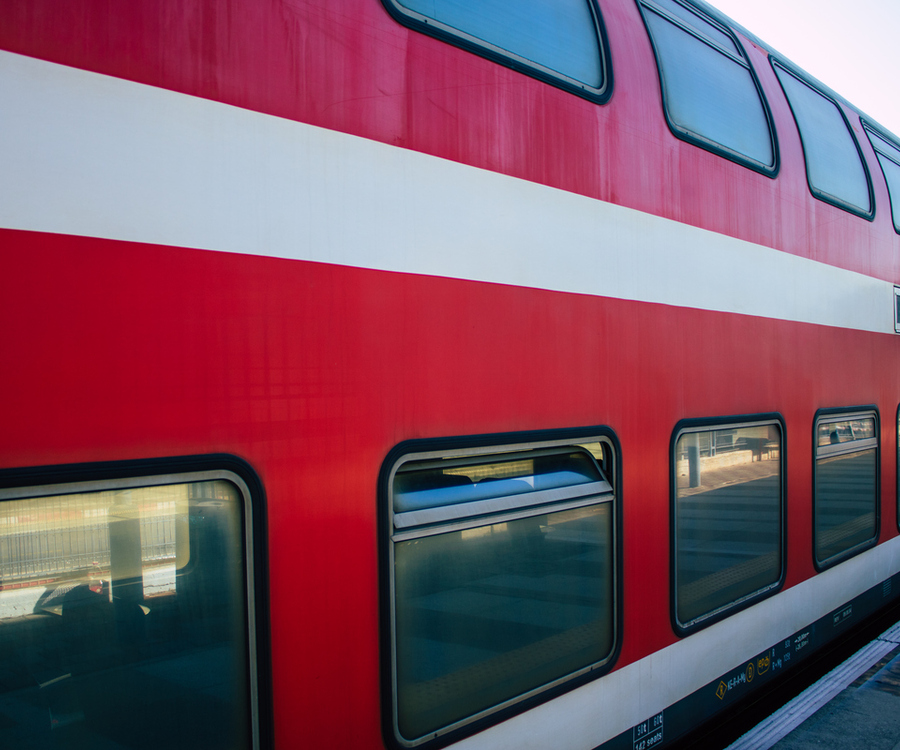
Train, always. Within Switzerland and to neighbouring countries, we take the train. When we travel to our clients in South Tyrol, we combine one trip with all meetings. Through 2025 we planned every business trip that way, combining meetings to avoid empty journeys, and took the train whenever it was possible. For our visit to our clients Camping and Locanda Mistral, we opted for public transportation all the way: buses, trains, no flights. We do fly when there is genuinely no alternative, for example to our client MAP Hotel in Cyprus. But we also prove it can work differently: we collaborate with Príncipe Collection and Faya Foundation in São Tomé and Príncipe entirely remotely. When we do fly, we make every trip count.
Flexible working
Online meetings are our default for client collaboration. As a small team in Zurich, we work flexibly and meet in person when it adds value. This has been our way of working since long before anyone called it a trend.
Digital tools and AI
This is the new frontier for us. We use AI daily – Claude, ChatGPT, Gemini and others – for writing, research, structuring and now for building our AI coaching programme. We know these tools consume energy and water. We commit to reviewing the environmental impact of our digital tools once a year, starting 2026. And we commit to using AI intentionally, not carelessly – consolidating queries, choosing the right tool for the job, being conscious of how and when we use it.
Conscious purchasing
We buy locally and from small suppliers where possible. We favour refurbished electronics, recycle and think twice before buying anything new. In 2025 the new studio display came refurbished from a Swiss company that buys back and reconditions used equipment, and our printing went to a house that is FSC certified and offsets through myclimate.
Green hosting
Our MAp Boutique Consultancy website, The Sustainable Hotel platform and all hotel websites we create and host for clients run on servers in Germany powered by green energy, with the highest data security standards. Green electricity and the German server location are a written condition of the engagement with our web developer, and once a year we confirm they still hold.
Client work
Sustainability is part of every project we take on. Not as an add-on, not as a nice-to-have. It is woven into the concepts, brands, strategies and coaching programmes we create. Every incoming request runs through our Client and Project Selection Criteria, which asks what a project does to the place it happens in. Once a year we take the three most material projects and assess their environmental impact in writing.

What we have not done yet
In our Impact Report 2025 we said we would make our own footprint more visible and find a way to measure our emissions. We did not get there. We travelled by train, we planned trips to avoid empty journeys, we stayed remote-first. What we still do not have is a number. That is the first target below.
Who does what
A plan needs people, time and resources behind it. Here is what we put behind this one.
People
Time
Technical and material
Who we do this with
Our team. We set and review the targets together at the Strategy Days, and progress is a standing item in our team meetings.
Our clients. We ask at the start of a project what their own climate commitments are, so that our work supports them.
Our suppliers. What they control, we agree with them. Green hosting started as our request and is now a condition of the engagement.
Our industry. HotellerieSuisse, the Swiss Tourism Federation and our research partnership with ZHAW are where we test what works and bring back what we learn.
Our readers. The hoteliers who use our handbooks and The Sustainable Hotel platform tell us what is realistic in a running hotel. That changes what we recommend, and it changes this plan.
Where a target turns out to be unworkable for the people who have to deliver it, we change the target rather than drop it quietly.
The AI question
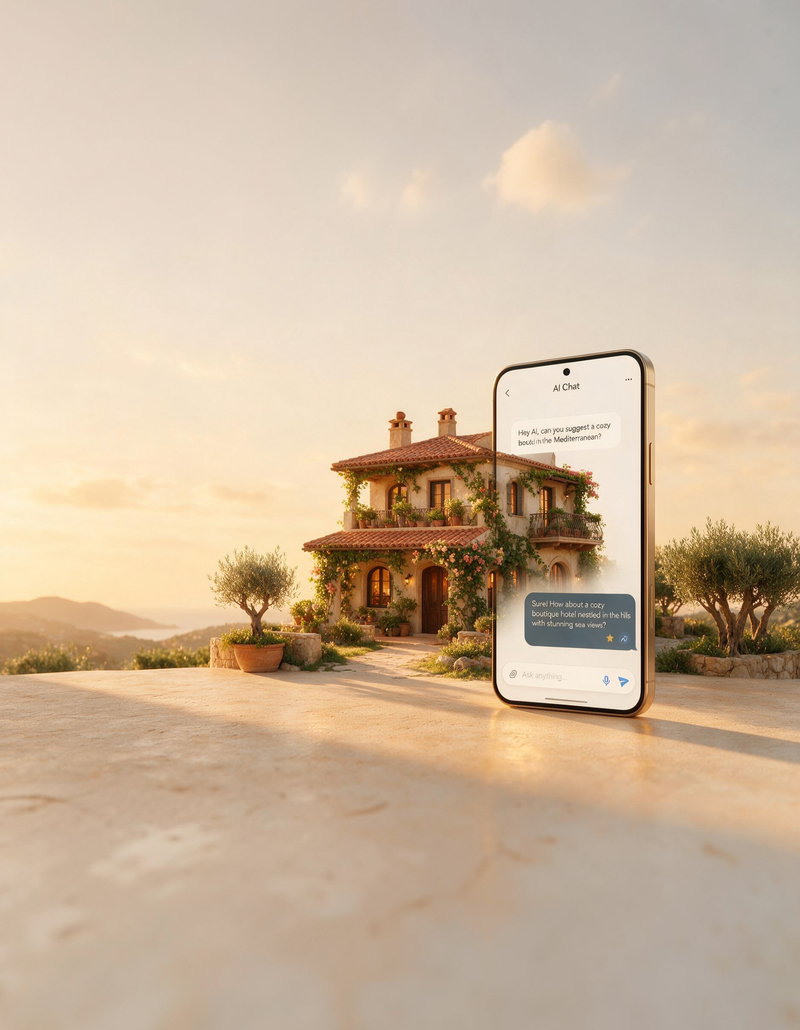
We are developing an AI coaching programme to help boutique hotels stay visible and relevant in a world that is changing fast. So that hotels that are trying to do good, that are on the same journey as we are, can continue their work and are found by guests.
We understand the environmental cost of AI – and we need to start measuring and optimising it. But we also know this is where the future goes. It is our responsibility to stay the innovative consultancy we have been since we started. The ones who dare to do things differently, who launched a sustainability platform and wrote handbooks when nobody asked for them, who are at the edge of what is coming.
In order to MAp out a better future for all. And of course, to put our hotel and business clients on the global MAp.

How we measure it
Every target has a measure, a deadline and a name against it.
Train or public transport for every journey within Switzerland and to neighbouring countries.
A first emissions baseline for travel and energy.
No meeting is a reason to fly.
Annual review of the environmental impact of our digital tools, including AI.
Sustainability in the scope of every client project.
Green hosting for every website we host ourselves.
The environmental dimension built into our consulting frameworks.
What’s next
Our next Impact Report (January 2027) will review how this plan worked in practice. What went well, what did not, what we adjusted. Because climate action is not a document – it is how we run our business, every day.
This plan is reviewed every year at our Strategy Days and fully updated every 36 months. The next full update is due in September 2029.
Approved by the highest governing body of MAp Boutique Consultancy GmbH:
Magdalena Rungaldier, Owner and Principal
Zurich – 19 September 2026
Written and illustrated with the support of AI tools. The ideas, decisions and soul are entirely MAp.
 ke time for prosecco ke it happenke it meaningfulke good coffeeke it matterke funny jokeske it kindke it simpleke it count
Sign up for the MAp newsletter for practical insights on hotel branding, marketing, and sustainability, plus fresh thinking from our projects and new tools from our sustainability platform. Let’s move #onwards together.